Braunschweig presents itself as an innovative development hub for the aviation of the future
What will the aviation of the future look like? How can it become more sustainable and climate-friendly? How is unmanned aerial technology changing our future, and what role do drones play in civil applications and in the protection of critical infrastructure? These were some of the topics addressed by the innovation hub of Braunschweig at yesterday’s parliamentary evening at the Lower Saxony State Representation in Berlin, attended by over 200 invited guests.
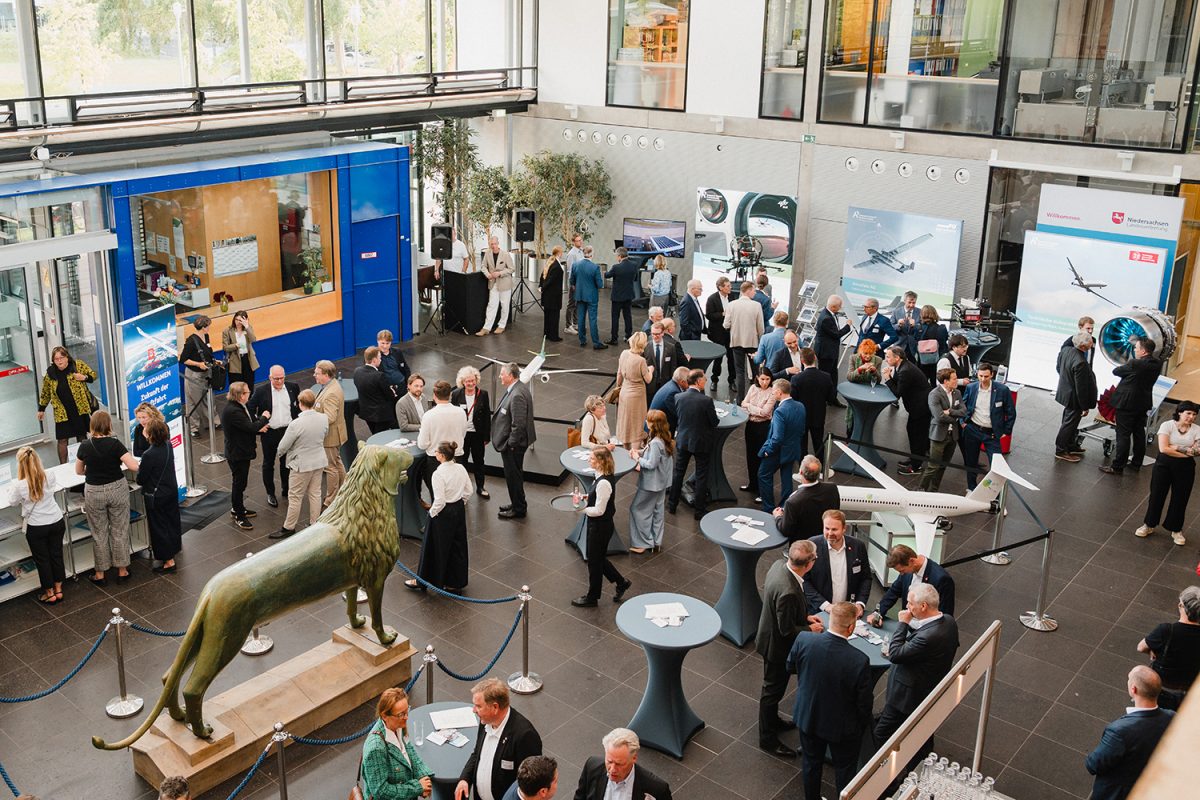
On 21 May 2026, the Parliamentary Evening on the topic of aviation took place in Berlin (pictured: a view inside the Lower Saxony State Representation). Photo credits: Nils Hasenau/TU Braunschweig
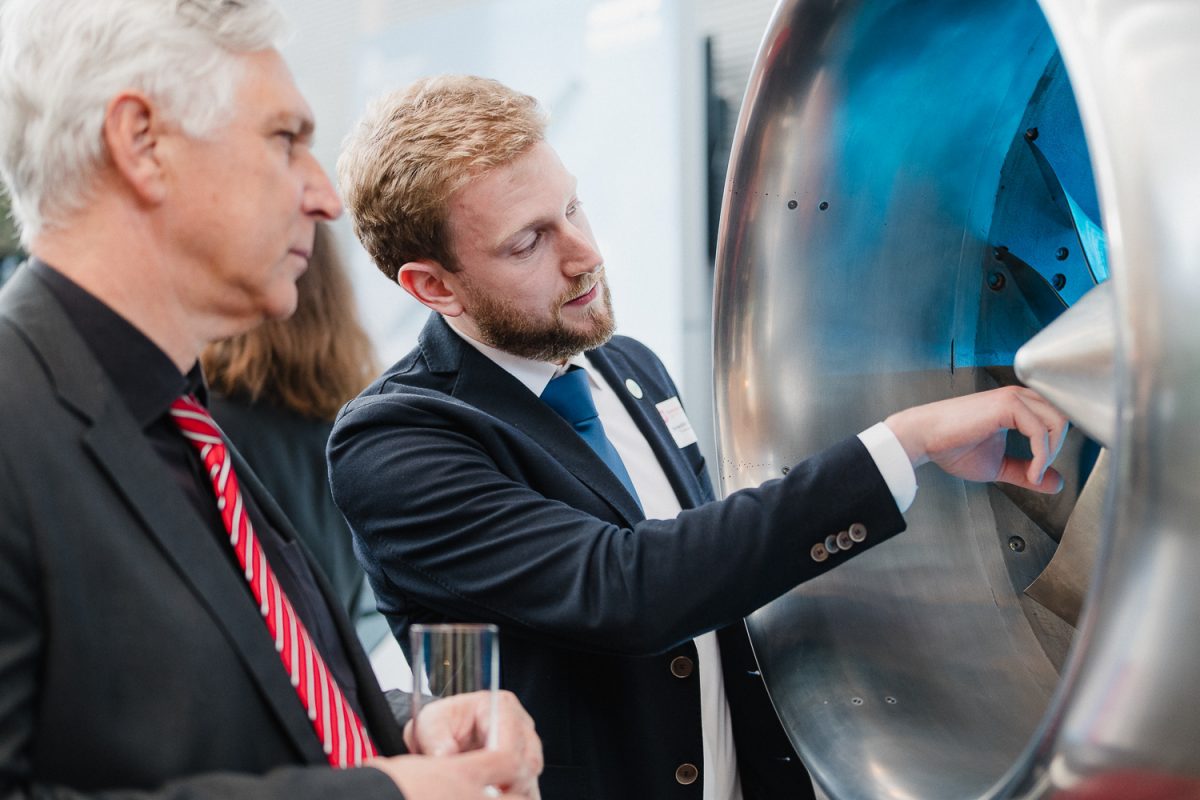
Benedikt Schulten, TU Braunschweig, explains how the research engine works at the exhibit. Photo credits: Nils Hasenau/TU Braunschweig
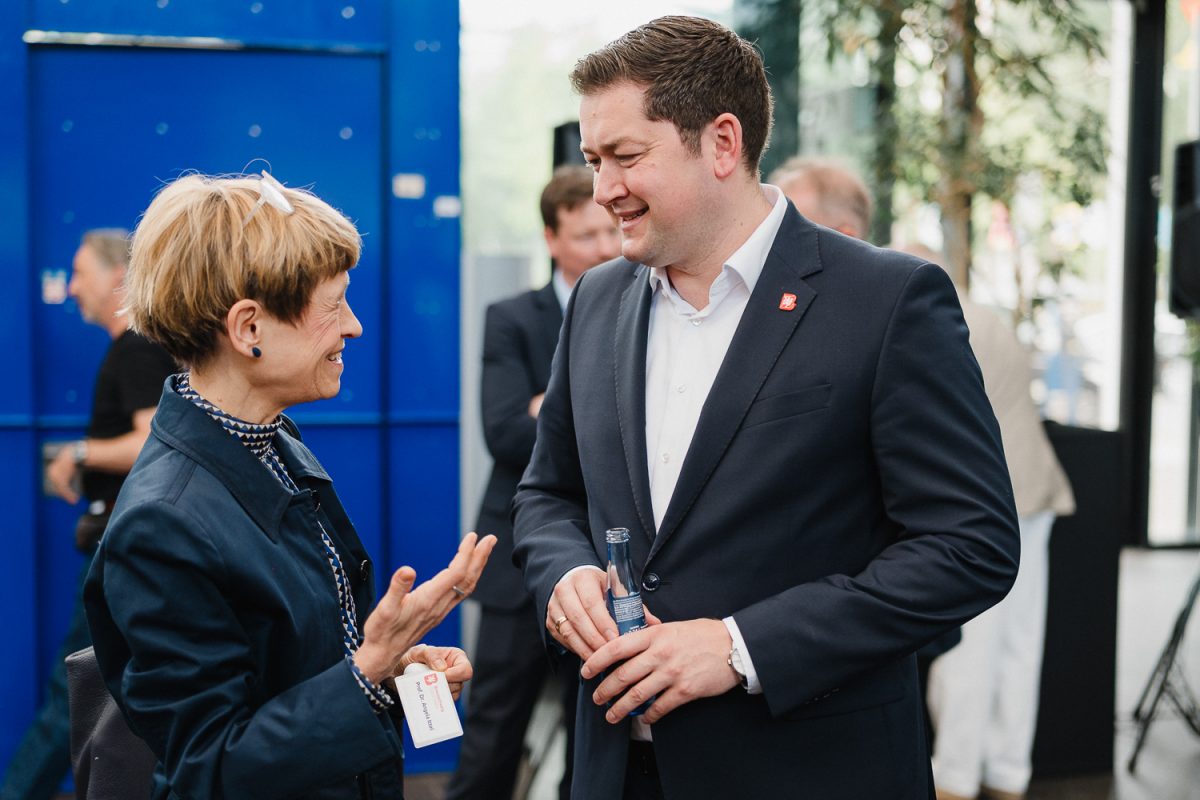
Prof. Dr. Angela Ittel, President of TU Braunschweig, in conversation with the Mayor of Braunschweig, Dr. Thorsten Kornblum. Photo credits: Nils Hasenau/TU Braunschweig
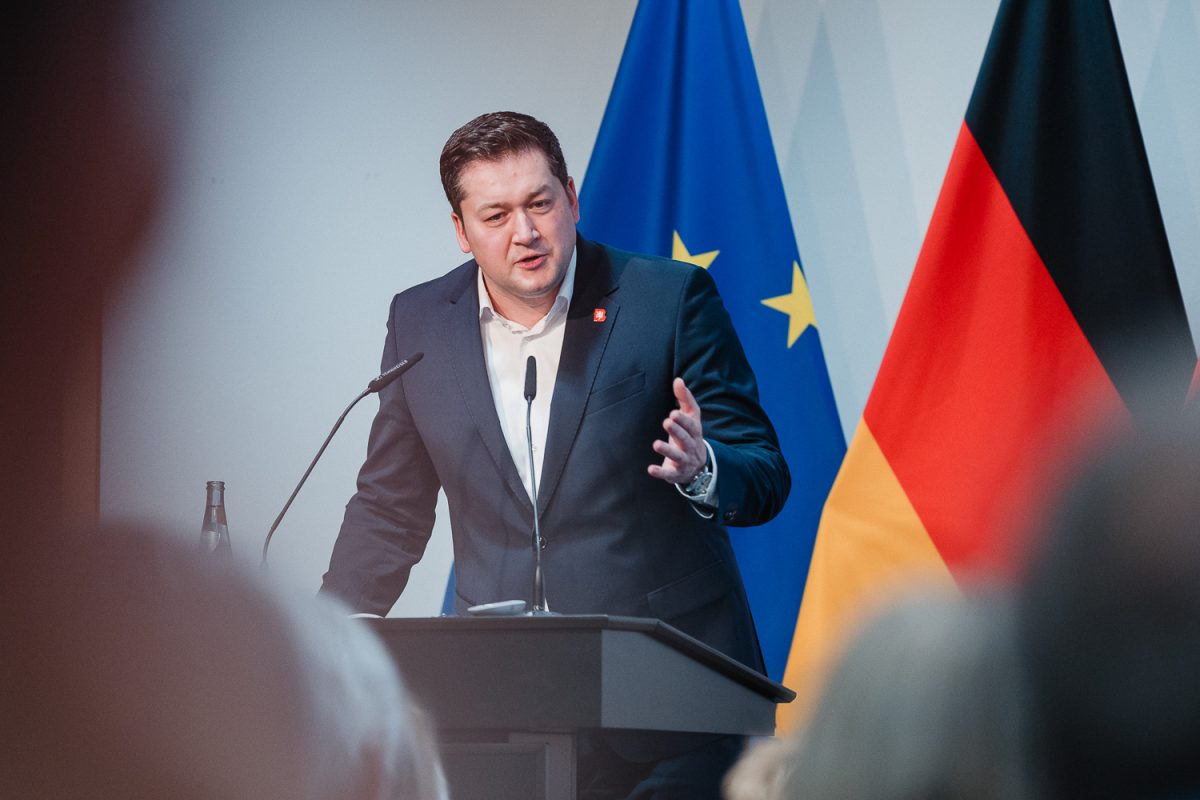
Dr. Thorsten Kornblum, Mayor of Braunschweig, warmly welcomes the evening’s guests. Photo credits: Nils Hasenau/TU Braunschweig
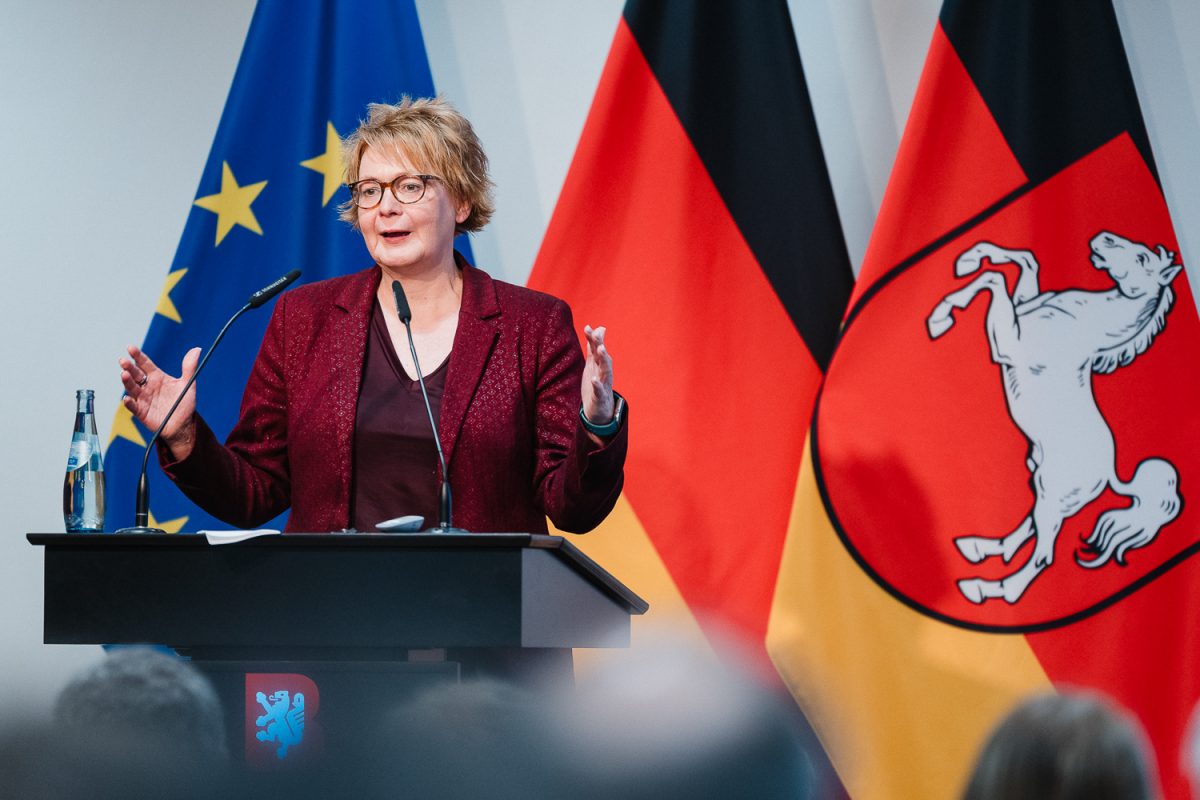
Daniela Behrens, Lower Saxony’s Minister for the Interior, Sport and Digitalisation. Photo credits: Nils Hasenau/TU Braunschweig
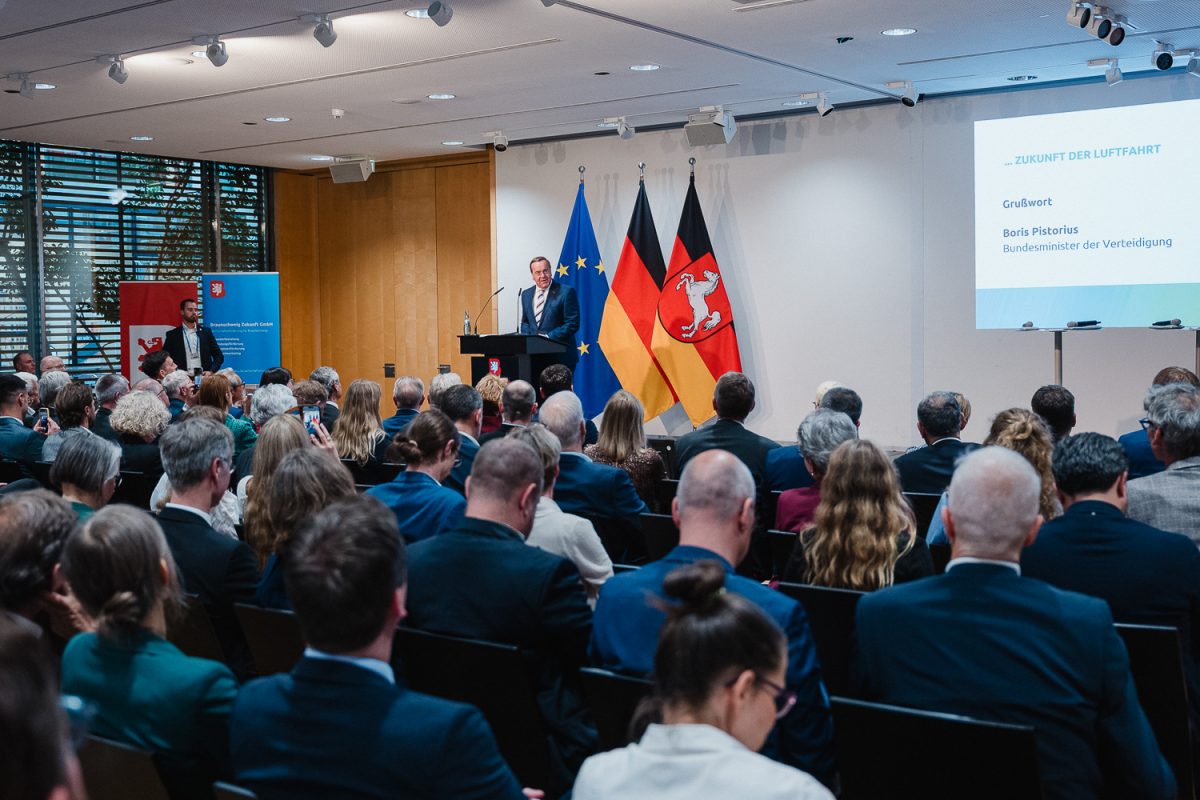
Defence Minister Boris Pistorius delivers a moving speech. Photo credits: Nils Hasenau/TU Braunschweig
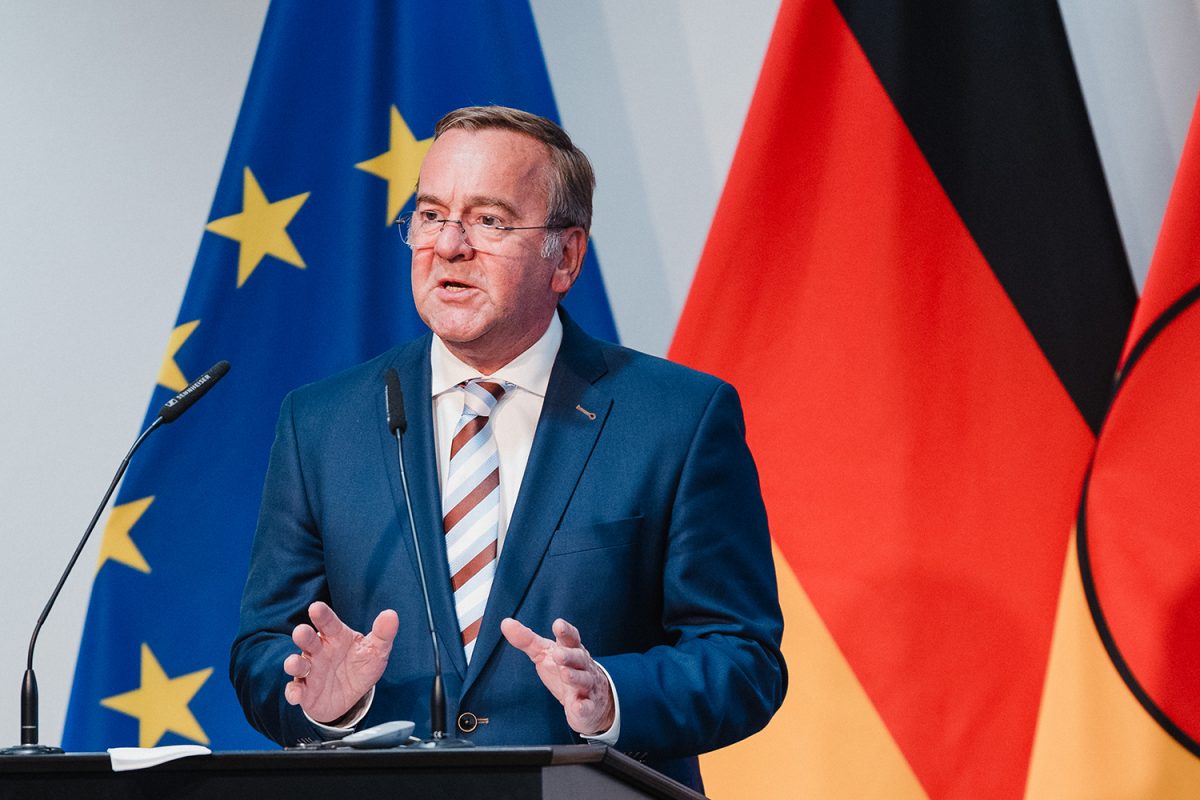
In his opening address, Federal Minister Pistorius also emphasised his close ties to Braunschweig. Photo credits: Nils Hasenau/TU Braunschweig
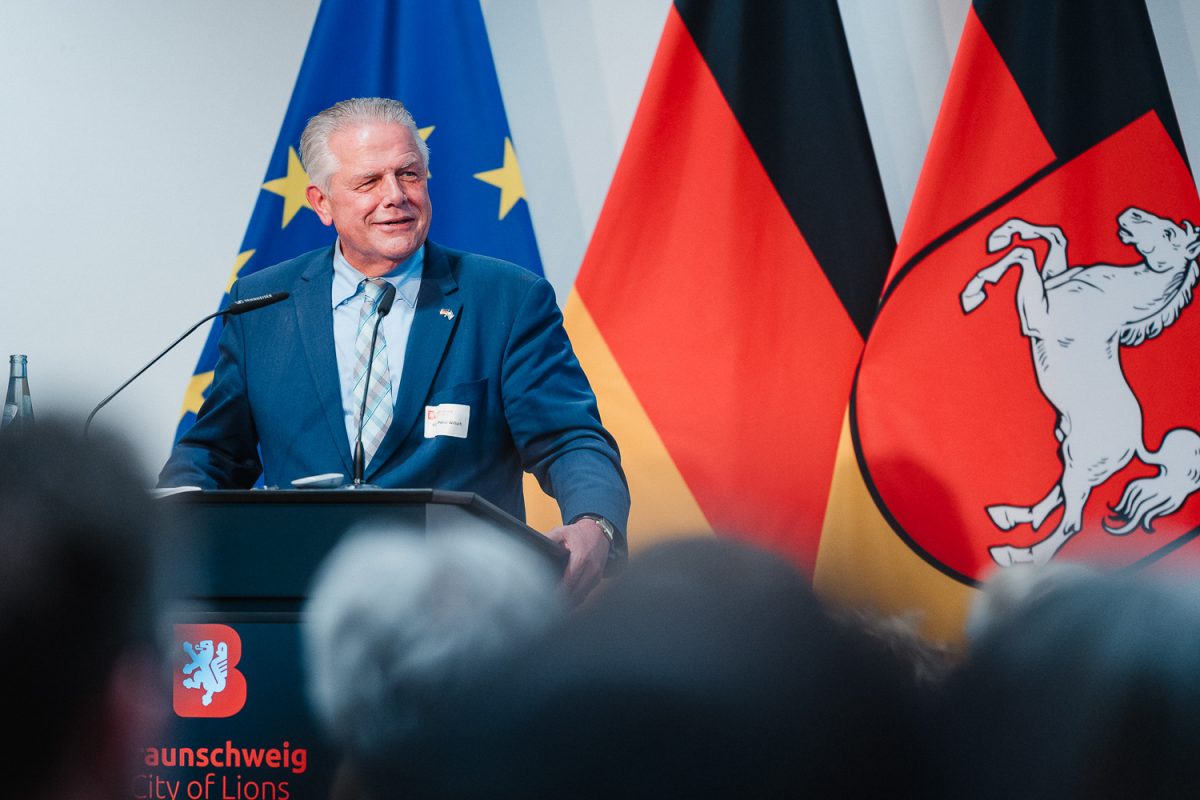
Klaus-Peter Willsch, Chair of the Parliamentary Group for Aerospace in the German Bundestag, delivering his opening keynote speech. Photo credits: Nils Hasenau/TU Braunschweig
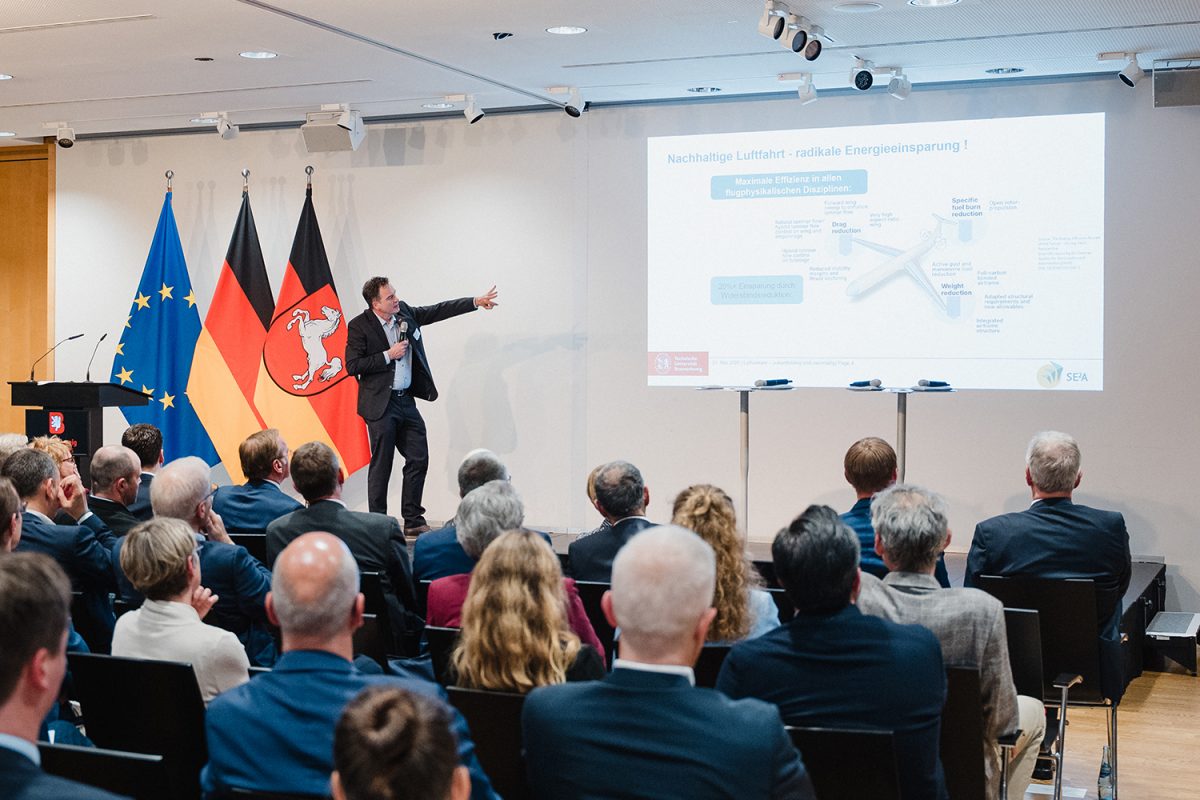
Prof. Dr. Jens Friedrichs, TU Braunschweig, during his presentation on sustainable flying. Photo credits: Nils Hasenau/TU Braunschweig
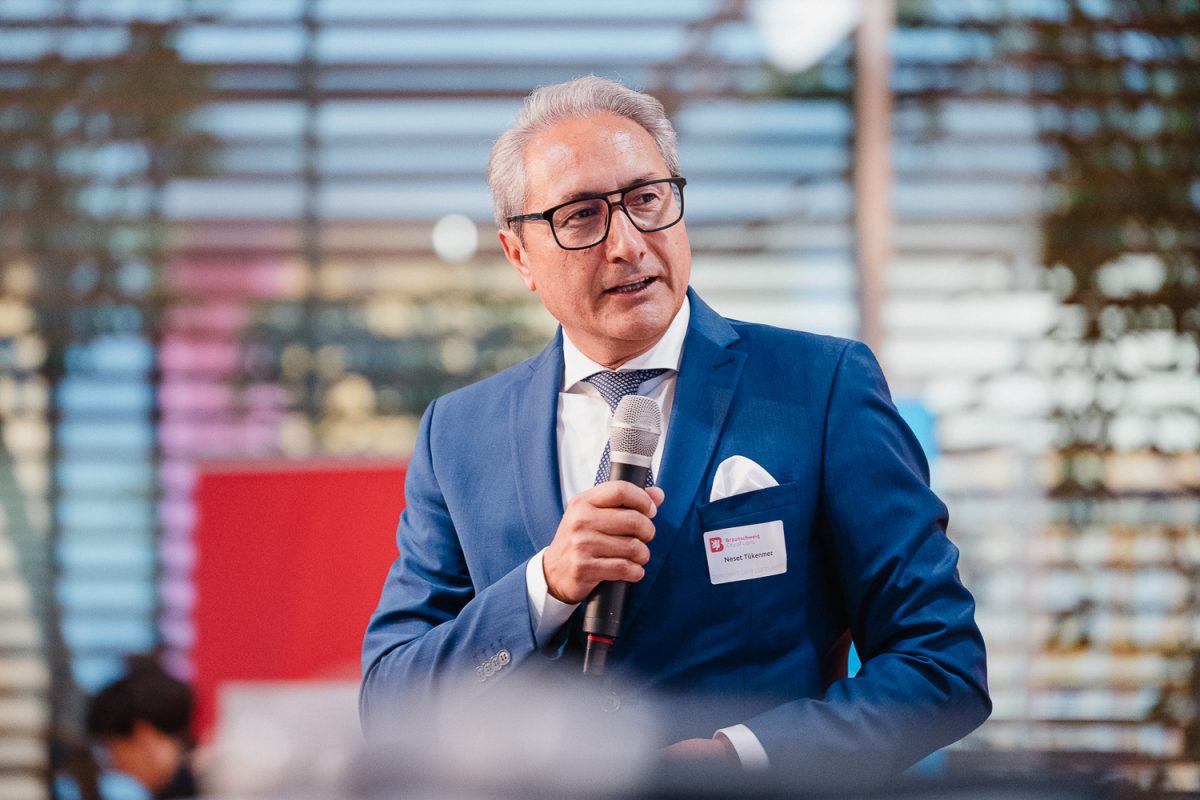
Nesert Tükenmez, CEO of Aeordata AG, during his pitch. Photo credits: Nils Hasenau/TU Braunschweig
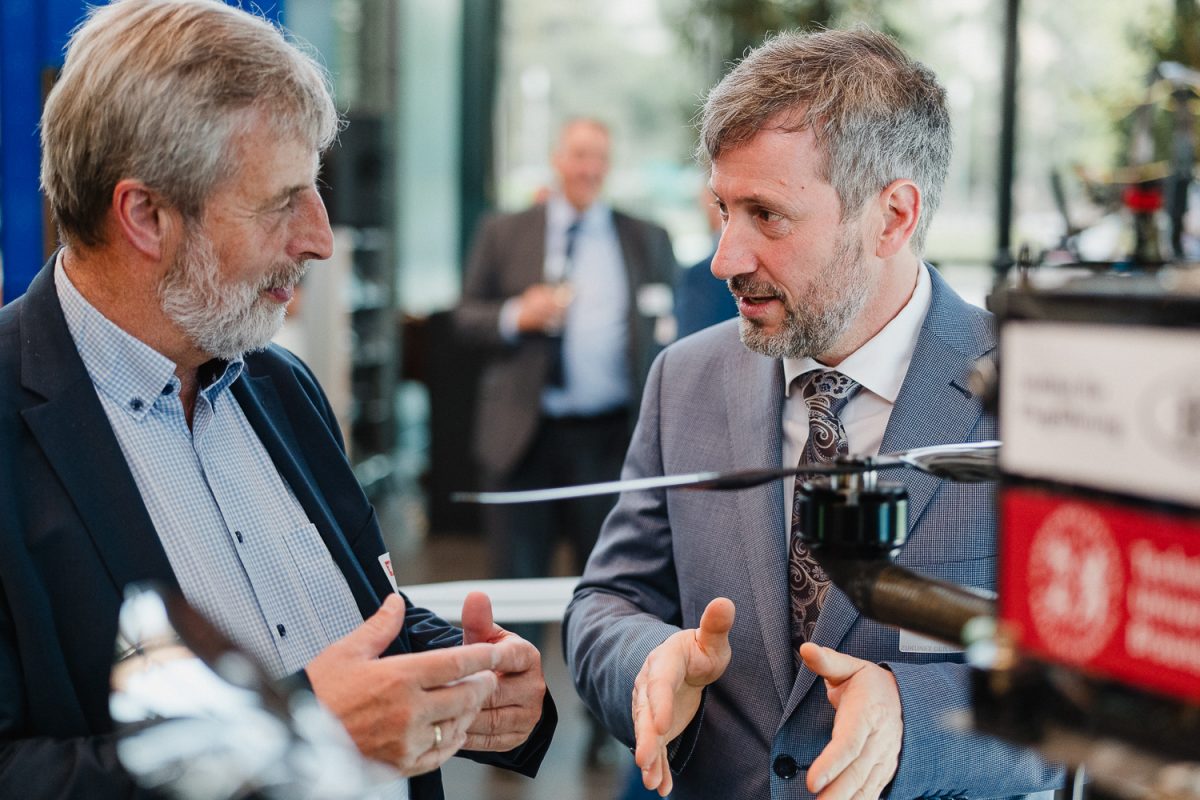
Dr. Falk Pätzold (right) from the Institute of Flight Control at TU Braunschweig in conversation. Photo credits: Nils Hasenau/TU Braunschweig
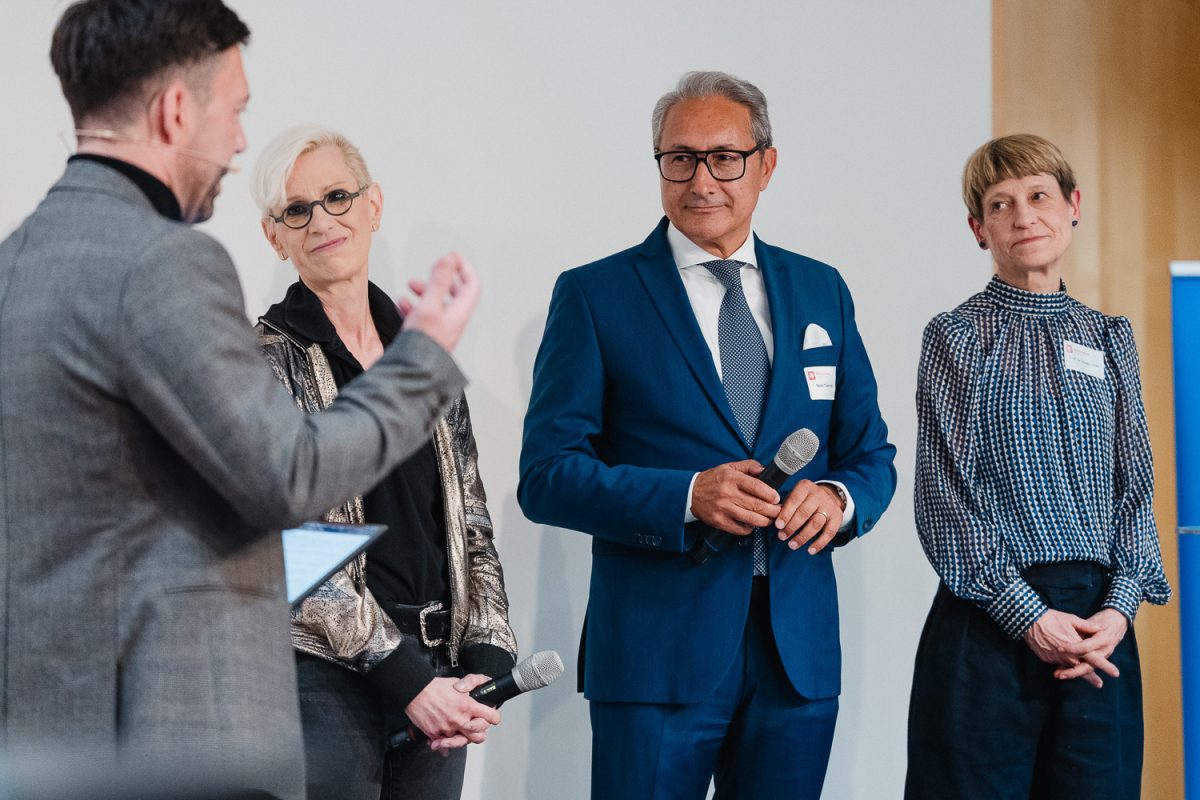
Prof. Dr. Anke Kaysser-Pyzalla (DLR, second from left), Nesert Tükenmez (Aeorodata AG) and Prof. Dr. Angela Ittel (TU Braunschweig, right) during the panel discussion on the future of aviation, moderated by Felix Rundel (left). Photo credits: Nils Hasenau/TU Braunschweig
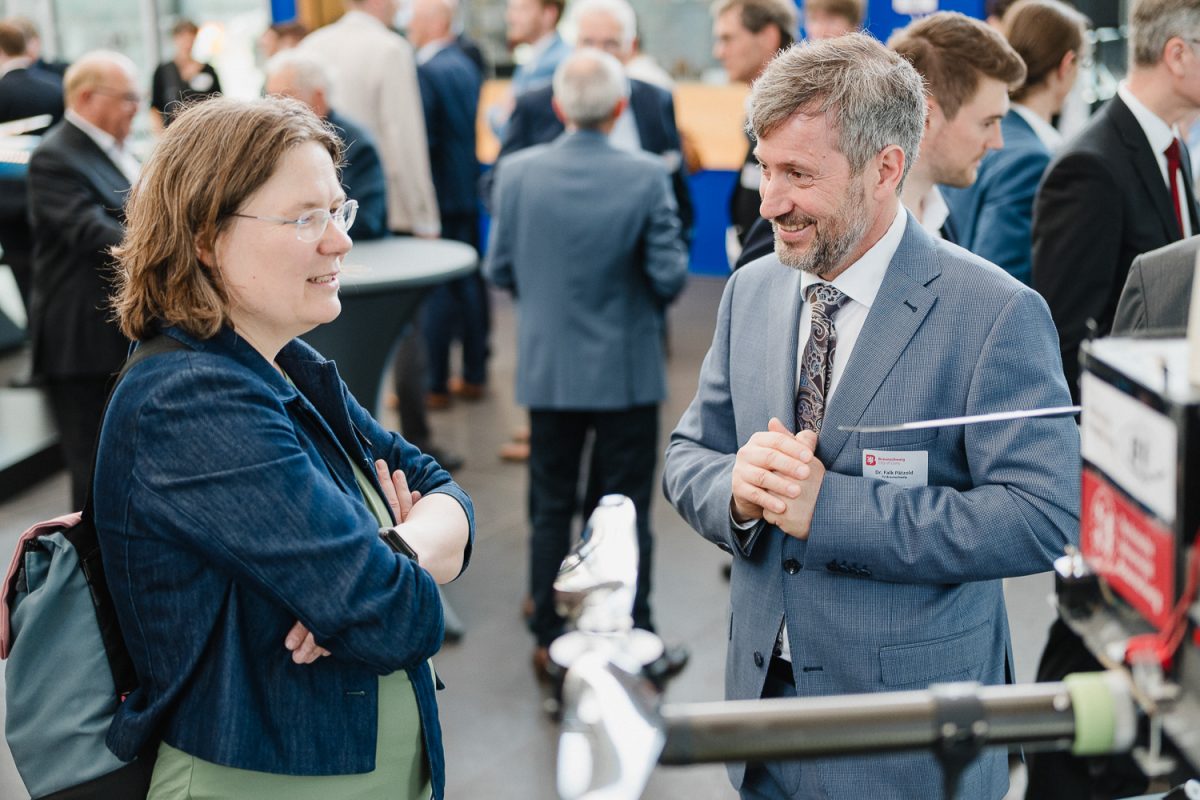
Dr. Andrea Lübcke of Alliance 90/The Greens in conversation with Dr. Falk Pätzold from TU Braunschweig. Photo credits: Nils Hasenau/TU Braunschweig
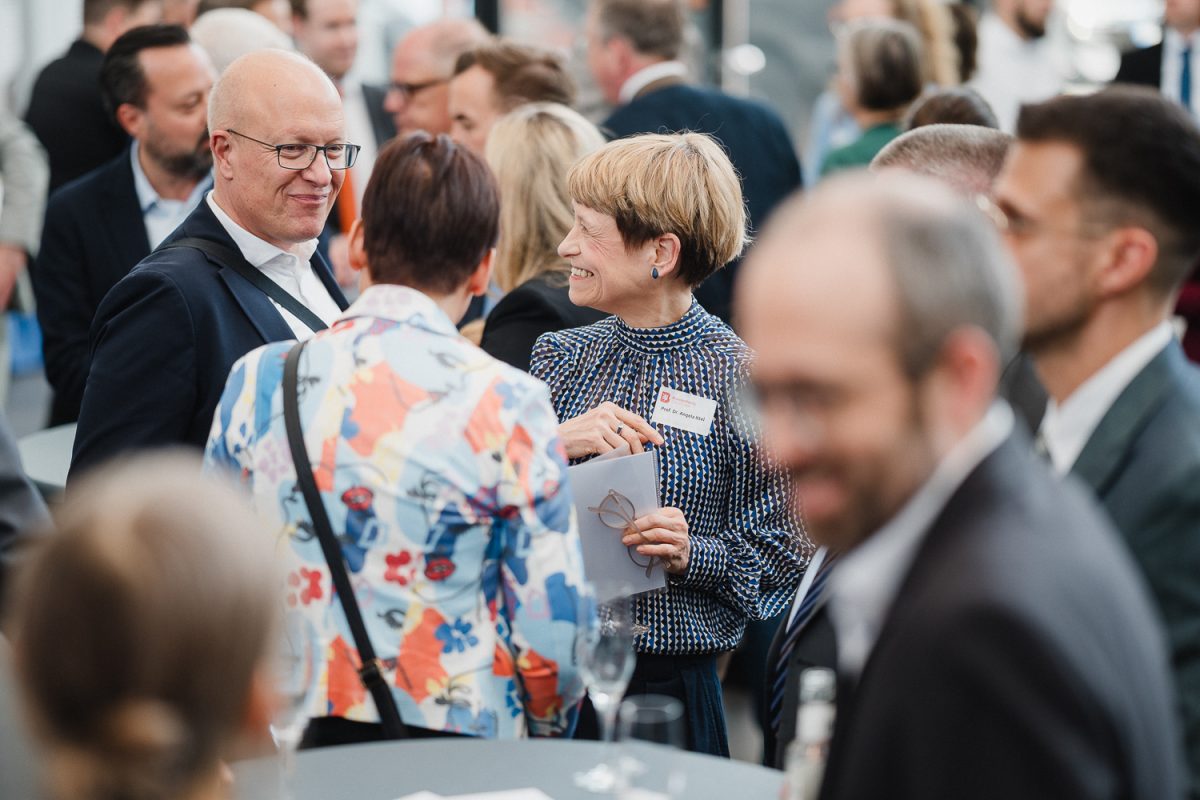
Angela Ittel, President of TU Braunschweig, and Prof. Dr. Christoph Herrmann (TU Braunschweig/Fraunhofer ITS) in conversation. Photo credits: Nils Hasenau/TU Braunschweig
At the heart of it all: the Research Airport, a cluster of research institutions and innovative companies unique in Europe, focusing on mobility, aviation and energy. Alongside numerous members of the Bundestag, Federal Minister of Defence Boris Pistorius and Lower Saxony’s Minister of the Interior, Daniela Behrens, also attended the event, which was organised by the City of Braunschweig and the business development agency Braunschweig Zukunft GmbH.
On behalf of the more than 40 institutions and companies at the Research Airport, the German Aerospace Centre (DLR), Technische Universität Braunschweig and Aerodata AG – which specialises in flight measurement and airborne surveillance systems – provided an insight into current research and developments. It became clear that, with the continued development of unmanned aviation technologies, the areas of application for UAS (Unmanned Aircraft Systems) of various sizes will multiply once again in the coming years. Aviation technology is becoming significantly more agile and flexible, enabling it to take on even more tasks, for example in observation and reconnaissance on land and at sea, in freight transport, and also in the fields of security and defence. This development offers, not least, major economic opportunities.
With the Research Airport, Braunschweig offers an already established and highly renowned mobility cluster across Europe, whose close integration of significant aviation research and entrepreneurial expertise in this field provides excellent conditions for innovative developments.
The presentations in the foyer of the Lower Saxony State Representation bore witness to this innovative potential. For instance, TU Braunschweig presented ‘Clime’, a scaled model of one of the reference aircraft it has developed within the SE2A Cluster of Excellence for Sustainable Aviation. This test aircraft enables the flight characteristics of the novel configuration to be measured.
The TU scientists demonstrated what future engines might look like with the ‘INFRA’ test rig. This test rig was designed and built in collaboration with the DLR specifically for the purpose of experimentally investigating the aerodynamic and aeroelastic interaction between the engine inlet and the rotating fan – a factor of critical importance for all future propulsion systems.
With its exhibits on unmanned aviation systems, the Digital Tower and the commercial aircraft of the future, the DLR demonstrated how innovative technologies will shape the aviation of tomorrow. The focus was on solutions for a robust, economical, safe and, at the same time, climate-friendly aviation sector – for both civil and defence applications.
Aerodata presented the AeroForce® X, an unmanned aerial vehicle designed for complex reconnaissance missions. The system belongs to the class of unmanned platforms with particularly long endurance and can make a significant contribution to technological sovereignty, as no market-ready European solution is currently available in this category. The first prototype is scheduled to make its maiden flight as early as this autumn.
At the start of the official part of the evening, Lord Mayor Dr. Thorsten Kornblum welcomed the guests. This was followed by welcoming remarks from Boris Pistorius and Daniela Behrens. The opening keynote was delivered by Klaus-Peter Willsch, Chair of the German Bundestag’s Parliamentary Group on Aerospace, before several specialist presentations followed.
First by Dr.-Ing. Andreas Bierig, Acting Director of the DLR Institute of Flight Systems, on “Unmanned Systems – Innovative Research for Civil and Sovereign Applications”, Prof. Dr.-Ing. Jens Friedrichs, TU Braunschweig, Spokesperson for the SE²A Cluster of Excellence, on “Air Transport – Future-Proof and Sustainable”, and Neset Tükenmez, CEO of Aerodata AG, on “Airborne Reconnaissance with State-of-the-Art Technology from Germany: AeroForce® X – the Unmanned Platform of the Future”. The outlook was presented in a panel discussion by Prof. Dr. Angela Ittel, President of Technische Universität Braunschweig, Prof. Dr. Anke Kaysser-Pyzalla, CEO of the DLR, Neset Tükenmez and Dr. Thorsten Kornblum.
Statements
Dr. Thorsten Kornblum, Lord Mayor of the City of Braunschweig: “Braunschweig is one of the most research-intensive regions in Europe. Events such as this serve to raise Braunschweig’s profile beyond the region. I am delighted that the response to the Parliamentary Evening has been so positive, including from Berlin’s political circles, and that this gives us the opportunity to position Braunschweig nationwide as a hub of innovation with key future-oriented sectors. The Research Airport, a world-class multimodal mobility cluster, offers answers to the questions of the future. Over 3,700 jobs in research institutions and companies are now based there. Expertise, innovation and a spirit of experimentation are evident to anyone who visits Braunschweig to find out more, which I can only recommend.”
Prof. Dr. Angela Ittel, President of TU Braunschweig: “Braunschweig has what modern aviation research needs: excellent science, strong partners and short distances. Here, proximity breeds speed – and cooperation breeds innovation. We will make targeted use of this potential and further strengthen the location as a centre for research, testing and certification. That is precisely what Ecoversity is all about: networking capacities, accelerating implementation, securing competitiveness.”
Prof. Dr.-Ing. Anke Kaysser-Pyzalla, Chair of the Executive Board of the DLR: “Our goal-oriented research focuses on the entire ecosystem of the aviation sector and industry. Through digital and experimental testing, the DLR brings innovations to a high level of maturity and thus directly into use. We also collaborate with our public stakeholders and act as a neutral partner for intensive knowledge exchange, enabling reliable, fact-based decisions for safe and sustainable aviation. Crucial impetus for this also comes from the DLR institutes and facilities at the Braunschweig site.”
Neset Tükenmez, CEO of Aerodata AG: “Regional ecosystems such as Research Airport Braunschweig make a decisive contribution to innovation and technological development. However, innovations only realise their full potential if the federal policy framework is right. Small and medium-sized defence companies in particular rely on contracts to secure their competitiveness. To ensure that technological know-how remains in the country, we therefore need a procurement system that specifically prioritises European solutions. It is precisely for such debates that the exchange in Berlin is essential – which is why I am all the more pleased with the positive response to the Parliamentary Evening.”
Keyword: Research Airport
The Research Airport in the north of Braunschweig is one of the most important centres for mobility research in Europe. This mobility cluster, unique in its form, comprises numerous internationally renowned research centres and federal research institutes such as the German Aerospace Centre (DLR), the Federal Aviation Authority and the Federal Bureau of Aircraft Accident Investigation, as well as the Lower Saxony Research Centre for Automotive Engineering and the Lower Saxony Research Centre for Aviation. Connecting shared fields of research: in future, an autonomous shuttle is set to operate between the facilities at the Research Airport.