
What do we gain from generative AI – and what do we lose? An interview with Emerging Tech Fellow Dr Christiaan Maasdorp
AI language models open up new possibilities for universities. What is particularly exciting, however, is how we can use them for learning and teaching without them replacing our own abilities. This is precisely what Dr Christiaan Maasdorp is working on during his Emerging Tech Fellowship at Technische Universität Braunschweig. Until the end of August, the researcher from Stellenbosch University in South Africa is a visiting scholar at the Institute for Information Systems and the Institute for Business Informatics.
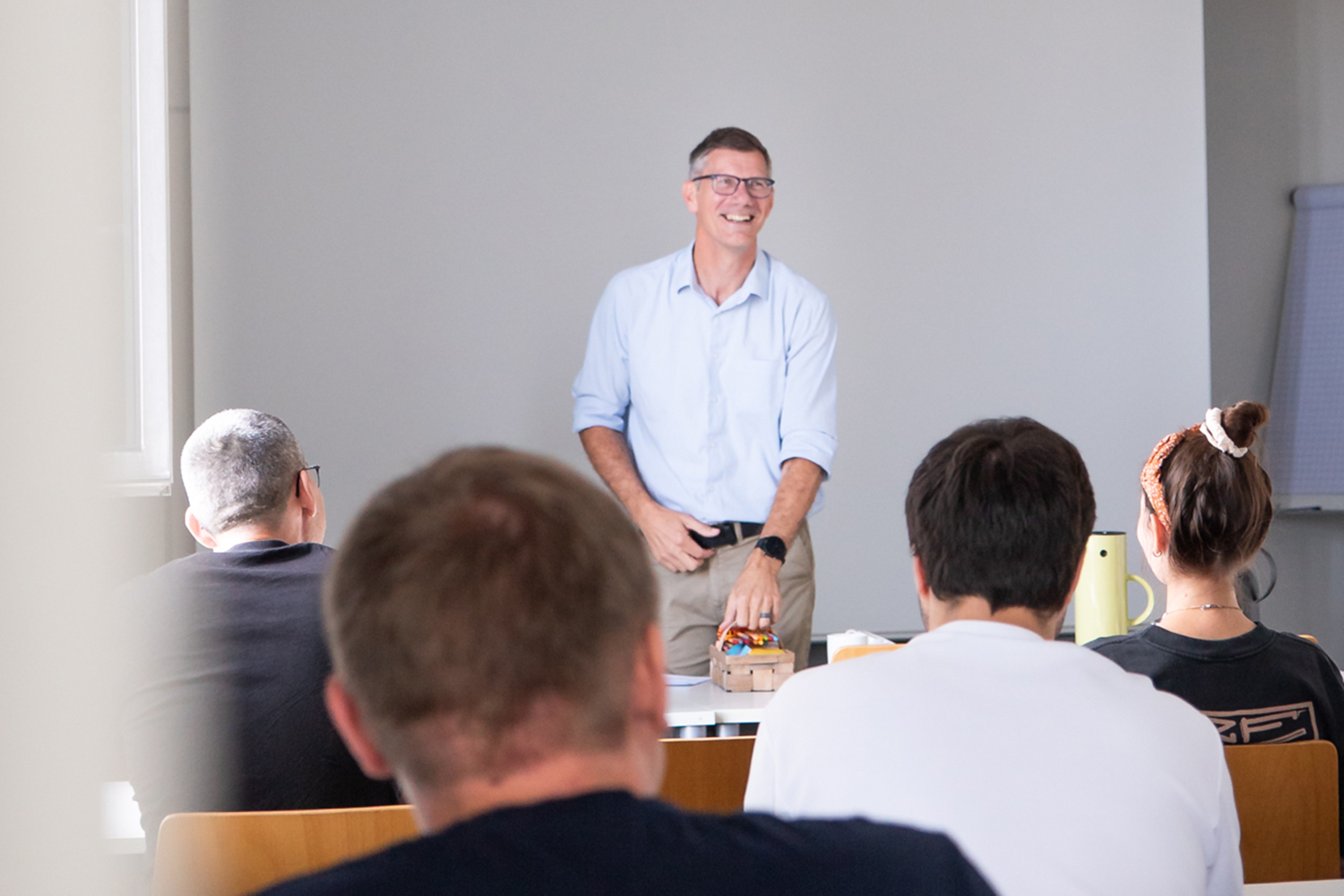
At TU Braunschweig, Emerging Tech Fellow Dr Christiaan Maasdorp is researching how generative AI is transforming learning and teaching. Photo credit: Kim Sölter / Projekthaus, TU Braunschweig
The key question you are exploring during your fellowship is: “When does technology help us, empower us and enhance our abilities? And when does it actually take these away from us?” What is your answer to this?
Technology helps us when we know exactly what we are doing and why. It promises to relieve us of tedious tasks, thereby giving us more time for the important things. Looking at older technologies makes clear how this gain in convenience can change the meaning of what we are doing.
For example, if we opt for ready-meals instead of cooking for ourselves, we save a lot of time – provided we’re simply looking for a quick meal. However, if the focus is on the act of cooking itself, ready-meals can never truly satisfy that need. Kitchen appliances, on the other hand, support our skills and efforts rather than replacing them. With this in mind, it’s worth asking whether a technology is supporting us or replacing us.
With regard to LLMs, for example, this means that when we’re trying to learn something or broaden our understanding, it is self-sabotage to look for the right answers “out there” – whether we ask ChatGPT, Google or a friend. It is better to come up with an answer ourselves.
When it comes to issues that are personally important to us, we should also consider the unintended consequences that the use of technology may have. For example, it is counterproductive to use LLMs to compose messages to people we care about: we lose the ability to recognise and express our feelings, and make it harder for others to truly understand how we feel. Which shows the importance of being clear in our own minds about what we are using technology for and why.
How can students and researchers use LLMs effectively and responsibly?
Formulate your thoughts yourself first, then consult an LLM – this ensures that your initial idea remains firmly anchored within your own horizon of understanding. This does not prevent you from broadening your perspective afterwards. Meaning emerges when the familiar is linked with the new or the unexpected. In the long term, this allows us to steadily broaden our horizons.
The situation is different if you use an LLM to clarify ambiguities rather than to gather information. Although an automatically generated response may seem enlightening at first, it often amounts to nothing more than an illusion of understanding. This is because a generated solution does not guarantee that we truly grasp what it means for us.
During your fellowship, you organised workshops and events for students and researchers. What particularly surprised or inspired the participants?
With the help of my hosts, I organised two events: a workshop for Bachelor’s students in Business Informatics and a roundtable for PhD students from various disciplines. Whilst the workshop focused on the topic of “Learning with LLMs”, the roundtable addressed the challenges that LLMs pose for teaching and supervision.
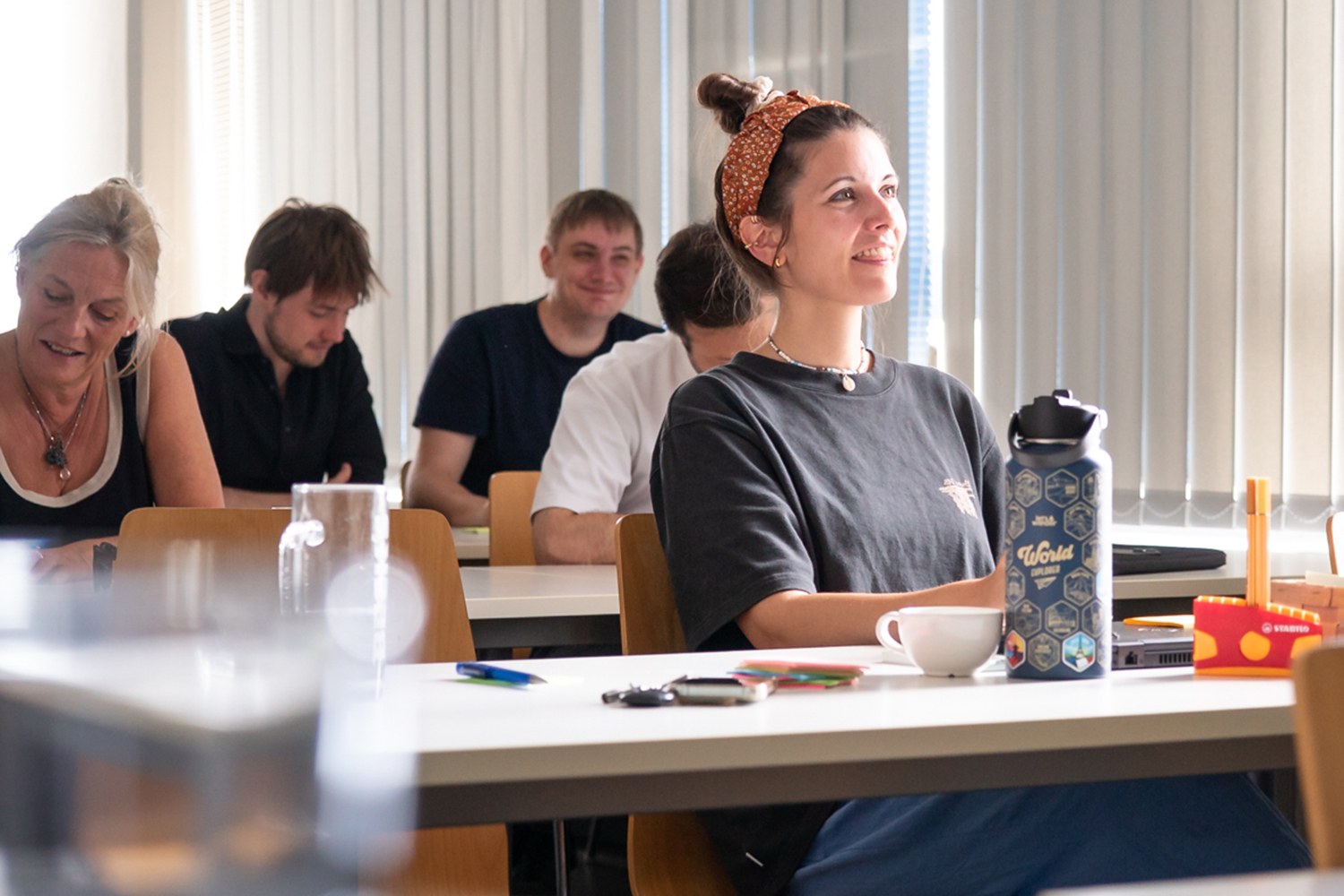
The roundtable gave not only the PhD students new ideas on how to use LLMs in teaching. Photo credit: Kim Sölter / Projekthaus, TU Braunschweig
In the workshop, we discussed the scenarios in which LLMs actually aid learning and those in which they circumvented learning. In one exercise, the students rated for themselves how helpful they found the use of LLMs in various situations. Sometimes participants arrived at similar judgments for very different reasons – which surprised not only them, but me as well. We came to the conclusion that there are many grey areas when it comes to using LLMs for learning.
In the session with the PhD students, we concluded that LLMs do not fundamentally undermine teaching and supervision. However, effective learning requires intensive and individual support, which is difficult to provide when dealing with a large number of students.
How will your collaboration with your hosts, Professor Balke and Professor Robra-Bissantz, continue following the fellowship?
I have been in close contact with Professor Balke for many years. He also introduced me to Professor Robra-Bissantz, who is co-hosting me as part of this fellowship. Whilst most lecturers view LLMs as a threat, she sees them as exciting opportunities to revitalise our teaching. I fully support this positive attitude. Together, we are developing approaches to improve our courses in the context of LLMs. In cross-cultural research projects, we aim to compare these innovations between Germany and South Africa.
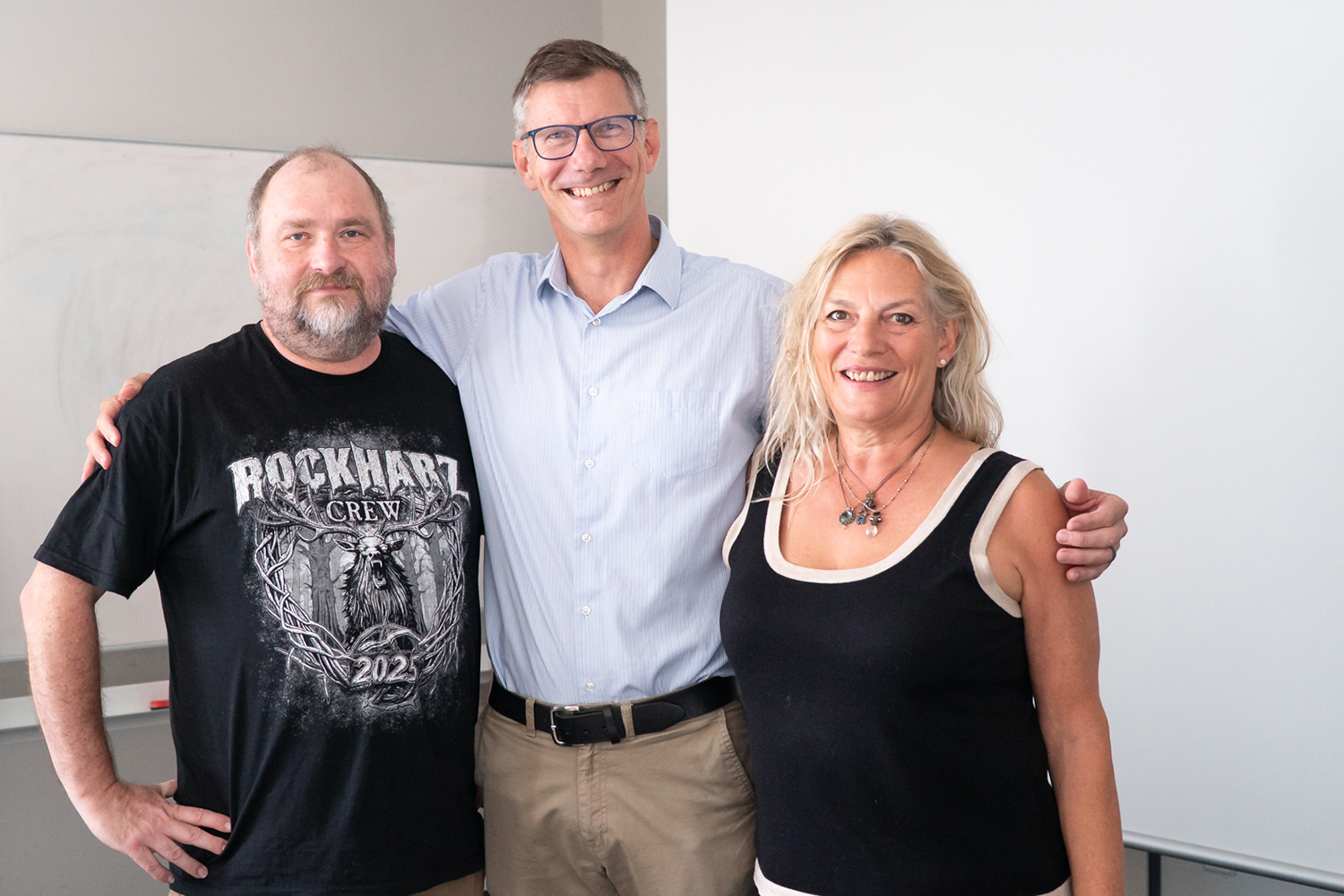
During his fellowship, Dr Christiaan Maasdorp is supervised by Professor Wolf-Tilo Balke and Professor Susanne Robra-Bissantz. Photo credit: Kim Sölter / Projekthaus, TU Braunschweig
Thanks to a memorandum of understanding between our universities, Professor Balke has enabled us to collaborate beyond our personal networks. This year, we organised a joint colloquium in Stellenbosch for researchers from the fields of Computer Science and Business Information Systems. Next year, I will be presenting the findings of this research stay there.
What are you taking with you from TU Braunschweig to Stellenbosch? Not just professionally, but personally as well?
This is my first extended stay in Braunschweig and I really like the lifestyle and the proximity to nature here. What I’d like to adopt back home is the balanced weekend routine of most people in Braunschweig: outings on Saturdays and quiet Sundays.
My colleagues at both institutes have welcomed me to an extent I hadn’t expected. At first, I was worried that people might already be fed up with the topic of LLMs, but that wasn’t the case – which is a great source of professional motivation for me. On a personal level, I’ve been able to deepen existing friendships and make new friends.
On 27 August, you’ll be giving a talk on “The Seamlessness of Technology and the Friction We Need”. What can participants expect?
No prior knowledge is required to follow the talk, apart from a knowledge of English. Otherwise, all you need is a curiosity about knowledge and technology.
With the word “seamlessness”, I’m alluding to the technological acceleration that is increasingly “smoothing out” our social lives. In the light of generative AI, many fields – from human-computer interaction to broader cultural criticism – argue that we must restore the “friction” that we lost. I will show that the various arguments do not sufficiently consider what really makes the difference when we use LLMs whilst trying to understand or learn. I will offer my answer based on the philosophical tradition concerned with how understanding happens.
Afterwards, we invite you to a World Café: here, participants can discuss the most pressing questions about LLMs and learning. Together, we will explore which research priorities are both possible and necessary for this in the future.