
From GAIN to Technische Universität Braunschweig A conversation about returning to Germany and future prospects
The German Academic International Network (GAIN) organises an annual job fair for researchers in the USA. This August, Technische Universität Braunschweig will once again be showcasing itself at the Talent Fair, in specialist forums and at various workshops and discussion panels in San Francisco. We spoke to Dr Stephan Steinke from the Institute of Biochemistry, Biotechnology and Bioinformatics, who returned to Germany after several years in the US and is now conducting research at the TU Braunschweig.
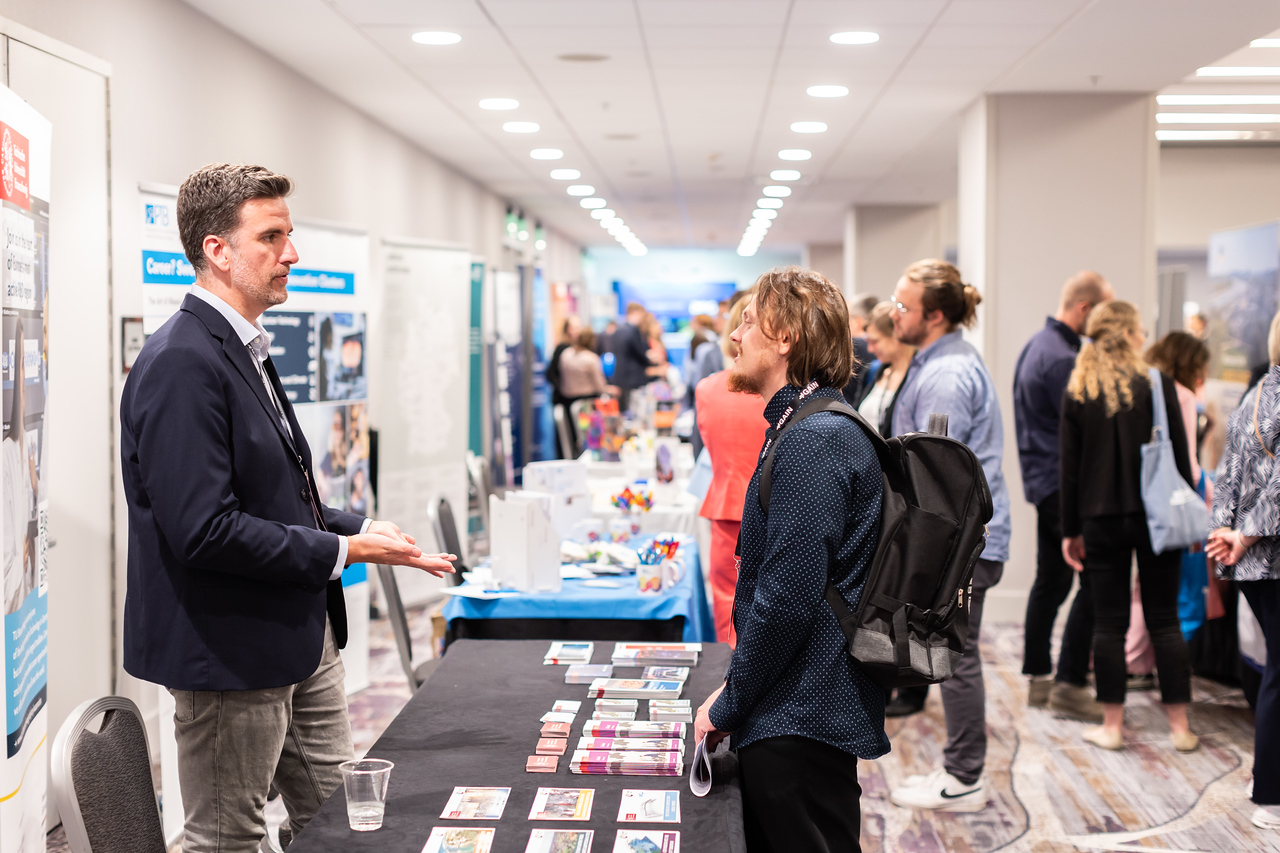
Dr Dominik Baumgarten is advising Dr Stephan Steinke at the TU Braunschweig’s stand at GAIN 2024. Photo credit: Barack Shrama/GAIN
Dr Steinke, you worked as a postdoc in the US from 2024 to 2026. What prompted you to return to Germany?
There were both personal and professional reasons for my return. On the one hand, I wanted to be closer to my family again. On the other hand, a better work-life balance, reliable framework conditions and long-term planning for my research were important to me. The current political developments in the US, particularly the cuts to research funding, also reinforced my decision.
Our magazine features a photo of you at the TU Braunschweig stand at GAIN 2024 in San Francisco. What impression did the opportunities on offer make on you, and to what extent have your expectations regarding your future career at TU Braunschweig been met?
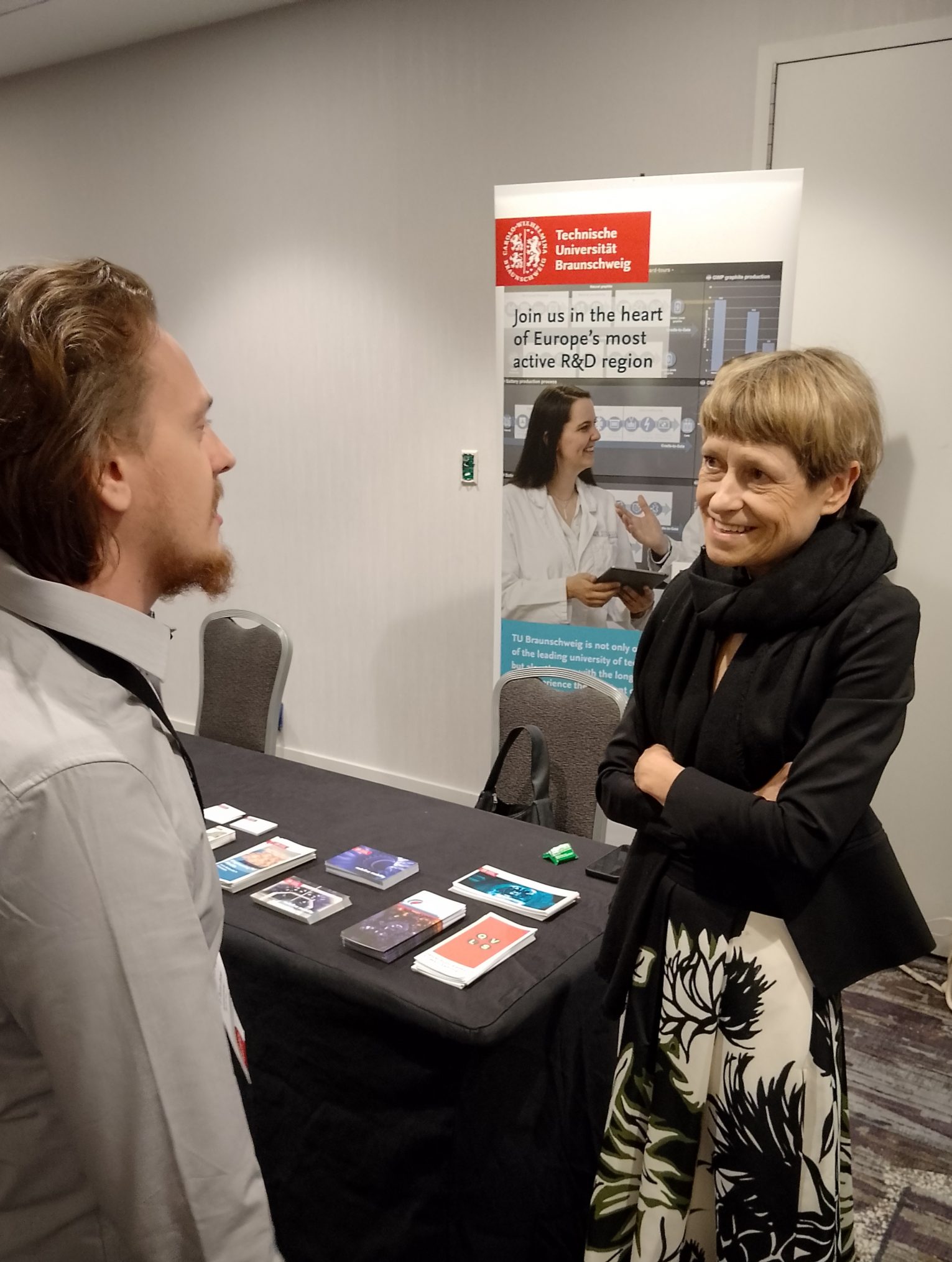
Dr Stephan Steinke in conversation with President of TU Braunschweig Prof. Angela Ittel at the TU Braunschweig stand at GAIN 2024. Photo credit: Dominik Baumgarten/TU Braunschweig
I found the conversation at TU Braunschweig stand to be very open and informative. The overview of the wide range of support and development opportunities for postdocs, as well as the relevant points of contact, was particularly helpful. This positive impression has been confirmed: even today, I experience the TU as a well-connected environment in which postdocs can find guidance and develop their academic careers in a targeted manner.
Based on your experience of the US academic system: how would you assess the attractiveness of the German university landscape – particularly TU Braunschweig – for researchers from the USA?
In my view, the German university landscape is certainly of interest to researchers from the USA. TU Braunschweig offers a great deal of support to both returning researchers and international researchers, for example with settling in, administrative matters and networking. Added to this are a good work-life balance and an open, international working environment. These strengths make TU Braunschweig very attractive internationally.
What recommendations would you give to TU Braunschweig to ensure it presents itself in the best possible light at social events such as GAIN and to convince young researchers in the USA to make the move to Braunschweig?
Many postdocs in the US begin to consider early on how they can put their scientific results and ideas into practice via spin-offs or spin-outs. At social events such as GAIN, TU Braunschweig could therefore place even greater emphasis on its offerings in the areas of technology transfer, start-ups and collaboration with industry. For example, the opportunities available within the iTUBS framework. In my view, the strong start-up culture is a particular strength of the US research system. In Germany and Europe, too, we should continue to develop structures that facilitate the journey from scientific findings to marketable products and applications. In doing so, TU Braunschweig can send a strong signal, particularly to internationally-oriented early-career researchers.
When you tell your former colleagues in the US about your current working and research environment in Braunschweig, which aspects do you emphasise in particular?
When I speak to my former colleagues, I particularly emphasise the good work-life balance, the reliable working conditions – especially regarding childcare facilities – and the significantly more than 15 days’ annual leave. Equally important to me is the inclusive and diverse working environment. At TU Braunschweig, I find that different perspectives are welcomed and everyone has the opportunity to contribute. In my opinion, this creates excellent conditions for collaborative research and work.
Thank you for the interview.