
Dreaming of Microchips Dr Liubov Bakhchova is developing mini-labs for the medicines of tomorrow
She is an inventor, a “bridge-builder”and a passionate advocate for modern technologies in biomedical research: Dr Liubov Bakhchova. At TU Braunschweig, she combines microtechnology, electronics, and biological systems. She works simultaneously at the Institute of Microtechnology and the Institute for CMOS Design, constantly asking new questions.
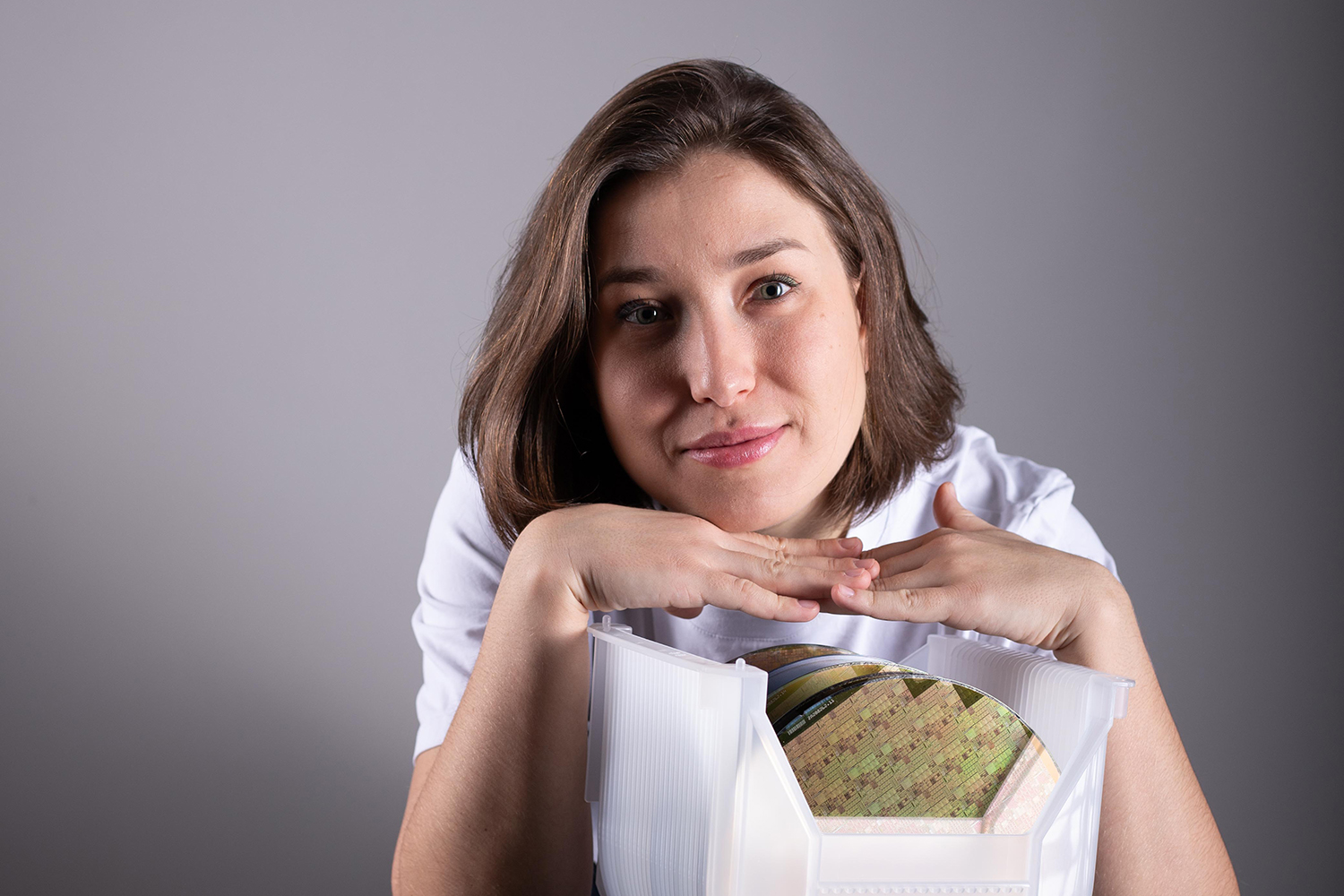
By combining microtechnology and electronics, Bakhchova develops state-of-the-art organ-on-a-chip systems. Photo credit: Maryna Bosiaha
“My brain never sleeps,” says Dr Liubov Bakhchova, her eyes lighting up. Sometimes she even dreams of new chip designs. To bring these to life immediately, she has her own inventor’s workshop at the Institute of Microtechnology. On the table are glass plates with fine channels and snake-shaped electrodes, as well as a case full of electronic chips. They all have one thing in common: they are tiny. Many of their structures measure just a few micrometres – dimensions that are no longer visible to the naked eye.
Bakhchova picks up a device that resembles a staple. However, it is not designed to staple paper; rather, it is intended to measure heartbeats. To do so, needle-like sensors encircle artificially grown heart tissue made from human cells, which is only a few millimetres in size. The movement is detected by a tiny electronic chip the size of a match head.
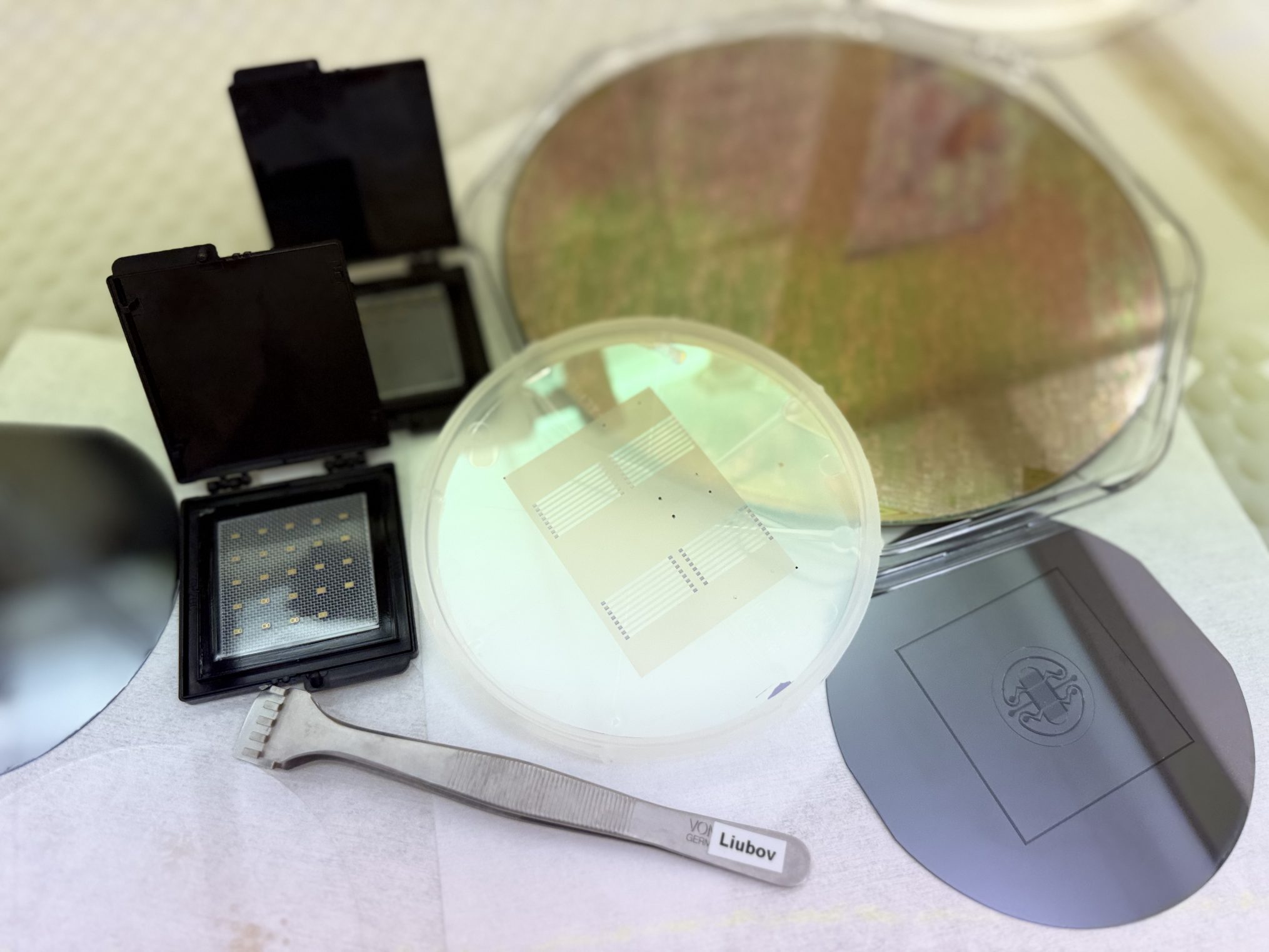
At Dr Liubov Bakhchova’s workstation, microchips (in the black case) are produced from large, electronically patterned CMOS semiconductor wafers (in the background). In the centre is a glass plate with electrodes capable of measuring biological activity. For example, from the cells growing in the fine channels that Bakhchova has applied to a silicon plate (right). Photo credit: Liubov Bakhchova/ TU Braunschweig
Such mini-labs are called ‘organ-on-a-chip’ systems because they simulate human organs in the smallest of spaces. In the long term, they could provide a genuine alternative to animal testing. Human cells and precise measurements provide more realistic results than many existing test systems. At the same time, their small size allows for a highly controlled testing environment.
‘I can’t live without questions’
Every one of her projects begins with a specific biological question. Which organ system should be investigated? Which processes need to be measured? Only then does the development of a suitable chip system begin. Some questions arise in collaboration with national and international partners, while Bakhchova herself raises others. “I can’t live without questions,” says the scientist.
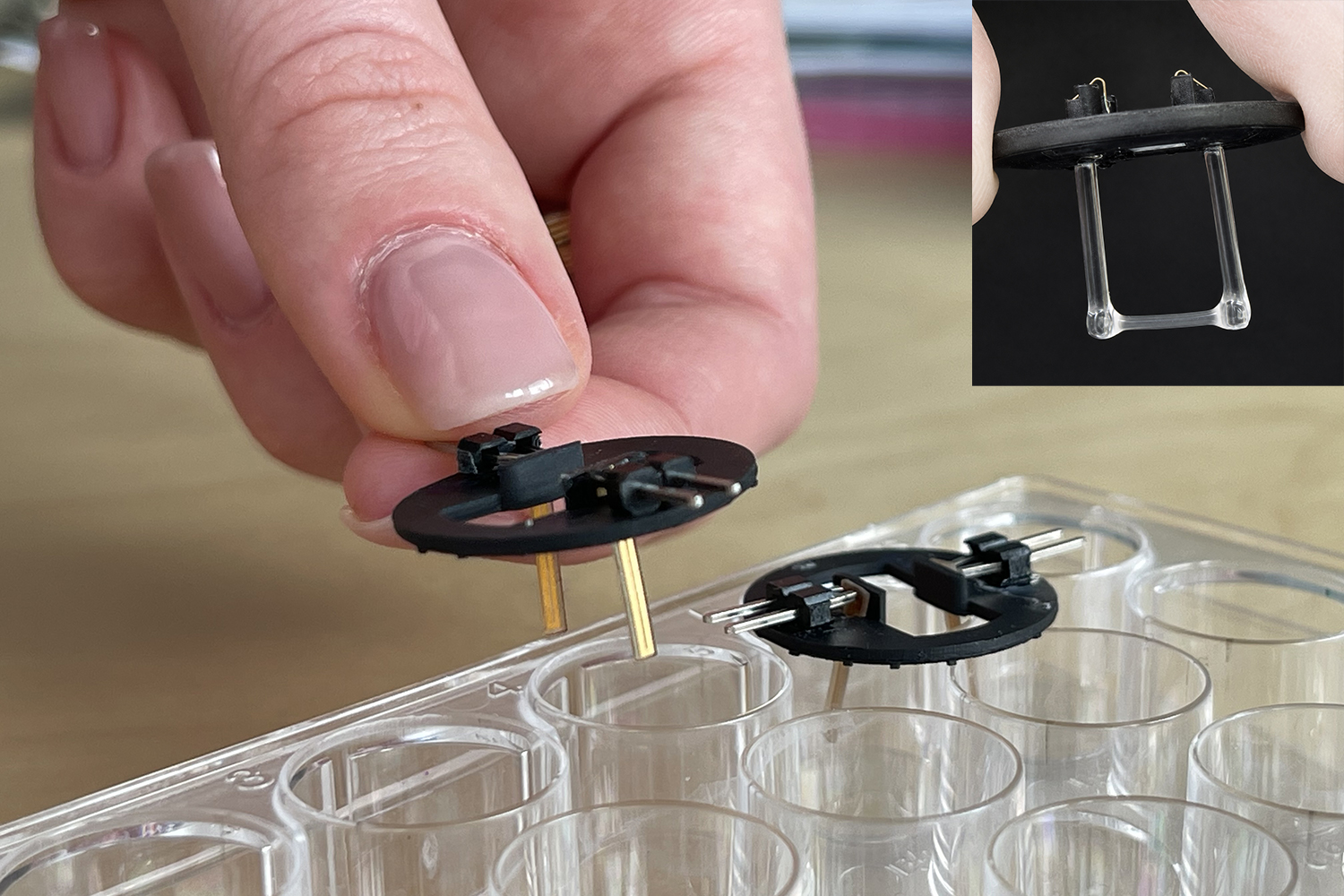
This small device allows researchers to measure heartbeats. The artificially grown heart tissue, which consists of human cells, connects the two sensors like a thread (top right). Photo credit: Liubov Bakhchova/ TU Braunschweig und Daiju Yamazaki/ National Institute of Health Science (Tokyo, Japan)
To develop such systems, Bakhchova moves between several specialist fields daily. This is why she works at two institutes simultaneously. At the Institute of Microtechnology, she develops mini-laboratory systems with precision-fit sensor technology. While she manufactures structures larger than one micrometre in the cleanroom herself, even smaller structures are produced by external service providers.
It is these sensors that make biological activity measurable in the first place, and they are controlled by the microchips that Bakhchova designs at the Institute for CMOS Design. She sometimes commutes between the two institutes several times a day.
Building bridges between disciplines
Admitting when she does not know something is enormously helpful in her research. Not only is the scientist the technical link between microtechnology, electronics and biology, she also builds bridges between people with their own distinct ways of thinking and terminology. Building bridges is her passion. During her PhD in Magdeburg, she developed the first organ-on-chip. However, electronics were not yet integrated at that time. During this period, she observed how challenging communication could be between biologists and engineers. “They needed someone who could think outside the box and keep an open mind – and that’s me,” she recalls.
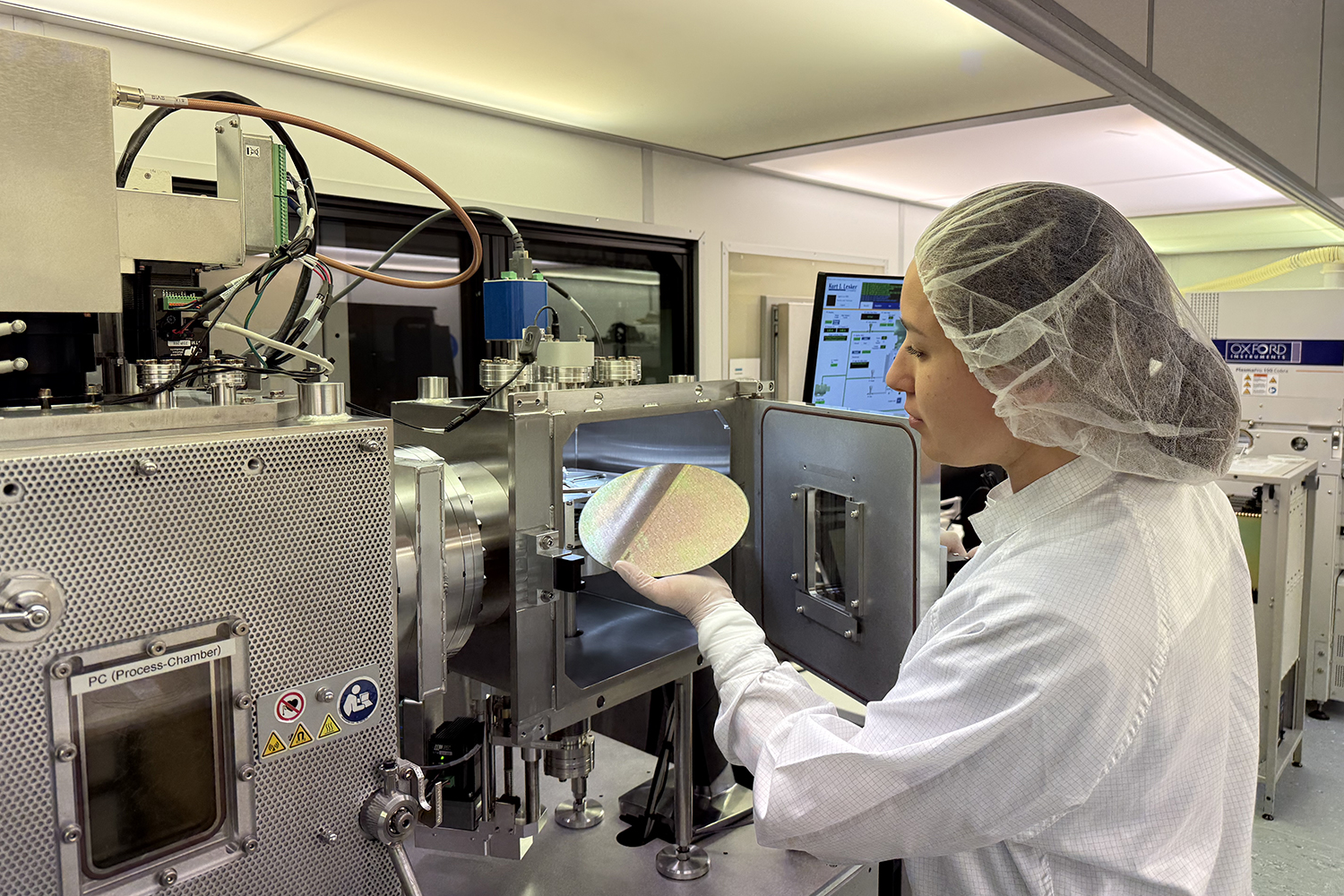
To create the intricate structures of the microchips, thin metal layers are deposited and shaped using sputtering techniques. Photo credit: Jonas Himmelstoß/ TU Braunschweig
However, behind her enthusiasm for research lies a strong sense of responsibility. Bakhchova is committed to achieving a world that is free from animal testing without compromising the safety of medicines. She realised just how important this issue was to her while working at Magdeburg University Hospital, where she witnessed first-hand just how distressing these experiments could be for animals. Her relationship with her dog, Rex, was also particularly formative in this regard: “Rex could suffer in the laboratory, too.”
Taking micro-steps towards a better world
Less than five years later, Bakhchova was leading her own research group at the TU Braunschweig while working on her habilitation. Since last year, she has also been a member of the Executive Board of the European Organ-on-Chip Society. In this role, she is particularly committed to improving conditions for female and international researchers. At the same time, her position enables her to engage closely with industry. This gives her first-hand insight into the future requirements that medicine will place on organ-on-chip systems. She is also involved in further developing such systems as part of the European research project UNLOOC. As a young scientist, she feels privileged to be able to help shape the direction of this field of research.
While it is difficult to predict where medical research will be in a few years’ time, one thing is clear: organ-on-chip systems could transform drug development by making it more precise and personalised while reducing the need for animal trials. Bakhchova is already working on the very microsystems required for this purpose. For her, every answer raises another question.