
The next generation of robotics Professor Jens Lambrecht is the new Head of the Institute of Robotics and Process Informatics
“Robotics has real, long-term potential for the future.” Professor Jens Lambrecht is certain of this. At Technische Universität Braunschweig, the new Head of the Institute of Robotics and Process Informatics aims to develop AI-based, adaptive systems. These can adapt flexibly to their environment and support people in their everyday lives. This approach combines technical innovation with a clear focus on people and their needs. In this interview, he talks about his research, his decision to undertake further studies in psychology and his fascination with robotics for over 20 years.
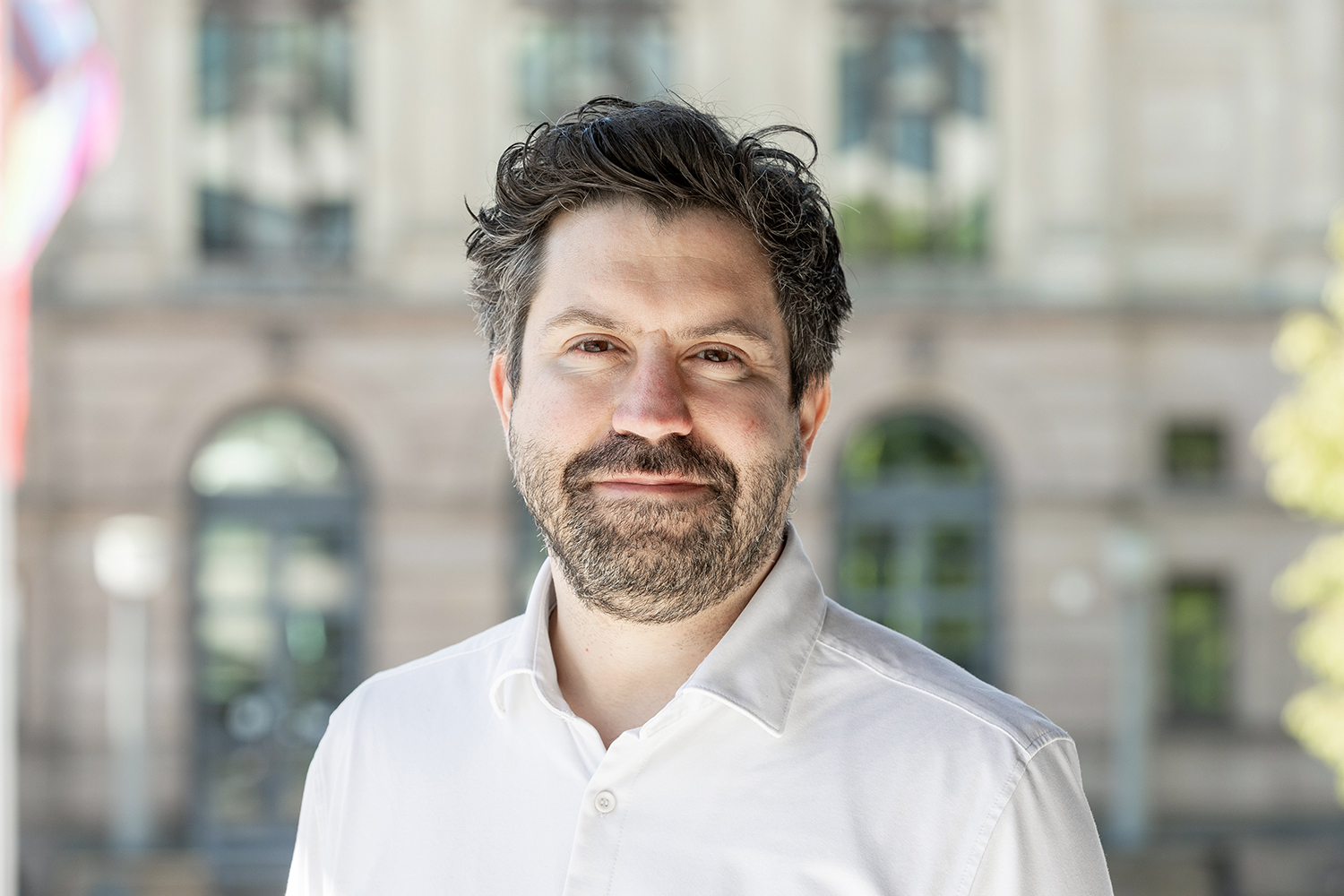
Professor Jens Lambrecht heads the Institute of Robotics and Process Informatics. Photo credit: Kristina Rottig/TU Braunschweig
Why did you choose TU Braunschweig?
I value TU Braunschweig’s research strength and the clear profile of its strategic development areas. What particularly sets TU Braunschweig apart in general is its pleasant size, which for me is not a compromise but a structural feature that actively promotes scientific collaboration. Short institutional lines of communication, a personal working culture and a collegial atmosphere across disciplinary boundaries create an environment that supports researchers not only professionally but also in their day-to-day work. TU Braunschweig is therefore a place where people not only conduct research and teach, but also enjoy working.
With the Institute of Robotics and Process Informatics (soon to be renamed the Institute of Cognitive Robotics), TU Braunschweig boasts one of the oldest and most renowned research institutes in the field of robotics in Germany. Receiving a position to this institute is a special honour and one that one does not hesitate to accept. It is the culmination of a long academic journey, and it fills me with genuine joy and anticipation to arrive here and to lead and further develop this institute.
What exactly do you focus on in your research? How would you explain your work to someone unfamiliar with the subject?
Our institute is shaping the future of intelligent robotics by developing AI-driven learning systems. These systems integrate seamlessly into real-world environments, supporting and enhancing human activity and action while enabling adaptive, distributed automation systems.
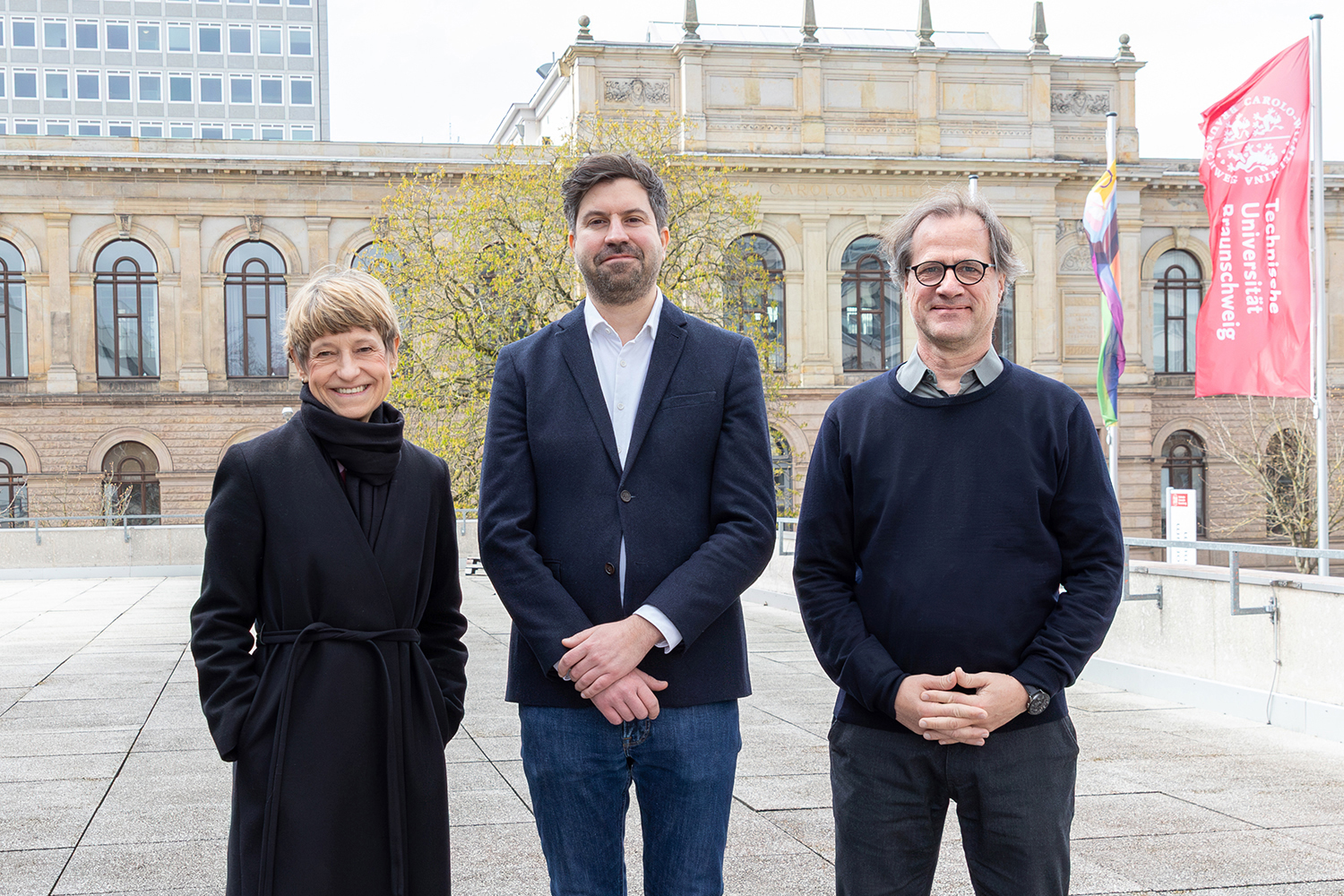
Professor Jens Lambrecht with President of TU Braunschweig Prof. Angela Ittel and Professor Dirk Konietzka. Photo credit: Kristina Rottig/TU Braunschweig
What are the main research areas and projects you will be working on at TU Braunschweig?
We are advancing applied machine learning in robotics with a strong focus on context-specific adaptability and human-centred behaviour of robotic systems. Our work combines state-of-the-art AI, distributed control architectures and cognitive ergonomics to develop intelligent systems that learn from data, adapt in real time and collaborate closely with humans in complex environments.
Through interdisciplinary research, open collaboration and scalable prototypes, our research specifically aims to enable seamless collaboration between humans and robots in shared workspaces, as well as to design distributed automation systems that are robust, modular and future-proof. Furthermore, we aim to make a significant contribution to responsible digital transformation in work environments and public spaces.
What motivated you to conduct research in this field of study?
What has fascinated me since my first practical encounters with robotics over 20 years ago is the interdisciplinary nature of this field of study.Although I studied Mechanical Engineering, I developed a keen interest in software topics and human-robot interaction early on. This ultimately led me to delve deeper into human experience and behaviour by undertaking an additional degree in psychology.
Beyond the current, arguably temporary hype surrounding humanoid robots, I am convinced that robotics has genuine, long-term potential for the future: for shaping future work environments, and for the way we live and interact with one another. That is precisely why I am keen not to present short-lived solutions here, but rather to develop long-term, sustainable concepts and solutions together with partners from industry and academia that will truly stand the test of time.
How would you describe your day-to-day work in three keywords?
Perceive · Plan · Act (derived from the classic Sense-Plan-Act paradigm of cognitive robotics)