
Research in free fall Students investigate 3D printing in zero gravity
As part of the German-Swedish student programme REXUS, the student initiative ExperimentalRaumfahrt-InteressenGemeinschaft (ERIG) e.V. carried out a challenging space experiment. Under the scientific supervision of the Institute for Space Systems (IRAS), an experiment to investigate material properties in space was developed over a period of one and a half years. The experiment was ultimately launched aboard the REXUS 35 high-altitude research rocket, reaching an altitude of around 75 kilometres.
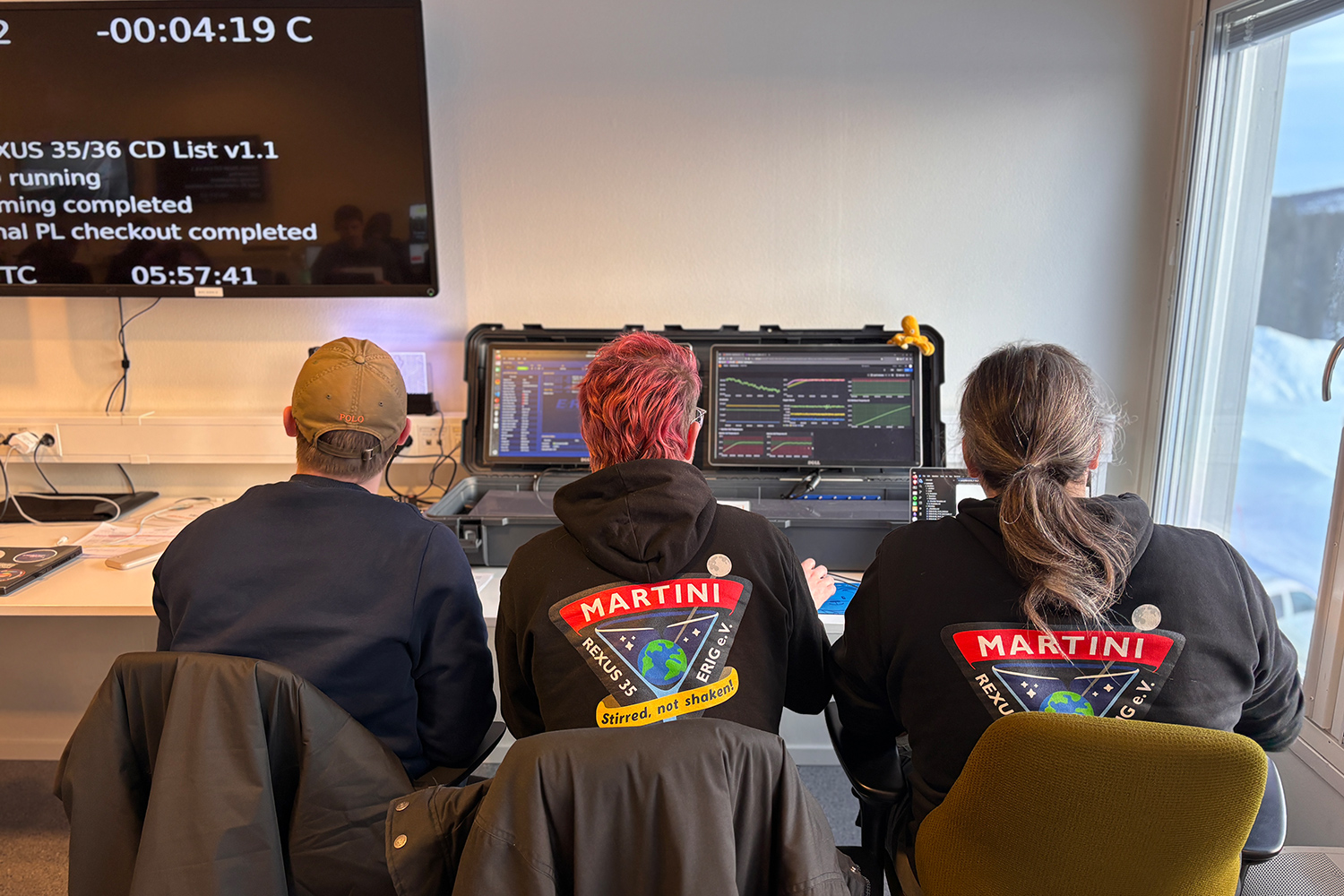
A view of the control centre: from here, the rocket launch and the progress of the experiment during flight are monitored. Photo credit: ERIG e.V.
The REXUS programme (Rocket Experiments for University Students) supports junior researchers. It is funded by the German Aerospace Center (DLR) and the Swedish National Space Agency (SNSA). Every year, two research rockets are launched from the Esrange Space Centre in northern Sweden. On board are experiments by student teams from across Europe.
MARTINI: Materials research in microgravity
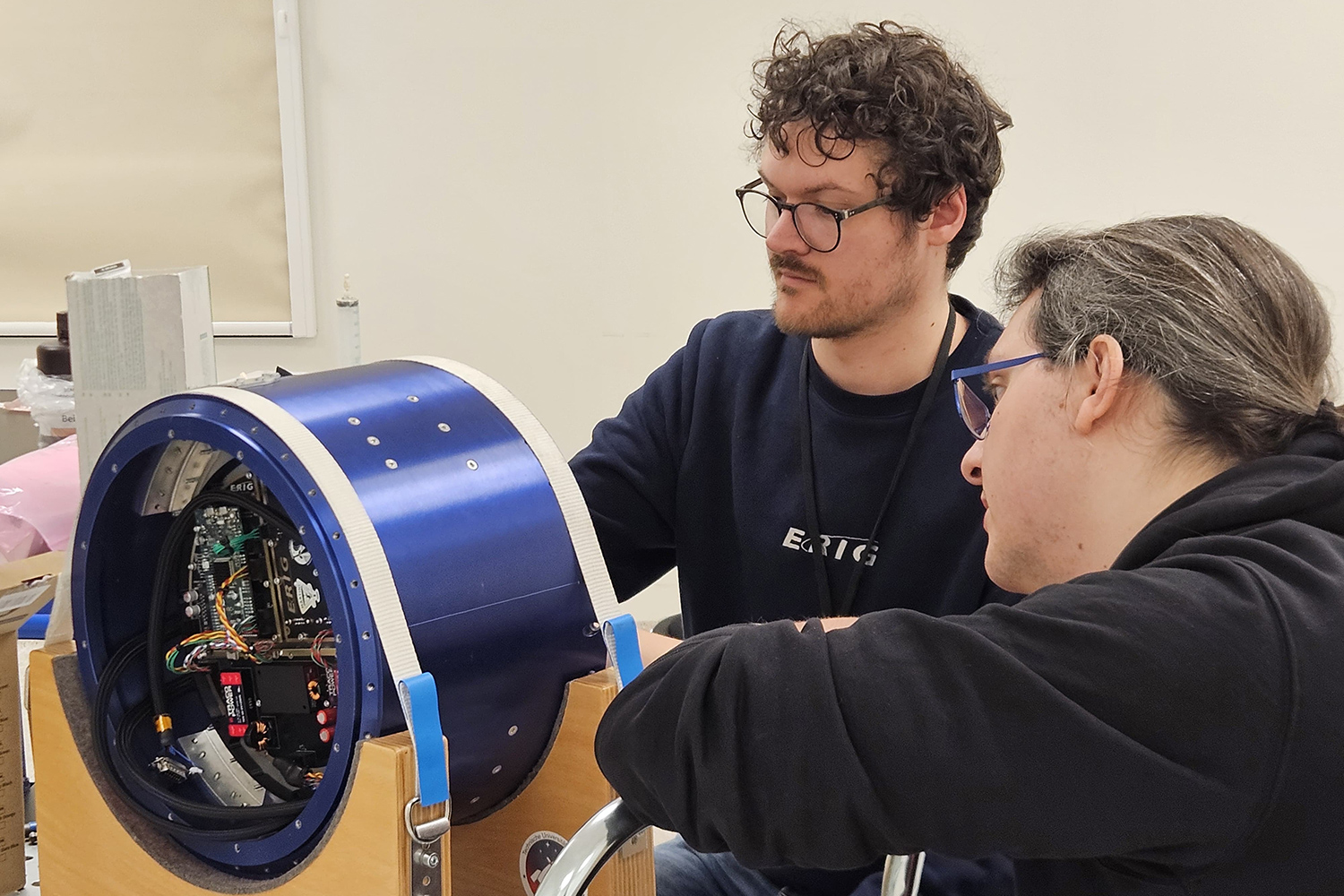
Members of the MARTINI team integrating the experiment into the rocket module. Photo credit: ERIG e.V.
The MARTINI experiment formed the core of the Braunschweig project. The aim was to investigate the behaviour of resin – a synthetic resin used in special 3D printing processes – in a weightless environment. Resin is a non-Newtonian fluid, meaning its viscosity changes when subjected to force. Since gravity is constantly at work on Earth, it was hypothesised that its flow behaviour would differ in space.
This knowledge is vital for future applications, such as 3D printing in space. The experiment therefore aimed to systematically record the viscosity of resin under microgravity.
Technology in detail: How the experiment worked
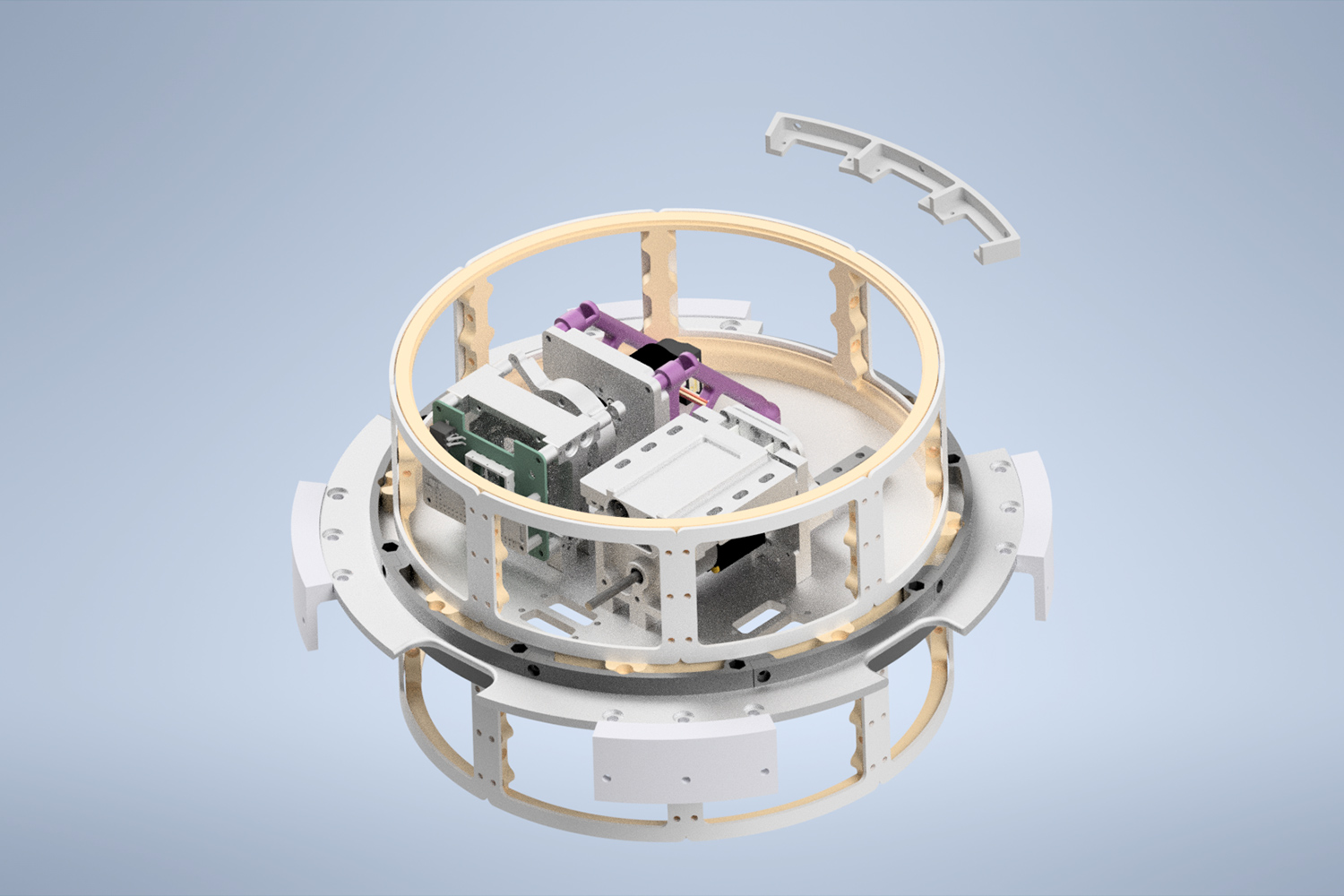
Rendering of the MARTINI experiment. Photo credit: ERIG e.V.
At the heart of the MARTINI project was a specially developed mixing chamber. During the rocket flight, resin was injected into this chamber. During the microgravity phase, i.e. in a virtually weightless environment, a motor began stirring the material at increasing speeds. The resulting torque enabled the viscosity to be determined.
The resin was then cured using UV light. The entire process was fully automated and documented by an integrated camera, enabling a detailed analysis afterwards.
A unique learning and research experience
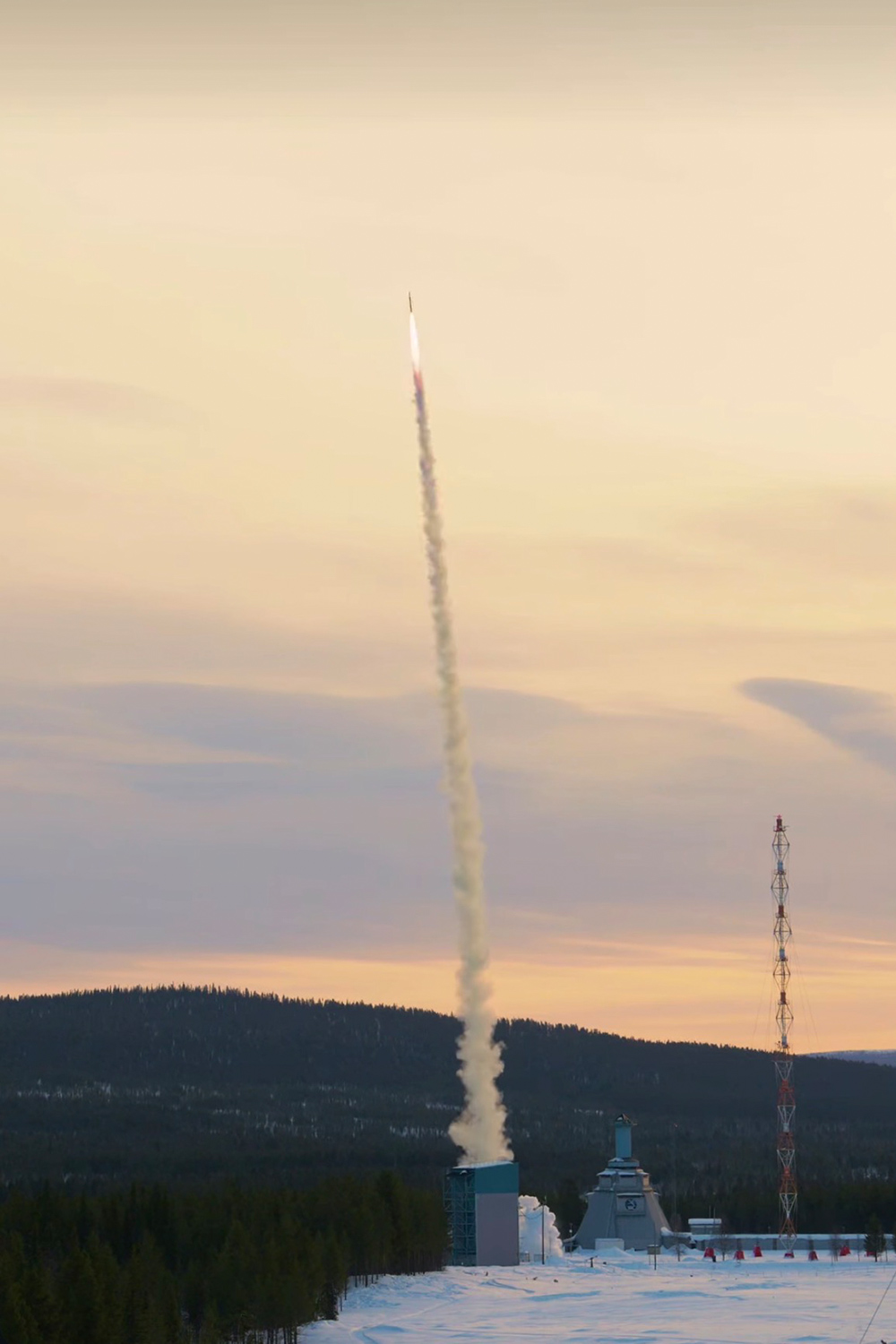
The REXUS 35 research rocket during launch from the Esrange Space Centre in northern Sweden. Photo credit: ERIG e.V.
Participation in the REXUS programme provides an exceptional opportunity to develop a complex space experiment as part of a team, while gaining insight into real mission procedures. Exchanging ideas with other teams and experts from various disciplines is particularly valuable.
Thanks to comprehensive funding from the DLR and additional support from sponsors, the project was successfully implemented without having to rely on the team’s own funds.
The REXUS programme offers students a unique opportunity to gain practical space experience. Further projects under the initiative are already in the planning stage, and interested students are invited to get involved.