
Reimagining the Future Aylin Dilek Walder on ‘Speculative Cultures’
Fantasy and science fiction are often regarded as mere entertainment literature. Yet they are far more than that. ‘Speculative fiction’ creates spaces for reflection and experimentation in which societal challenges can be re-examined. With her series of workshops on ‘Speculative Cultures’, Aylin Dilek Walder from the Institute of English and American Studies brings together researchers from various disciplines to discuss precisely these possibilities. In an interview with Bianca Loschinsky, she talks about literary visions of the future and why fantastical stories reveal a surprising amount about our present.
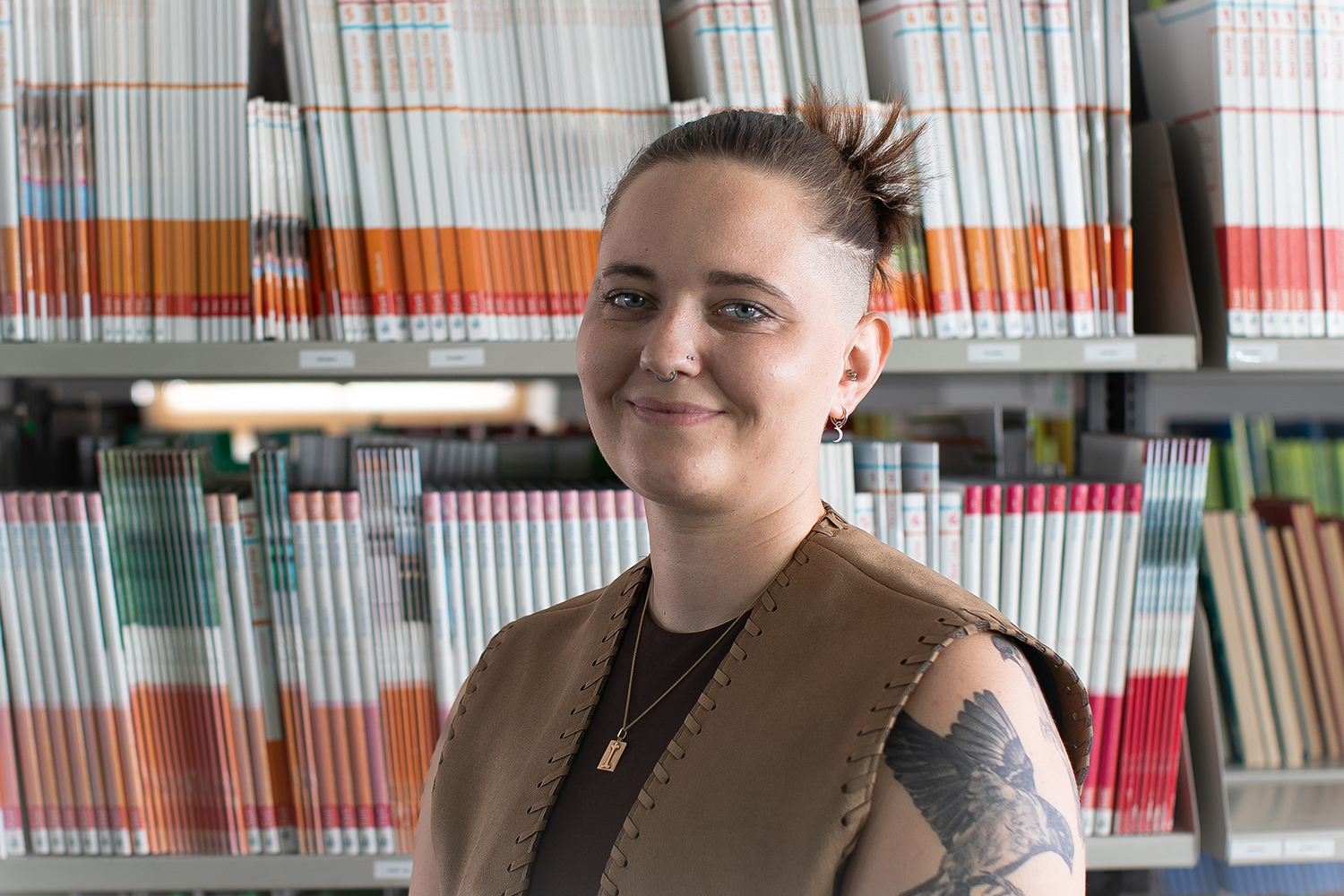
Aylin Dilek Walder from the Institute of English and American Studies. Photo credits: Gebhard/TU Braunschweig
Ms Walder, what does ‘Speculative Cultures’ actually mean?
In my PhD research, I am exploring speculative fiction – a term for which there are various definitions. Some see the term as synonymous with science fiction, but I take a broader view. This means the focus is no longer on the boundaries between different genres, and fantasy, science fiction, horror, Gothic and Afrofuturism can be considered together.
Through the ‘Speculative Cultures’ workshops, I aim to build a network that brings together researchers who view such speculative works as important sources of information. I am particularly interested in how speculative narratives develop visions of the future and, by mentally extending our present-day society, highlight possibilities for a more just future. The term ‘Cultures’ encompasses literature as well as music, theatre, film and games. It thus opens up the possibility of considering very different forms of cultural expression together.
Which authors are the main focus of your research?
My research focuses on the negotiation of identity and the materiality of identity in speculative fiction. A key work is the trilogy ‘The Broken Earth’ by N.K. Jemisin. The novels combine elements of fantasy and science fiction and explore themes such as colonialism, oppression, identity and humanity’s relationship with nature in a post-apocalyptic society.
In Jemisin’s world, the planet itself becomes a character that reacts to human exploitation. Such stories do not provide direct solutions to real-world problems. However, they open up spaces for thought and experience in which we can reflect anew on our own relationship with the environment and with other people. Other authors include Indrapamit Das, Premee Mohamed and Tin Makereti.
Many of the themes seem remarkably topical. Why is speculative fiction socially relevant today in particular?
Because many current crises are so complex that they remain difficult to visualise. This is precisely where speculative narratives come in. They explore ‘what if?’ scenarios and consistently take current developments to their logical conclusion. In doing so, they reveal structures that often remain hidden in everyday life. These are not predictions, but they sharpen our awareness of how we live – or how we want to live. It is therefore an oversimplification to regard these works merely as entertainment.
Why are young people, in particular, so enthusiastic about fantasy and science fiction?
I believe their reading interests are more diverse than is often assumed. In my seminars, students do bring books such as ‘The Hunger Games’ or ‘Dune’, but at the same time they also bring works by Shakespeare, Virginia Woolf or Kafka’s ‘The Metamorphosis’.
Fantasy and science fiction should not be dismissed as a mere escape from reality or as ‘leisure reading’. As I’ve already said, many of these stories tackle themes such as colonialism, racism, the climate crisis or other forms of social exclusion. Speculative worlds invite us to imagine things differently. This probably appeals particularly to people who ask themselves what kind of world they would like to live in.
What insights can be gained from speculative fiction?
Many works help to highlight existing injustices and encourage reflection on how society can be made more just.
One fascinating talk at the February workshop, for example, was given by Andrew Erickson from TU Dresden. He demonstrated that the notion of a future apocalypse depends very heavily on one’s own social perspective. For many people whose ancestors were enslaved or who still experience discrimination today, the apocalypse is not a vision of the future – they already experience their present as an apocalyptic world. Such perspectives make it clear that we must first recognise and name social inequalities before we can overcome them. Speculative texts can create a space for this.
There are also interesting food for thought in the field of urban development. Rather than viewing nature and the city as opposites, there is a growing focus on how the two are interconnected. Green roofs, more habitats for animals and climate-adapted urban planning are examples of how such ideas are no longer confined to literature but are being implemented in real-world projects. This includes research projects on the Campus, as we can see from the example of the reed bed on the North Campus.
Your research focuses intensively on identity.
I assume that identity is a constructed concept. We tell ourselves who we are and are constantly developing this self-image, particularly through our interactions with other people. If identity is constructed, it can also be deconstructed, allowing me to understand myself anew.
Many of the novels I examine portray people as part of a larger whole. They illustrate that we are connected to our environment and do not exist independently of it. From this perspective, climate protection arises not only out of self-interest, but from a sense of responsibility towards a system of which we ourselves are a part. Such ideas can often be conveyed much more vividly in fantastical worlds.
The second workshop is scheduled for 10 October. What will it focus on?
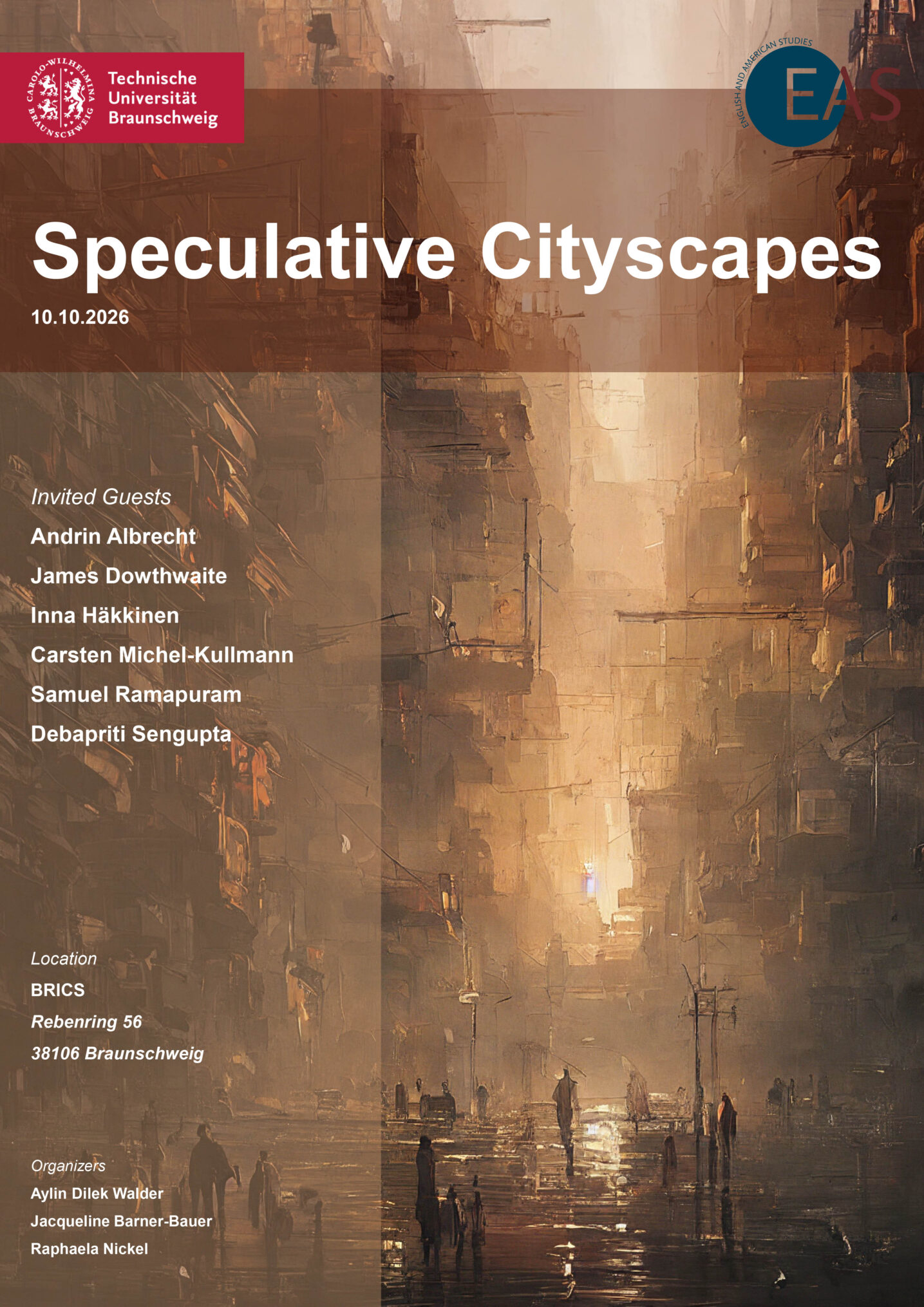
The next workshop is entitled ‘Speculative Cityscapes’. There, we will explore how we negotiate the city – as a place where crises converge in a highly concentrated manner and where the consequences of the climate crisis are particularly evident. At the same time, cities are spaces full of potential, innovation and new technologies. Cities have always played a central role, particularly in science fiction.
We are therefore interested in how future cities can be reimagined. This is not just about futuristic high-tech, but also, for example, about green engineering or how nature can be more strongly integrated into urban spaces once again. This topic also fits perfectly with the core research area ‘Future City’.
Both workshops are supported by the Innovation Fund of the Faculty of Humanities and Education.
For me, this funding is very important. Such opportunities are crucial, particularly for early-career researchers. I am especially pleased that an interdisciplinary network is emerging from the workshops. A special open-access issue is also planned. Furthermore, a third workshop is already scheduled for November. This will focus on how the relationship between the climate crisis and colonialism is explored in speculative narrative forms.