
Chikungunya: A little-known disease Scientists from Cameroon are working in the Department of Biotechnology
Elizabeth Berinyuy Nsai and Pascale Yvana Lele Kamga from the Centre Pasteur du Cameroun will be staying in Braunschweig for four months. They are working in the Department of Medical Biotechnology at Technische Universität Braunschweig and at the Helmholtz Centre for Infection Research (HZI). They are both working on tests to diagnose chikungunya infections and on potential treatments for infected patients. The virus is a relatively unknown pathogen with growing scientific and public health significance.
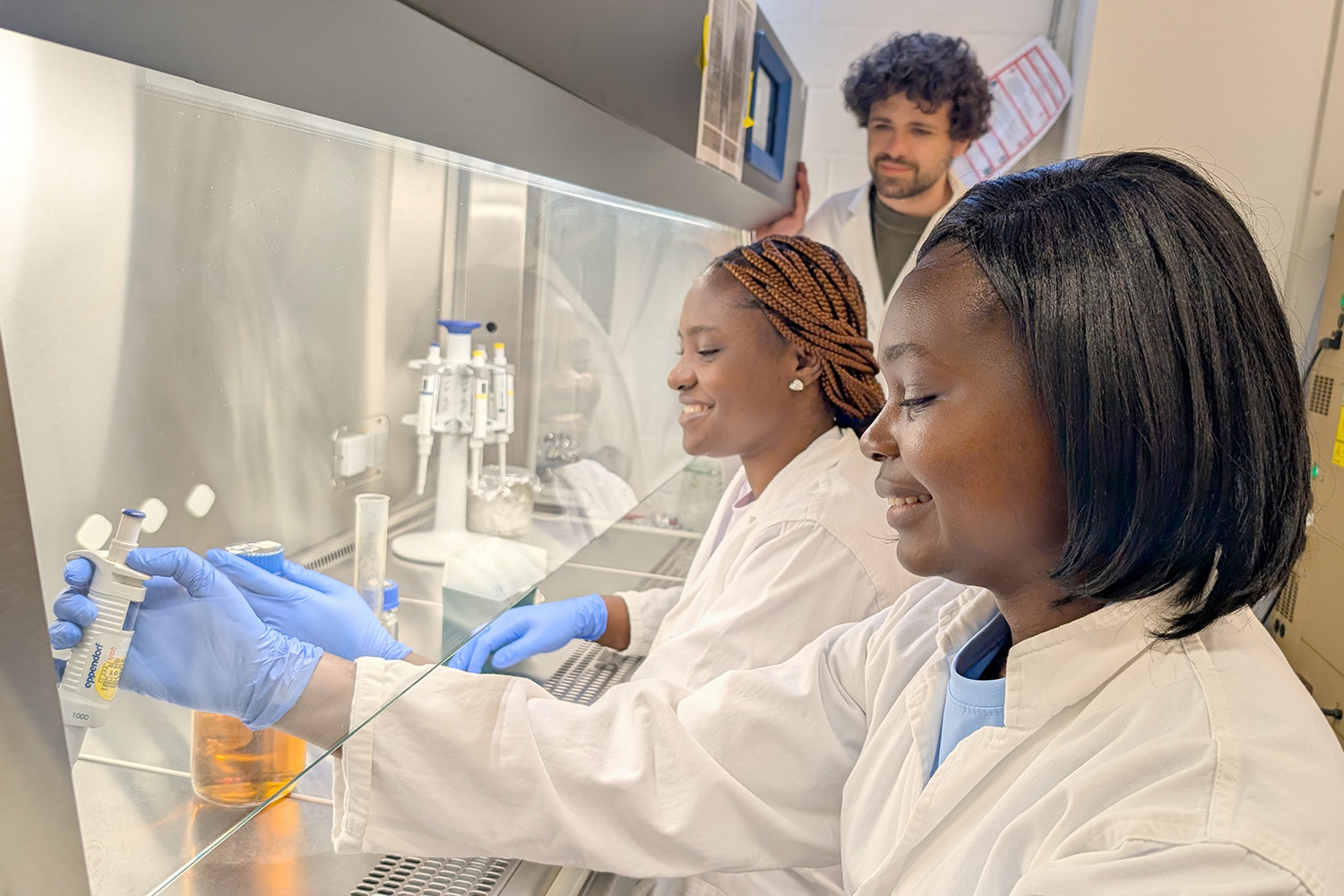
Elizabeth Berinyuy Nsai and Pascale Yvana Lele Kamga during the phage display training session headed by Piotr Stanczyk. Photo credits: Michael Hust, TU Braunschweig
Ms Nsai studied biochemistry at the University of Bamenda (in north-western Cameroon) and Ms Kamga also studied biochemistry at the University of Yaoundé (the capital of Cameroon). Both are conducting research into the chikungunya virus, which belongs to the alphavirus group and is transmitted by Aedes mosquitoes. This genus, found predominantly in tropical and subtropical regions, is also a vector for the dengue, yellow fever and Zika viruses. Infection leads to chikungunya disease. In most cases, it is asymptomatic, meaning there are no noticeable symptoms. However, fatal cases preceded by prolonged arthritis have also been reported. There is currently no specific treatment for this disease. Furthermore, no specific serological diagnostic test is available.
The aim of both researchers is to develop a more specific diagnostic test as well as neutralising antibodies for a potential therapeutic approach. During their stay in Braunschweig, they will be working on recombinant antibodies at TU Braunschweig and on the production of recombinant proteins at the HZI in Dr. Maren Schubert’s research group.
Ms Nsai: “Beyond the scientific benefits, experiencing an international research environment has fostered my professional and personal development and broadened my perspective on scientific collaboration and research practice.”
Ms Kamga: “From a scientific point of view, one of the most fascinating aspects of this education so far has been my introduction to phage display technology. I find this technique particularly exciting because of its potential for the discovery and characterisation of antibodies, as well as its experimental versatility. Gaining practical experience with it was one of the highlights of my first week here in Braunschweig.”
“We have been working on antibodies for the diagnosis and treatment of various viruses. We will benefit from Ms Nsai’s and Ms Kamga’s experience in virology,” says Professor Michael Hust.
The chikungunya virus (CHIKV) is an alphavirus transmitted by Aedes mosquitoes, whose global spread and recurring outbreaks pose a growing challenge to public health. Clinically, the main symptoms are acute fever and severe joint inflammation. The virus’s increasing international spread underlines the importance of interdisciplinary research at the interface between virology, immunology, epidemiology and public health.