
Against Forgetting – with Picture Books ‘DrawnTogether’ exhibition project nominated for the European Simone Veil Prize
How do you explain exclusion, persecution and the Holocaust to children? And how can you foster empathy and moral courage without overwhelming them? The project ‘DrawnTogether: A Children’s Picture Book Exhibition at Bergen-Belsen Memorial’ by Dr. Tatia Gruenbaum combines picture book art with engagement with the Holocaust. In recognition of this exceptional commitment, the exhibition, currently on display at the Bergen-Belsen Memorial, has now been nominated for the prestigious European Simone Veil Prize. In an interview with Bianca Loschinsky, Tatia Gruenbaum, a visiting researcher in the Department of English Language Teaching at the Institute of English and American Studies, explains how picture books about the Holocaust can support Global Citizenship Education.
Dr. Gruenbaum, ‘DrawnTogether’ has been nominated for the Simone Veil Prize. What does this recognition mean to you?
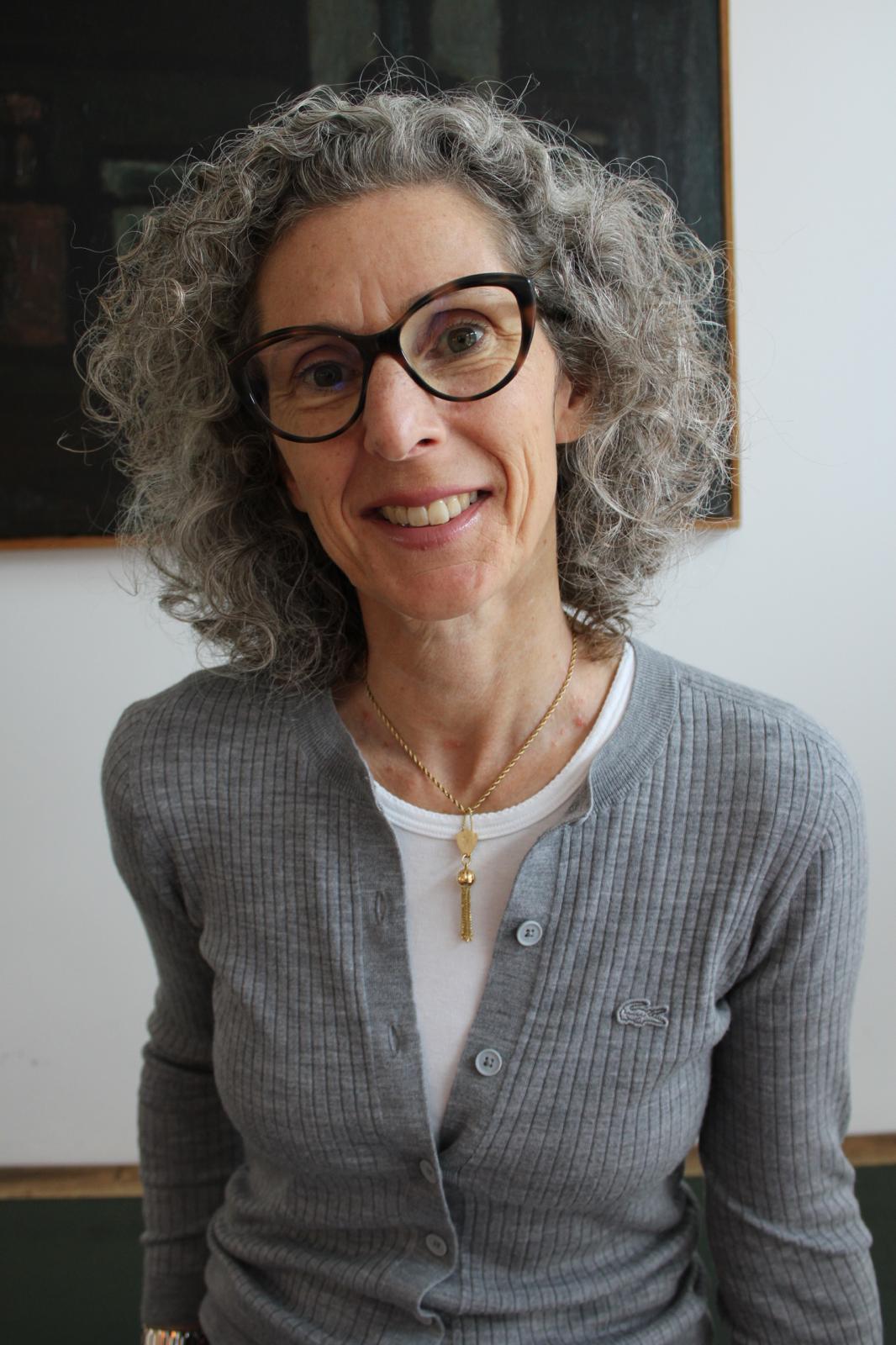
Dr. Tatia Gruenbaum. Photo credits: private
It’s simply wonderful that we’ve been nominated and have made it into the 25 finalists out of the 400 projects submitted. This exhibition is ‘boundary-breaking’ in every respect. There has never been anything like it at a memorial site before. Even within English Studies, Holocaust education has so far played hardly any role in the context of Global Citizenship Education. With ‘DrawnTogether’ and our other projects in the Department of English Language Teaching, we are trying to change that.
The aim is to use picture books to address the Holocaust, Jewish experiences, but also the solidarity and support that existed. Many people are unaware of these books, and even if they are, they often do not know how to use them effectively.
The reading guides I have created, based on the ‘Discover. Observe. React.’ approach, are designed for each individual book in such a way that they can be read by children both on their own and together with adults. At the same time, teachers can integrate the materials into their lessons and build on them further.
How did the idea for ‘DrawnTogether’ come about?
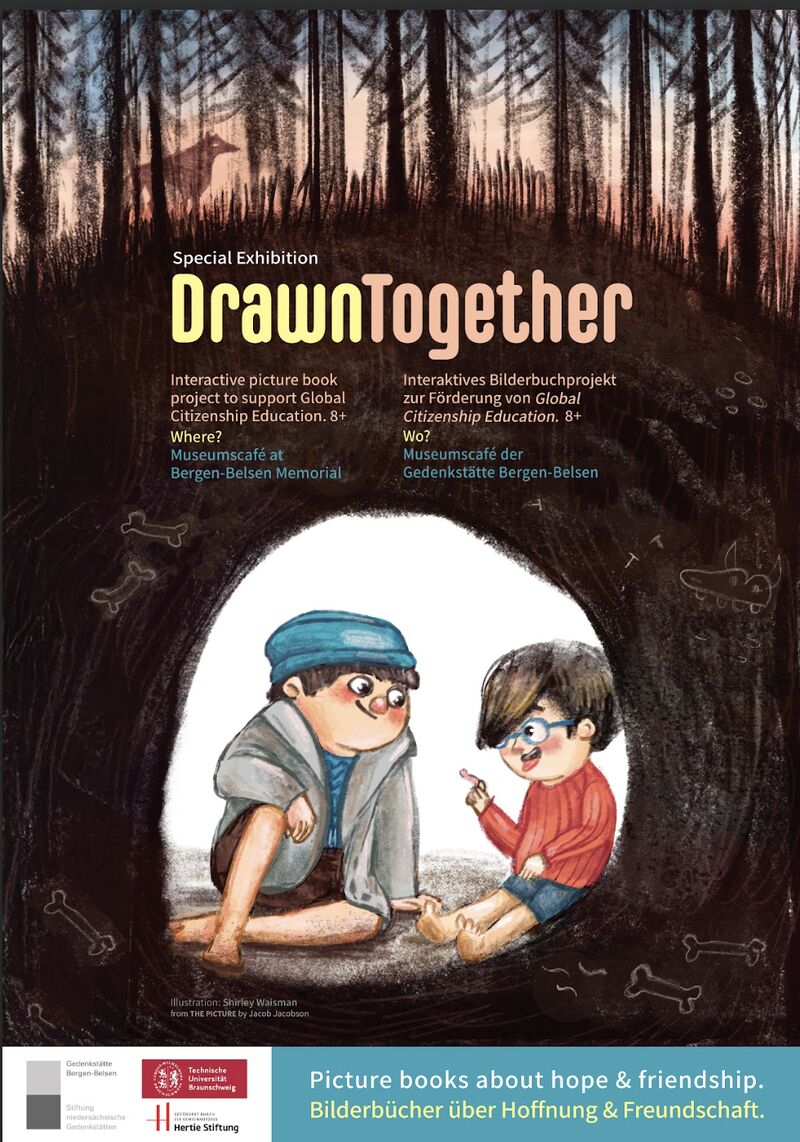
The poster for the exhibition. Photo credits: Tatia Gruenbaum/TU Braunschweig
My background is in applied linguistics, and my specialism is picture-book-based English teaching. At the end of 2022, I began exploring picture books that depict Jewish life before, during and after the Holocaust, as well as the experiences of other persecuted groups. Since then, I have been collecting picture books from various countries. They tell the stories of people who survived the Holocaust and of those who did not. Most are based on true memories.
My aim was to draw more attention to these books. It is not just about the picture books themselves, but about the people, about what happened, and also about how people survived and who helped them to do so. But it is also about what they contributed to society before the Holocaust, so that they are not seen solely as victims. These stories should be preserved and used in the classroom to teach children and young people about the Holocaust in an age-appropriate way – and not just on Holocaust Remembrance Day in January.
Initially, I had planned to create an interactive digital exhibition. Following the approval of funding from the Hertie Foundation, the exhibition was eventually realised at the Bergen-Belsen Memorial. Stephanie Billib, who heads the Communications and Events team, supported me right from the start. This enabled us to display the picture books in the memorial’s café – exactly where families with children often spend time during their visit, particularly during the summer holidays. In Germany, unlike in many other countries, visits to memorial sites are generally only recommended for those aged 14 and over. This also applies to the permanent exhibitions at Bergen-Belsen, and until now there have been hardly any age-appropriate activities for younger children. The exhibition was originally planned to run from July to October, but was extended until December due to its success.
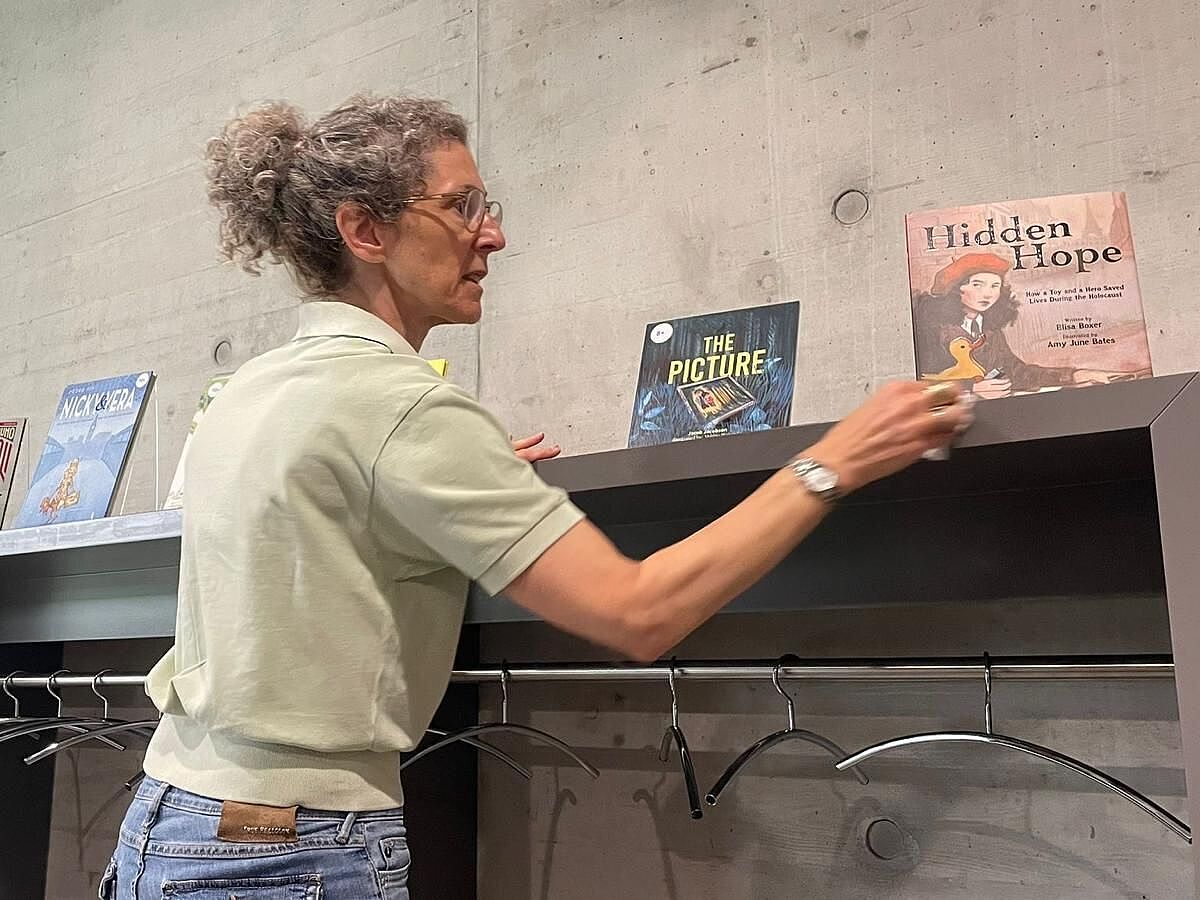
Dr. Tatia Gruenbaum setting up the exhibition at the Bergen-Belsen Memorial. Photo credits: Tatia Gruenbaum/TU Braunschweig
How is the exhibition structured?
‘DrawnTogether’ showcases 22 colourful picture books that recount Jewish experiences during the Holocaust and are aimed at children aged between eight and 14. All titles are available in English, with some also available in other languages such as Dutch, German, French and Italian.
A reading guide supports the exploration of each picture book. For example, it encourages visitors to take a closer look at the book cover or to think about which aspects of the story they would like to share with their friends.
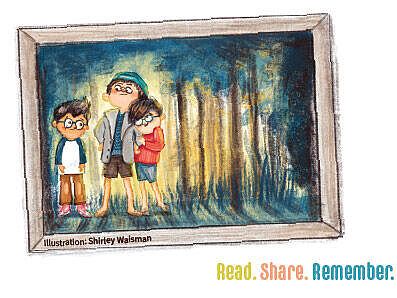
The postcards featuring illustrations by Shirley Waisman can be downloaded from the project page. Photo credits: Tatia Gruenbaum/TU Braunschweig
In addition to the picture books, the exhibition in Bergen-Belsen also showcased works by the Israeli illustrator and author Shirley Waisman. Her artwork is taken from the picture book ‘The Picture’, written by the Israeli playwright Jacob Jacobson. The story centres on a boy who, whilst visiting his great-grandfather, discovers a framed photograph on the wall showing two little boys in a forest. The great-grandfather, who is one of the boys in the picture, then tells the story of two brothers who hide in the forest with wolves during the Holocaust. The great-grandfather in the story is modelled on Shirley Waisman’s father, who survived the Warsaw Ghetto and the Mauthausen concentration camp. This book shaped the entire look and feel of the exhibition – from buttons and posters to postcards bearing the call to action ‘Read. Share. Remember.’
I set up the exhibition in Bergen-Belsen myself, together with my children. It stood in stark contrast to the architecture of the memorial site – no grey, no beige. This was also particularly important to Stephanie Billip. The exhibition is intended to offer younger children a non-traumatising introduction to the subject of the Holocaust.
How many books have you collected in total so far?
In my online collection ‘Pictured Memory’, I’ve catalogued over 300 titles, not counting translations. I own perhaps 250. It’s probably the world’s largest collection of picture books. The boundaries between picture books and graphic novels are sometimes blurred, which is why I also have ‘hybrids’ in my collection. Some aren’t even intended primarily for children.
In school lessons, it’s often just the facts and figures that are taught. That doesn’t usually stick in the mind very well. Perhaps people’s personal stories are told, such as that of Anne Frank. That tends to stay in the memory. That’s why I use these picture books. I believe they offer an easier way in – a narrative.
Which books have been included in the exhibition?
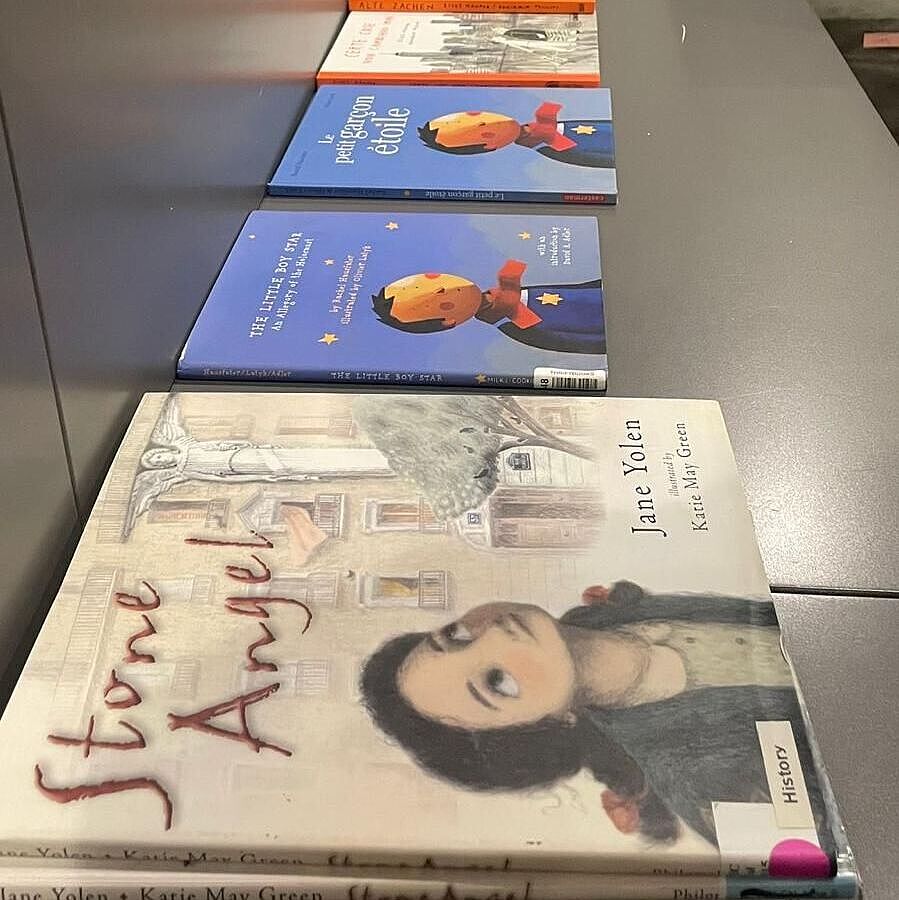
‘DrawnTogether’ showcases 22 picture books that recount Jewish life experiences during the Holocaust. Photo credits: Tatia Gruenbaum/TU Braunschweig
One of the books, for example, is ‘Hidden Hope: How a Toy and a Hero Saved Lives During the Holocaust’ by Elisa Boxer, illustrated by Amy June Bates. It tells the story of Jacqueline Gauthier, whose real name was Judith Geller. She assumed a different identity and joined the Resistance. She used a toy duck with a secret compartment to transport forged documents for Jewish people who wanted to flee the Nazis.
Another book is ‘Nicky & Vera’ by Peter Sís. That is true art. It’s about the young Englishman Nicholas Winton, who saved nearly 700 Jewish children from the Nazis by organising ‘Kindertransports’ from Prague to England. One of these children is little Vera Gissing.
I’d also like to mention ‘The Little Boy Star’ by Rachel Hausfater, illustrated by Olivier Latyk. It is a moving book based on the story of her father, who survived the Holocaust in Paris whilst in hiding.
In ‘Bear and Fred: A World War II Story’ by Iris Argaman, illustrated by Avi Ofer, the true story of the Jewish boy Fred Lessing is told from the perspective of a teddy bear. Fred Lessing lived in hiding in the Netherlands during the Second World War. He later donated the bear to the Yad Vashem memorial in Jerusalem.
What can picture books convey that traditional history books or other forms of Holocaust education might not?
They help children build a connection with the people featured in the books when a child reads a story about another child. There is a name and a place, so that children learn where and how the people lived. Their lived experiences differ, but children can feel a connection to the people depicted.
How can we succeed in making these historical horrors visible, whilst at the same time telling stories of friendship, solidarity and hope?
This is achieved when the author and illustrator are skilled. It is this connection between text and image. The name ‘DrawnTogether’ – which I have deliberately written as one word – reflects precisely this connection between text and image in the picture book and is intended to symbolise the combined power of friendship, solidarity and hope.
What role does empathy play in coming to terms with the Holocaust?
Whilst we need empathy at the outset, what we really need is understanding. Otherwise, nothing will change. I want children and young people to learn about this so that we can counteract the distortion of the Holocaust. So that they do not believe everything they are told about the Holocaust on social media, and do not pass on false information. They should therefore learn critical thinking, which is so important in Global Citizenship Education.
How should ‘DrawnTogether’ develop from here? Are there plans to show the exhibition at other venues?
I’d love nothing more than for every memorial site to have its own ‘DrawnTogether’ exhibition next summer. Twenty-two books on the shelf, the reading guides, and a few posters and postcards. We make these materials available for free download on our project page. The Bergen-Belsen Memorial has also kept a collection of the books in its café.
I’m also currently working on a virtual version of the exhibition: an online museum with various rooms where visitors can explore the books, supplemented by videos featuring interviews and music, as well as archive material. The plan is for this interactive material to be used by teachers and school classes.