
Truly regenerative building Design by students from TU Braunschweig honoured at the Heinze Architecture AWARD
The Department of Architecture at Technische Universität Braunschweig has won one of three young talent prizes at this year’s Heinze Architecture AWARD. The design “Structural Anomalies” by architecture students Dieter Beckert and John Rüstemeier impressed the jury with its “consistent integration of research, design and structural innovation”. At the heart of their work is the listed former Higher Regional Court in Braunschweig, whose roof truss is transformed into an “urban mine”, thereby turning the existing structure into a valuable resource. In addition to the AWARD trophy, the students received prize money of 2,000 euros.
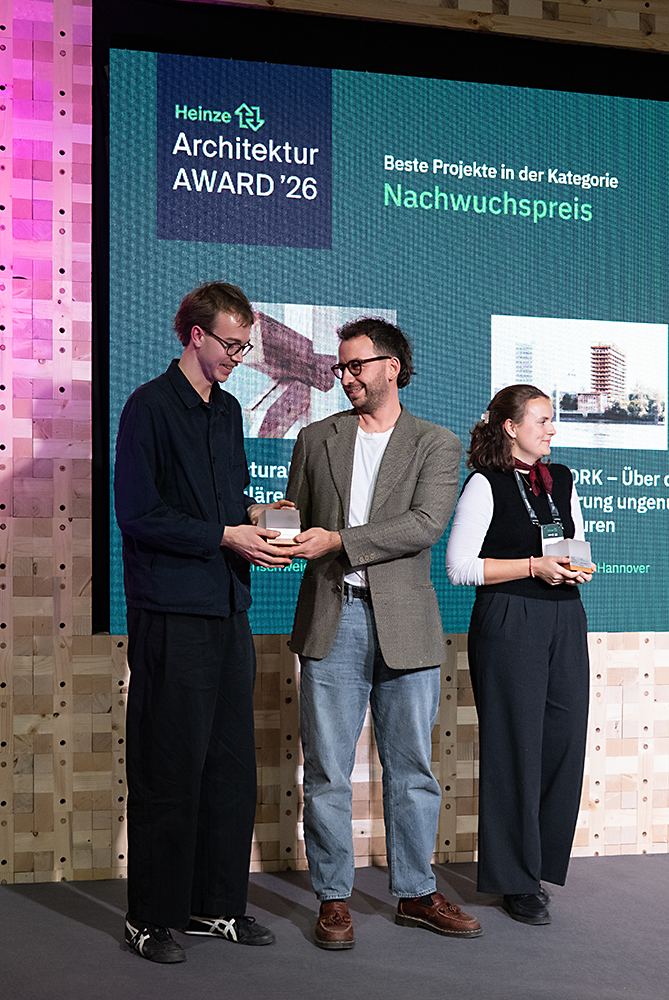
John Rüstemeier and Dieter Beckert are delighted to have won the Young Talent Award. Photo credit: Yamen Abou Abdallah
As part of a Master’s design project at the Institute for Building Construction (IKON) under the headship of Professor Helga Blocksdorf, Dieter Beckert and John Rüstemeier examined the former Higher Regional Court. Built in 1853, it was originally the headquarters of the Braunschweigische Bank on Bankplatz in Braunschweig and is currently undergoing renovation. As part of this, the existing roof truss is being demolished and the building raised by one storey.
“With architectural clarity, high aesthetic quality and remarkable depth of presentation, the project exemplifies how urban mining, digital planning and structural precision merge to create a forward-looking building culture,” stated the jury in its reasoning for selecting the “Structural Anomalies” project for the Young Architects’ Prize.
The roof truss becomes a raw materials store
During the design phase, the two students asked themselves how the existing materials could be re-evaluated and reused in the course of adding another storey. Could the reclaimed timber from the roof truss take on a new function? The built environment is viewed here as a valuable repository of raw materials, with the existing roof truss becoming an “urban mine” from which materials for new creations can be extracted.
The project thus challenges the common practice of disposing of timber after a single use. “Only when timber is used for as long as it takes for forests to regenerate is the raw material truly renewable,” say the two students.
As the basis for their design, they analysed and catalogued the roof truss using a scan and explored various possible uses. “In our design, the roof is to become a public space, giving people back their city, their ‘right to a roof’, and providing space for consumption-free venues and social events in a part of Braunschweig’s city centre where these are currently in short supply,” say Beckert and Rüstemeier. To this end, a community café will be attached to the existing stairwell. It forms the starting point for a column-free auditorium with an adjoining viewing platform.
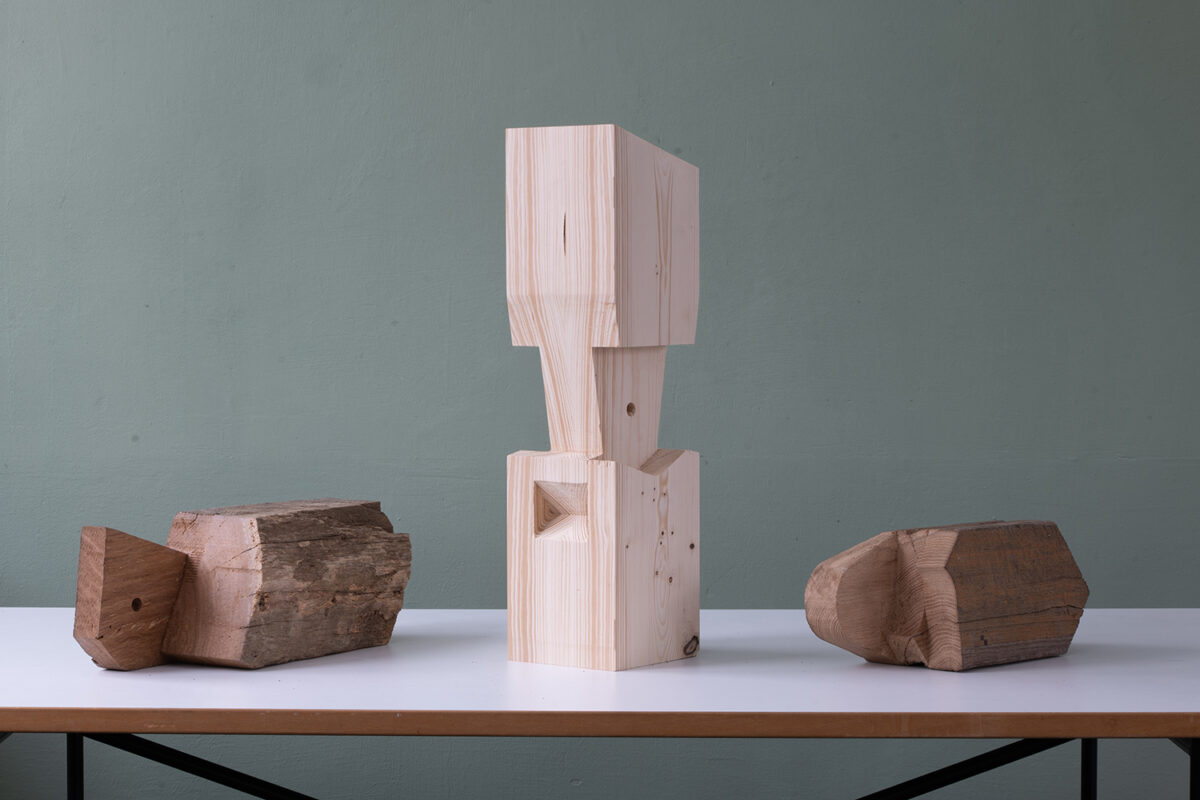
The old and the new are brought together. Photo credit: Beckert, Rüstemeier/TU Braunschweig
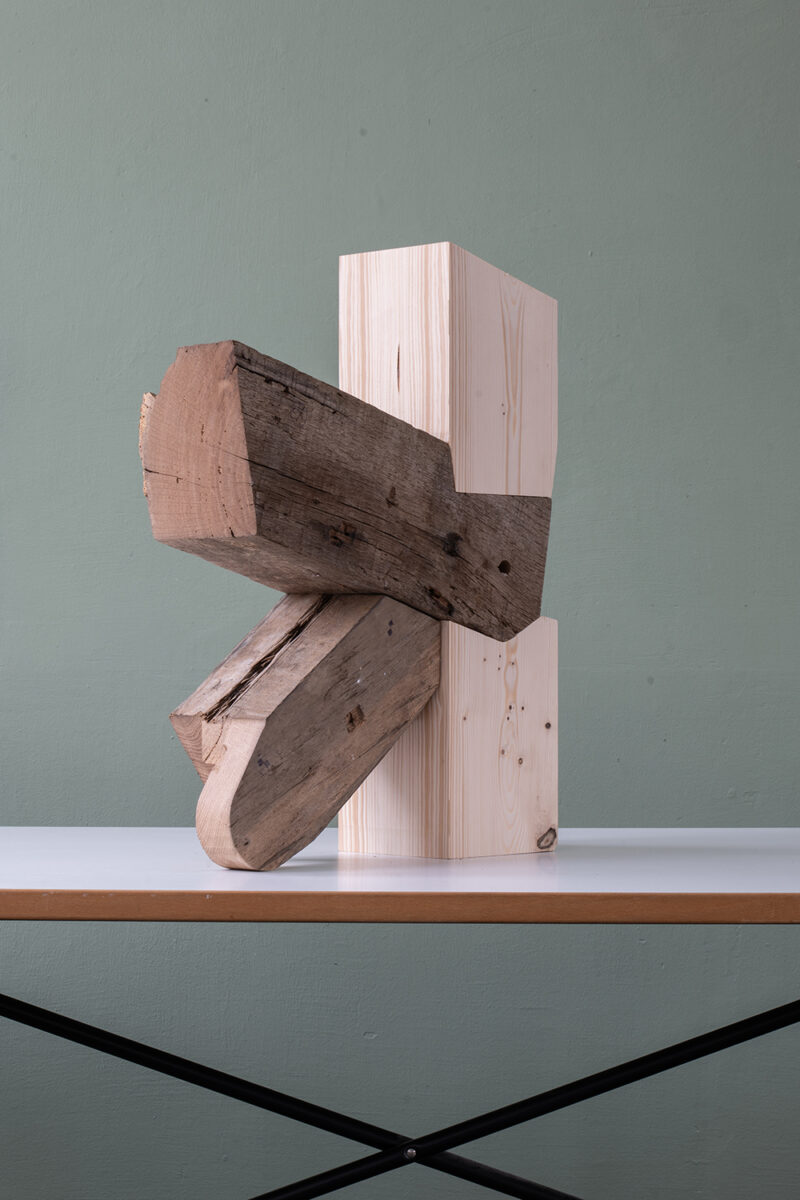
A 1:1-scale junction produced at IKON’s Robotic Timber Studio demonstrates the symbiosis between reclaimed timber and new spruce. Photo credit: Beckert, Rüstemeier/TU Braunschweig
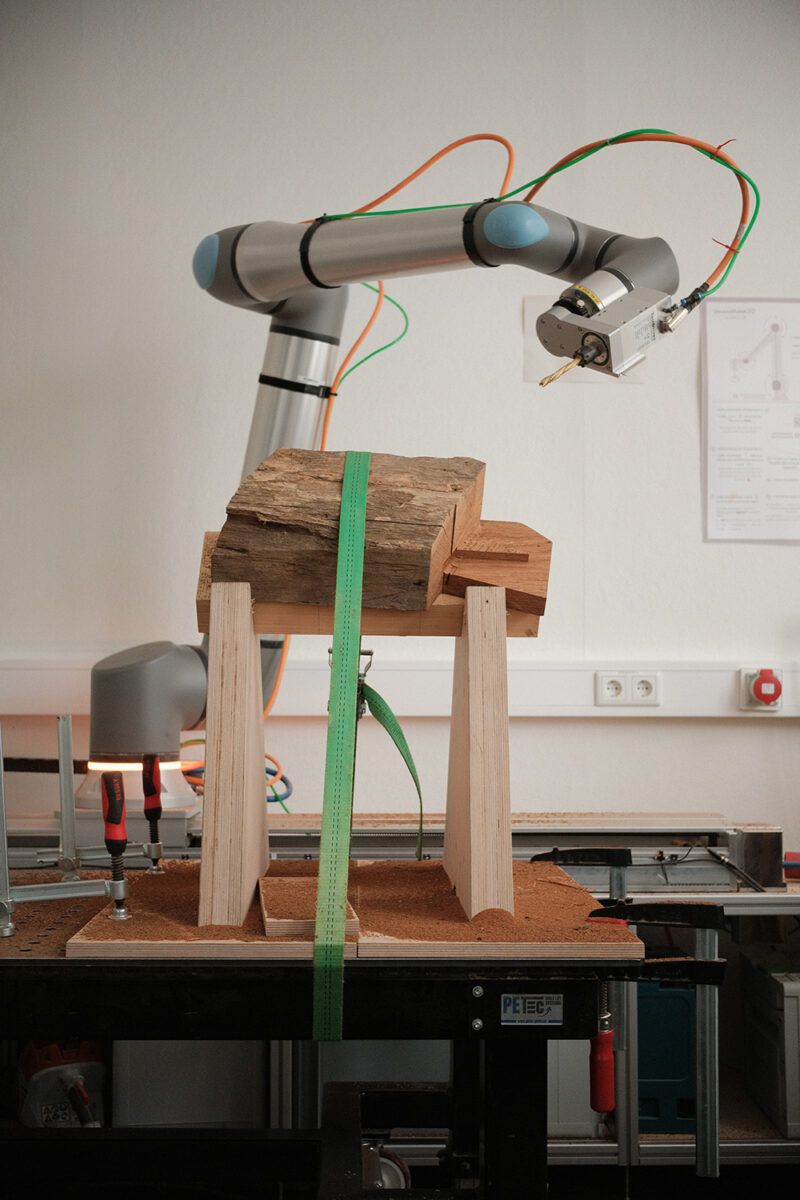
Robotic milling of waste wood. Photo credit: Beckert, Rüstemeier/TU Braunschweig
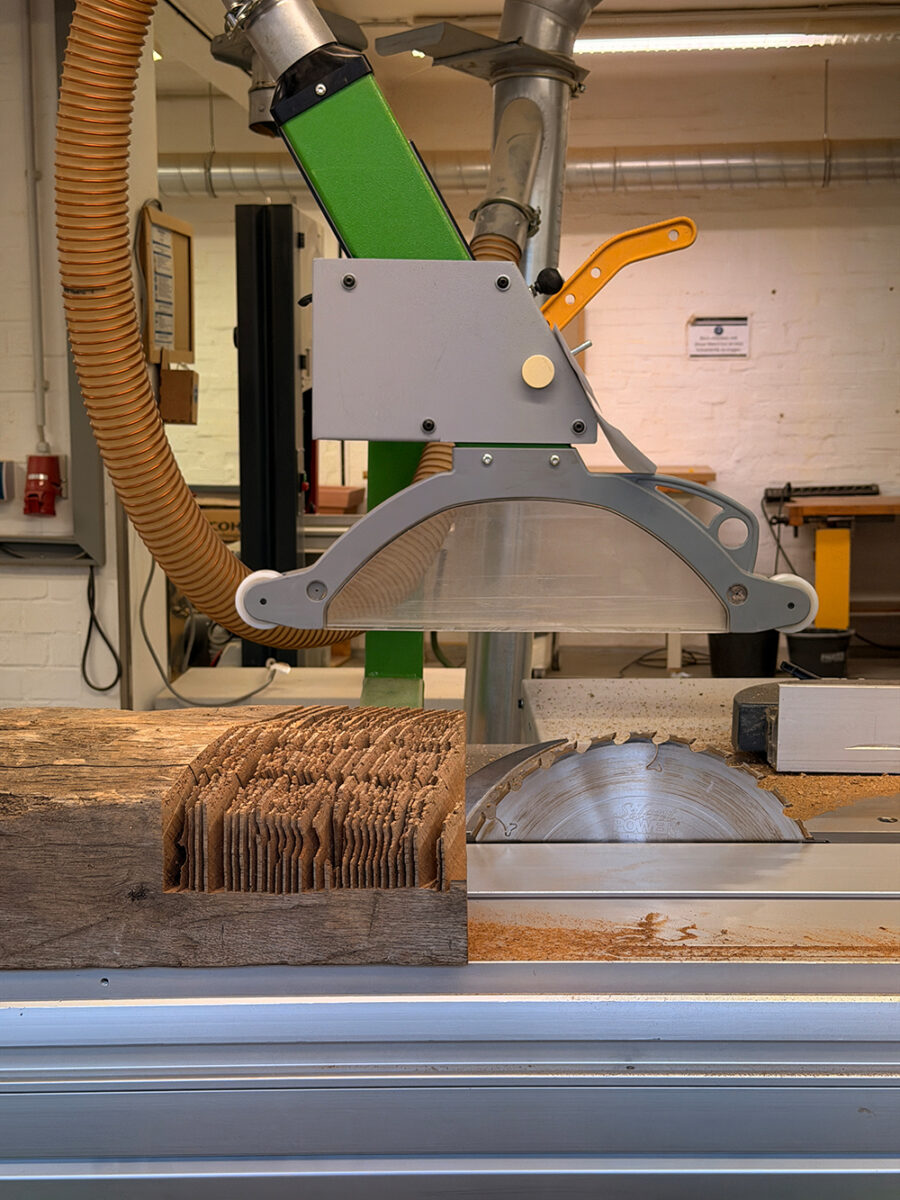
Preparation of waste wood. Photo credit: Beckert, Rüstemeier/TU Braunschweig
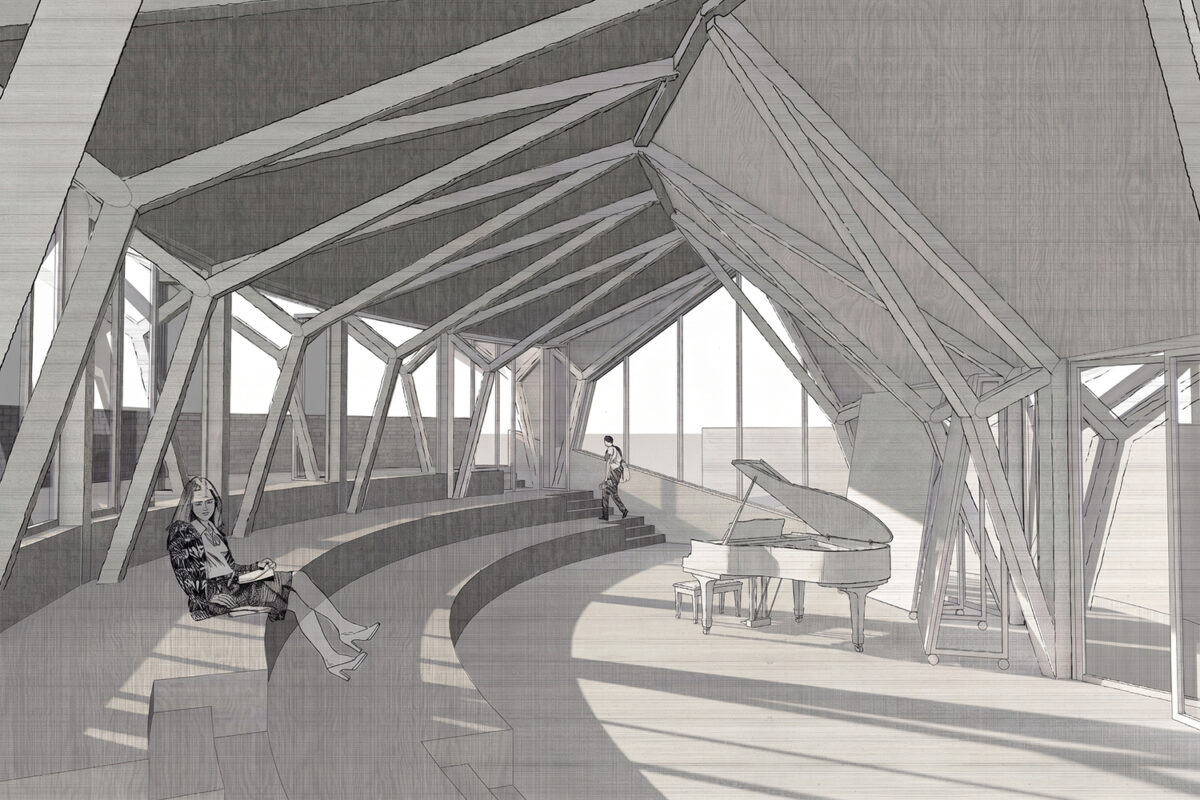
Conceptual visualisation of the auditorium. Photo credit: Beckert, Rüstemeier/TU Braunschweig
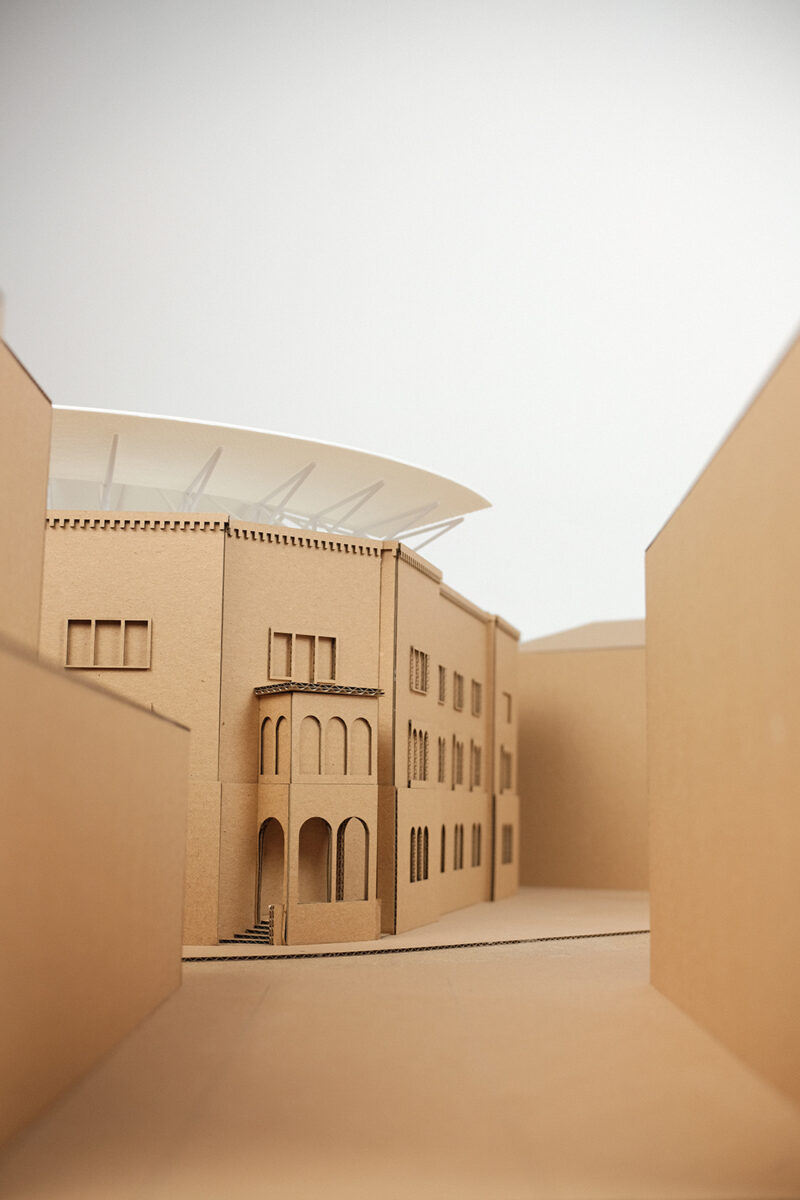
Street view, 1:100 scale model. Photo credit: Beckert, Rüstemeier/TU Braunschweig
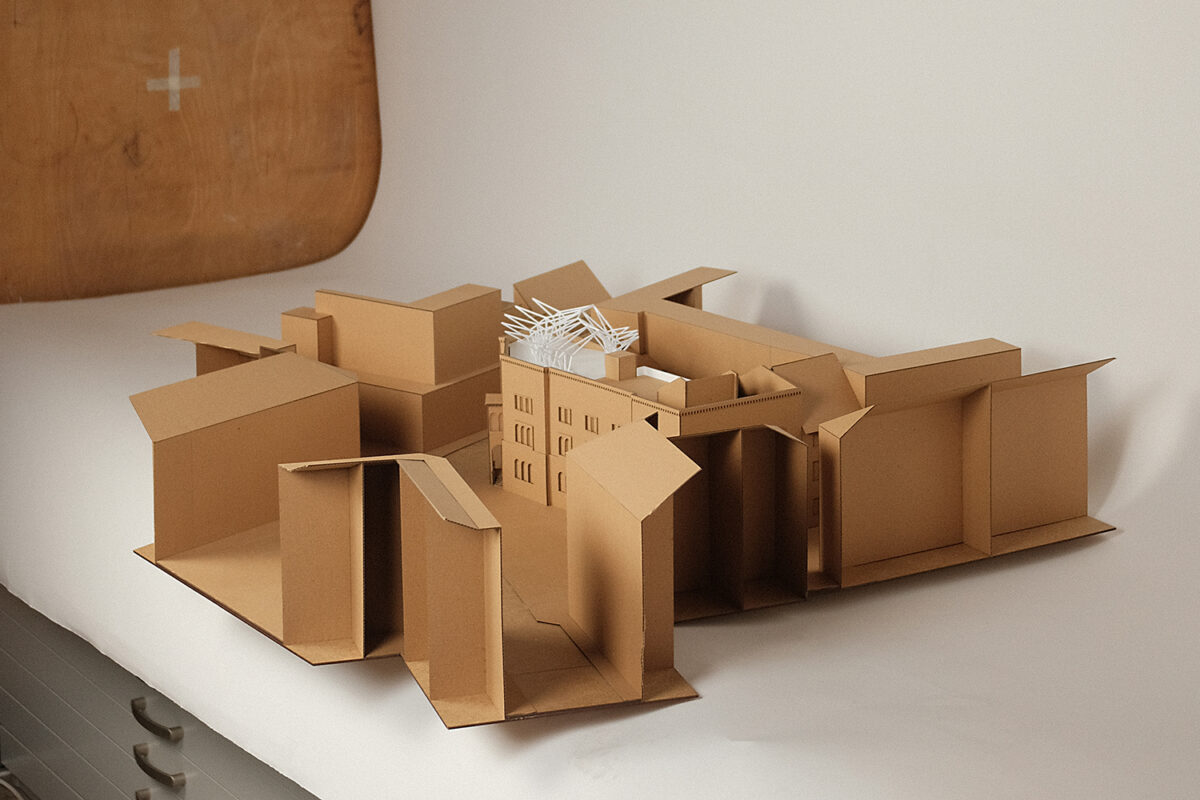
1:100 scale model of the surroundings. Photo credit: Beckert, Rüstemeier/TU Braunschweig
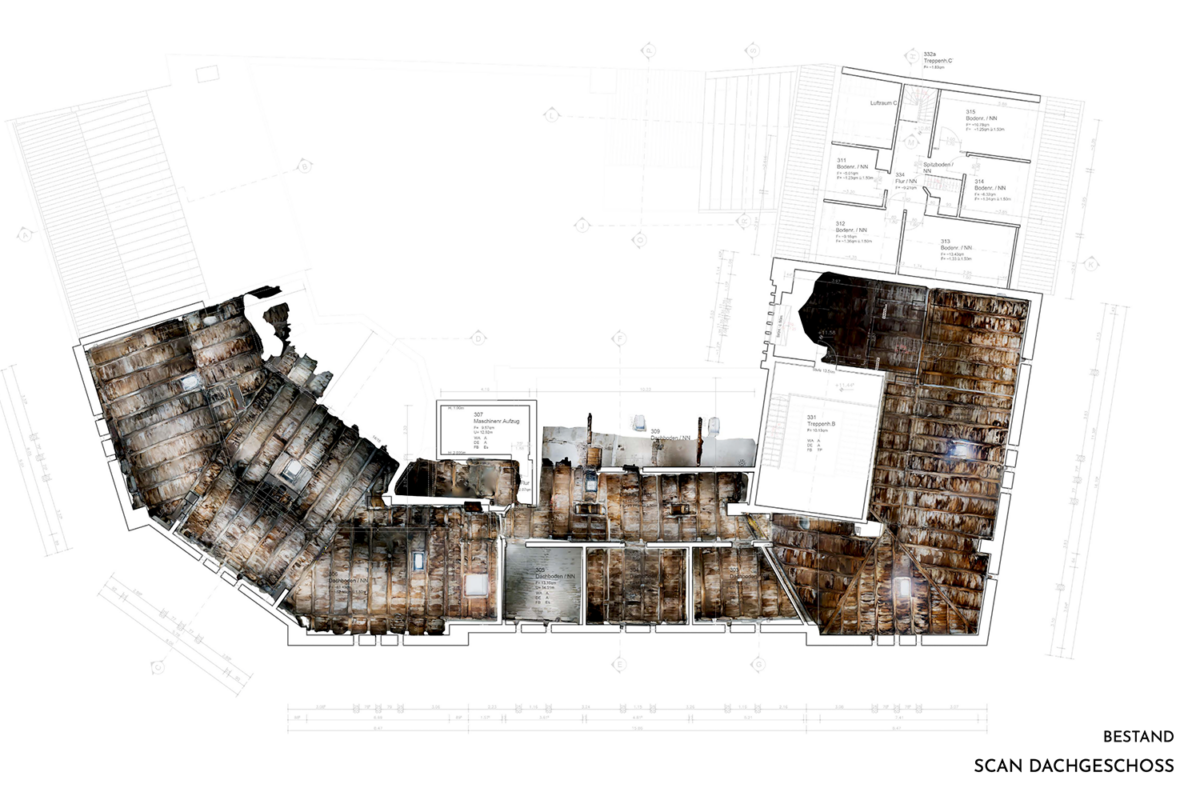
Floor plan of the top floor with scan. Photo credit: Beckert, Rüstemeier/TU Braunschweig
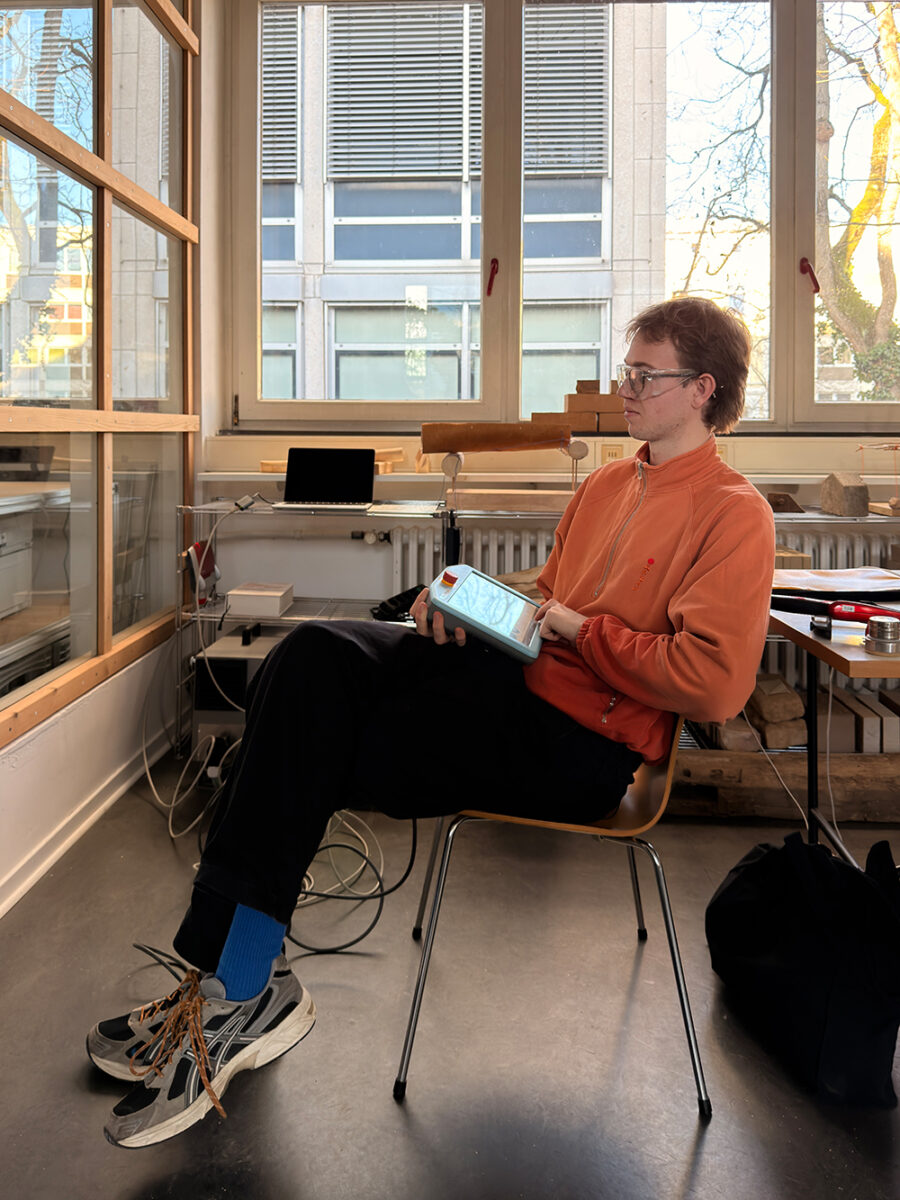
John Rüstemeier operating the robot. Photo credit: Beckert, Rüstemeier/TU Braunschweig
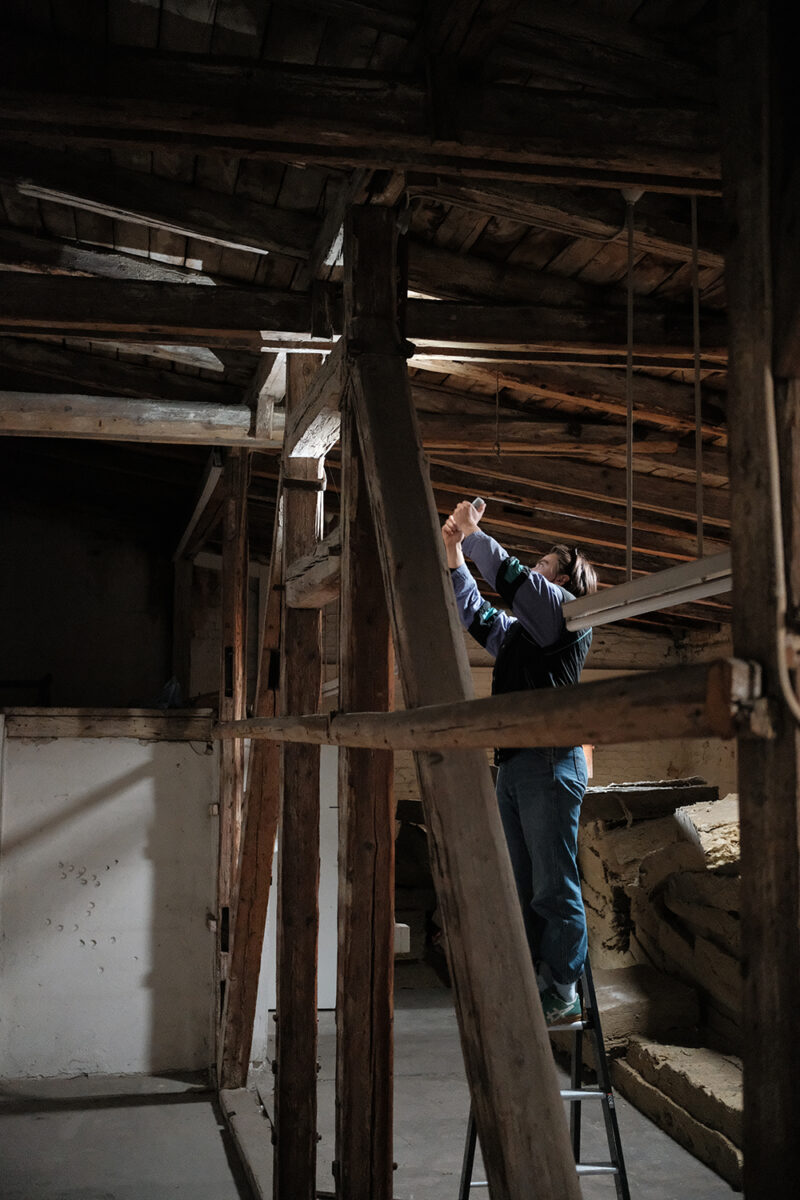
Digital survey. Photo credit: Beckert, Rüstemeier/TU Braunschweig
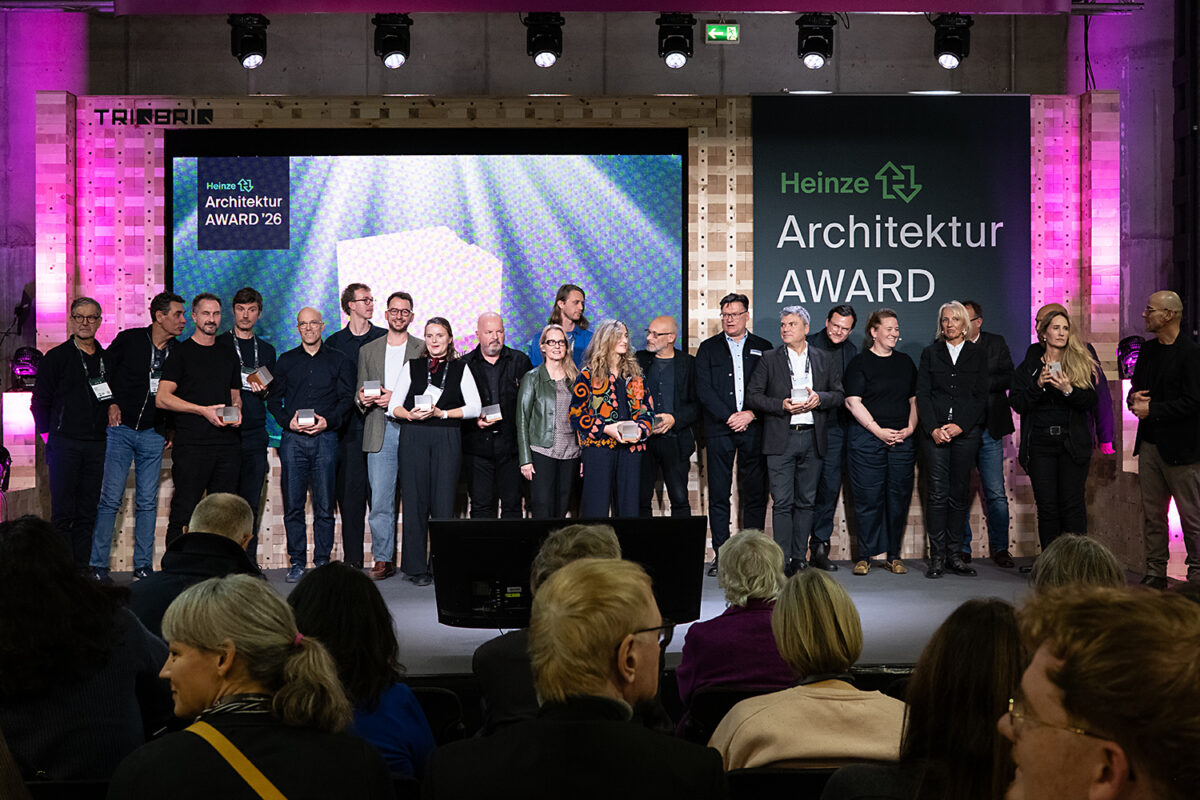
All the winners of the Heinze Architecture AWARD at the awards ceremony. Photo credit: Yamen Abou Abdallah
A symbiosis of old and new timber
In order to determine precisely which beam in the new building is to be made from which existing rafter – and where new timber is actually necessary – the students have developed a digital tool (Grasshopper script). The processing of the reclaimed timber is supported by a digital and robot-assisted process. A 1:1 joint fabricated in the IKON Robotic Timber Studio demonstrates the symbiosis between reclaimed timber and new spruce.
Professor Helga Blocksdorf is delighted with the award for the students: “Their work demonstrates how reclaimed timber can be completely reconfigured. The Robotic Timber Studio, with Robin Godwyll, Pia Brückner and Jonathan Heck, was utilised for this, where our robot acts as a tool enabling customised fabrication. At the same time, the Robotic Timber Studio also serves as a teaching method: expanding digitalisation in timber construction and incorporating it into the design process is a key factor for future building production in the context of changing forests. Dieter and John are currently specialising in the design with us, because the practice of re-use can only establish itself if the architectural quality meets the highest standards.”