
“Urban planning is not exclusively a metropolitan issue” Professor Lydia Rintz is the new Head of the Institute for Urban Planning and Design Methodology
What characterises a sustainable city? What role do existing buildings, public spaces and mobility play in this? These are the questions being explored by Professor Lydia Rintz, who has been the new Head of the Institute for Urban Planning and Design Methodology since 1 September 2026. Through her research and teaching, she aims to highlight ways in which the built environment in towns and cities of all sizes, as well as in rural areas, can be developed in a climate-friendly and public-interest-oriented manner. In this interview, she talks about her vision for the city of the future and the skills she wishes to impart to her students.
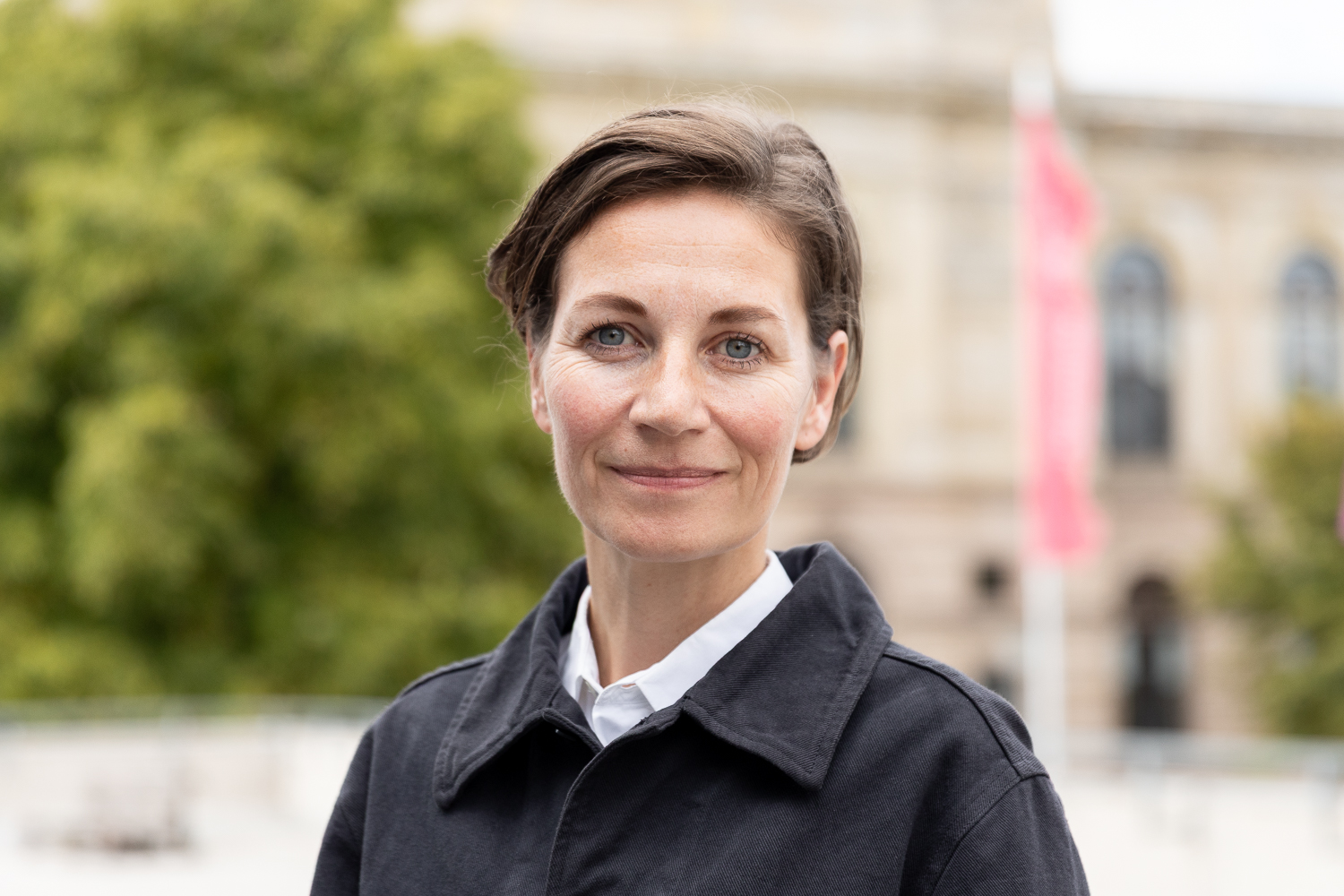
Professor Lydia Rintz. Photo credits: Kristina Rottig/TU Braunschweig
Professor Rintz, you have previously held professorships in Lübeck and Münster, two cities comparable in size to Braunschweig, both with historically significant old towns. Why did you decide to join TU Braunschweig now?
TU Braunschweig is an outstanding institution in the field of architectural teaching and research, with a very inspiring academic staff and a holistic, forward-looking approach to education. There are excellent opportunities for collaboration both within the department and across disciplines. I wholeheartedly endorse the university’s philosophy that transformation must be tackled as a joint endeavour by academia, industry, politics and society, transcending the boundaries of traditional disciplines and guided by the common good – a view I share wholeheartedly in my own field. Furthermore, the city of Braunschweig and its region are a particularly interesting location for teaching and research in urban planning, where the challenges of sustainable urban development present themselves in a wide variety of forms. I am very keen to get involved in working in and with the city of Braunschweig – and from within the city itself!
How would you explain your work to someone who is not familiar with the subject?
As an architect specialising in urban planning, my core concern is how we can develop our built environment in a sustainable manner whilst appropriately integrating the existing built heritage – in other words, how we can renovate and expand in a climate-friendly way. In this context, I see urban planning as a concrete spatial – but also substantive – interface that links the overarching, strategic level of planning with the neighbourhood and building levels.
I find it particularly fascinating to explore how we can appropriately redesign street space and the roadside to support sustainable mobility, how we can intensify and rethink urban spaces in terms of their diversity of use – and how we can achieve functional, design-related and also climate-related added value through necessary redensification.
At your firm, ARQ, in Berlin, you deal with small towns and rural areas more frequently than average. Can our students also expect this to be a key focus in your teaching?
In my teaching, too, it is important to me not to view urban planning exclusively as a metropolitan issue. In Lower Saxony, around 80 per cent of the population lives in small and medium-sized towns and in rural areas. Not only do they play a significant role in successful transformation, but they also have similar needs to those in densely populated centres: in all types of settlements, good access to work, education and infrastructure; adequate and affordable housing; space for interaction, socialising and participation; and the climate-resilient design of public and private spaces are of immense importance. Furthermore, small-town and rural areas – with their lower population density and less efficient use of land – are significantly more affected by demographic change, shifts in the world of work and fundamental changes in care provision structures.
For many students, engaging with small and medium-sized towns and rural areas is closely linked to their own lives and experiences. This is another reason why it lends itself very well to exciting teaching and teaching-research formats. At the ISE, we will be engaging intensively with these areas. I look forward to collaborating with various local authorities in this regard.
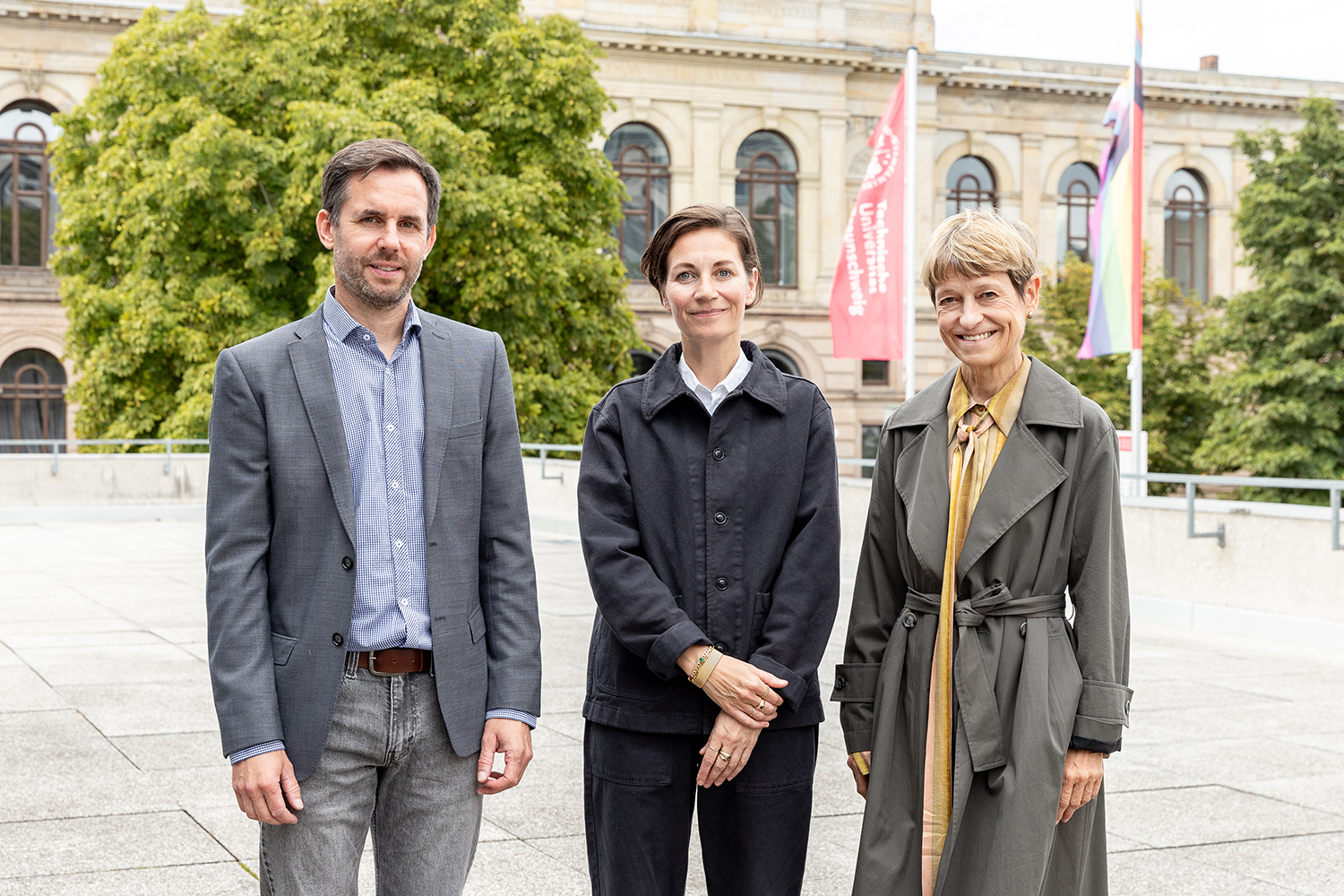
Photo credits: Kristina Rottig/TU Braunschweig
At TU Braunschweig, there is a core research area called ‘City of the Future’. As a professor of urban planning, what do you think the ‘City of the Future’ should look like?
At its best, the City of the Future is – as memorably formulated in the New Leipzig Charter, our current planning manifesto – green, equitable and productive. It must be resilient, adaptable and versatile, and allow sufficient scope for participation and experience, but also for experimentation. The city of the future is open to different ways of life and to technical innovation; it facilitates enriching coexistence and creates new substantive density, partly through spatial density.
What motivated you to conduct research in this field?
My own professional and academic development has fostered a great enthusiasm for the city as a space for research and action: The incredible complexity and dynamism of urban spaces is not only highly interesting from my perspective as a practising architect; it also allows me, in my research, to examine a wide range of currently relevant topics, to combine them thematically and to collaborate closely with researchers from other disciplines.
At the Institute for Urban Design and Design Methodology, our initial research will focus, amongst other things, on the climate-just and public-interest-oriented development of existing housing stock and commercial architectures. A particular focus will be on the often-neglected urban periphery. Further topics include quality-enhancing redensification and opportunities for saving space at the urban planning scale. Beyond research, I believe it is important to maintain close dialogue with politicians, local authorities and civil society, and to communicate our specialist content and key research areas in a simple and clear manner.
Part of the professorship is ‘Design Methodology’. What will you be teaching students in this area of teaching?
Given the major ecological, economic, social and political transformation processes and ongoing global crises, I see a key task in teaching as raising students’ awareness of these complex interrelationships and equipping them with the appropriate tools and methods for their future work in planning, so that they can respond effectively to uncertainties and unforeseen circumstances. Developing an independent approach to design is fundamental to this. In urban design, I believe it is important for students to understand built structures and the surrounding (open) space as a single planning and design unit, and to learn to consider and develop different scales – from the city to the neighbourhood and down to the building – in an integrated manner. Through practical assignments, students hone these analytical and design skills – and, furthermore, learn to communicate the ideas they have developed clearly and effectively through meaningful visualisations and presentations.
Your predecessor, Professor Uwe Brederlau, was also always actively involved in the Göderitz Prize here. Will you continue this work, or will you focus on other competitions for students?
I am delighted that Professor Uwe Brederlau has proposed that, alongside heading the institute, I should also take on the chairmanship of the Johannes Göderitz Foundation. The foundation’s work will therefore remain closely linked to TU Braunschweig. The Göderitz Prize, as an important platform for competition, learning and exchange involving many other universities, remains an integral part of the institute’s work. Beyond that, as an institute, we aim to enhance the recognition and visibility of students’ work through participation in competitions and the development of exciting exhibition and knowledge transfer formats.
How would you describe your day-to-day work in three keywords?
Varied, learning-intensive, fulfilling!