“I’m looking forward to lots of interdisciplinary ideas” Thomas Große is the new Professor of Production Measurement Technology
Since 1 October 2026, Thomas Große has been the new Professor of Production Measurement Technology at Technische Universität Braunschweig. His research combines modern sensor technologies with innovative recycling processes. Among other things, this involves determining how different materials in a waste stream can be distinguished so that they can be channelled into the most suitable recycling pathway. In this questionnaire, Große provides insights into his work, his goals and his motivation.
Professor Große, why did you choose TU Braunschweig?
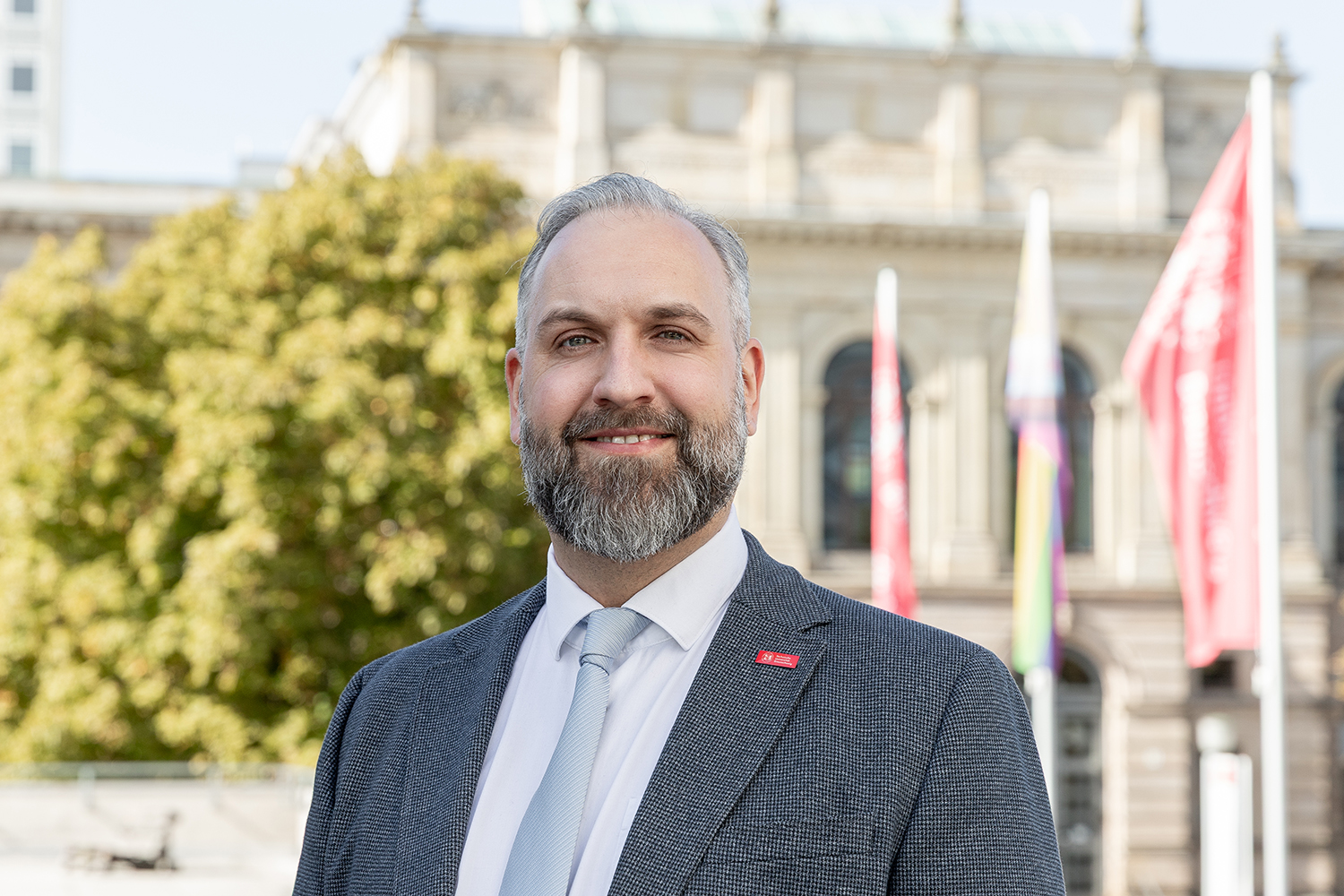
Professor Thomas Große. Photo credits: Kristina Rottig/TU Braunschweig
In my view, TU Braunschweig offers the best conditions for the research topics our society needs for a sustainable future, thanks to its geographical proximity and the close networks already in place with relevant partners in many areas. These include, for example, the PTB, the Open Hybrid LabFactory in Wolfsburg, the BLB, the NFF, the ZESS and the DLR – the list goes on and on. I’ve also had long-standing ties with TU Braunschweig; I studied here myself many years ago, completed my PhD here, and, in my last role in industry at Volkswagen, worked on many fantastic joint projects with the university. So it somehow feels a bit like ‘coming home’.
What exactly do you focus on in your research? How would you explain your work to someone outside the field?
Almost any material is recyclable in the context of the circular economy, provided it is kept separate by type. However, in today’s products, materials are usually combined for various reasons, which often makes recycling difficult and, in some cases, even impossible. Sorting technology is usually required to obtain fractions that are suitable for recycling again. In my research, I therefore focus on sensor-based detection of materials and material properties for the circular economy. This can include base materials and additives, as well as impurities or contaminants.
What core research areas and projects will you be working on at TU Braunschweig?
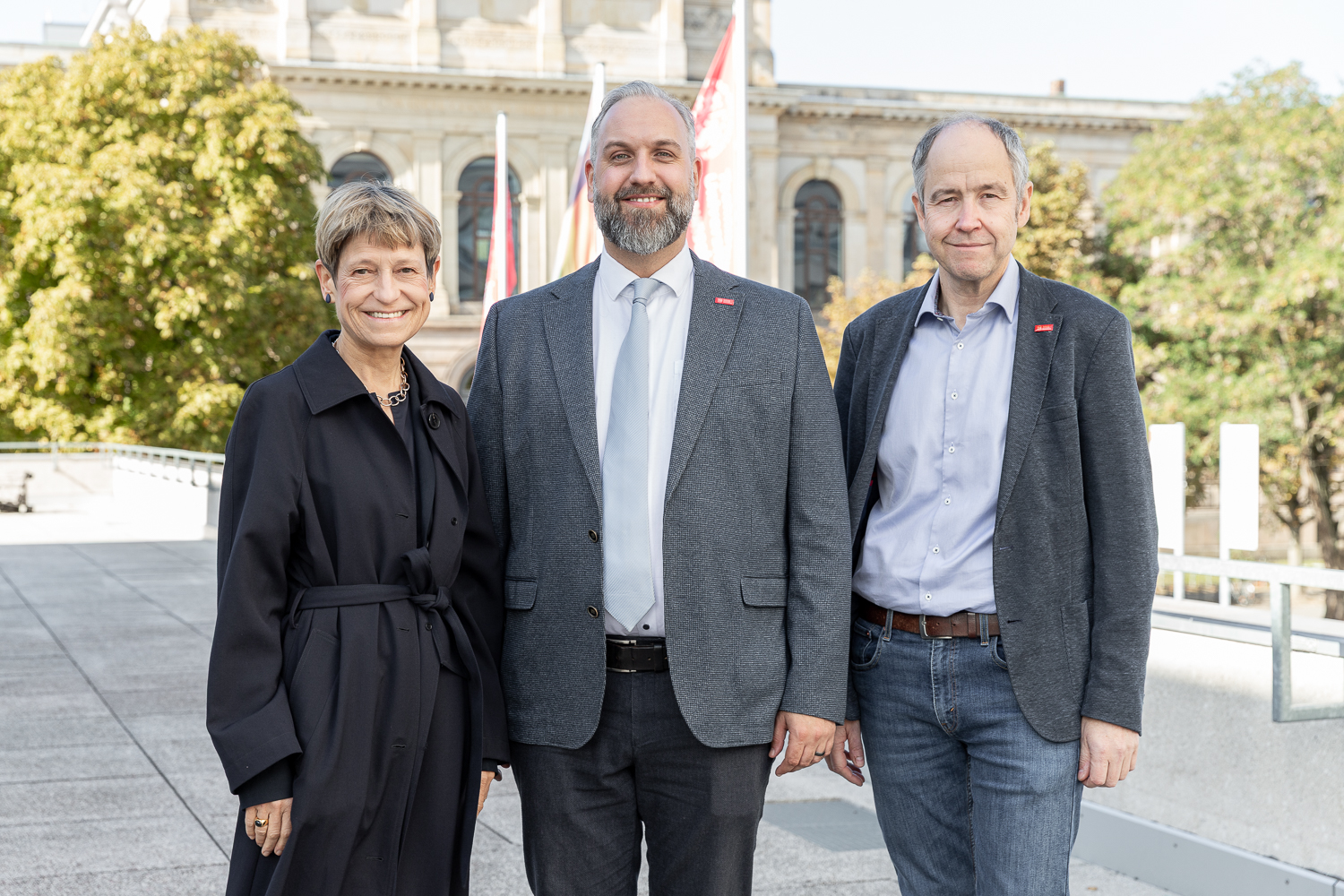
Prof. Thomas Große (centre) with TU President Angela Ittel and Prof. Markus Böl, Dean of the Faculty of Mechanical Engineering. Photo credits: Kristina Rottig/TU Braunschweig
One area of focus will be spectroscopic methods that function even under the harsh conditions of a recycling plant, and not just in the laboratory. This includes, for example, the integration of such systems into handheld devices or robotic end-effectors for manual or automated disassembly.
Other key areas will be in-process measurement technology and methods for defect detection. Furthermore, I also plan to continue the research topics previously pursued at IPROM, such as optical 3D measurement technology. And because one is always learning something new, I am already looking forward to many future interdisciplinary ideas with my fellow researchers! With a cross-cutting topic such as production measurement technology, I believe we are very well positioned.
What motivated you to conduct research in this field?
If you stop to consider how humanity is currently managing the Earth’s resources within a linear economy, it becomes clear relatively quickly that things cannot continue this way for long and that we must transition towards a circular economy. Beyond this purely ecological perspective, this approach also strengthens the resilience of domestic companies and supply chains, for example, against natural disasters or geopolitical conflicts. However, for material-specific recycling aimed at conserving resources, it is essential to answer the question: ‘What exactly do I have here, and how do I deal with it?’
How would you describe your day-to-day work in three keywords?
Planning, doing, learning