
How STEM education can be made accessible to everyone New collaborative project on extracurricular STEM activities launched
Enabling more young people to access high-quality STEM education – that is the aim of a new joint project between Technische Universität Braunschweig and Leibniz University Hannover. Using case studies, the researchers are examining successful approaches in order to derive concrete recommendations for practical application. From TU Braunschweig, the Institute for Science Education (IFdN) is participating in the project, which is funded by the Federal Ministry of Education, Family Affairs, Senior Citizens, Women and Youth (BMBFSFJ).
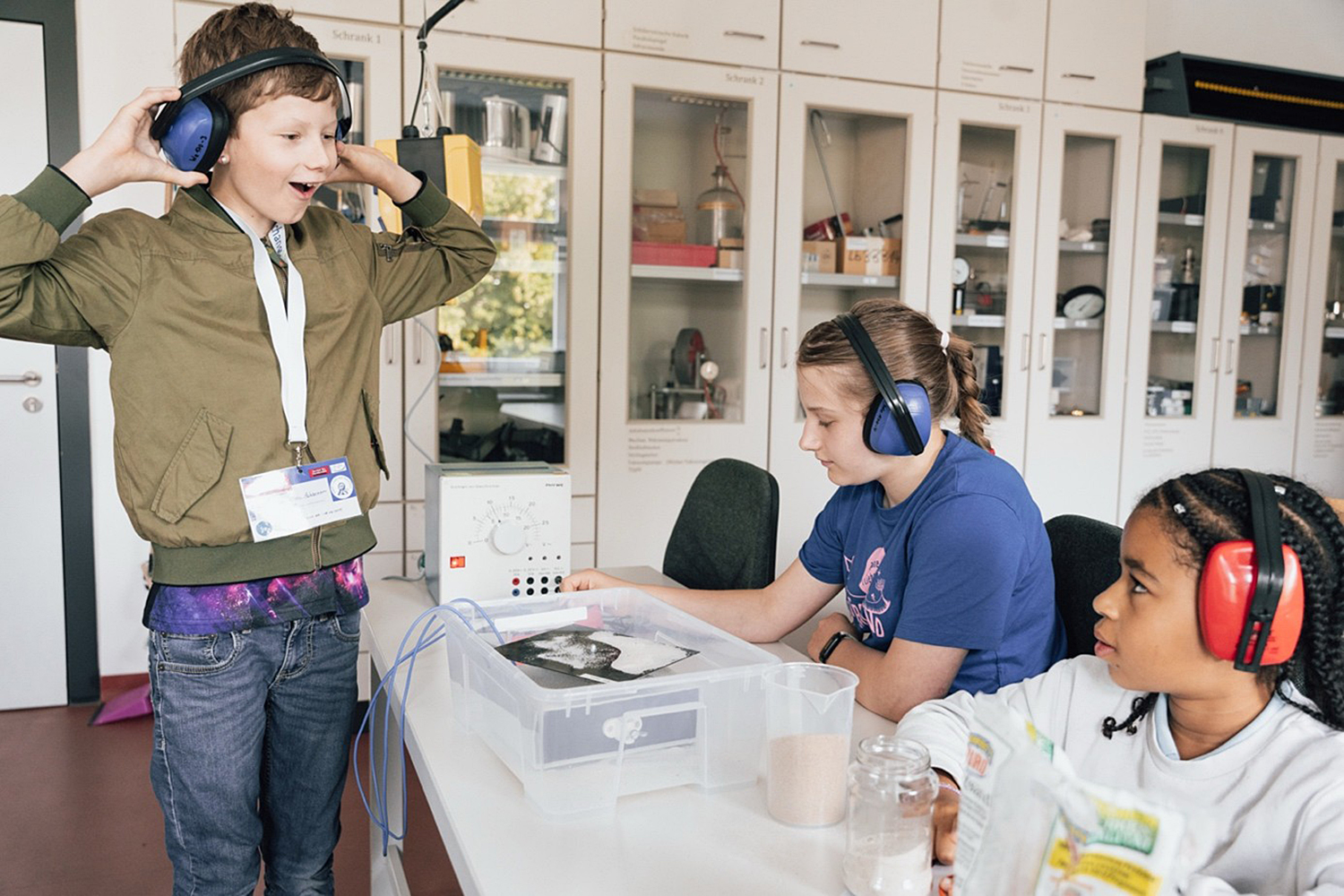
Not all children have the opportunity to take part in extracurricular STEM activities. Photo credit: Silja Klemenz/TU Braunschweig
Numerous extracurricular STEM programmes offer young people the chance to discover new things and specialise in their interests. In practice, however, not everyone takes advantage of these opportunities. Young people from previously under-represented groups, in particular, often face barriers. This is precisely where the project ‘Exploring Success Factors for Access, Use and Quality of STEM Programmes through Case Studies (MINT-FaSt)’ comes in: It investigates, within different educational ecosystems, what makes programmes more accessible and attractive. Using case studies, interviews and surveys, various programmes are examined in detail. This provides a comprehensive picture of which factors are crucial for ensuring that STEM programmes are better utilised. Particular focus is placed on collaboration between different stakeholders, as well as flexible, easily accessible learning venues.
Mobile learning programmes for young people
People from very different backgrounds design STEM learning programmes. Often, subject specialists from the natural sciences work closely with staff members from the education sector. “Programmes are particularly successful when the objectives of those involved are in harmony,” explains Professor Alexander Büssing, head of the sub-project “Cultures of Cooperation” and director of the Grüne Schule Braunschweig. Conflicting objectives can stand in the way of successful cooperation, which can affect collaboration between school-based and non-school-based stakeholders.
Furthermore, access for young people is often made more difficult by the fact that programmes are hard to reach or barely visible. Mobile formats in particular can help here. They bring STEM learning opportunities directly to young people, especially in regions where there have been few such opportunities to date. “In Braunschweig, we are currently setting up a mobile programme with the LeoVan. From late summer onwards, this will be able to specifically reach schools for which a visit to Braunschweig is less accessible,” explains Dr Anne Geese, who heads the sub-project “Reducing barriers to access to programmes through spatial flexibility”. The LeibnizLab in Hanover offers an exciting opportunity for comparison from which the success factors of mobile programmes can be derived.
Kick-off meeting at the Teacher Training Campus in Hanover
The project’s kick-off meeting took place recently at the Teacher Training Campus of the Leibniz School of Education at Leibniz University Hannover. During the meeting, the various sub-projects were presented and specialisation in terms of the project schedule and shared objectives was discussed in detail. Professor Sascha Schanze (Director of the Leibniz School of Education and Professor at the Institute for Science Education, Leibniz University Hannover) also provided an insight into the research methodology of case-based work. Helene Pachale (also from the School of Education) presented ideas on science communication and knowledge transfer.
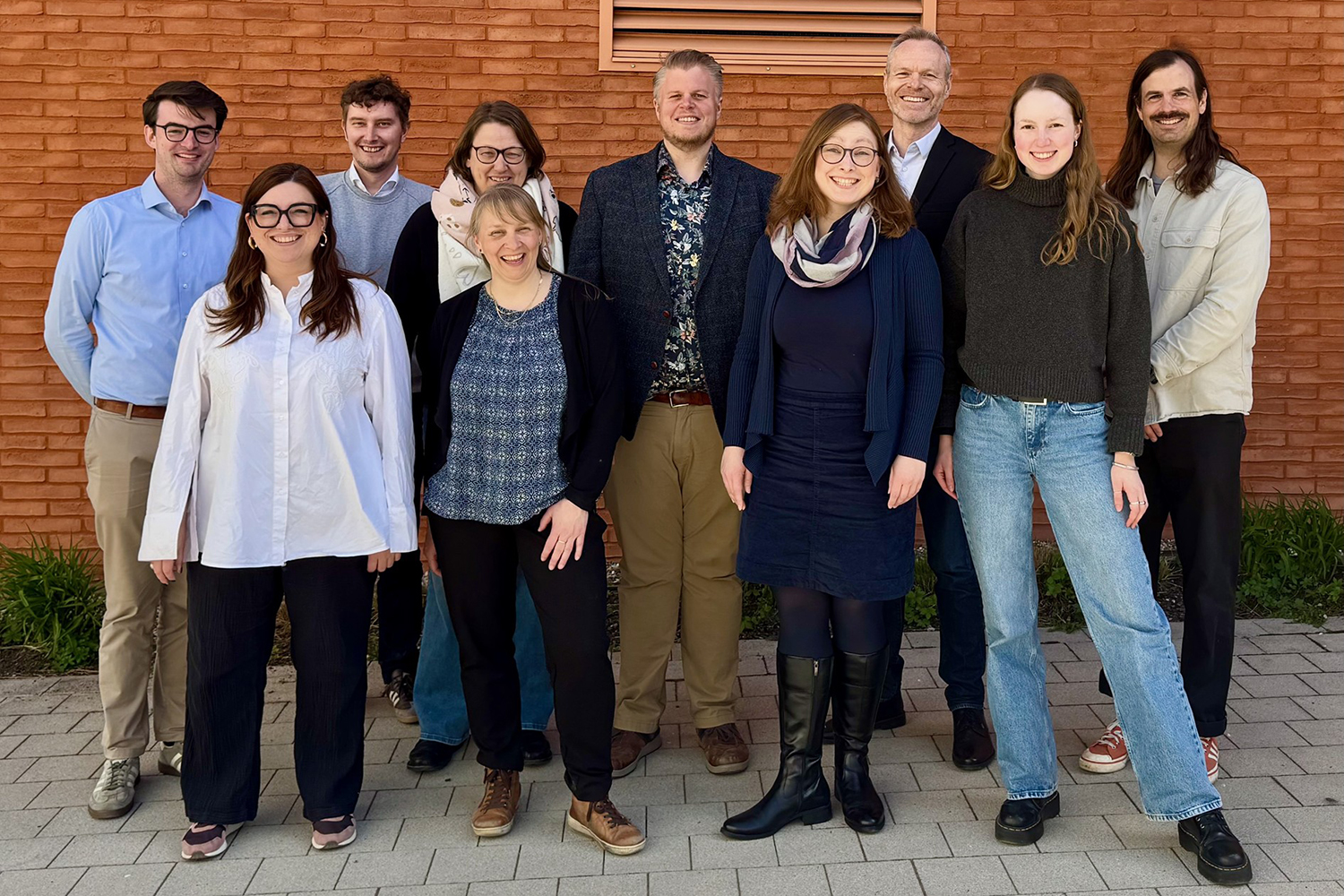
Project launch at the Leibniz School of Education (front row, from left to right): Carina Pniok, Dr Anne Geese, Helene Pachale, Marie Vahldiek; back row, from left to right: Dorian Thomsen, Prof. Dr Till Bruckermann, Prof. Dr Claudia Schomaker, Prof. Dr Alexander Büssing, Prof. Dr Sascha Schanze, Prof. Dr Moritz Börnert-Ringleb. Photo credit: Leibniz University Hannover
Outlook for the use of scientific results
The scientific results are also to be incorporated into teacher training in the coming years. The aim is to present the results in such a way that they can be directly applied in practice – both in schools and in out-of-school learning programmes. In the long term, this should inspire more young people to take an interest in STEM subjects and ensure they are better reached.
Project details
The project is funded with approximately €850,000 under the second funding line on the conditions for successful STEM education by the Federal Ministry of Education, Family Affairs, Senior Citizens, Women and Youth (BMBFSFJ). The consortium is led by Professor Till Bruckermann (Institute of Educational Sciences, Leibniz University Hannover). In addition, Professor Claudia Schomaker, Professor Moritz Börnert-Ringleb (both from the Institute of Special Education) and Professor Gunnar Friege (Institute of Mathematics and Physics Education) from Leibniz University Hannover are conducting research within the project. From the TU Braunschweig, Dr Anne Geese and Professor Alexander Büssing (Institute for Science Education) are each involved in a sub-project.