From Braunschweig to Sapporo New perspectives on quantum magnetism
Professor Stefan Süllow from the Institute of Condensed Matter Physics is undertaking an eight-week research visit at Hokkaido University in Sapporo. This visit has been made possible by a JSPS Invitational Fellowship from the Japan Society for the Promotion of Science (JSPS). The Invitational Fellowship is one of the JSPS’s well-established and internationally recognised funding schemes for collaboration with researchers from abroad.
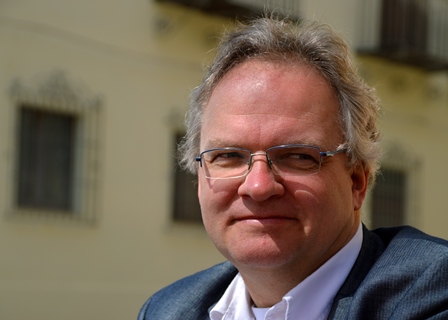
Prof. Dr. Stefan Süllow from the Institute of Condensed Matter Physics. (Photo: private)
The host for this visit is Professor Hiroshi Amitsuka, a professor in the Department of Physics at Hokkaido University. His research focuses, amongst other things, on novel magnetic properties and electronic states in condensed matter, and he is particularly active in the field of experimental solid-state physics.
The joint project centres on the mineral atacamite – a naturally occurring material that serves as a model system for a frustrated quantum magnet. Its distinctive structure consists of interconnected triangles that form what is known as a magnetic sawtooth chain. Because the magnetic moments within this structure cannot all align completely antiparallel at the same time, unusual magnetic states arise.
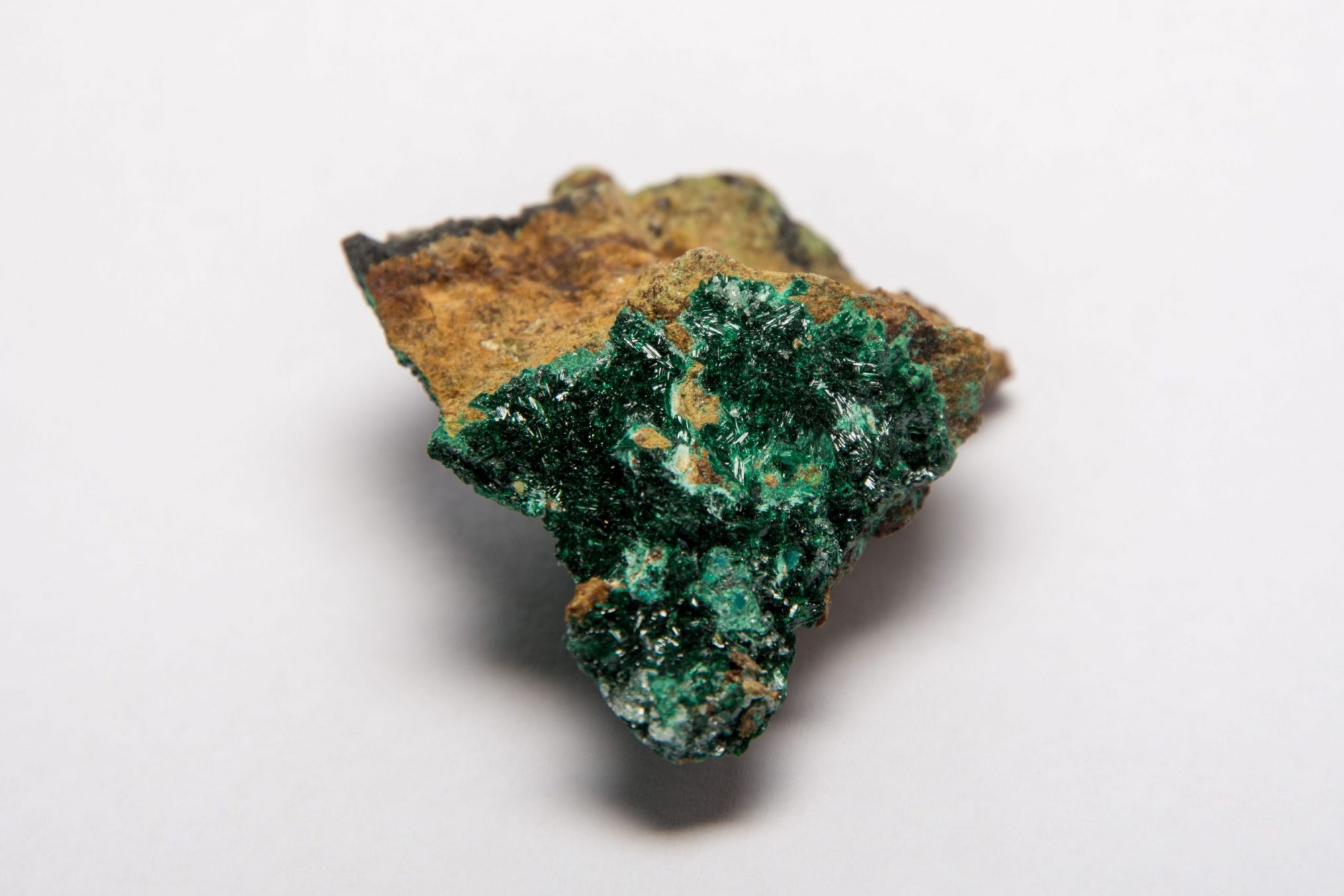
A naturally formed atacamite crystal on rock. Photo credits: Leonie Heinze/TU Braunschweig
Atacamite has already been studied extensively at TU Braunschweig. In a paper published in 2021, the mineral was characterised as a model system for a quantum magnetic sawtooth chain. More recent studies have also shown that atacamite exhibits a surprisingly strong magnetocaloric effect at low temperatures: under high magnetic fields, the material can cool down significantly. This makes atacamite of interest not only for fundamental research into quantum magnetism, but potentially also for the development of novel magnetocaloric cooling concepts.
“My stay in Sapporo ties in directly with this research. Together with Prof. Amitsuka, I am continuing to investigate the physical properties of the frustrated quantum magnet atacamite and aim to contribute to a better understanding of this material’s unique properties and the underlying magnetic mechanisms. The visit offers the opportunity to bring together the expertise of the two research centres more closely and to develop new perspectives on the material,” says Professor Süllow.
Another component of the fellowship is academic teaching. During his stay, he will deliver a block lecture on the topic of ‘Frustrated Magnetism’ at Hokkaido University. Thus, the exchange is not solely about joint research, but equally about sharing knowledge and perspectives with local students and researchers – very much in the spirit of international cooperation, which the JSPS programme expressly aims to promote.
Particularly pleasing is the link to previous work carried out in Braunschweig: research into frustrated materials has not only led to highly acclaimed scientific results but has also been recognised at the early-career level. Dr. Leonie Heinze, who played a key role in the work on frustrated magnetic materials, was awarded the 2024 Heinrich Büssing Prize, worth 10,000 euros, for her outstanding dissertation.
About the Invitational Fellowships
The JSPS awards its Invitational Fellowships to distinguished researchers from abroad to facilitate joint research projects, academic exchange and discussions with researchers in Japan. The programme is generally open to all subjects within the humanities, social sciences and natural sciences. A distinctive feature of the programme is that applications are not submitted by the invited researchers themselves, but by their Japanese hosts via their university or research facility.
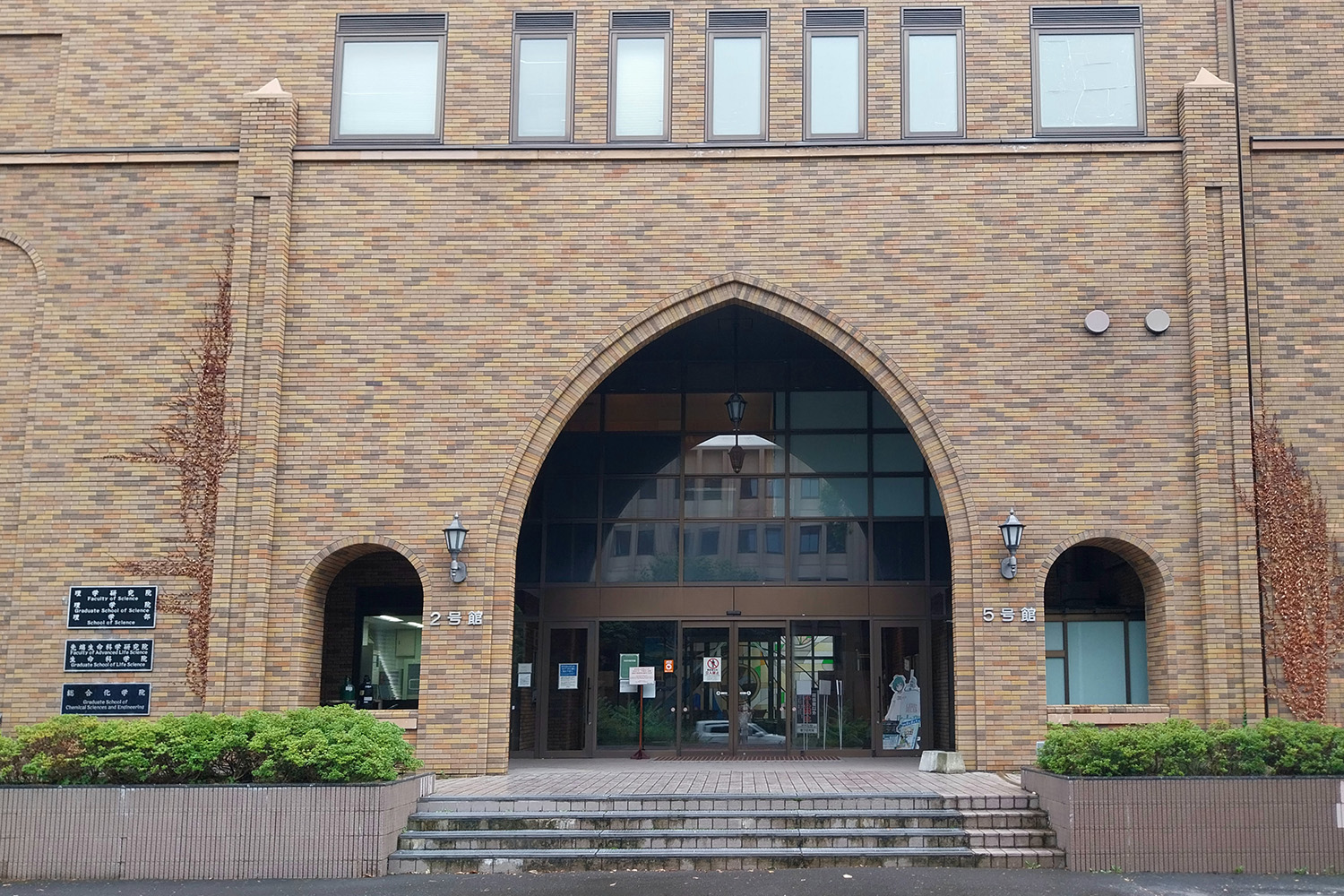
Entrance to the Faculty of Science at Hokkaido University in Japan. Photo credits: Stefan Süllow/TU Braunschweig