
“Two key technologies of the energy transition combined in a single degree programme” Professor Michael Heere on the award-winning degree programme at TU Braunschweig
In the MINTchallenge plus 2026, the Stifterverband, in collaboration with the Dr. Friedrich Jungheinrich Foundation, sought out innovative technical degree programmes that specifically train students to become skilled professionals – and found them, among other places, at Technische Universität Braunschweig’s Faculty of Mechanical Engineering with the Bachelor’s degree programme ‘Battery and Hydrogen Technology’. In this interview, programme spokesperson Professor Michael Heere discusses the distinctive features of the department at TU Braunschweig.
Why do you think this particular degree programme was recognised?
Good question – I can only answer that hypothetically. But I am very sure that it is because it combines two key technologies of the energy transition within a single degree programme. We do not view batteries and hydrogen as competing technologies, but as complementary ones. At the same time, we place great emphasis on practical relevance and training through laboratory practicals, individual supervision and close links with current research and industry.
From the coming winter semester, the new Master’s programme in ‘Battery and Hydrogen Technology’ will be offered at TU Braunschweig. What are the advantages of this programme?
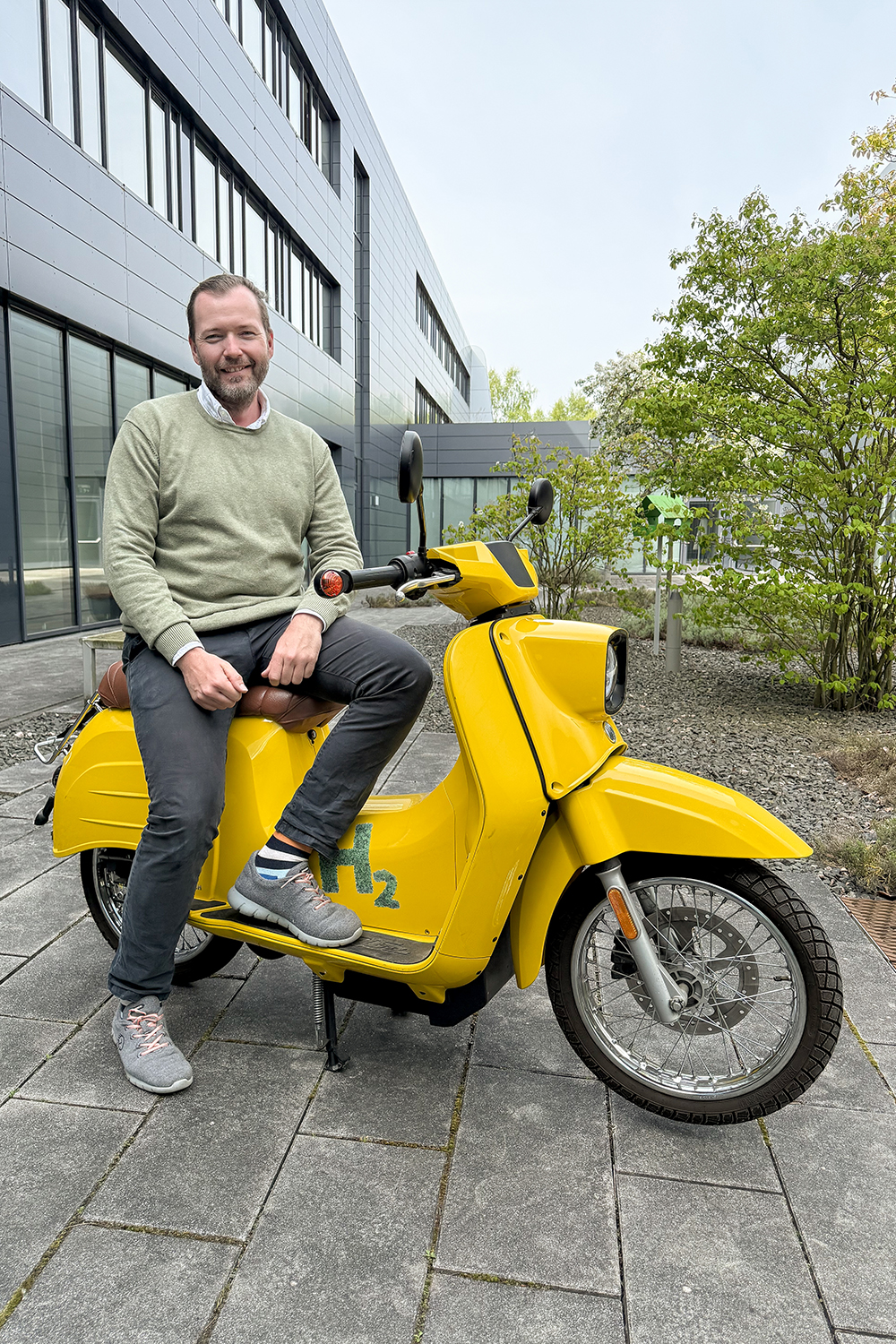
Programme spokesperson Professor Michael Heere on the ‘H2-Schwalbe’, a Vespa powered by fuel cells. Photo credits: Jessica Lüders/TU Braunschweig
Anyone wishing to help shape the energy and mobility systems of the future will find the right training here. This internationally oriented Master’s programme provides a deep understanding of batteries, hydrogen and their integration into real-world applications. Through close links with research projects and industry partners, students not only learn about the technology but also its practical implementation. Furthermore, a period abroad during the course is easily achievable. For example, you could complete your dissertation at one of our numerous excellent partner institutions, such as in Japan or Canada.
The Braunschweig location: What unique opportunities are available to students here whilst studying battery and hydrogen technology?
Braunschweig offers one of Germany’s strongest research networks in the field of mobility and energy systems. Thanks to our network of research centres – the Braunschweig Labfactories for Batteries and more (BLB+), the Wasserstoff Campus Salzgitter e.V. and the Hydrogen Terminal – students can get involved in real research and development projects at an early stage. Through close collaboration between the university, research institutions and industry, they gain practical insights early on and can actively help shape the technologies of tomorrow.
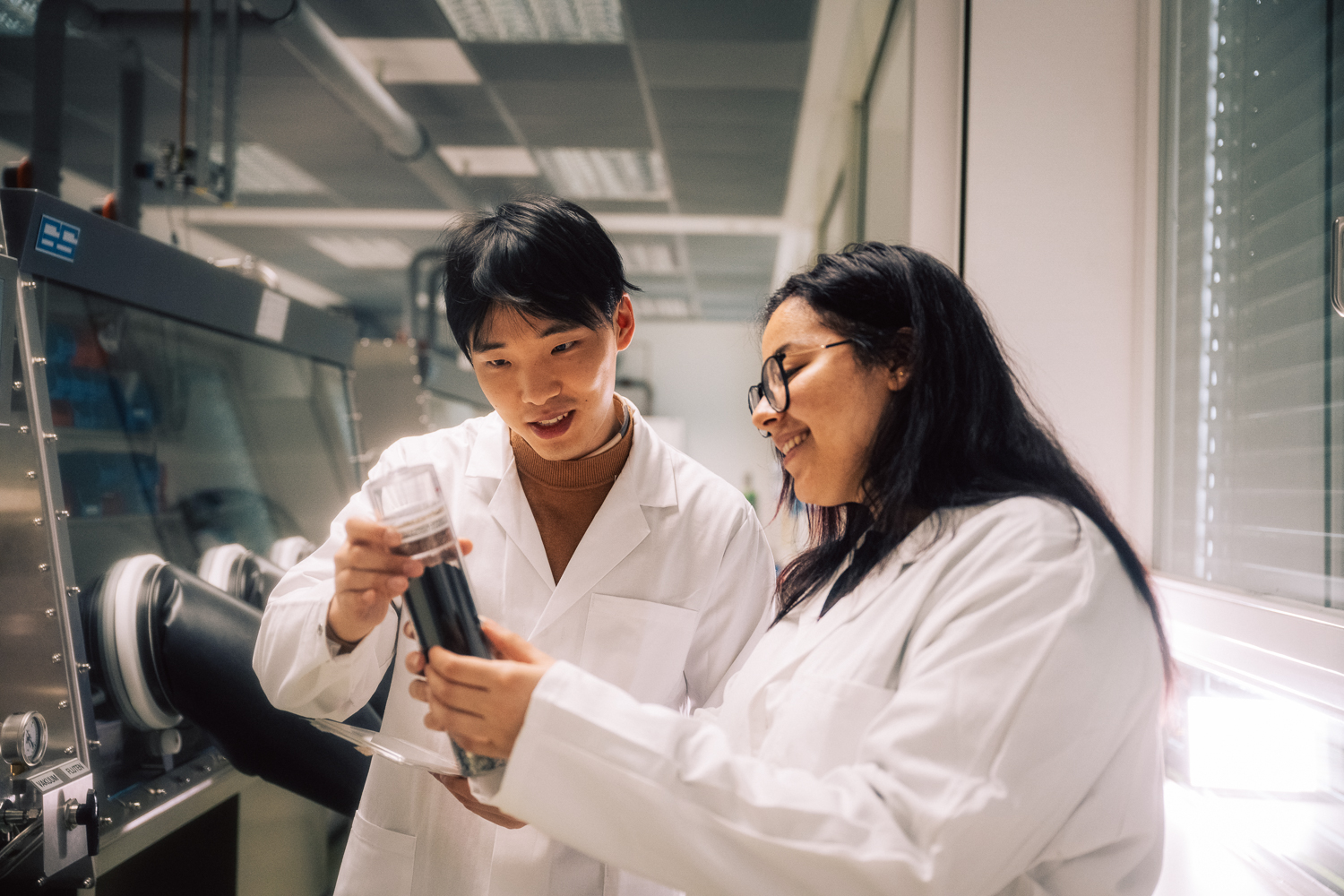
Whilst studying battery and hydrogen technology, students can get involved in real research and development projects at an early stage. Photo credits: Giovanna Gahrns/TU Braunschweig
In uncertain times, young people long for secure prospects for the future. Why can battery and hydrogen research offer precisely that?
The energy transition requires many solutions and creative minds. Batteries will be the best choice in many areas. Hydrogen will be particularly important where large amounts of energy need to be stored or transported – for example, in industry, heavy goods transport or aviation.
Anyone working on these technologies today is tackling key issues for the future and opening up excellent prospects in research and industry. What matters to me personally is this: we should not be fighting for a single technology, but for the best solution for each specific application.