
Real-world projects for STEM students
In June, students from across Germany gathered at the FutureMINT conference in Berlin, organised by the Stifterverband. There, they presented their ideas for enhancing STEM education at universities. Among them were students from Technische Universität Braunschweig, who presented the concept “Futurlink: Projects for All – Real-world Projects in Higher Education”. The aim: to make project work accessible to all students.
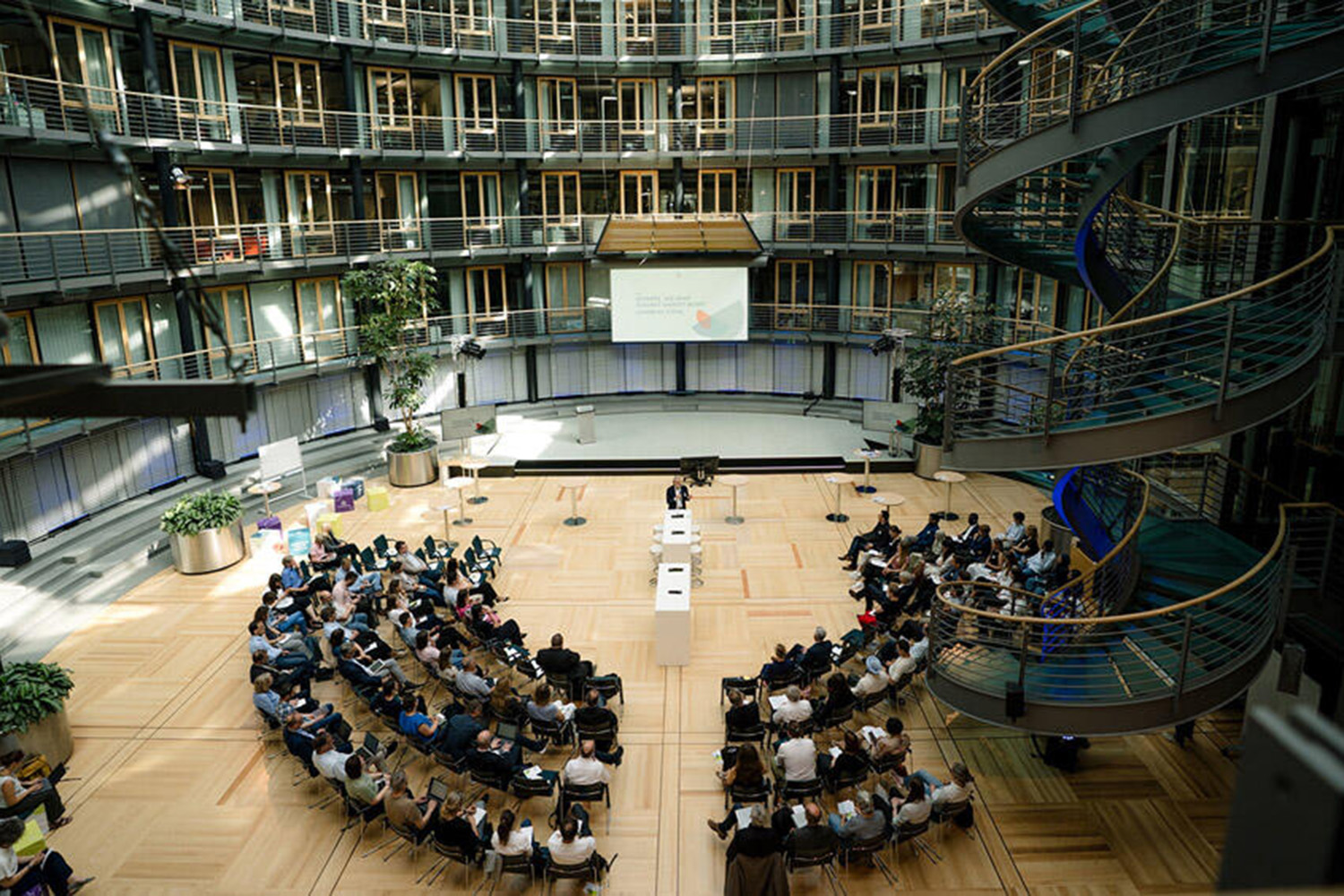
FutureMINT Conference on 18 June 2026 at the Allianzforum Berlin. Photo credit: Hanns Schmelzer
STEM subjects (mathematics, computer science, natural sciences and technology) are under pressure. Universities are grappling not only with a shortage of instructors, but also with a decline in interest among many school pupils, the high demands posed by digitalisation (artificial intelligence, digitalisation and data literacy), and intensified competition for qualified graduates.
But how can study plans, practical relevance and learning environments be designed to make university studies more attractive? A jury from the Stifterverband selected students from across Germany to take part in a thinkathon in Braunschweig in March 2026, organised on the initiative of Professor Robert Hänsch. At this event, teams work collaboratively to develop innovative solutions to complex problems – in this case, to improve STEM education at universities. The best concepts were presented in a pitch on 18 June 2026 at the FutureMINT conference in Berlin to university management, programme coordinators and industry representatives.
Concept involving TU Braunschweig: A marketplace for project experience
Two students from Braunschweig were also involved in developing the concept “Futurlink: Projects for All – Real-World Projects as Part of Your Studies” (PDF). Their idea: a platform – similar to a marketplace that would make it easier for students to access project work in non-academic settings. The aim is to ensure that no student leaves university without having gained problem-solving skills through project experience. To facilitate this, the platform is designed to help students access projects both in companies and within the university.
The students received intensive support during the thinkathon held in March at TU Braunschweig, both in developing their ideas and in preparing their pitch. The subsequent online coaching was conducted jointly by a representative from the Stifterverband and a representative from the sponsor, Tata Consultancy Services (TCS). In addition to these joint sessions, the teams also continued to coordinate their work independently. The aim was to refine the concepts so that they could be presented convincingly to a high-profile audience at the FutureMINT conference.
A key outcome of the conference was that the students took centre stage and were able to discuss their ideas directly with decision-makers.
“This format was very well received by all those involved. Particular emphasis was placed on the fact that the students were treated with great openness and as equals. The opportunity to present their ideas on a major stage was seen as a mark of appreciation and opened up numerous networking opportunities,” says Carolin Friese from the Stifterverband für die Deutsche Wissenschaft.
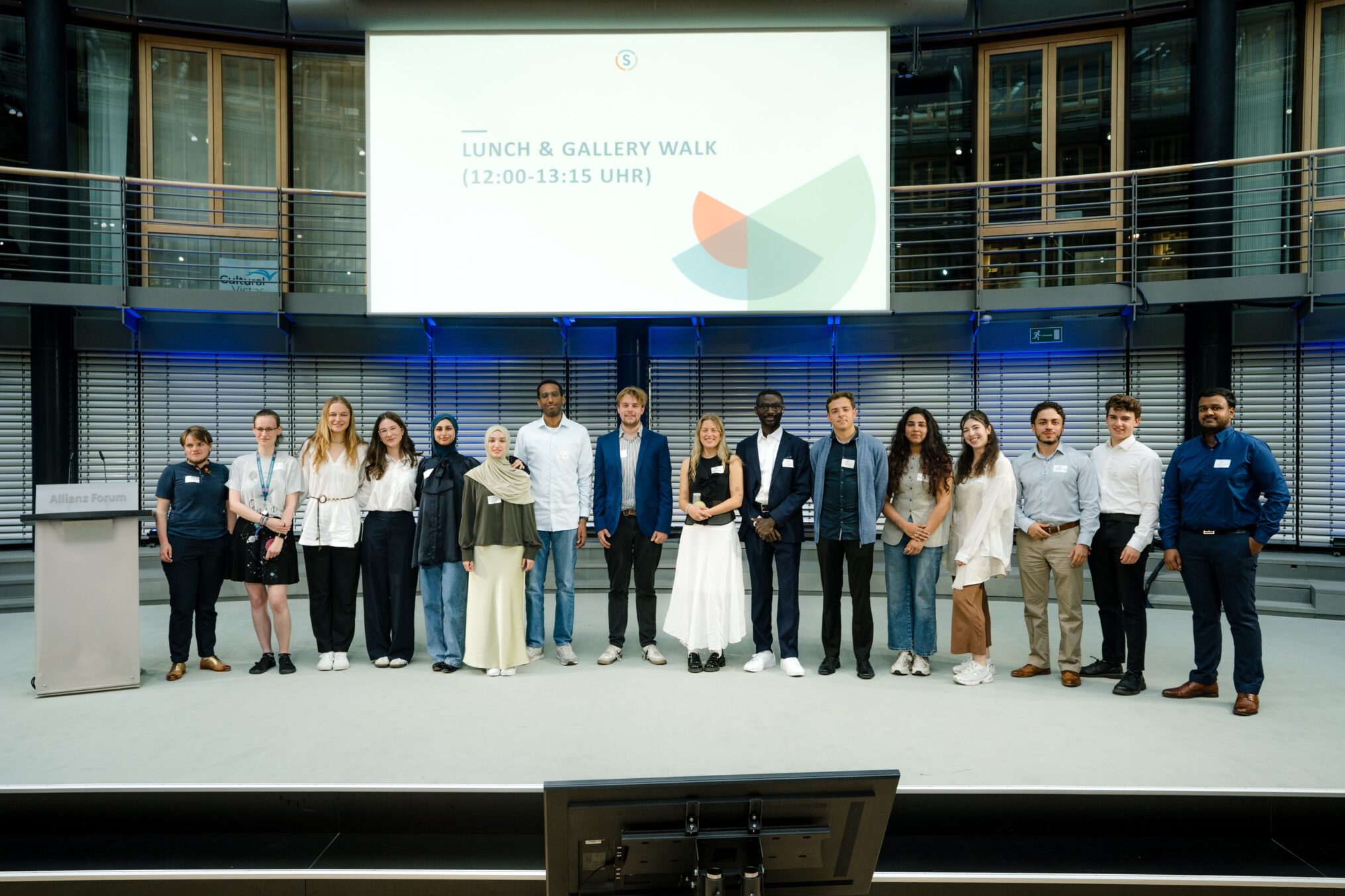
All the teams that presented their ideas for improving STEM education in pitches. Photo credit: Hanns Schmelzer
From idea to implementation
During the conference, interested parties were recruited for so-called Communities of Practice, which aim to support further implementation. Several universities also expressed an interest in adopting the presented ideas and assessing their applicability to their own institutions. This laid the groundwork for putting the developed concepts into practice beyond the scope of the event itself.
The Stifterverband is supporting the ongoing implementation process. Another Community Call is planned for October, during which it will be assessed which ideas have already been adopted and where further support is needed. In parallel, funding opportunities are being sought to implement selected concepts in a structured and long-term manner. This process is expected to continue into the coming year.
The students made it clear that they have already invested a great deal of time and commitment in developing the concepts alongside their studies and other commitments. They now consider it to be the responsibility of the universities, the Stifterverband and other stakeholders to work together to develop and implement these ideas.
About the Thinkathon and the FutureMINT Conference
The Thinkathon and the FutureMINT Conference form part of the “Zukunftsmission Bildung” (Education for the Future) initiative, through which the Stifterverband seeks innovative contributions to the further development of STEM higher education. One component of this is the MINTchallenge plus, which specifically targets forward-looking degree programmes that set new standards for study and teaching as examples of best practice. In parallel, the FutureMINT Thinkathon brings together students from across Germany to share their perspectives and ideas for the future of STEM degree programmes.
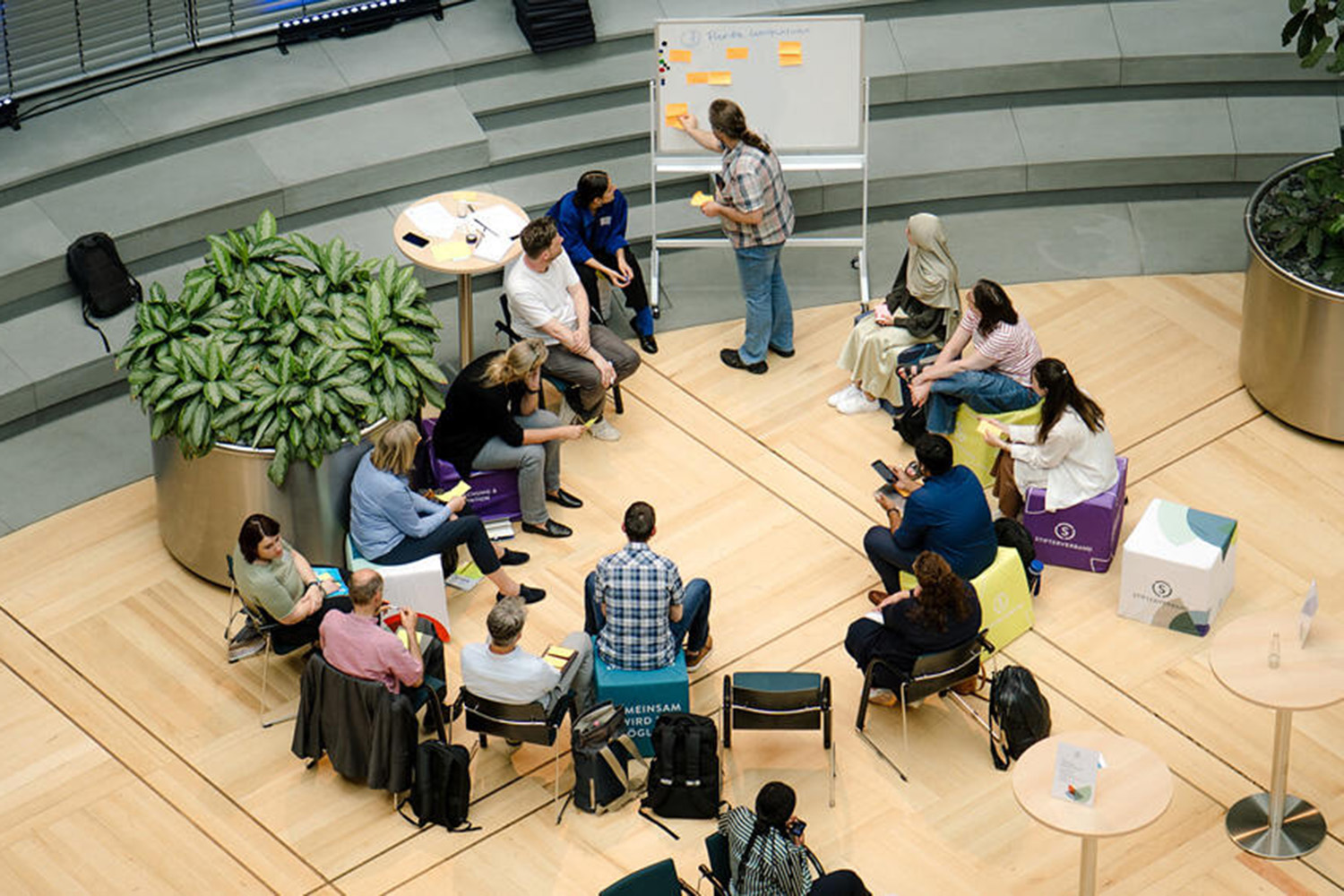
At the FutureMINT Conference in Berlin, the concepts selected during the Thinkathon were presented to university management, programme directors and representatives from industry. Photo credit: Hanns Schmelzer