
Democracy needs conviction Workshop supports teaching staff in dealing with everyday racism and discrimination
What should you do if discriminatory or anti-democratic remarks are made during a course? A workshop organised by the #Buntstadt Initiative aims to give teaching staff at Technische Universität Braunschweig the confidence to deal with such situations and to foster a teaching and learning environment in which diversity is the norm. In an interview, two of the organisers, Dr Britta Wittner and Dr Konrad Schäfer, explain why this initiative is particularly important right now and what participants can expect.
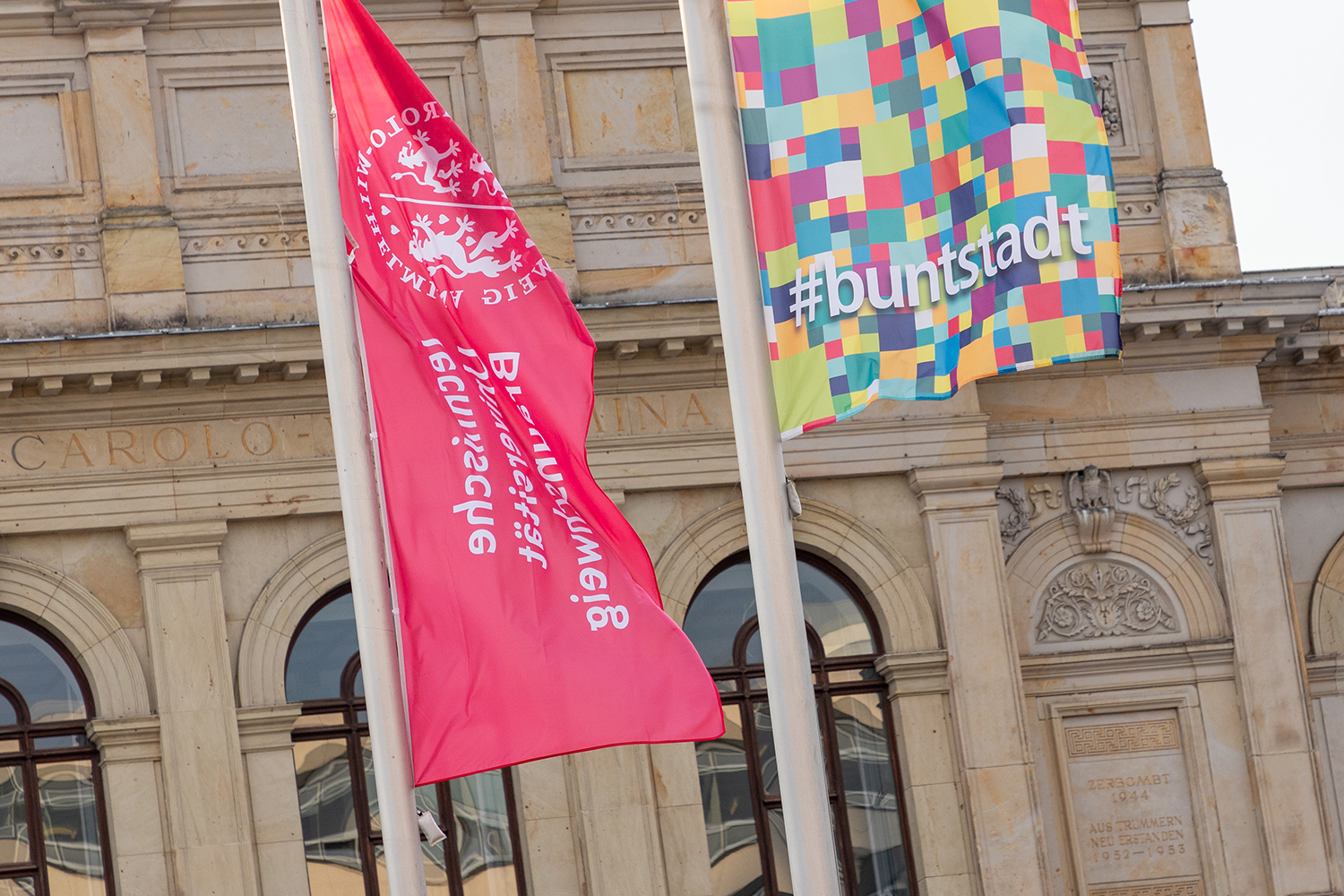
The #Buntstadt flag was raised on Universitätsplatz to mark International Democracy Day. Photo credit: Kristina Rottig/TU Braunschweig
Why is a workshop on everyday racism and discrimination in higher education needed? Why is this topic particularly relevant right now?
Konrad Schäfer: The idea arose as part of the Buntstadt initiative, in which the TU Braunschweig has been involved from the outset. Last year, following the Buntstadt conference, various working groups were set up – including a university group. Together, we considered which issues we would like to promote at the university in the long term.
Britta Wittner: We were already involved last year with a contribution to Democracy Day. However, our aim is not just to highlight the issue on a single day of action, but to have a lasting impact within the university. This has led to two formats: firstly, this workshop for teaching staff, and secondly, a series of events for students next year. And there will also be another Democracy Week with several social events at the TU Braunschweig.
We are particularly pleased that the Executive Board is very involved and committed to this issue. In addition, many different stakeholders are getting involved – including the Staff Council, the ver.di works council, the Equality Office, the Diversity Office, the AStA and numerous individuals. This broad collaboration sends an important signal.
Is this about specific problems at the university, or about developments in society as a whole?
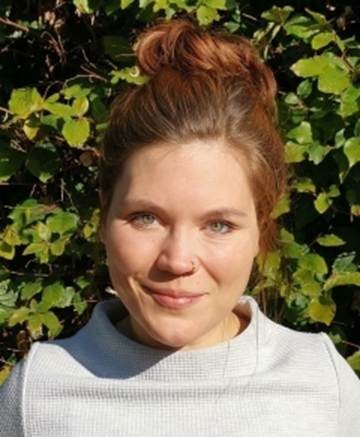
Dr Britta Wittner, Head of the University–Trade Unions Cooperation Office at TU Braunschweig. Photo credit: Nora Höft
Britta Wittner: We are seeing that, overall, anti-democratic attitudes are on the rise in society and that the boundaries of what can be said in public are shifting. Universities are a reflection of society. That is why these developments do not stop at the university gates.
Konrad Schäfer: This is not about reacting to specific incidents at TU Braunschweig, but about visibly reinforcing democratic values, giving them space and taking preventive action. The university should remain a place where people can study and work safely, regardless of their background or identity. We are concerned with important fundamental questions: How do we want to treat one another? How important is democracy? Which values do we want to stand up for?
What is the aim of the workshop?
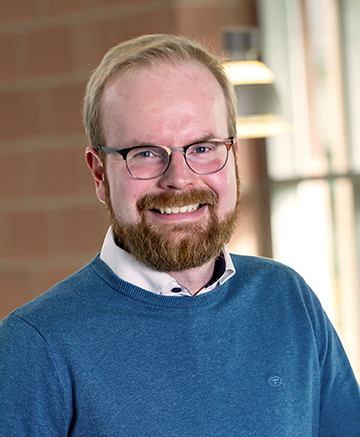
Dr Konrad Schäfer, Managing Director of the Faculty of Humanities and Education. Photo credit: Philipp Ziebart/TU Braunschweig
Britta Wittner: The focus is on everyday discriminatory or anti-democratic remarks, such as those that may arise in courses. The initial aim is to raise awareness of such situations and improve our ability to recognise them. It is also about instilling the necessary sensitivity in people who would not otherwise be affected by such moments – by everyday discrimination.
At the same time, teaching staff should learn about possible courses of action. This is because many find such situations unexpected, feel uncertain and ask themselves: How do I respond appropriately? How do I address a discriminatory remark without throwing the whole course or lecture off balance? This is particularly true when the issue has no direct academic connection to the seminar or lecture and the teaching staff member has no expertise in the matter.
The workshop therefore does not aim to impose any restrictions on language. Rather, the focus is on contextualising situations, perceiving them sensitively and providing appropriate ways to respond.
Konrad Schäfer: As a university, we also have a responsibility to actively protect diversity, academic freedom and democracy. We do not view this as a reaction to acute problems, but as an ongoing task.
What forms of discrimination play a role here?
Britta Wittner: At universities, we generally encounter the same forms of discrimination and anti-democratic attitudes as in society as a whole – such as everyday racism or sexism. This isn’t about particularly obvious incidents. Often, people who do not experience discrimination themselves do not even perceive certain situations as problematic. This is precisely where the workshop comes in. It is designed to help participants develop an awareness of different experiences.
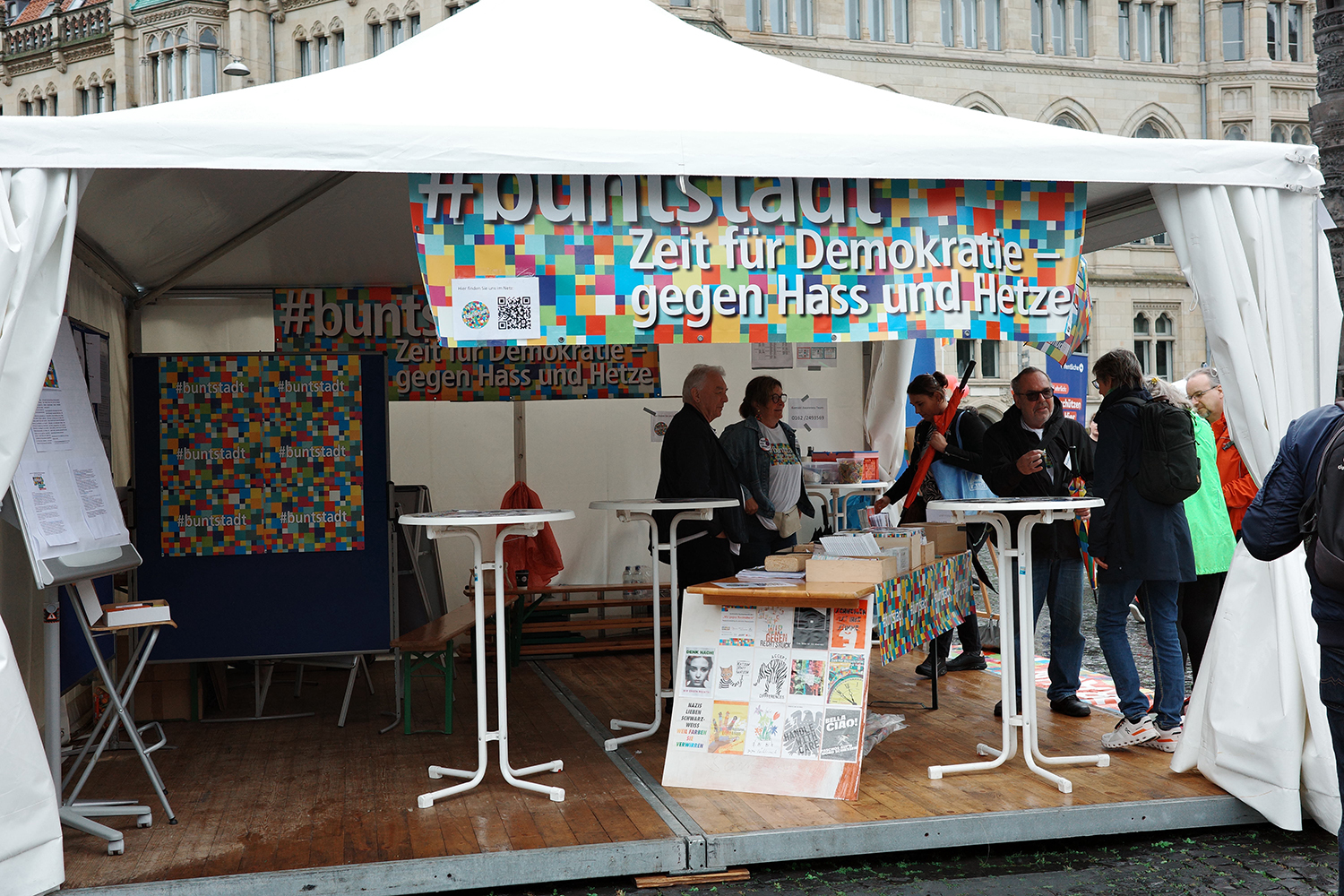
The Buntstadt Initiative also took part in Lower Saxony Day. Photo credit: Konrad Schäfer/TU Braunschweig
What exactly can workshop participants expect?
Konrad Schäfer: The workshop is aimed at anyone who would like to be better equipped to act in the situations described – without regretting afterwards that they didn’t speak up. We will try out short, practical ways of responding that can be used in everyday life, practise typical scenarios from teaching, and work together to develop strategies for taking a stand without causing the situation to escalate. Our aim is to foster a teaching and learning environment in which diversity is taken for granted and disparaging remarks are not left unchallenged. The facilitator, Helga Gundlach, will structure the session flexibly. The focus is not on rigid solutions, but on developing a personalised toolkit of approaches.
Helga Gundlach has been engaged in both academic and practical work on the topics of democracy, discrimination, communication and conflict management for many years. She works as a speaker and lecturer in various fields, and is a trainer and consultant specialising in intercultural skills, diversity and intercultural openness processes.
What other events are planned?
Britta Wittner: In early September, there will be a social event on the principle of neutrality featuring Hannah Vos from the research portal FragdenStaat. A lecture series specifically aimed at students is also planned for next year.
Konrad Schäfer: By the way, we’d be delighted to welcome anyone who’d like to join the university group. Anyone interested in these topics is warmly invited to get involved.