
Weed control in transition – International experts meet in Braunschweig
From 24 to 26 February 2026, Braunschweig once again became the centre of herbological research: 150 participants from six countries gathered at the House of Science for the 32nd German Working Meeting on Weed Biology and Control. The long-standing conference was jointly organised by the Julius Kühn Institute (JKI), the Institute of Plant Biology at Technische Universität Braunschweig and the Herbology Working Group of the German Phytomedical Society.
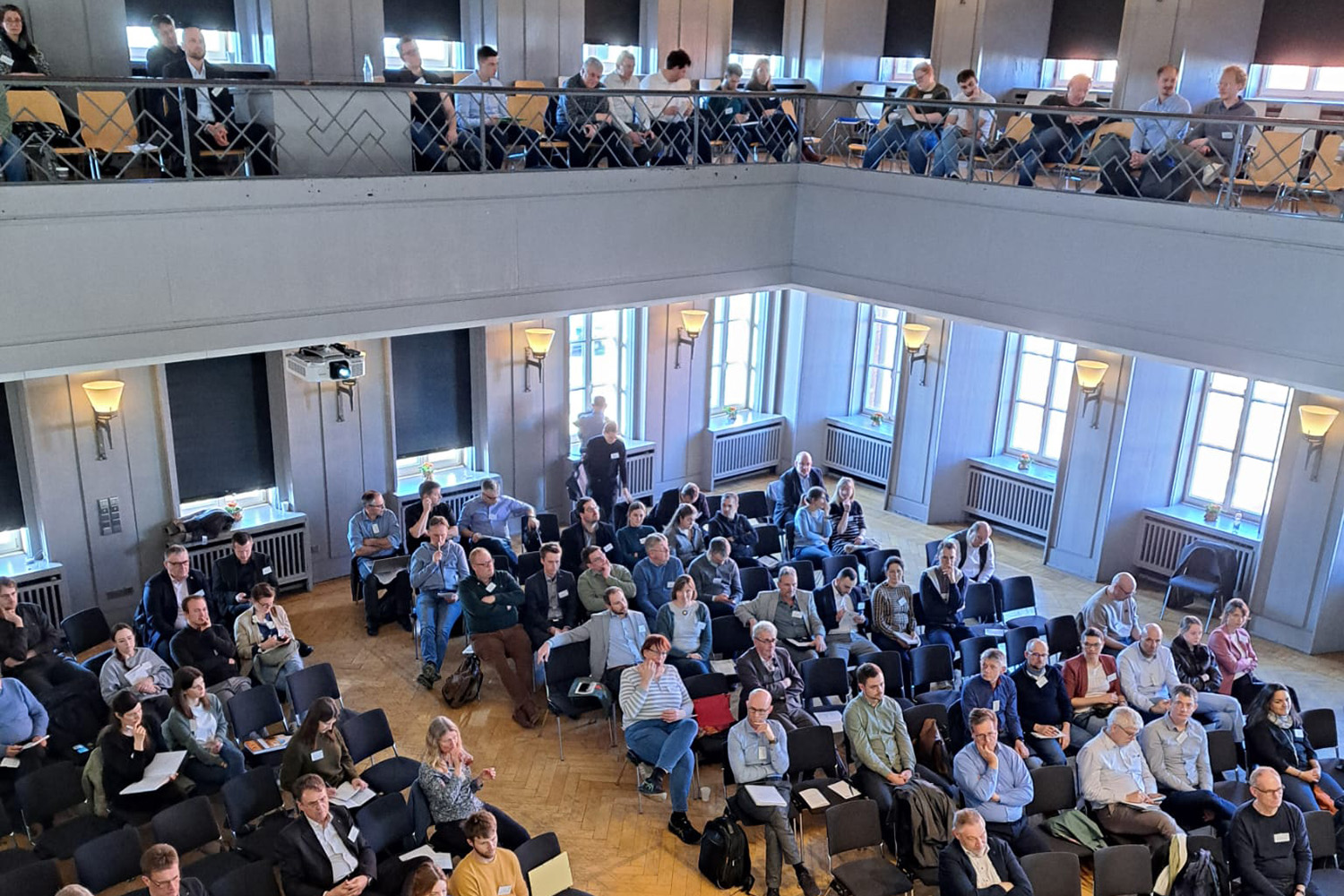
32nd Weed Conference at the House of Science in Braunschweig, February 2026. Photo credits: Robert Hänsch/TU Braunschweig
The opening event already set a special tone: in a panel discussion entitled ‘Is it still okay to say ‘weed’?’ technical, social and linguistic perspectives on the term and its meaning were examined. The discussion was moderated by Prof. Dr. Sabine Andert (JKI). Prof. Dr. Jan Standke (TU Braunschweig) and Dr. Horst-Henning Steinmann (University of Göttingen) underpinned the debate with pointed contributions from different scientific perspectives. The interdisciplinary exchange impressively demonstrated how closely scientific, agronomic and social issues are intertwined.
The extensive scientific programme comprised eight sections and reflected the thematic breadth of modern weed research: from biodiversity management and weed biology to integrated and cultural weed control methods, herbicide innovations, long-term data and questions of herbicide resistance. It became clear what agronomic, technical and ecological challenges plant production faces – and how diverse the approaches to solving them are: they range from digital technologies and AI-supported applications to alternative, herbicide-reduced systems, chemically synthetic active ingredients and long-term systemic observations.
Another introductory presentation focused on the economic perspective of herbicide-free cultivation systems, complementing the scientific contributions with business management issues. The poster section provided space for intensive technical discussions, while excursions – including visits to JKI research projects and the greenhouses of the Botanical Garden of TU Braunschweig – provided insights into current research infrastructures.
The conference impressively demonstrated that sustainable weed management requires interdisciplinary approaches, international cooperation and open dialogue between research, consulting, industry and practice. With its combination of scientific depth, social relevance and personal exchange, the 32nd Weed Conference provided important impetus for the future direction of herbological research.
Dr. Lena Ulber (JKI), Prof. Robert Hänsch (TU Braunschweig)