
Research battle: rope or drone to the canopy? Researchers from Braunschweig and Göttingen compete to find the best method for taking samples from the tree canopy
What is the current state of health of our trees and forests? Is a tree under stress? Is it lacking nutrients? Where does it get its water from? To answer these questions, branch and leaf samples from the tree canopy are often required. But how do you obtain these from trees that are up to 40 metres tall? To this end, Technische Universität Braunschweig and Universität Göttingen launched a ‘research battle in the canopy’ – a contest between tree climbers and sampling drones, which is now featured in a short film.
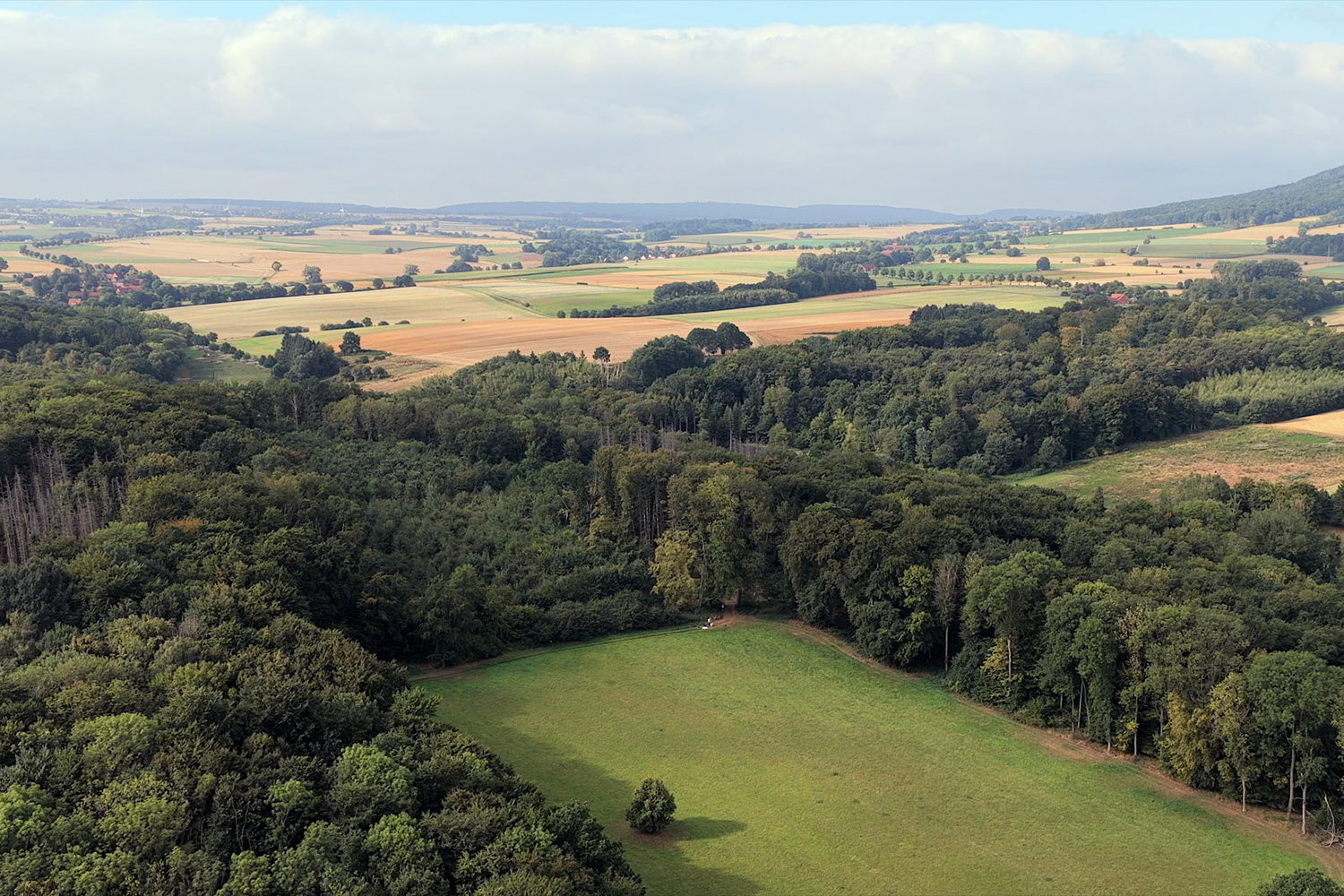
The setting for the research battle: a mixed deciduous forest south-west of Hanover. Photo credits: Zum Staunen*
The climate crisis is taking its toll on our forests and posing major challenges for science and forestry. According to the latest Forest Condition Report, 36 per cent of trees showed significant thinning of the canopy in 2024. Only 21 per cent of trees were undamaged. To understand how trees react to environmental influences and how forests can become more resilient, information from the tree canopy, amongst other sources, is required. “The canopy is directly exposed to environmental conditions. The condition of a tree can therefore best be examined and understood there,” says Dr. Christina Hackmann from the Department of Silviculture and Forest Ecology of Temperate Zones at Universität Göttingen.
As part of the climate future lab ‘FoResLab’ (Future Lab towards Forests Resilient to Climate Change), Hackmann is researching how forests can be made resilient to climate change under current and future conditions. Dr. Matthias Beyer, head of the ‘Isodrones’ research group at the Institute of Geoecology at TU Braunschweig, is also involved in this project, which is funded with five million euros by the Lower Saxony Ministry of Science and Culture.
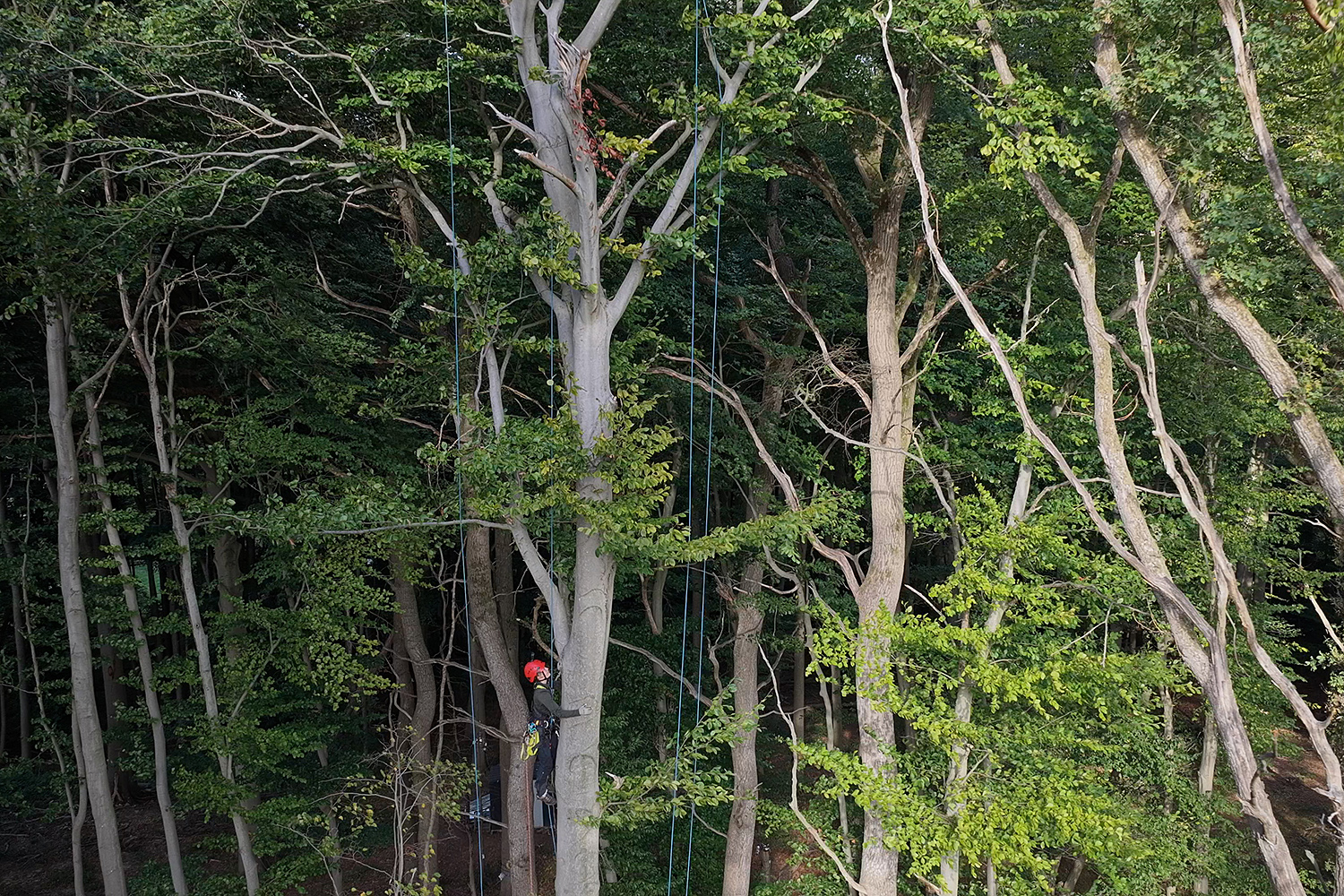
Christina Hackmann on her way to the tree canopy. Photo credits: Zum Staunen*
Tree climber or drone – which is better?
During a field trip with Christian Ammer, Professor of Silviculture and Forest Ecology at Universität Göttingen, the idea of a research battle finally took shape. Hackmann is a trained tree climber, whilst Beyer and his group developed a drone to collect branch and leaf samples from the tree canopy. A question that preoccupied them both: which of the methods is better suited to collecting the valuable samples?
With funding from the German Research Foundation (DFG) and the Eva Mayr-Stihl Foundation, a professional video comparing the two approaches has been produced in collaboration with the creative studio for science communication ‘Zum Staunen*’. This also serves a scientific purpose. After all, collecting branch and leaf samples is expensive and time-consuming, and in the past, some questionable methods were used for this purpose.
With a shotgun and a helicopter
When Beyer developed the idea for the ‘Isodrone’ – the sampling drone – he looked in depth at the collection of samples from the tree canopy. In doing so, he came across surprising and, in some cases, rather curious practices. “In the past, and in some areas even today, samples are actually shot down from the canopy using a shotgun,” he reports. Other approaches use slingshots or even deploy helicopters. “I thought to myself: there must be an easier and cheaper way!” After five years of development work, the ‘Isodrone’ is now ready for use and in high demand. But is the sampling drone really superior to the tree climbers traditionally employed?
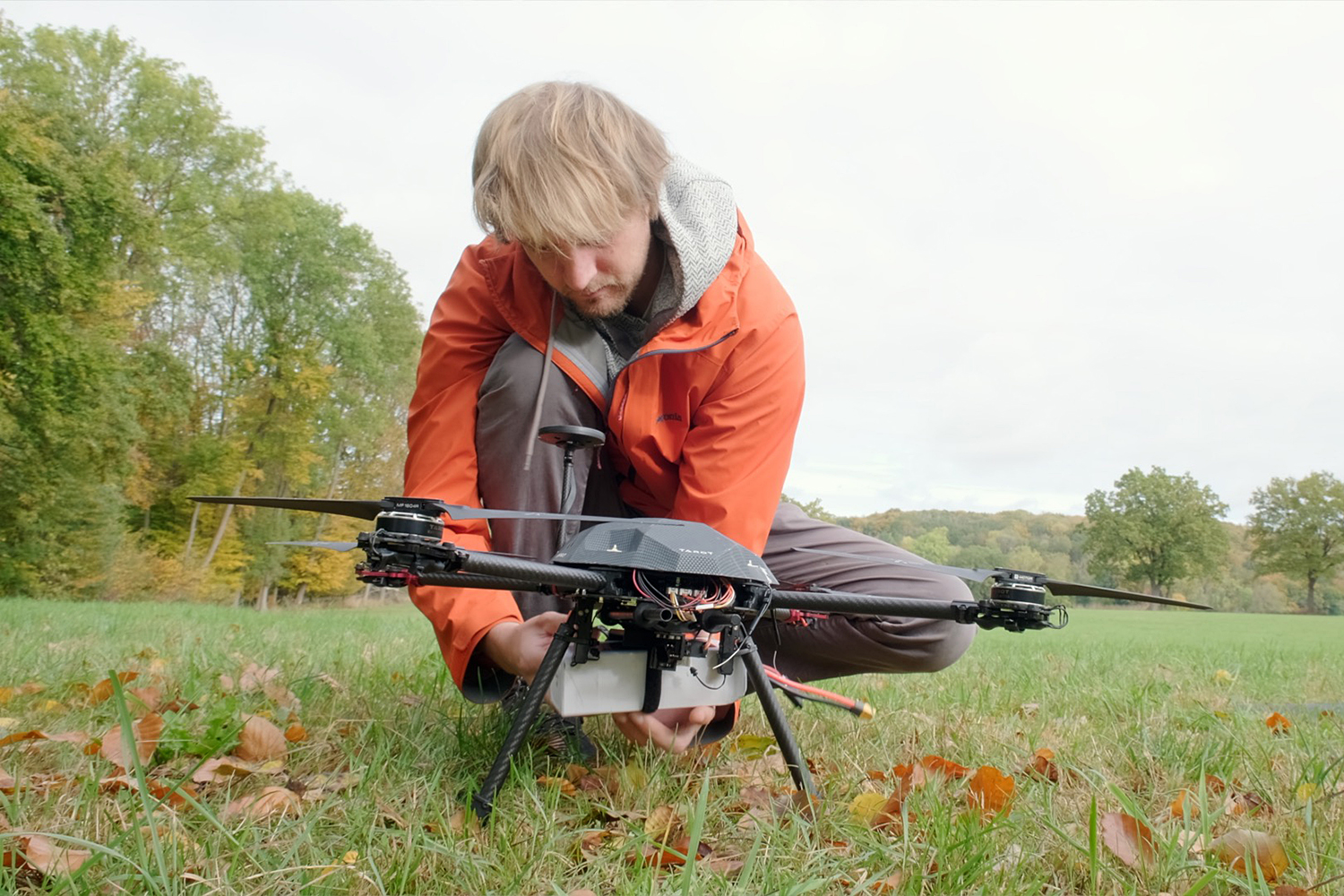
Malkin Gerchow with the ‘Isodrone’. Photo credits: Zum Staunen*
Research battle on video
The film ‘By rope or drone to the crown?’ follows the two research teams at lofty heights in a mixed deciduous forest in Lower Saxony, south-west of Hanover. Christina Hackmann and her colleague Sharath Paligi from Universität Göttingen climb into the treetops with courage and muscle power. Malkin Gerchow and Steffen Dohmen from TU Braunschweig, on the other hand, rely on innovative technology: They use a specially developed sampling drone.
‘Team Climbing’ and ‘Team Drone’ – two approaches to the same goal: collecting valuable samples from the tree canopy to better understand the health of the trees and thus lay important foundations for resilient and sustainable forest management. Over nine exciting rounds, viewers will not only learn about the methods but also get to know the researchers and their motivations better.
The research battle is now available to watch on YouTube.
Project details
The collaboration between TU Braunschweig, Universität Göttingen and the creative studio for science communication ‘Zum Staunen*’ was funded by the German Research Foundation (DFG) with approximately €7,500 and by the Eva Mayr-Stihl Foundation via the Innovation Pool of the Centre of Excellence for Landscape Resilience at Universität Göttingen with approximately €6,500.