
Taking hydrogen-powered aircraft even higher into the sky Second place for students from TU Braunschweig in a Germany-wide aircraft design competition
With their aircraft design ‘KANGAROO’, a team of students from Technische Universität Braunschweig took second place in this year’s Design Challenge organised by the German Aerospace Centre (DLR). In just four months, the students developed a design that allows various hydrogen propulsion concepts to be tested safely – even at higher altitudes. They were supported in this by research assistants from the Institute of Aircraft Design and Lightweight Structures. A total of 16 teams from ten German universities took part in the Design Challenge, which has been seeking out Germany’s best student aircraft designs for the past ten years.
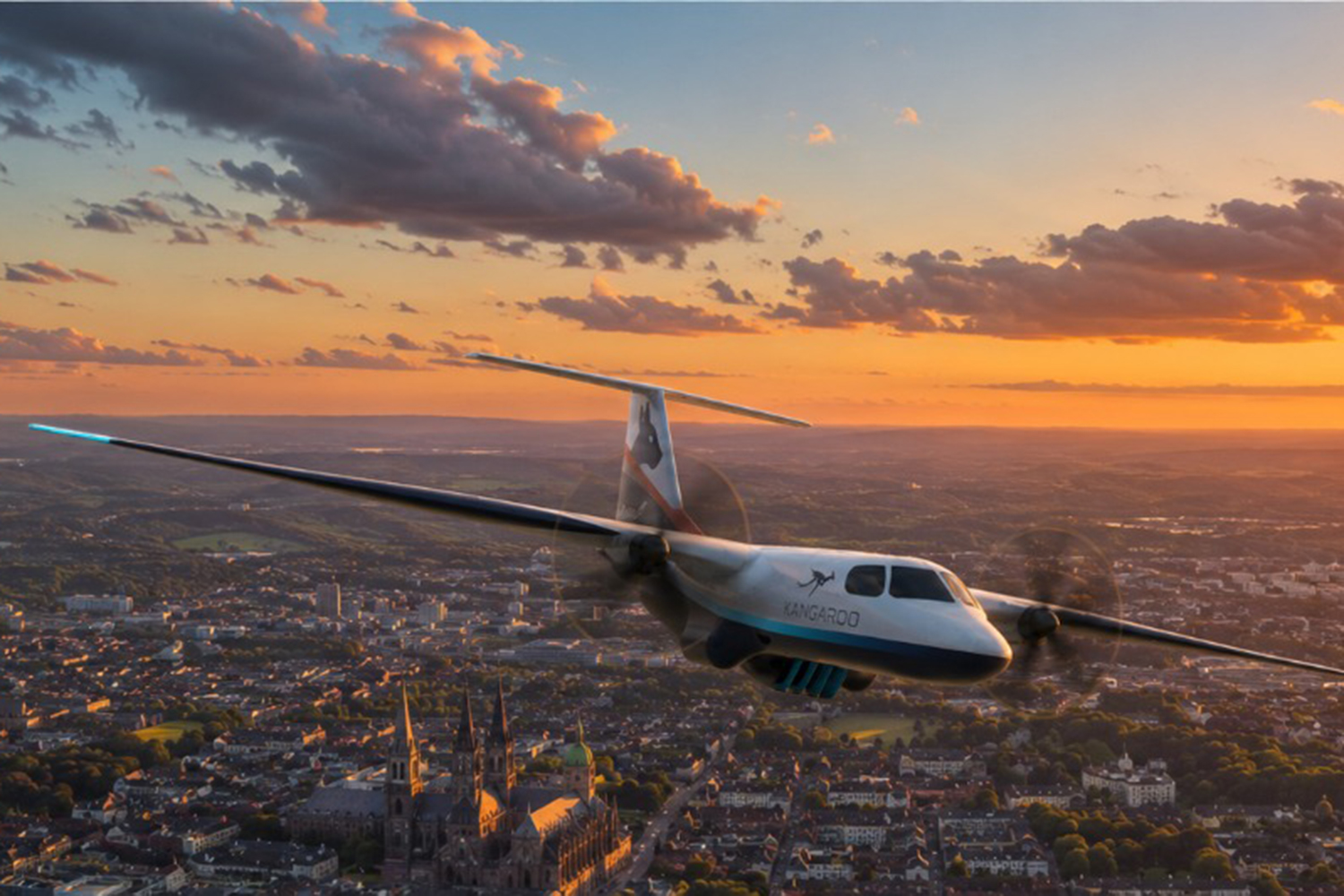
With their design ‘KANGAROO’, a team of six students from TU Braunschweig took second place in the DLR Design Challenge. Image credits: ‘KeWings’/TU Braunschweig.
Every year, the DLR invites students to submit designs for experimental aircraft. The challenge: they have only four months to do so. Furthermore, the design must be ready to take off on its maiden flight within three years – normally, it takes considerably longer to develop and build an aircraft.
Six students from TU Braunschweig also took on this challenge. They learnt about the competition in Professor Ingo Staack’s course on commercial aircraft design. “Our benchmark was never: ‘Is this good enough for a student competition?’ But rather: ‘Would an engineer in the industry take this design seriously?’ We set ourselves this bar and realised every week just how high it was. And yet we managed to clear it,” says Jacques Meimann, who is studying for a Bachelor’s degree in Mechanical Engineering. His colleagues Tim Freier, Jens Ohland, Kevin Rittinghaus, Nick Schoeneich and Alexander Zapff are studying for a Master’s degree in Aerospace Engineering.
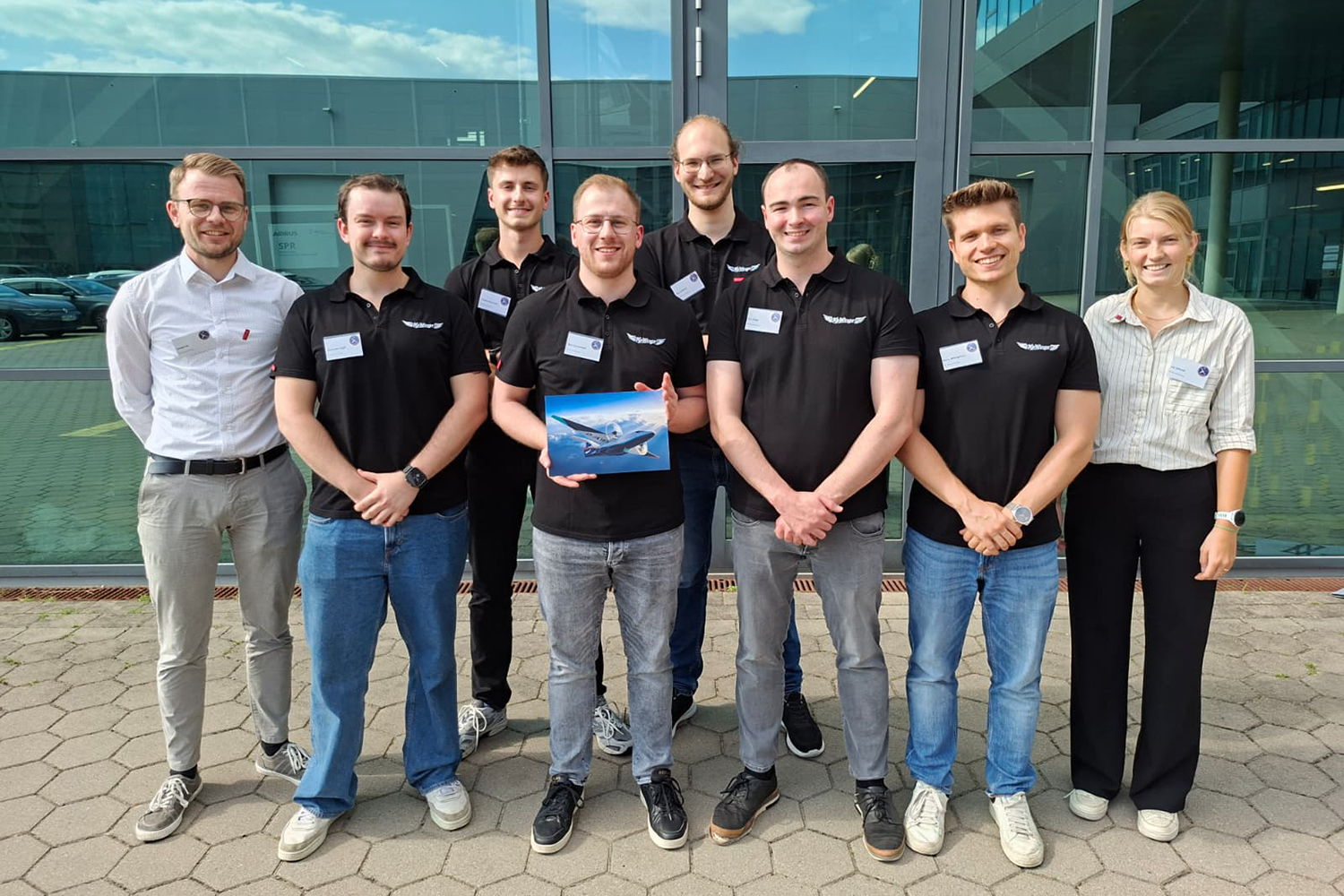
The ‘KeWings’ team together with their supervisors Daniel Six (left) and Lea Schmitt at the closing event of the DLR Design Challenge at the Centre for Applied Aeronautical Research in Hamburg. Photo credits: TU Braunschweig.
The students were free to choose which technologies to use in their design – the only requirement being that the aircraft’s propulsion system should be at least partly electric. “We realised that there is a gap between the current state of hydrogen research and the future of commercial aviation,” explains Tim Freier. This gave rise to the ‘KANGAROO’ concept. Supervised by research assistants Daniel Six and Lea Schmitt from the Institute of Aircraft Structures and Lightweight Construction, the team – known as ‘KeWings’ – developed a design for an aircraft that enables hydrogen-based propulsion technologies to be tested at various altitudes. This is because the hydrogen-powered aircraft currently in use do not yet reach the altitudes relevant for commercial aircraft.
The Nerve-Centre Nave
Unlike aircraft with conventional propulsion systems, ‘KANGAROO’ features a nacelle beneath the fuselage that resembles a kangaroo’s pouch. This houses a heat exchanger that draws in cold air from outside and channels it past the hot components of the hydrogen propulsion system. Heated by the waste heat it absorbs, the air then flows back out again. This cooling is necessary because the design allows for the testing of various hydrogen propulsion concepts that generate different levels of heat: a proton exchange membrane (PEM) fuel cell and a gas turbine with a generator.
Modular Design
A rail system in the fuselage enables a quick swap between these two modules, also known as powerpacks. To ensure safe operation, the aircraft is primarily battery-powered – meaning it can continue flying even if the powerpacks should fail. This separation of systems makes it possible to investigate different propulsion technologies using liquid hydrogen under comparable real-world flight conditions. The modular architecture also means that further propulsion systems and individual technologies can be integrated and tested in flight in the future.
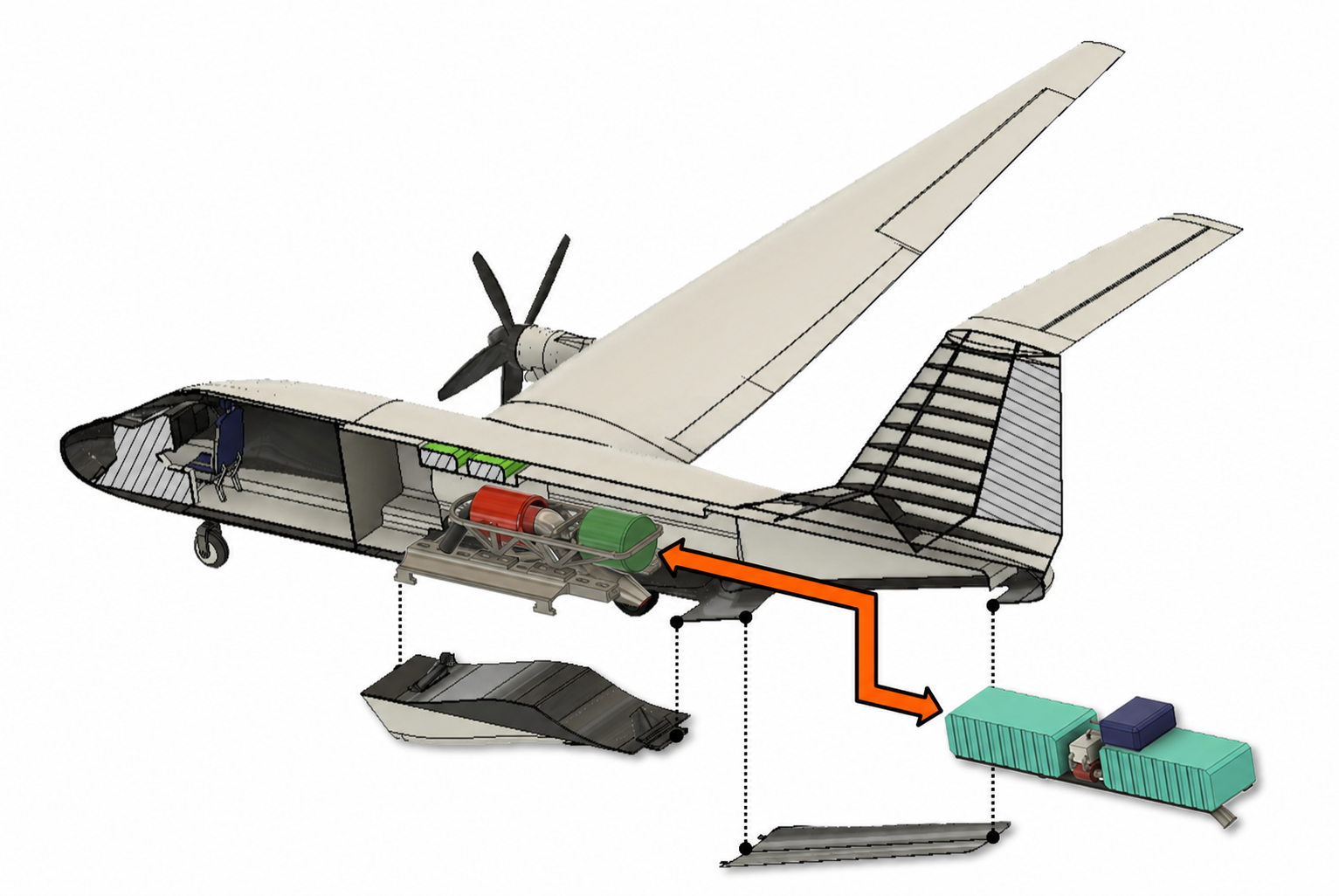
The powerpacks can be swapped out quickly via a rail system in the fuselage. A heat exchanger is housed in the nacelle beneath the fuselage. Photo credits: ‘KeWings’/TU Braunschweig.
Uncomplicated Design
To ensure the aircraft can take to the skies for test flights within the required three-year timeframe, the students opted for a conventional, uncomplicated design. Alexander Zapff says: “Nothing about the aircraft’s configuration is new – and that was precisely the intention. High-wing, T-tail, two propellers. Every unknown factor we introduce into the airframe is an unknown factor we cannot afford in the propulsion system.”
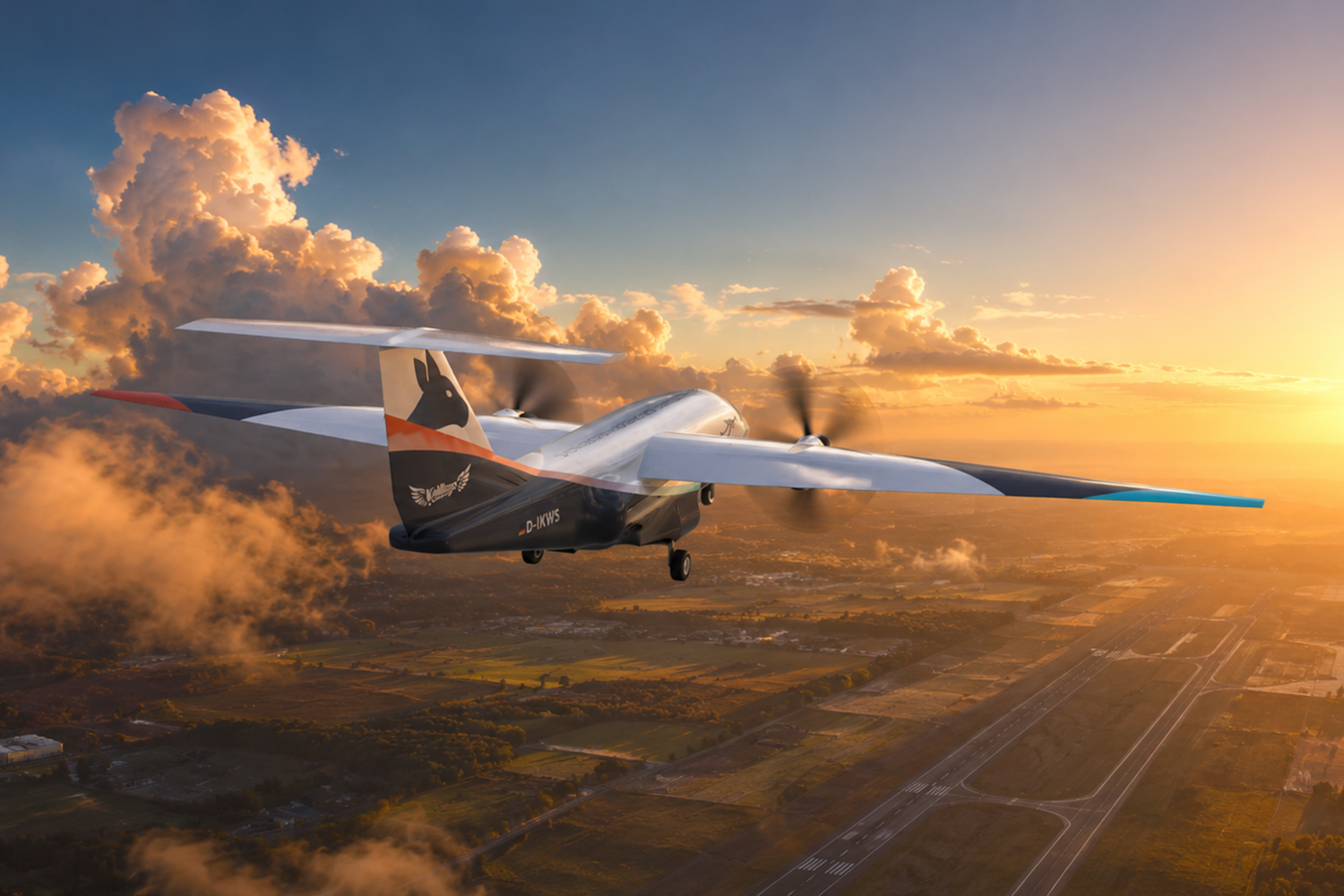
The ‘KeWings’ aircraft design could serve as a test bed in future for trialling a wide range of hydrogen-based propulsion technologies. Image credits: ‘KeWings’/TU Braunschweig.
With its own logo, colour scheme and merchandise, ‘KANGAROO’ ultimately became the brand that won over the jury at the final event of the DLR Design Challenge at the Centre for Applied Aerospace Research in Hamburg. The ‘KeWings’ team took second place for their practical and professionally executed concept. In September 2026, they will present their design to an expert audience at a DLR conference in Aachen.