
Mission Future: An interim report from the IdeenExpo Impressions from the stand of Technische Universität Braunschweig
Inspiring 400,000 visitors over nine days with STEM topics: that’s the IdeenExpo 2026 in Hannover. At its exhibition stand, Technische Universität Braunschweig invites school pupils to embark on a journey of discovery through its research areas. Visitors can get hands-on with four thematically distinct “missions”. Around 100 staff members from TU Braunschweig are ensuring that the event runs smoothly from 20 to 28 June, providing explanations and insights into the research.
Straight from school into research? That’s exactly what’s possible at the TU Braunschweig stand at the IdeenExpo. Thirteen hands-on exhibits from the Faculty of Architecture, Civil Engineering and Environmental Sciences, the Faculty of Mechanical Engineering and the Faculty of Electrical Engineering, Information Technology and Physics demonstrate how real research is carried out at our university on a small scale.
Through four missions, young people can explore what research and study are like at TU Braunschweig – and what they enjoy most – together with research assistants and student helpers. Was it the acoustic camera from “Mission Mobility”? The silo from “Mission Matter”? The mini-Marx generator from “Mission Energy”? Or perhaps the VR simulation from “Mission Climate”, showing the island of Spiekeroog in the year 2100? After consulting the Zukunfts.Hub, visitors will have a better idea of what their future might look like.
But the TU stand wasn’t just of interest to school pupils – President Angela Ittel and guests from the worlds of politics and business also tried out the mission system. A photo gallery offers a glimpse of the highlights from 23 June:
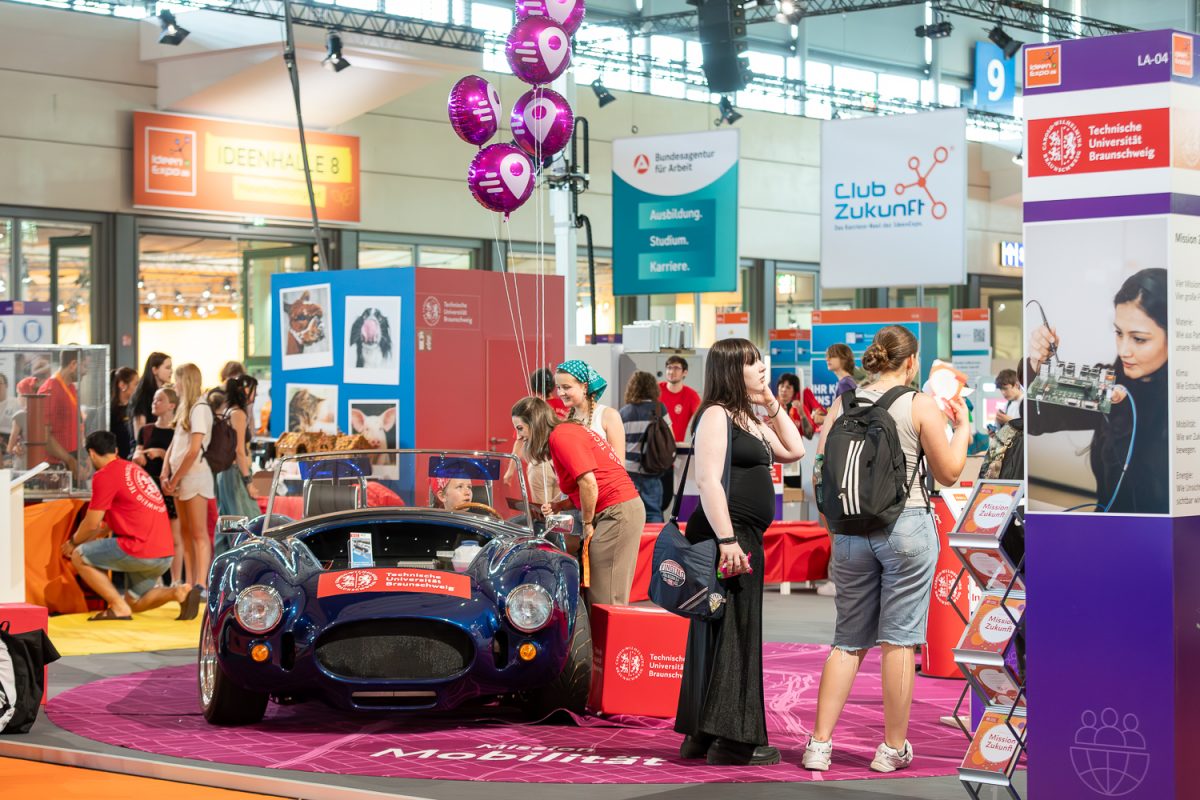
A large crowd gathered around the exhibits from TU Braunschweig. Photo credit: Kristina Rottig/TU Braunschweig
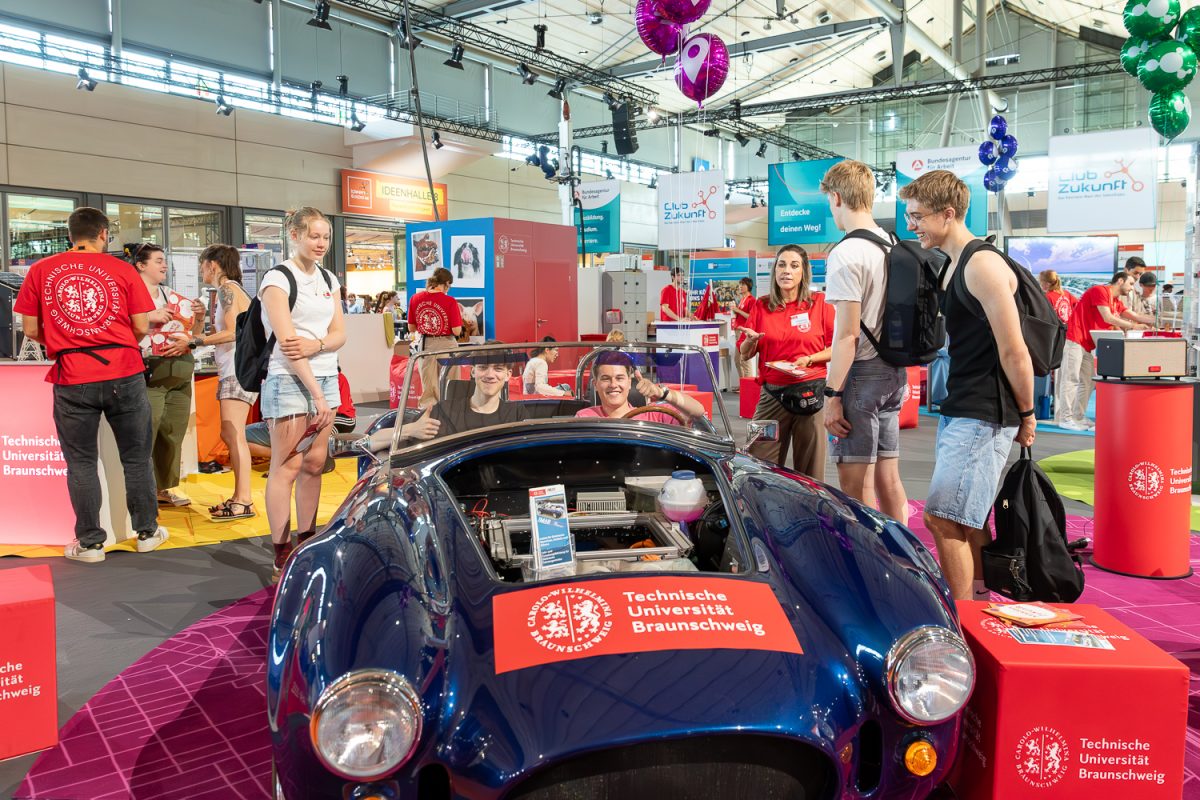
When you enter TU Braunschweig’s stand at the IdeenExpo 2026, the first thing that catches your eye is the IMAB Racer – built by students and staff from the Institute for Electrical Machines, Drives and Railways. Christina Bachmann (Prospective Student Marketing, Faculty of Electrical Engineering, Information Technology and Physics): “People of all ages are fascinated by the car’s design. And I always say to the older teenagers: ‘If you study with us, you’ll be able to get involved in projects like this too!’” Photo credit: Kristina Rottig/TU Braunschweig
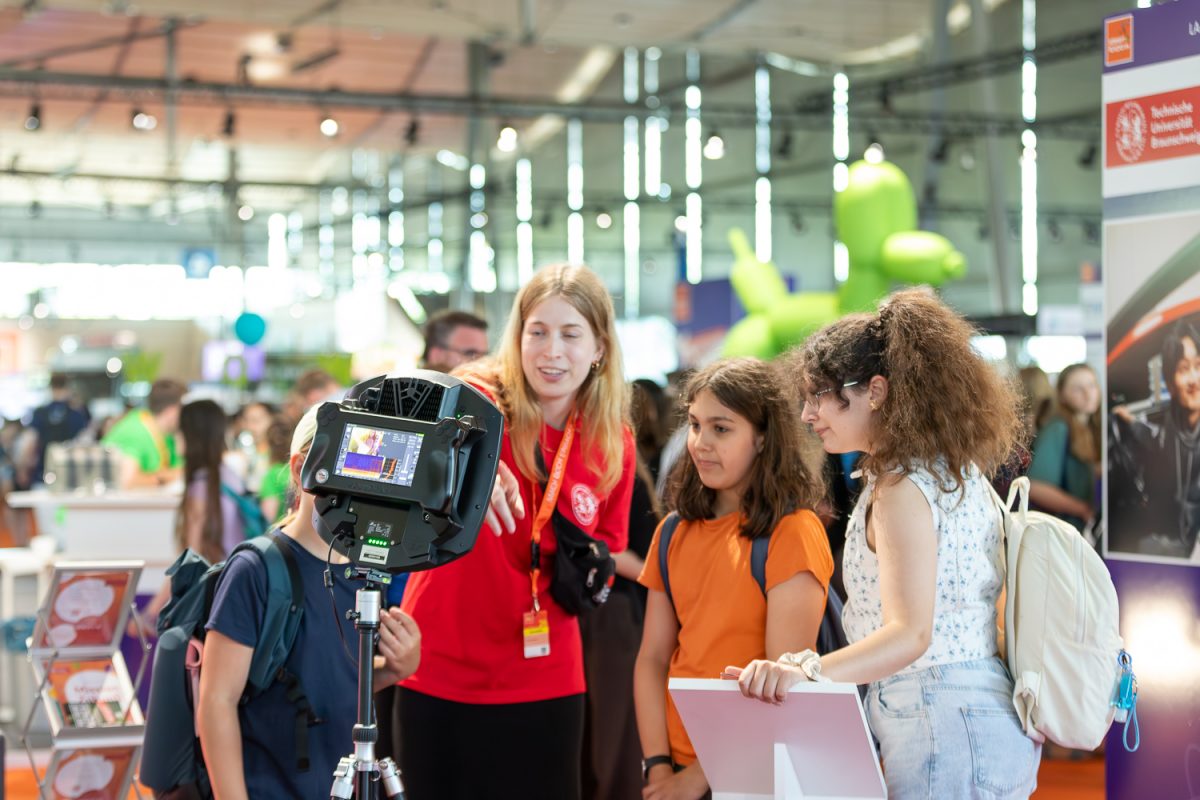
Anyone interested can find out what different sound frequencies look like from Saskia Hellberg (student assistant at the Institute of Acoustics and Dynamics) at the acoustic camera, the second exhibit in the “Mission Mobility” exhibition. The measuring device from the Institute of Acoustics and Dynamics instantly detects and identifies even the smallest sources of noise, thereby helping to make aeroplanes quieter. Photo credit: Kristina Rottig/TU Braunschweig
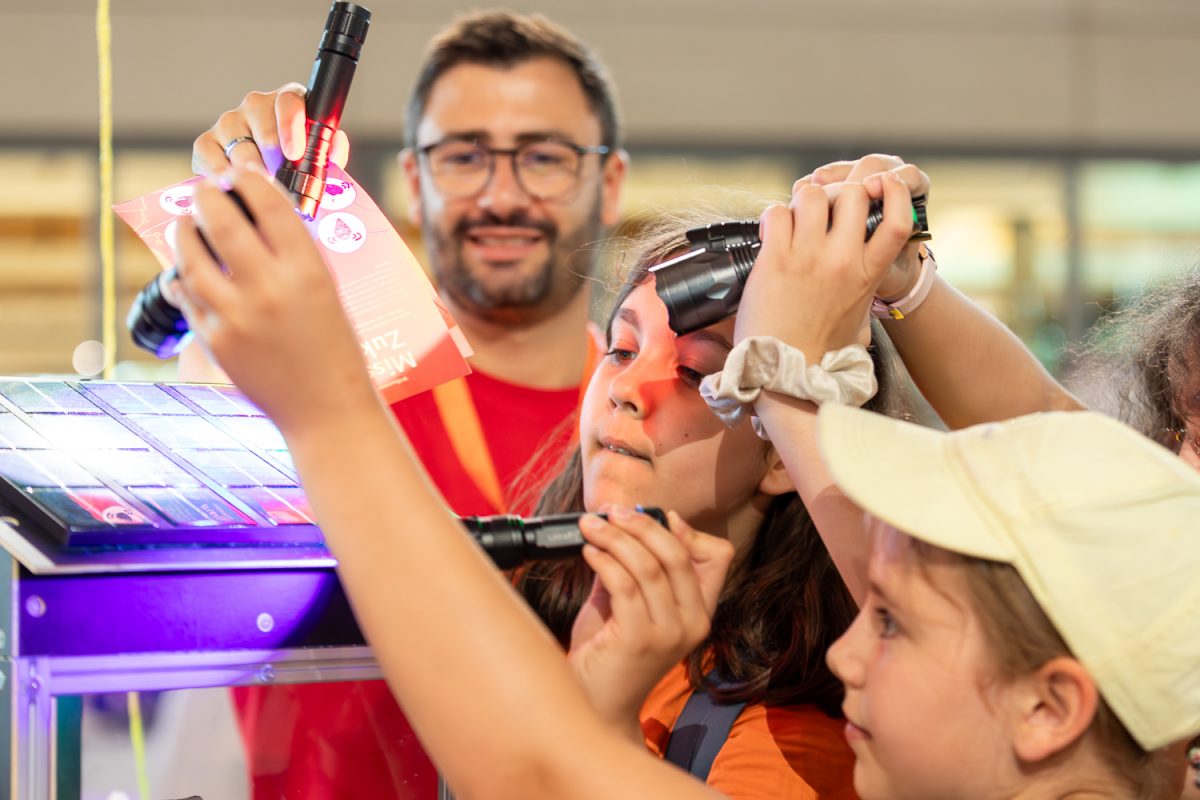
How much voltage does each type of light generate, and which material conducts electricity best? Developed as a student project at the elenia Institute for High-Voltage Engineering and Energy Systems, the model house gives young people taking part in the "Mission Energy" programme an insight into the energy transition. Photo credit: Kristina Rottig/TU Braunschweig
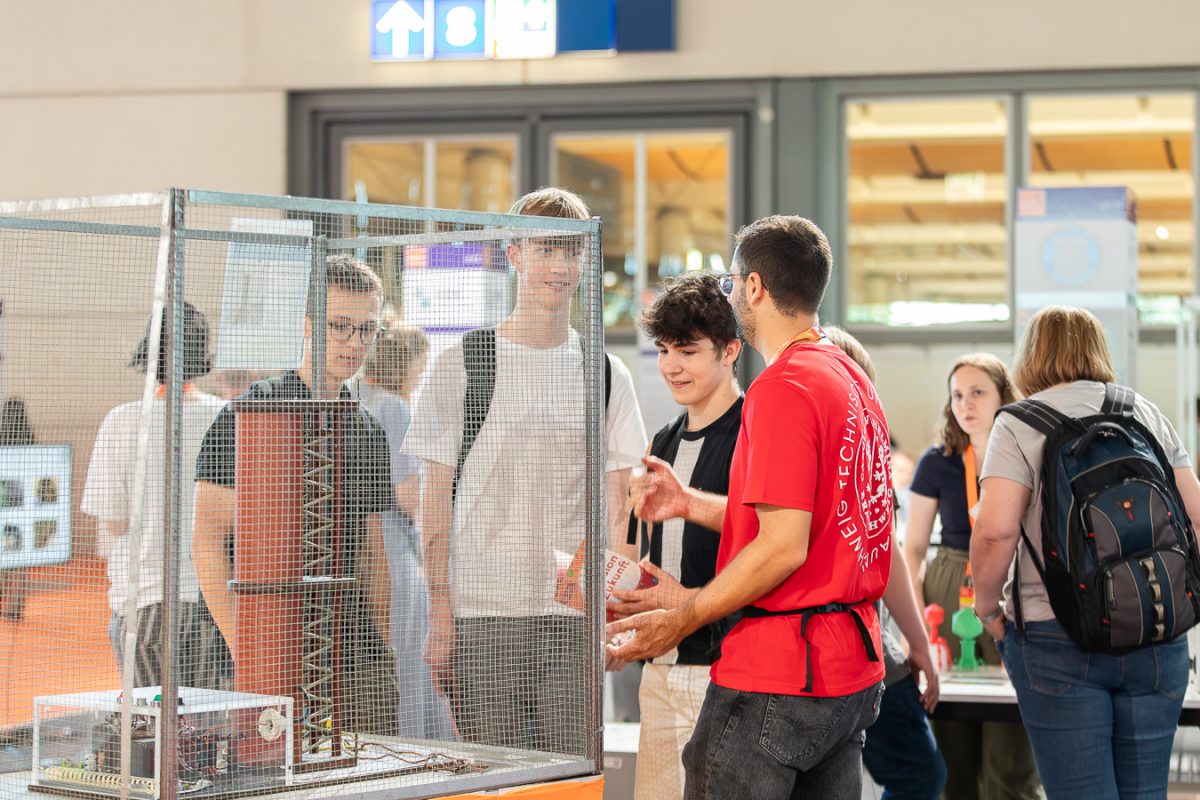
The Mini-Marx Generator is the second exhibit in the "Mission Energy" exhibition – a smaller version of the "Marx Generator" in the high-voltage hall of the elenia Institute for High-Voltage Engineering and Energy Systems, a device for generating short high-voltage pulses. Photo credit: Kristina Rottig/TU Braunschweig
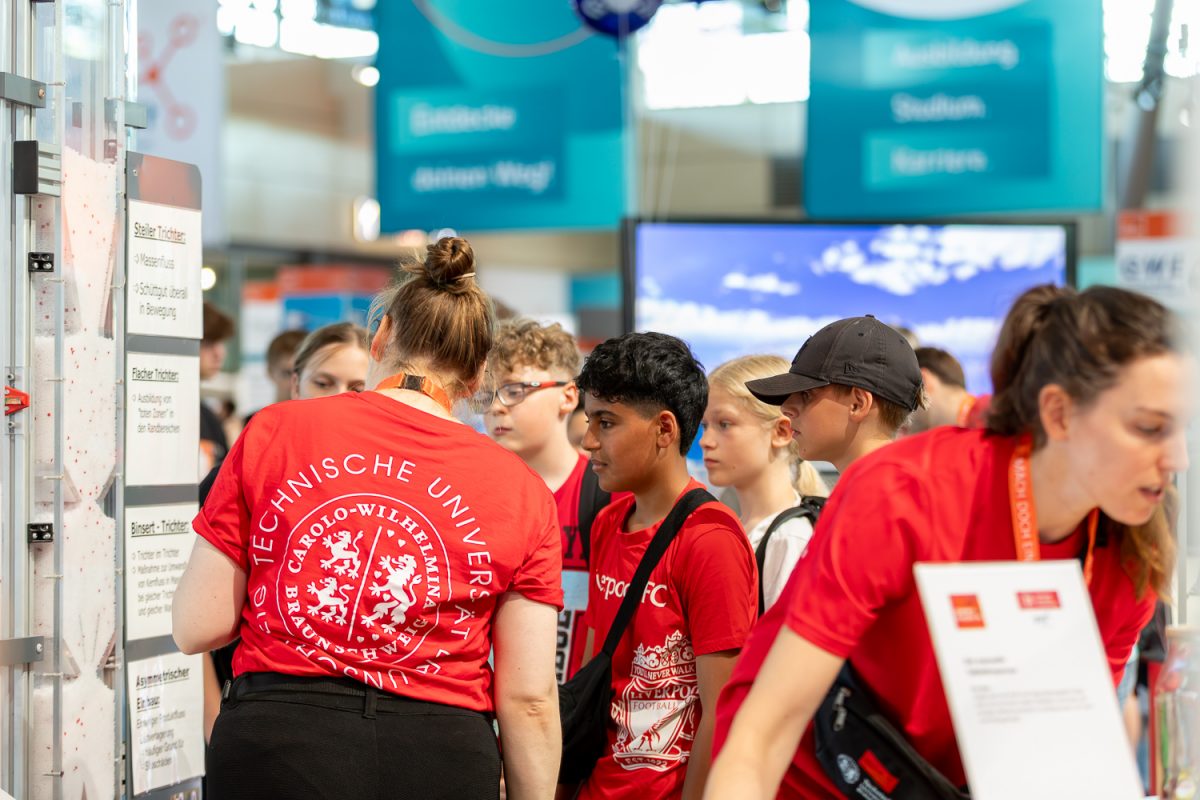
Jennifer Pierick and Caroline Willuhn, research assistants at the Institute of Particle Technology, demonstrate in "Mission Matter" just what particles are capable of. Whether it’s the flow behaviour of bulk materials in a silo… Photo credit: Kristina Rottig/TU Braunschweig
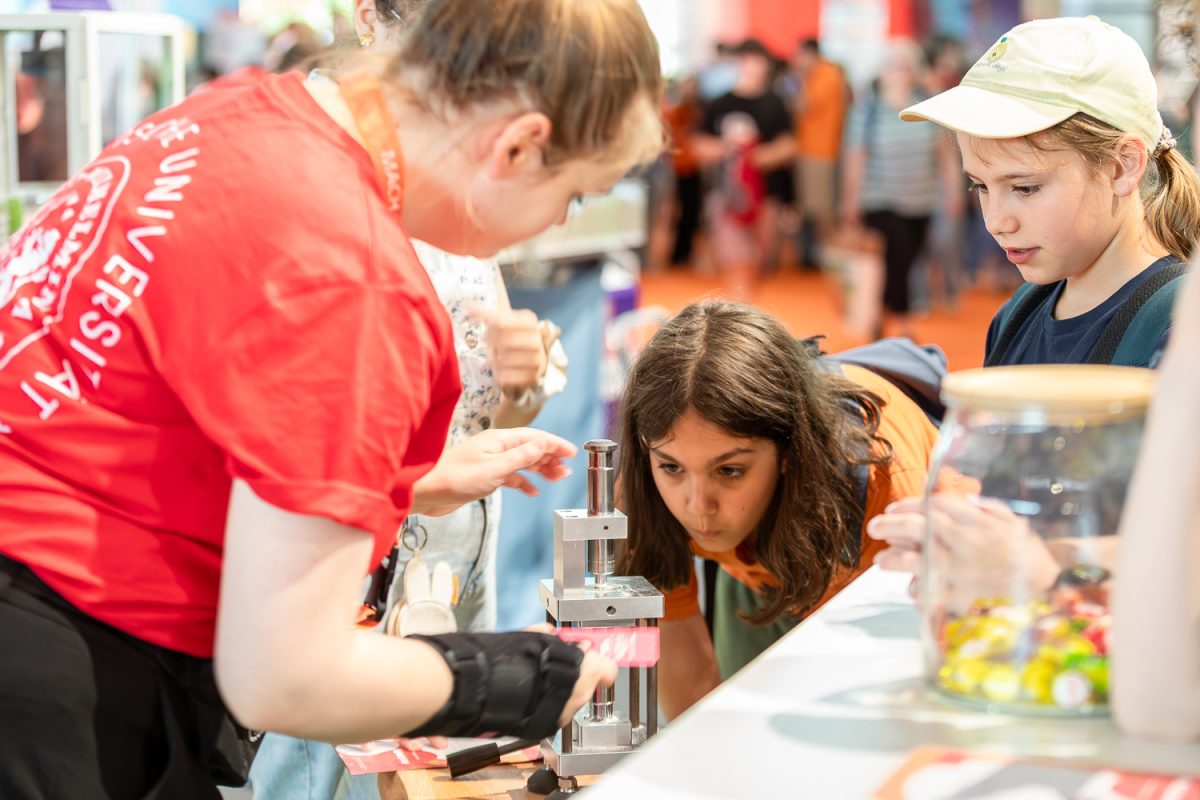
… or the manual tablet press. “Helping out here is definitely a far cry from my usual day-to-day routine! The children’s questions also reminded me why I got involved in this field in the first place,” says Caroline Willuhn. Photo credit: Kristina Rottig/TU Braunschweig
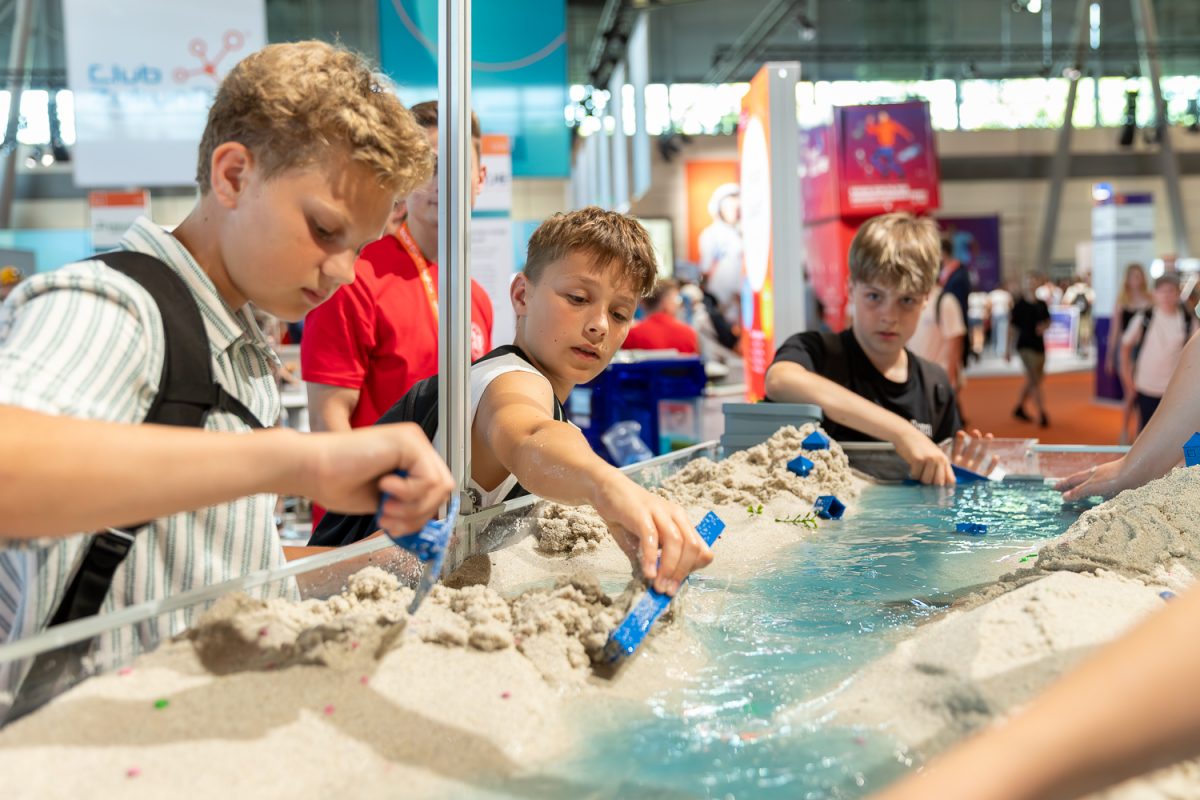
The “Mission Climate” initiative is all about water. At the meandering river table at the Leichtweiß Institute for Hydraulic Engineering, visitors can build their own river in a sandpit. The landscape reacts immediately when a dyke is built or the course of the river is altered. Photo credit: Kristina Rottig/TU Braunschweig
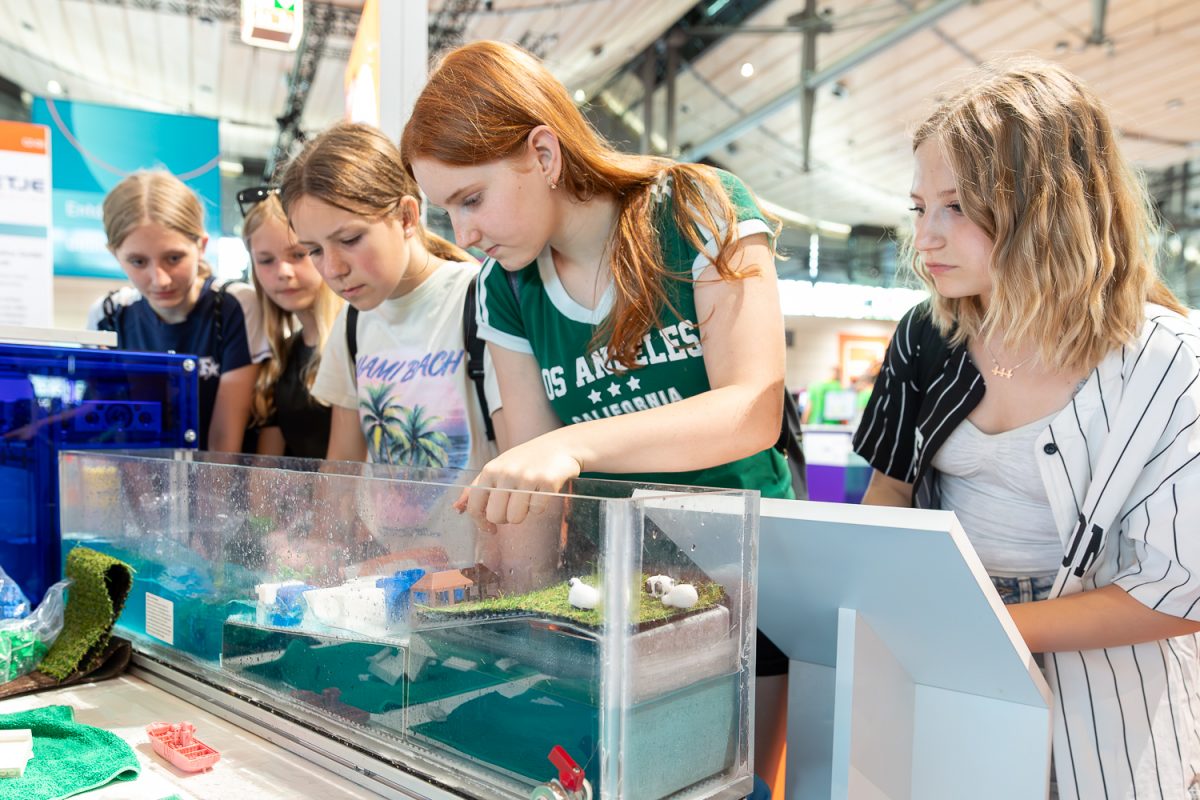
Protecting the model coastline from rising sea levels: the mini wave flume is modelled on the large wave flume. “I always set the students the task of protecting the coastline using as few stones as possible, whilst at the same time preserving the sea view,” explains Robin Henke, a student assistant at the Leichtweiß Institute for Hydraulic Engineering. Photo credit: Kristina Rottig/TU Braunschweig
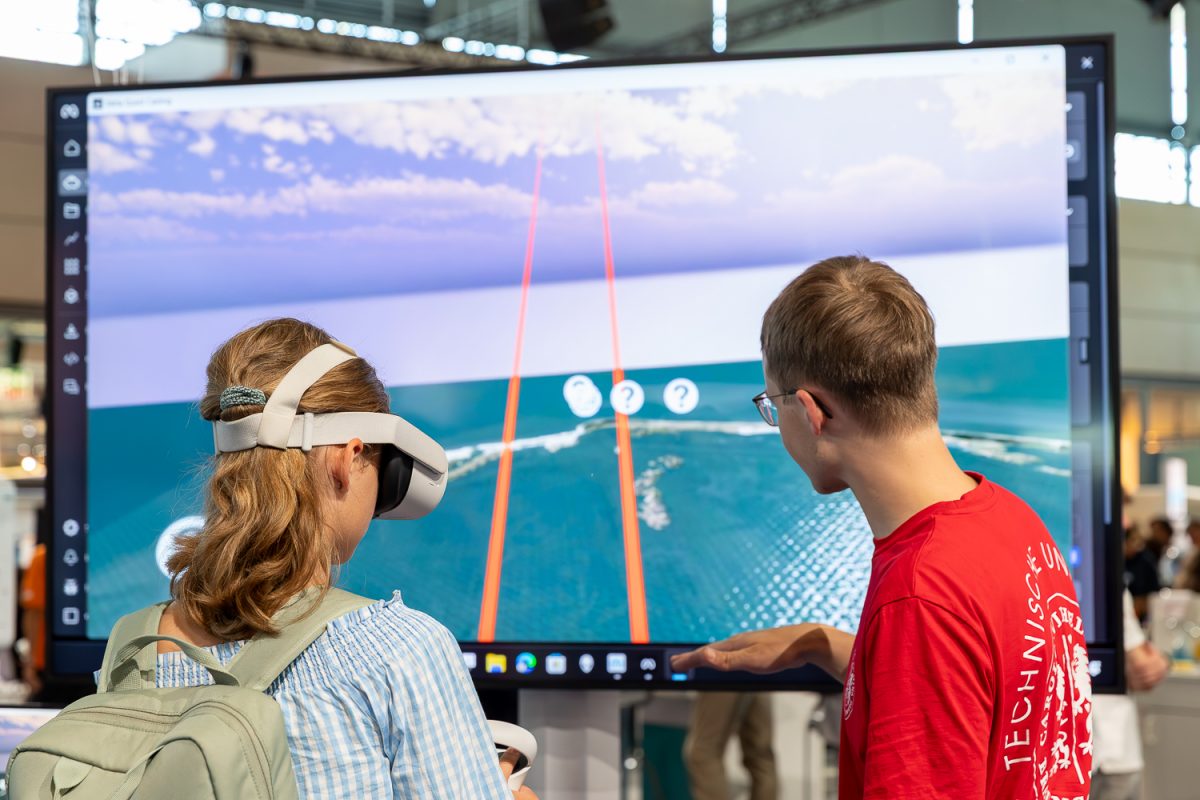
Using VR headsets, visitors can glimpse the Spiekeroog of the future. How much of this North Sea island will remain in 2100 if sea levels continue to rise, and how can protective measures prevent this? Photo credit: Kristina Rottig/TU Braunschweig
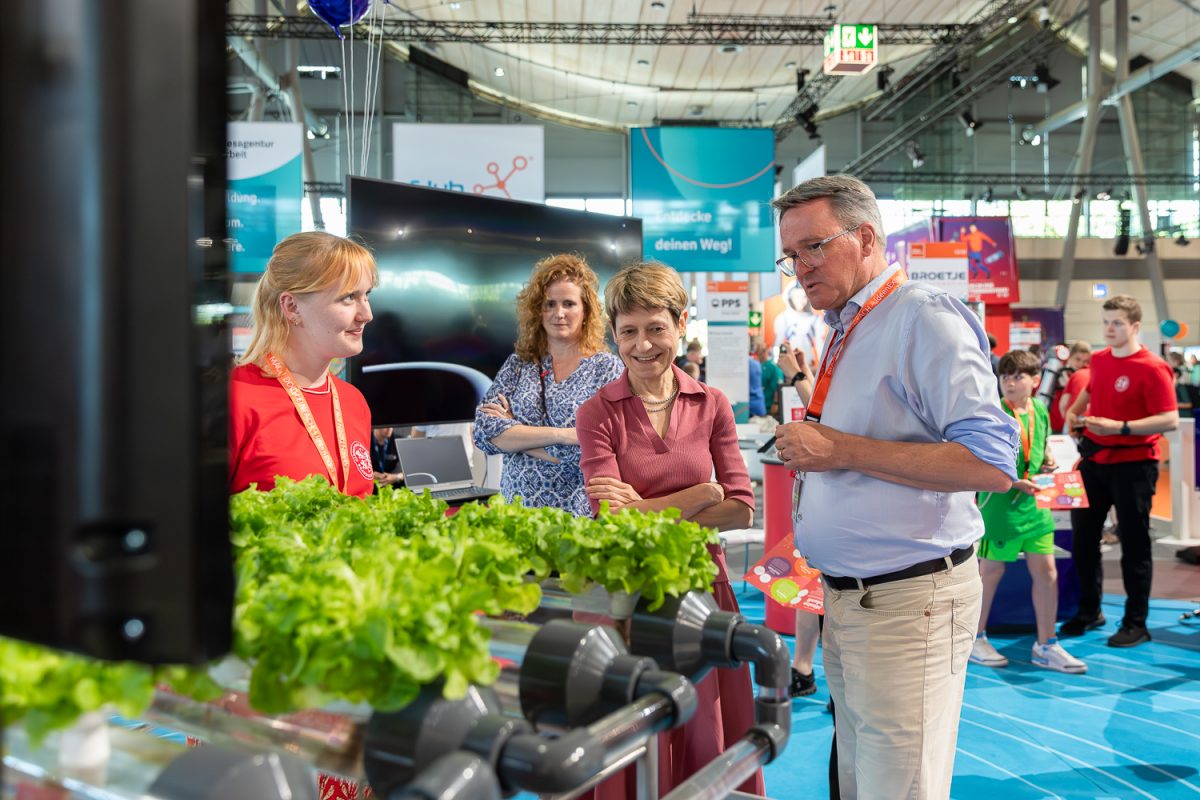
As part of the "HypoWave" project run by the Institute of Urban Water Management, lettuce heads, amongst other crops, are being grown in a hydroponic system fed with treated, nutrient-rich wastewater – a system that is now even being used in agriculture. During a visit by President Angela Ittel, Professor Thomas Dockhorn, Head of the Institute for Urban Water Management, explains the background to the project. Photo credit: Kristina Rottig/TU Braunschweig
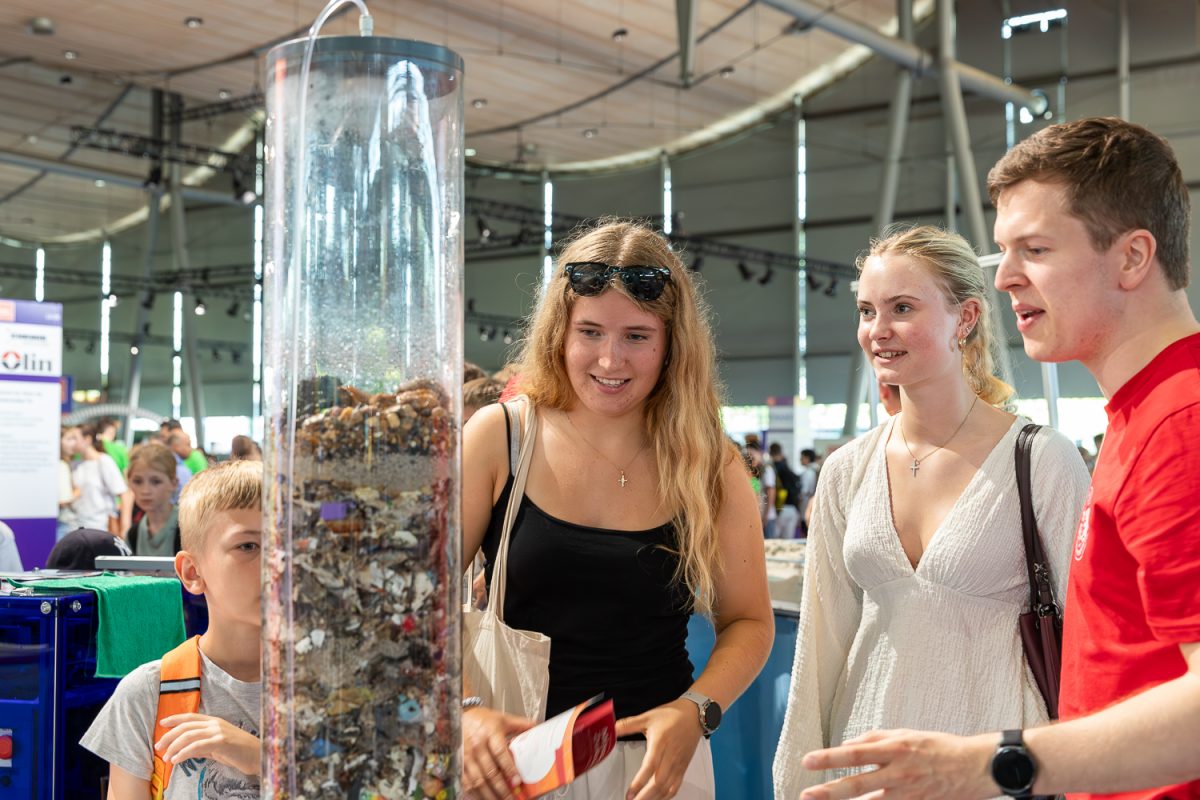
How does rubbish dumped illegally in the forest affect the substances that are washed into the ground when it rains? Student assistant Robin Henke demonstrates this using the waste simulation reactor at the Leichtweiß Institute for Hydraulic Engineering. Photo credit: Kristina Rottig/TU Braunschweig
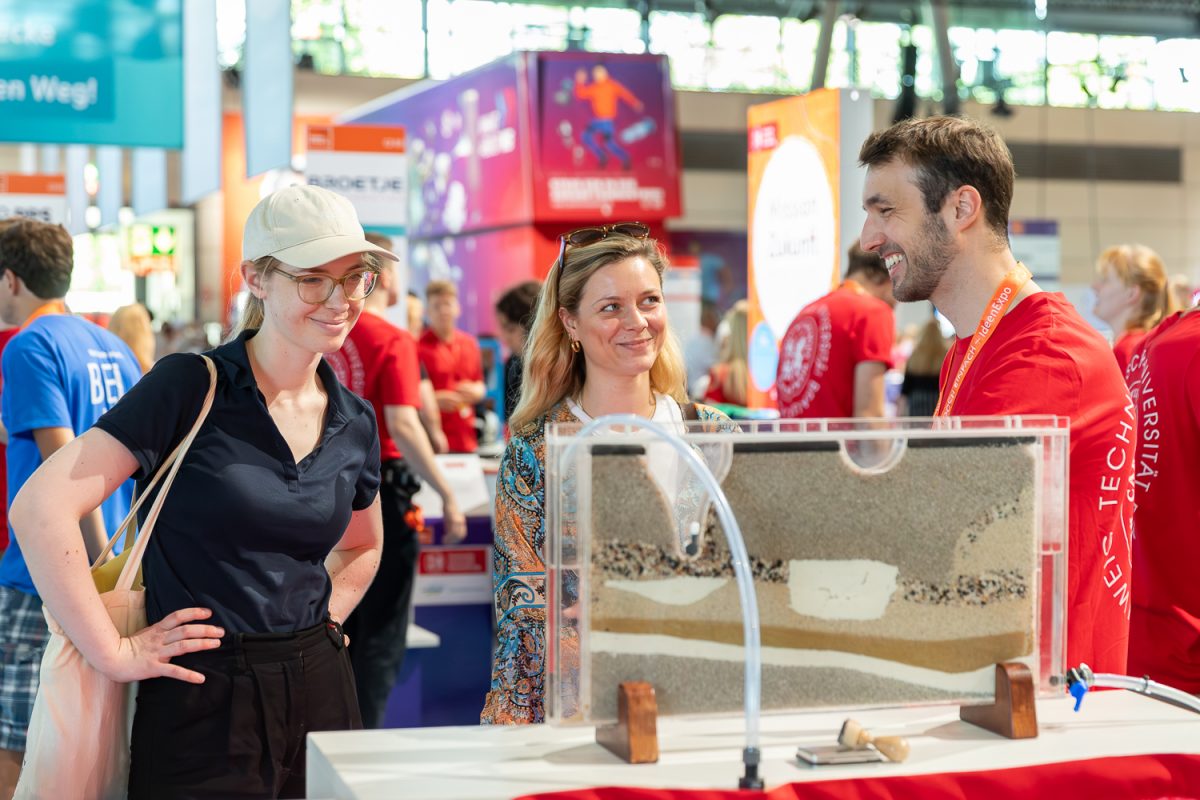
In the next exhibit of the "Mission Climate" exhibition, visitors can see what happens underground. Using a groundwater model, Niklas Böhle (research assistant at the Leichtweiß Institute for Hydraulic Engineering) explains how pollutants spread and why the water table falls more quickly or more slowly in certain places. “Groundwater is so fascinating to us because Lower Saxony draws a lot of its drinking water from groundwater,” he says. Photo credit: Kristina Rottig/TU Braunschweig
Visit the IdeenExpo this weekend
The exciting final weekend is still ahead of us. The air-conditioned halls of the IdeenExpo offer a welcome respite from the record temperatures expected over the coming days. And when Vice-President Professor Arno Kwade takes to the stage at midday on 27 June for his quiz on battery recycling, young researchers will be in for a real treat. There are prizes for the winners, which they can use to continue their research at home.