
Making the railways work better Professor Lars Schnieder is the new Head of the Institute of Railway Engineering and Transport Safety
What will the railway system of the future look like? Rising transport volumes, the need for greater reliability, and the demands of climate protection and the mobility transition present major challenges for the railways. At the same time, digitalisation and automation are opening up new opportunities to plan infrastructure more efficiently, manage construction processes better and make operations more stable. It is precisely these questions that Professor Lars Schnieder, the new Head of the Institute of Railway Engineering and Transport Safety, addresses in his research. In this interview, he explains how digital methods and automation can transform rail transport, what his priorities will be in research and teaching, and what will happen to the railway training facility.
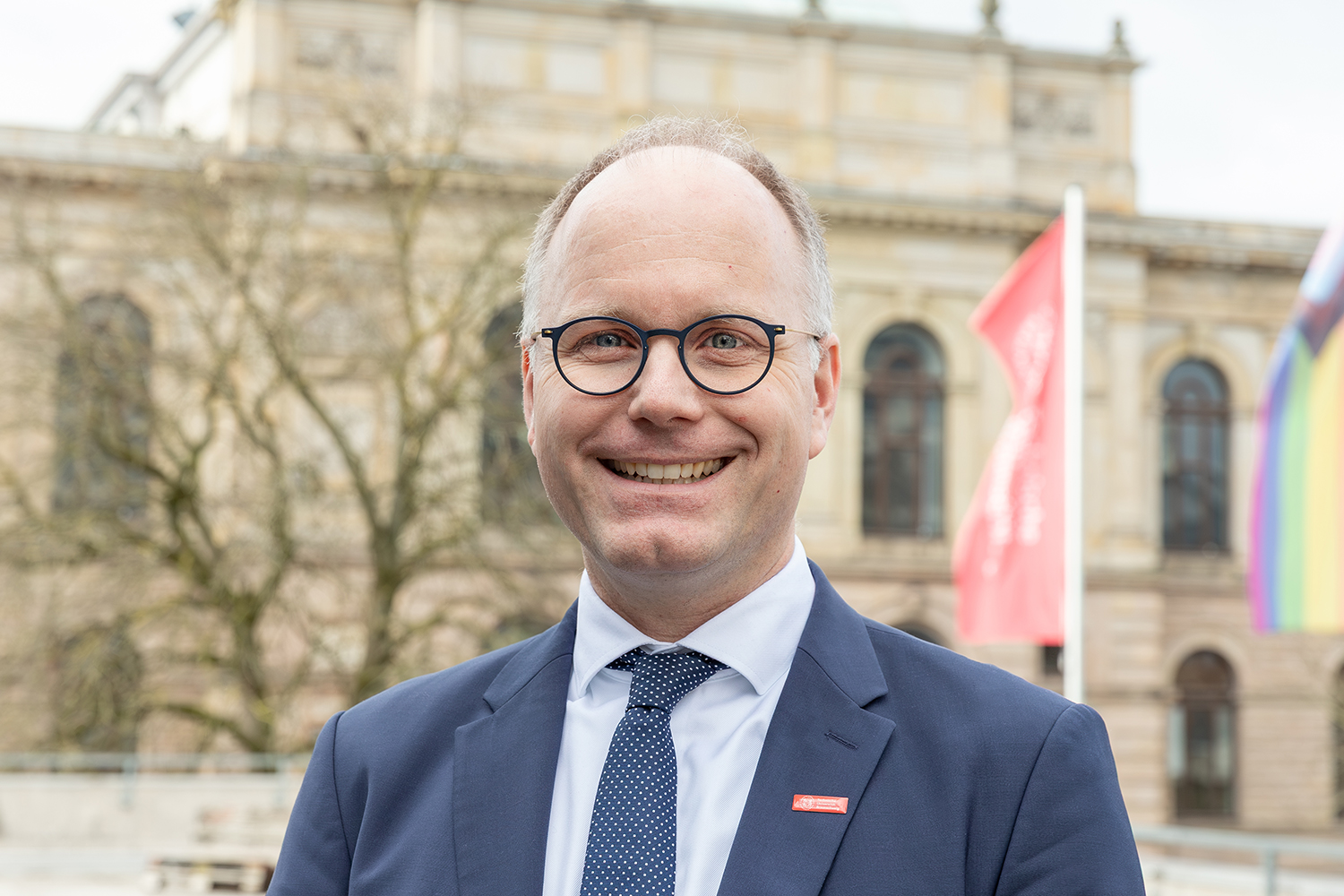
Professor Lars Schnieder, new head of the Institute of Railway Engineering and Transport Safety. Photo credits: Kristina Rottig/TU Braunschweig
Professor Schnieder, why did you choose TU Braunschweig?
The Braunschweig region is exceptionally research-intensive, particularly in the field of rail transport. Numerous research institutions and an extremely strong railway industry are concentrated here. This unique constellation creates an extremely exciting environment with a wide range of topics – from basic research to application-oriented issues. It is precisely this close interlinking of science and practice that makes TU Braunschweig particularly attractive to me and offers excellent conditions for providing innovative impetus in the field of rail transport.
What exactly do you focus on in your research?
In my research, I focus on the railway system of the future. At its core, I am driven by the question of how we can make the railways more efficient overall – that is, handle more traffic, become more reliable, and at the same time remain economical and sustainable. In doing so, I take a holistic view of the system: from the planning of new infrastructure through to construction – often whilst services are running, i.e. ‘under rolling wheels’ – right through to the day-to-day operation of trains. All these phases are closely interlinked. Decisions made during the planning stage affect the construction processes, and both subsequently influence the quality and stability of operations.
To put it simply: I work to ensure that the railways function better, that trains run more punctually, that construction sites cause fewer disruptions, and that the existing infrastructure is used to its full potential. As almost everyone is familiar with or uses the railways as a mode of transport, the challenges are intuitively understandable. My task is to systematically analyse these challenges and develop solutions that strengthen the overall system in the long term.
In the early days, railway lines were often planned on the basis of the individual interests of companies or rulers. You say that public transport needs democracy: how do we democratically determine whether a route and its alignment meet the needs of the public?
That is a key question, because infrastructure is always an expression of societal priorities. When I say that public transport needs democracy, I mean: it needs transparent, accountable and legitimate decisions. It is crucial that the evaluation criteria are made public: what goals are we pursuing? Climate neutrality? Equal living standards? Economic competitiveness? Democracy here means: society – represented by parliaments – sets the hierarchy of objectives, not just expert reports or individual interests. Fairness in meeting needs does not just arise on the drawing board, but is based on the involvement of as many people as possible at the earliest possible stage. In this way, conflicts can be brought to light and alternatives discussed before positions become entrenched.
What are the main research areas and projects you will be working on at TU Braunschweig?
My research can be described in terms of two main areas. The first concerns the digitalisation of the planning, construction and operation of rail transport systems. The aim is to digitally map the entire lifecycle of the railway infrastructure and systematically interconnect it. Digital methods such as Building Information Modelling (BIM) already play a central role in the planning and construction phases. With the help of digital models, infrastructure projects can be coordinated more precisely, conflicts identified at an early stage and processes designed more efficiently. During operation, digital twins, sensor data and data-driven processes – for example, as part of predictive maintenance – open up new possibilities. This enables continuous monitoring of asset conditions, early detection of wear and tear, and the targeted planning of maintenance measures. This not only increases the availability of the infrastructure but also the cost-effectiveness and reliability of the entire system.
The second area of focus is the increasing automation of railway operations. This is not solely about driverless trains, but about a fundamental evolution of the railway system. Automation affects control and signalling technology as well as communication between vehicles and infrastructure and operational scheduling. Traditional professions, such as train drivers, signalmen and train attendants, will also undergo fundamental changes. Consequently, the organisational processes that usually run invisibly in the background for passengers must also be rethought. In my research, I consider these technical and operational aspects as an integrated whole system. In the design of technical systems, we pursue a human-centred approach: we analyse users’ needs, test prototypes early on in the laboratory and incorporate feedback iteratively. For only when technology, data structures, operational processes and people are consistently aligned can the railways become more efficient, robust and sustainable in the future.
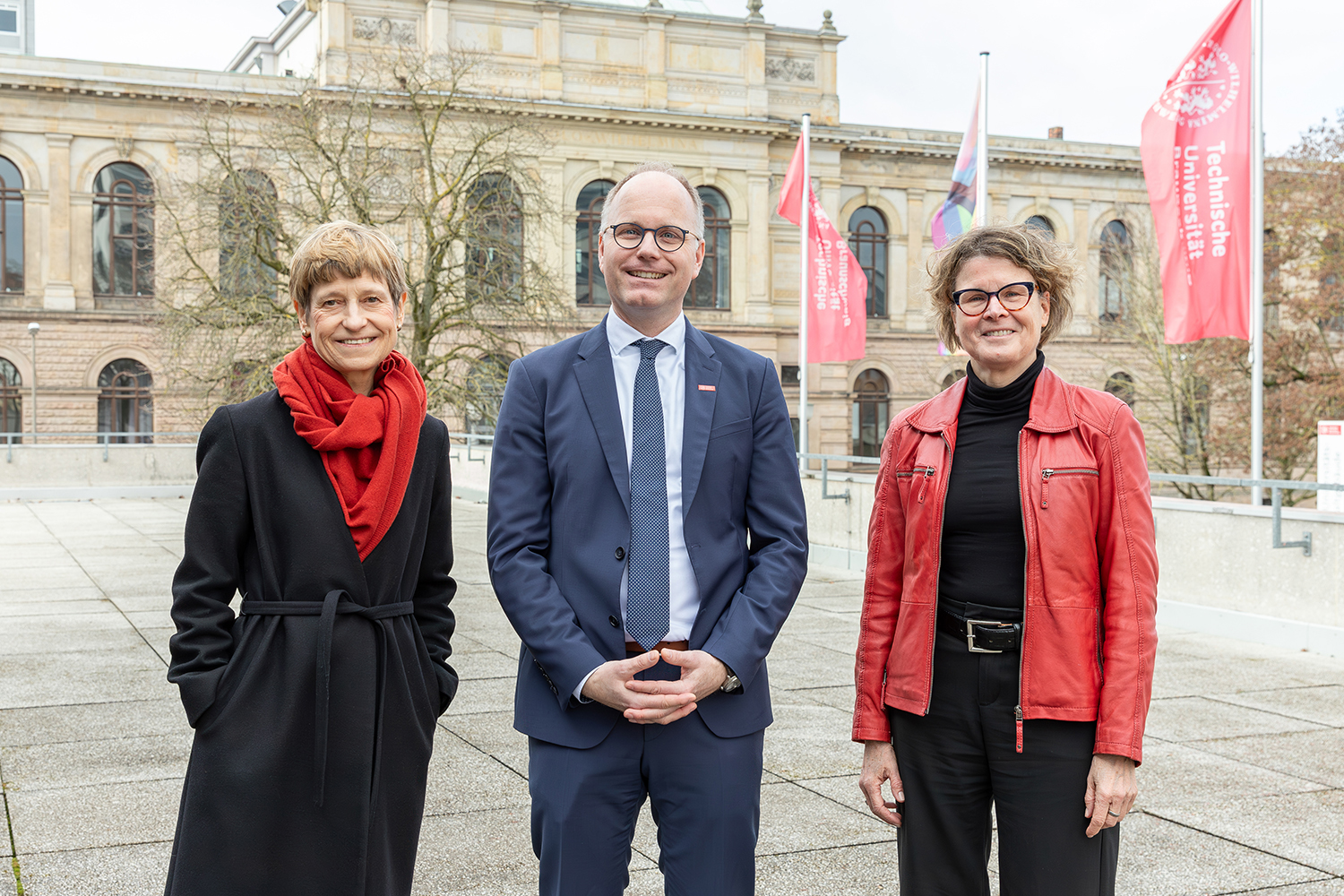
Prof. Lars Schnieder with TU President Prof. Angela Ittel and Prof. Antje Schwalb, Dean of the Faculty of Architecture, Civil Engineering and Environmental Sciences. Photo credits: Kristina Rottig/TU Braunschweig
What motivated you to conduct research in this field?
I am motivated above all by the systemic interrelationships in this field. Rail transport infrastructure never functions in isolation. As a railway engineer with a background in civil engineering – responsible for trackways, bridges, tunnels and buildings – you cannot get by without a sound understanding of mechanical engineering, for instance with regard to rail vehicle technology, any more than you can without a basic knowledge of electrical engineering and computer science. It is only through the closely interlinked interaction of these disciplines that the railway emerges as an efficient integrated system. I also find it particularly exciting that the railway is constantly evolving: it is becoming more digital, more connected and is always situated within the social context of the mobility transition, sustainability and climate protection. This dynamic continually raises new questions at the interface of technology, the environment and society.
You are taking up your professorship just a few months after Prof. Tirachini joined the Institute for Public Transport Planning. How will responsibilities be divided between the institutes in future?
My work and Prof. Tirachini’s research will complement one another. Whilst he focuses heavily on the interplay between transport demand and service design – that is, on the strategic, transport planning level where criteria such as climate impact, regional development, social inclusion and land use are assessed – my focus is on implementation, namely the concrete structural, technical and increasingly automated aspects of the rail system. You could put it this way: Professor Tirachini defines the strategic framework within which I shape the interplay of infrastructure, vehicle technology, control and safety technology, and operational regulations in concrete terms. Thanks to this clear division of responsibilities, both institutes can contribute their expertise fully whilst working closely together, ensuring that strategic decisions and technical implementation are optimally aligned.
What are your teaching priorities? Will the Transport Engineering degree programme change significantly?
My teaching will be strongly guided by my personal strengths and interests. Naturally, a change in the institute’s leadership will shift the focus of teaching. The first key focus will be the system-level design of an increasingly automated railway system. Here, I will draw on my experience from a wide range of international railway automation projects in an industrial context. The second focus will be on digital tools and planning procedures. This area holds significant potential for future gains in efficiency and quality, which we absolutely need for the modernisation of Germany’s rail infrastructure. Last but not least, railway safety is one of the key drivers of my work – both in teaching and in research. Through my role as a certified inspector, I bring direct practical knowledge to the table and can teach students how safety requirements are systematically integrated into the planning, construction and operation of railway facilities.
As a result of these two new appointments, the Transport Engineering degree programme will evolve towards an increasingly intermodal perspective. Furthermore, the programme will be more strongly shaped by the possibilities offered by the growing automation of road and rail transport.
The railway training facility, previously based at the IVE, is also moving to your institute. What are your plans for the laboratory, and what are the prospects for the ELA?
The railway training facility (ELA) is already an excellent example of how academic teaching at TU Braunschweig can be linked to practical training. In this regard, DB InfraGO AG stands by our side as a partner. My aim is to further expand this existing cooperation whilst continuing to open the laboratory to further training within the railway sector. In the coming years, we will systematically expand the capabilities of the ELA. Specifically, we would like to demonstrate the technological leap in signal box technology – for example, through digital signal boxes (DSTW) – within the laboratory. It will also be a matter of more closely simulating automated railway operations in a practical manner in future. In this way, the laboratory will not only be a place for teaching, but also for applied research and further training, offering students and professionals realistic insights into modern railway systems.
How would you describe your day-to-day work in three keywords?
Curiosity – As a professor of railway engineering, I am driven by a curiosity to gain an ever-deeper understanding of the complex interrelationships within the railway system and to develop new solutions for a sustainable and efficient rail infrastructure.
Empowerment – It is important to me to support students and young researchers both professionally and personally, so that they can think independently, take on responsibility and actively help shape the future of the railway system.
Shaping – For me, research and teaching mean constructively shaping the future development of the railway sector – technologically, systemically and in dialogue with society and the environment.
Interview: Heiko Jacobs and Bianca Loschinsky