
Individual paths, social patterns Merle Hinrichsen is the new professor of extracurricular education research
Education does not only take place in the classroom. It also occurs in families, daycare centres, youth groups, digital spaces and civil society initiatives. Merle Hinrichsen, the new professor of empirical education research with a focus on extracurricular education at the Institute of Education at Technische Universität Braunschweig, focuses her research on precisely these extracurricular locations. She investigates how people learn, orient themselves and find their place in society throughout their entire lives. Her research centres on questions of diversity, participation and social inequality. In this interview, she talks about her current projects and what motivates her personally to devote herself to educational research.
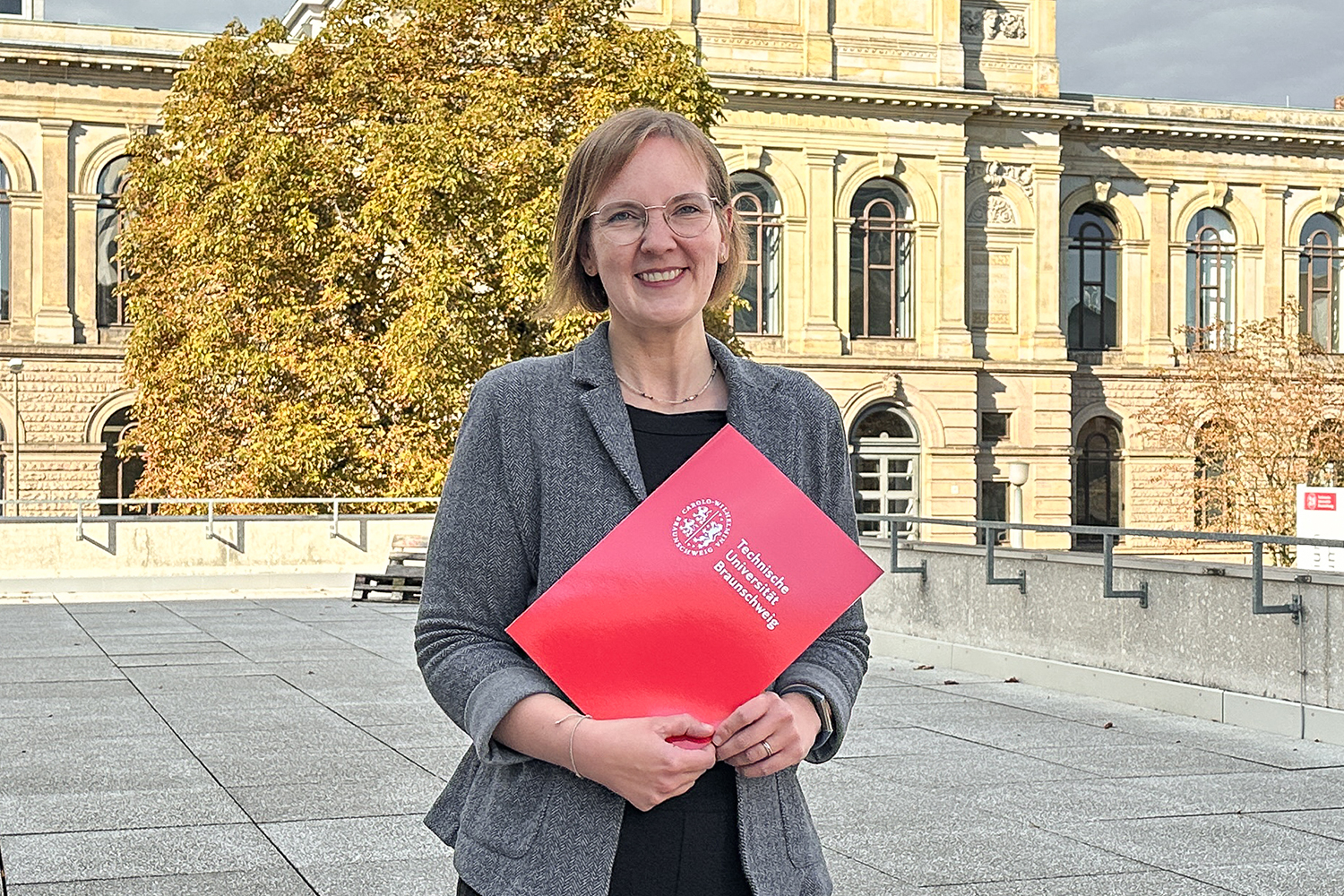
Professor Merle Hinrichsen. Photo credits: Jessica Lüders/TU Braunschweig
Why did you choose TU Braunschweig?
I was convinced by the fact that TU Braunschweig offers a dynamic research environment in which interdisciplinary and transdisciplinary cooperation is specifically supported. This approach will become increasingly important for researching and shaping social transformation processes in the future. TU Braunschweig is leading the way in this regard by recognising diversity and internationalisation as cross-cutting issues, thereby creating promising conditions for excellent and future-oriented research.
What exactly do you focus on in your research? How would you explain your work to someone who is unfamiliar with the topic?
I study upbringing, education and socialisation in extracurricular institutions and fields of action. This encompasses a broad field of research that spans the entire lifespan and ranges from daycare centres to family and social media to youth volunteer services and migrant self-organisations.
With the help of empirical analyses of interviews, group discussions, observations and documents of various kinds, I gain insights into how upbringing, education and socialisation processes are socially structured and institutionally framed. In doing so, I focus in particular on the actions, perspectives and experiences of children, young people and adults. I am interested in how people understand themselves, others and the world, and how this understanding changes over time.
What are the main research areas and projects you will be working on at TU Braunschweig?
Dealing with diversity and participation is a central focus of my research. I am currently investigating how cross-border processes change education systems and biographies and what (new) social inequalities are associated with this. In an ongoing joint project, I am analysing the social and professional integration of migrant educators and their pedagogical professionalisation in migrant self-organisations. One focus is on how barriers to access in higher education and the labour market can be broken down – not least in order to counteract the shortage of skilled workers in the field of education.
Another focus of my work concerns the question of how the world of young people is changing as a result of digitalisation and what potential and challenges this presents for education and political participation. I also conduct research on the significance of forgetting for individual and collective educational processes. Across the board, I am further developing methods of empirical educational research, among other things by integrating responsive and participatory approaches that aim at the mutual transfer of knowledge between science and practice.
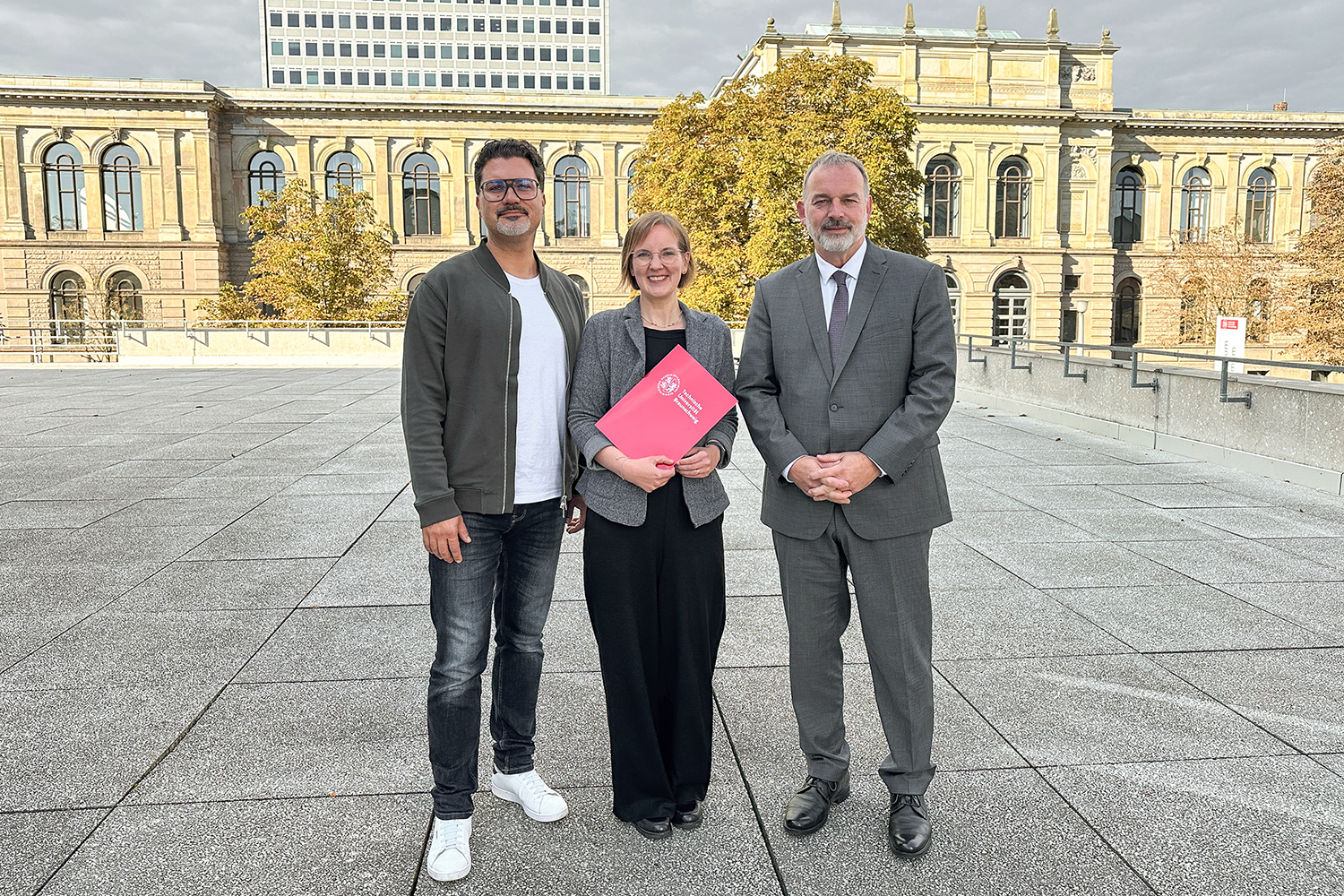
Professor Merle Hinrichsen with the Vice-President for Digitalisation and Sustainability at TU Braunschweig, Professor Manfred Krafczyk, and the Dean of the Faculty of Humanities and Education, Professor Jan Standke. Photo credits: Jessica Lüders/TU Braunschweig
What motivated you to conduct research in this area?
Since my studies, I have been interested in the topics of education, inequality and diversity. In my thesis, I researched the biographies of long-term unemployed young adults. Even then, it was important to me to examine socially relevant issues – such as high unemployment rates – in more detail, focusing on the interplay between social structures, institutional frameworks and subjective perspectives. Since then, I have been interested in how individual life stories and social structural conditions intertwine. I see educational research as an opportunity to reveal connections that are often overlooked and, in this way, to gain a deeper understanding of social inequalities and how they change.
How would you describe your everyday work in three keywords?
Organising – researching – teaching.