
Better by bus and train Professor Alejandro Tirachini heads the Institute of Public Transport Planning
Climate targets, digitalisation and growing awareness of the social effects of mobility call for new solutions for public transport. Since September 2025, Professor Alejandro Tirachini has been head of the Institute for Public Transport Planning (IPTP) at Technische Universität Braunschweig, bringing with him international perspectives and many years of research experience. His research focuses on sustainable and shared mobility, the planning and design of efficient public transport systems, and new mobility technologies. Bianca Loschinsky and Heiko Jacobs spoke with Professor Tirachini about mobility from Australia to South America, AI in transport planning, and his vision for public transport.
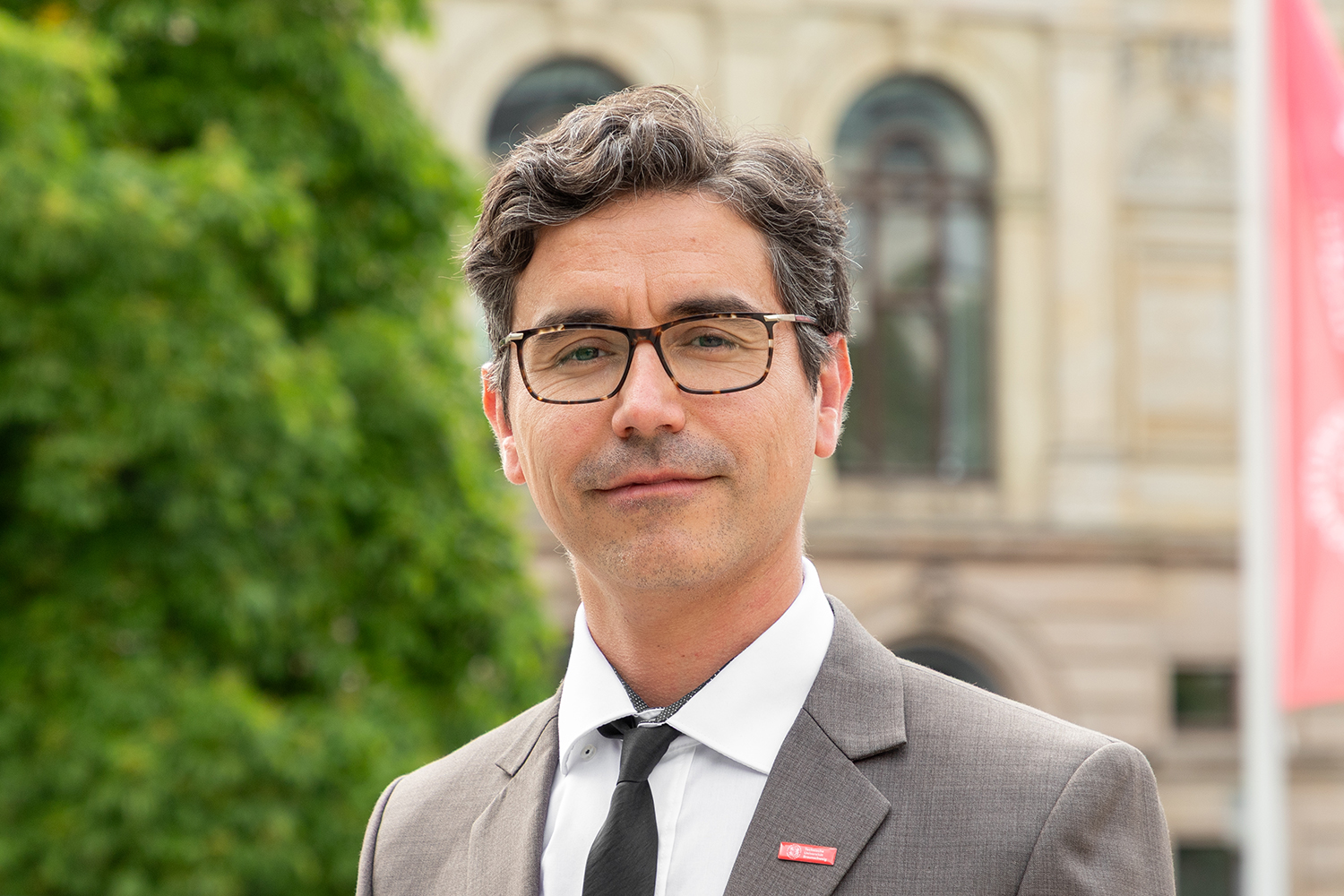
Professor Alejandro Tirachini heads the Institute of Public Transport Planning. Picture credits: Kristina Rottig/TU Braunschweig
Professor Tirachini, why did you choose TU Braunschweig?
First of all, the topic of the professorship was very attractive to me, as public transport is the main focus of my work. The challenge to create a new Institute on Public Transport Planning in a major German university felt like a once-in-a-lifetime opportunity, and I am thankful to TU Braunschweig for trusting in me to lead this endeavour.
My first weeks at the university have been really motivating as I have received great support from colleagues, researchers and everyone I encounter. Also, in Lower Saxony there are many opportunities for collaboration with the public sector and industry partners. And very importantly, Braunschweig is a pretty and family-friendly city, so everything was aligned to make this decision.
The Institute for Transport, Railway Construction and Operation (IVE) has become the Institute for Public Transport Planning (IPTP). What role will railway construction play in the Institute’s work?
Rail infrastructure planning in general, as part of public transport planning, will also be a focus point of our institute. Future public transport, including all technologies from rail to standard buses to small on-demand vehicles, will be part of an integrated public transport systems in future cities, serving different mobility needs.
You completed your Master’s degree in Chile and your PhD in Sydney, and you have most recently taught in Twente, the Netherlands. You have literally travelled the world doing research and attending conferences. How do the principles of public transport systems differ from Australia to South America?
The fundamental principles of public transport do not change between regions. Public transport should provide mobility to all, regardless of socioeconomic status and physical condition. Public transport is more efficient in the use of space and is more environmentally friendly than travelling by car, even though cars are in many situations more convenient for the users. It should be easy to combine walking and cycling with public transport for multimodal trips. These principles are the same all over the world. What changes is the intensity and policy relevance of the principles, which is shaped by policy priorities, social values and budget constraints.
For instance, among high-income regions there are striking differences between countries that really make an effort to have good public transport systems (more common in Europe and high-income Asia) vs countries that through urban and transport policy are more car-oriented (e.g., North America). On the other hand, in developing or lower-income countries, financial constraints play a large role in reducing the quality of public transport, even though in large cities, for example in South America, public transport is massively used.
Is there anything we in Germany can pick up from them, or implement ideas?
In the European context, urban public transport is quite good in Germany. Interurban public transport is suffering in the last years because of rail reliability issues, which should be fixed soon before more people stop travelling by train to choose other, less sustainable modes of transport. But even in cities with good public transport, there are always things that can be improved. For example, in cities like Braunschweig the network design can be revised particularly in the outskirts, where sometimes, to privilege spatial coverage, bus lines are circuitous and lack directness, with detours that significantly increase travel time for people that need to travel longer distances. In off-peak periods and in low-density suburbs and rural areas there is huge potential for flexible services with smaller vehicles, something that is still incipient in Germany. Flexible services are commonly seen in developing countries, although in informal of semiformal public transport forms.
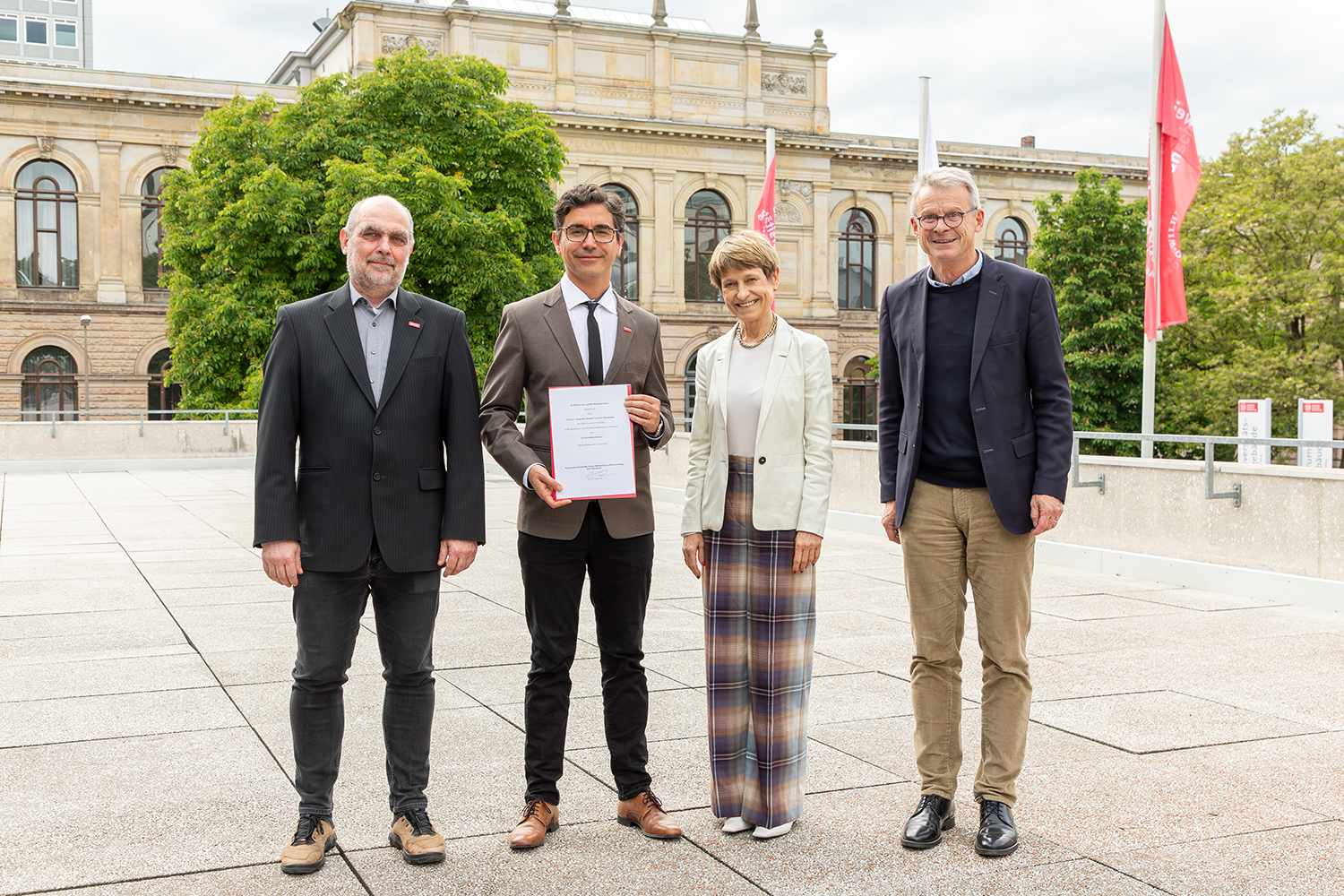
Professor Alejandro Tirachini at his appointment ceremony with TU President Angela Ittel, Department Spokesperson for Building and Environment Professor Jochen Aberle, and Professor Bernhard Friedrich from the Institute of Transportation and Urban Engineering. Picture credits: Kristina Rottig/TU Braunschweig
What exactly do you research? How would you explain your work to someone unfamiliar with the subject?
If you want to travel by public transport in a city, you depend on decisions that someone already made. Someone decided where there are going to be trains, where are going to be buses, which types of vehicles (size, internal layout, number and quality of seats, aesthetics), how frequent the service is, where stops are located, how the system should be integrated with other modes of transport and how much you should pay for a ticket. In my work I try to understand the mechanisms that govern all these decisions, in order to provide insights to improve public transport and shared mobility. I also study cycling and walking as forms of active mobility and the traffic externalities derived from motorised traffic, with a focus on sustainable transport policy making.
You will be researching the combination of public transport systems with sustainable modes of transport, such as bicycle hire, e-scooters and car sharing, with a focus on optimised transport systems. Where are things running ‘optimally’ in this sense?
In the integration of new shared modes and traditional public transport there is still plenty to do, as in most cities these systems are planned independently, by different entities with different objectives, and the modes have different payment systems that make combined use harder. First, simplifying payment would be a huge step forward, for instance if bike-sharing is integrated in a single payment method with public transport. This is still the exception rather than the rule around the world.
Second, the combined fleet planning of public transport and shared mobility is also a research and policy objective with increasing relevance. And third, the physical integration between modes also needs improvement, by designing more attractive mobility hubs where the connection between modes is effortless. Urban design and transport planning are needed together for this latter objective.
How can artificial intelligence optimise public transport networks?
We expect that AI will help us to create more equitable and resilient public transport services, with great improvements in quality and coverage particularly in those areas where public transport does not work well today, owing to having a low demand. How human-AI collaboration will evolve as time goes by is also an exciting development of the next decades. The risk is, of course, that AI will be more effectively used to promote unsustainable modes of transport. For this reason, again, strong policy making and public sector involvement is crucial.
What motivated you to research public transport systems?
It was during my Bachelor studies in Civil Engineering at Universidad de Chile that I got to know about transport science, a captivating field. I also had several inspiring transport professors that clearly loved their jobs. One day I was curious to learn about how the transport research done by students at my university looked like, so I went to the library and picked a bunch of master theses on transport studies. The one that I liked the most was about optimisation models for the frequency of service in public transport lines. It was due to the elegance of the models and the connections to my own life and experience as public transport user in Chile (which made me think of several ways of doing new research using those theories), that I started to work on this field.
How would you describe your day-to-day work in three words?
Dedication, collaboration and hope.