
Architecture as a “protective machine” Students explore bunkers in Braunschweig from historical and artistic perspectives
Bunkers and air-raid shelters still shape the cityscape in many places today – often hidden, sometimes barely noticed. For some, they are military relics of a bygone era; for others, they are poignant reminders of war, fear and the struggle for survival. In a joint seminar organised by the Institute for Architecture-Related Art (IAK) and the Institute of History (IfG) at Technische Universität Braunschweig, students undertook an interdisciplinary examination of bunkers and architecture as a “protective machine”. In doing so, they examined these shelters not as isolated relics of the past, but as active architectural, social and aesthetic structures within the urban landscape.
During the Nazi era, Braunschweig was developed into a centre of the armaments industry. Numerous bunkers were also built in the city during this period. The building housing the Institute for Architecture-Related Art in the Querumer Forst is closely linked to the history of bunker construction. Between 1938 and 1945, Professor Theodor Kristen Ende developed the so-called “Braunschweig reinforcement” at what was then the Institute for Architectural Air-Raid Protection. His expertise in building materials, particularly reinforced concrete, was of central importance to civilian bunker construction in Braunschweig, the “German Reich” and the occupied territories of the time.
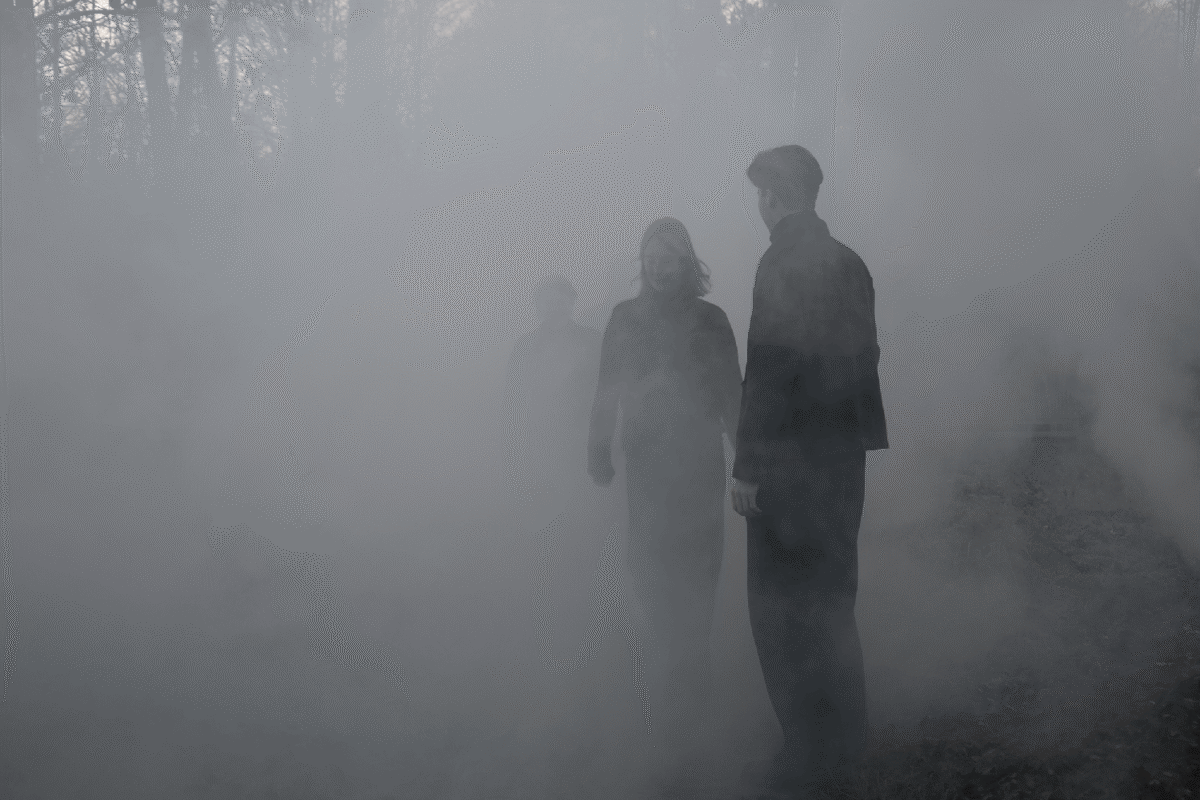
The artistic performance “Vaporous Bodies” took place in the outdoor area and the adjacent woodland of the Institute for Architecture-Related Art. Photo credit: Stella Flatten
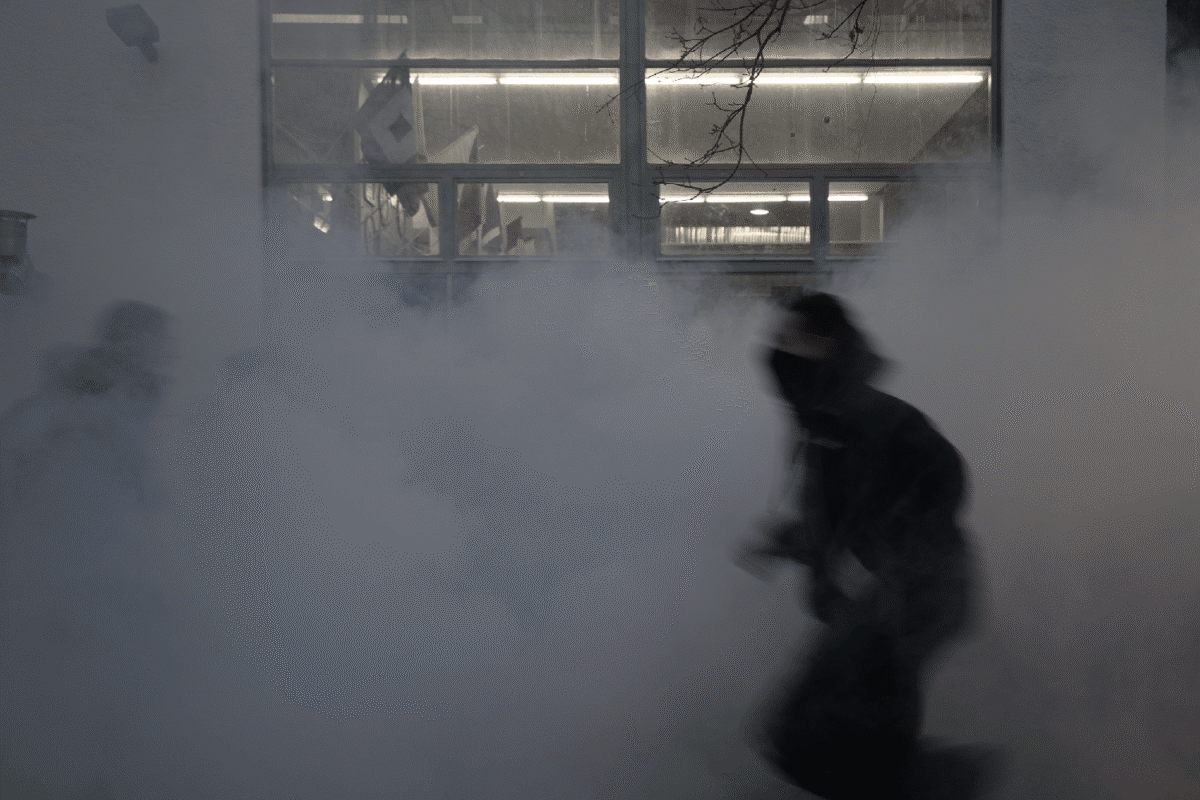
The foggy figure symbolises the concealment of the past. Photo credit: Stella Flatten
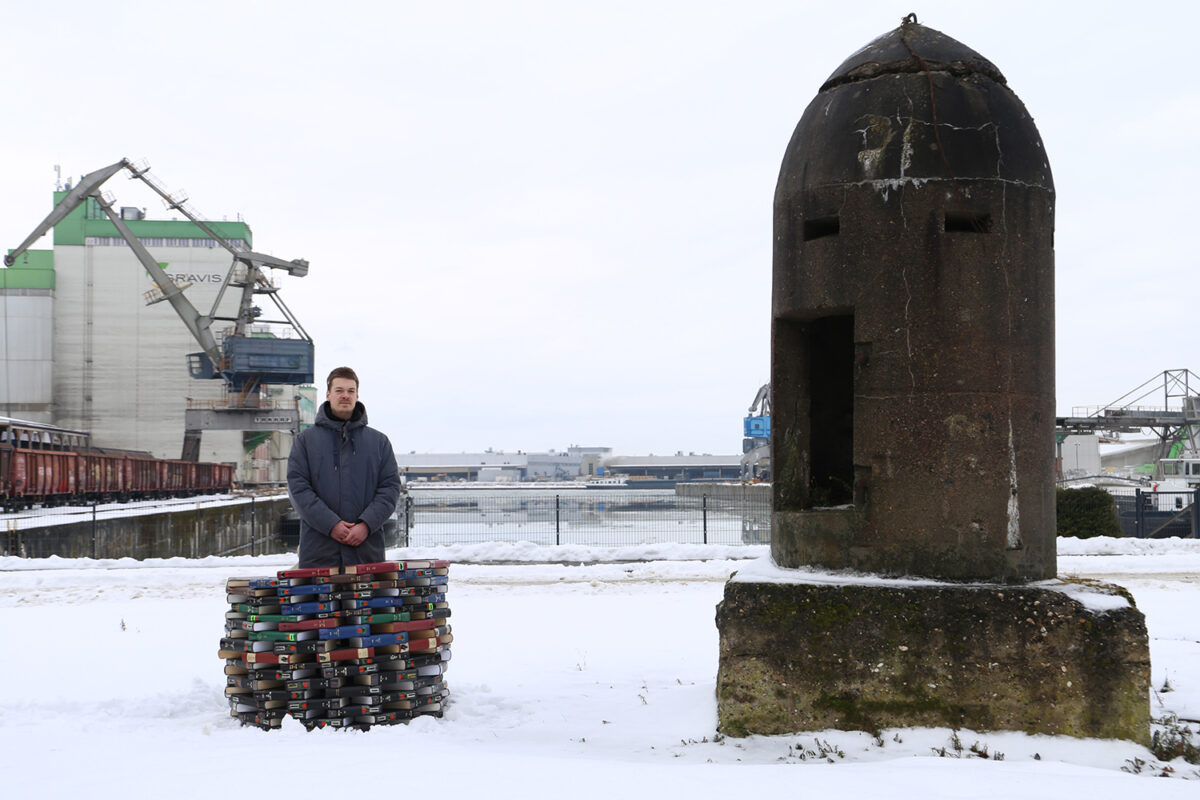
Still from the stop-motion film "Unbombable Archives". Photo credit: Stella Flatten
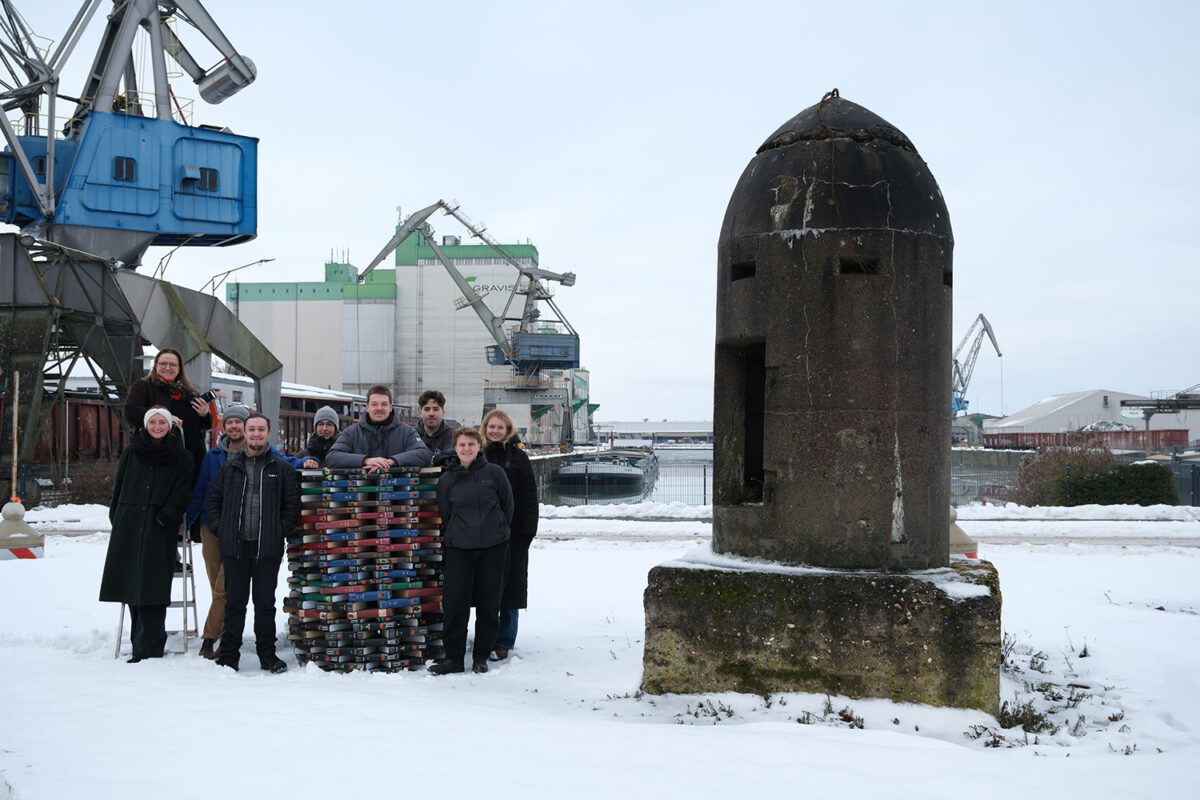
The seminar group at Braunschweig harbour, next to the Westermann splinter protection cell. Photo credit: Marie Röpke
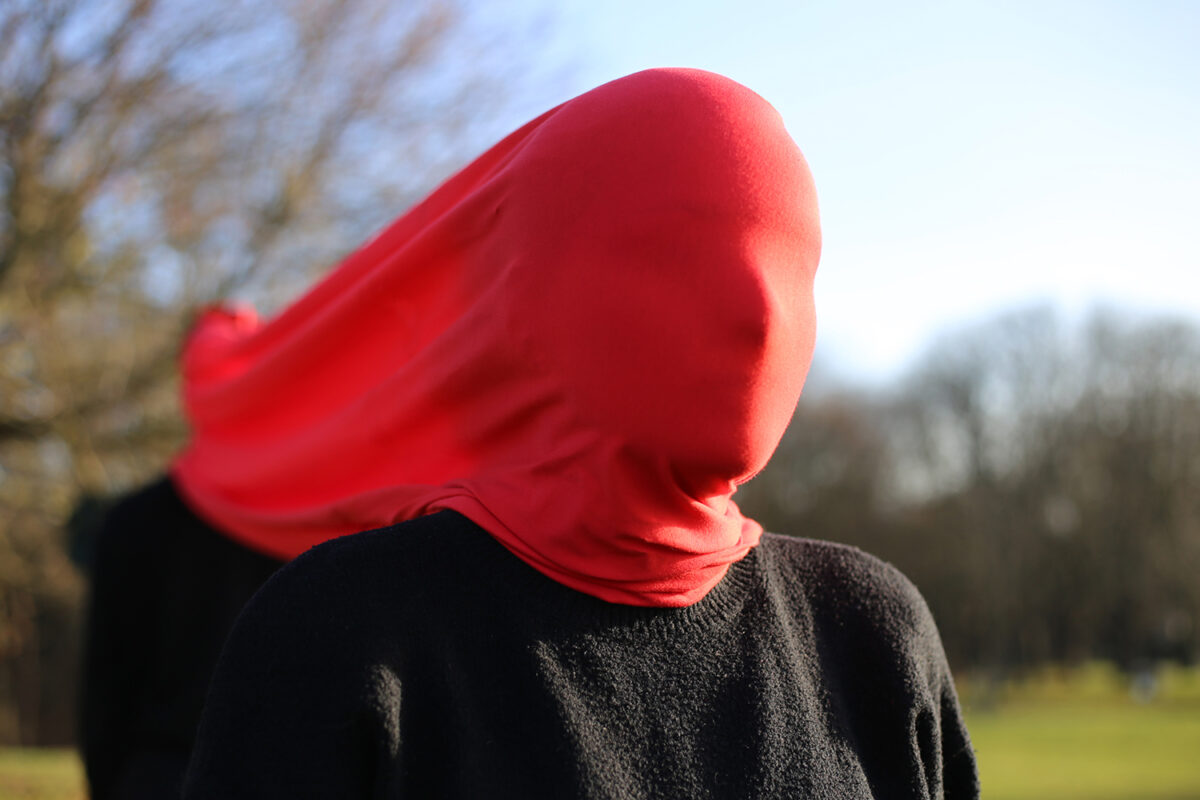
Performance: "Disappearing whilst Connecting". Photo credit: Stella Flatten
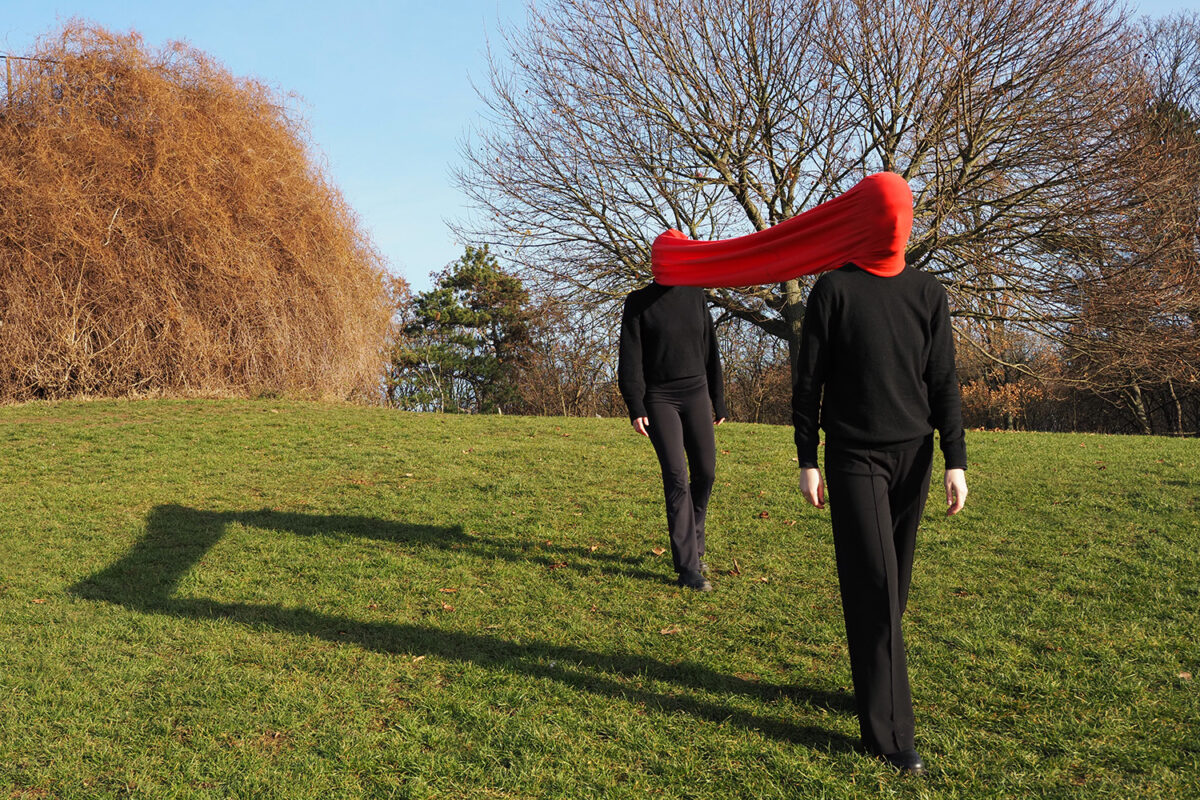
The spatial installation “Verschwinden im Verbinden” at the former bunker on Nussberg in Braunschweig. Photo credit: Sief Kuban
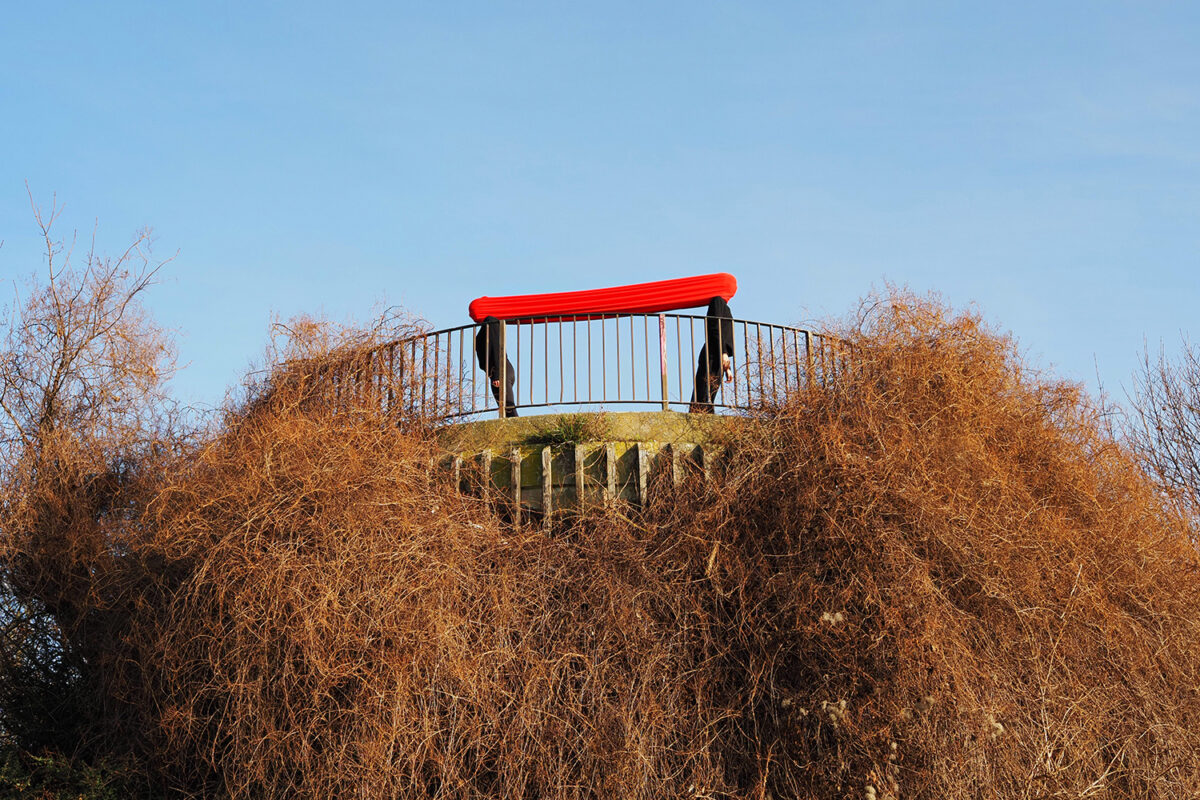
A performance offering a commentary on the historical fabric of the former air-raid shelter on the Nussberg. Photo credit: Sief Kuban
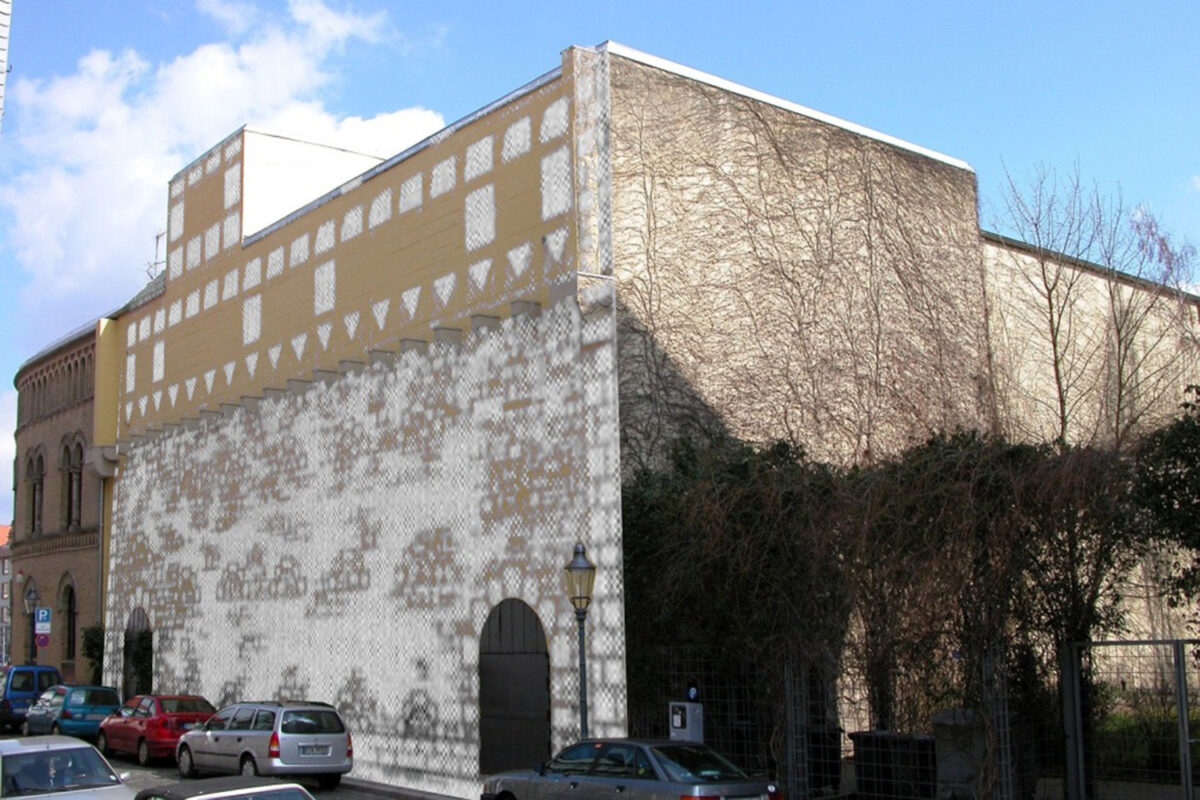
Facade projection of the work "Alternative Realities". Photo credit: Team Rena Brockman, Milan Reusch and Thor Wendler
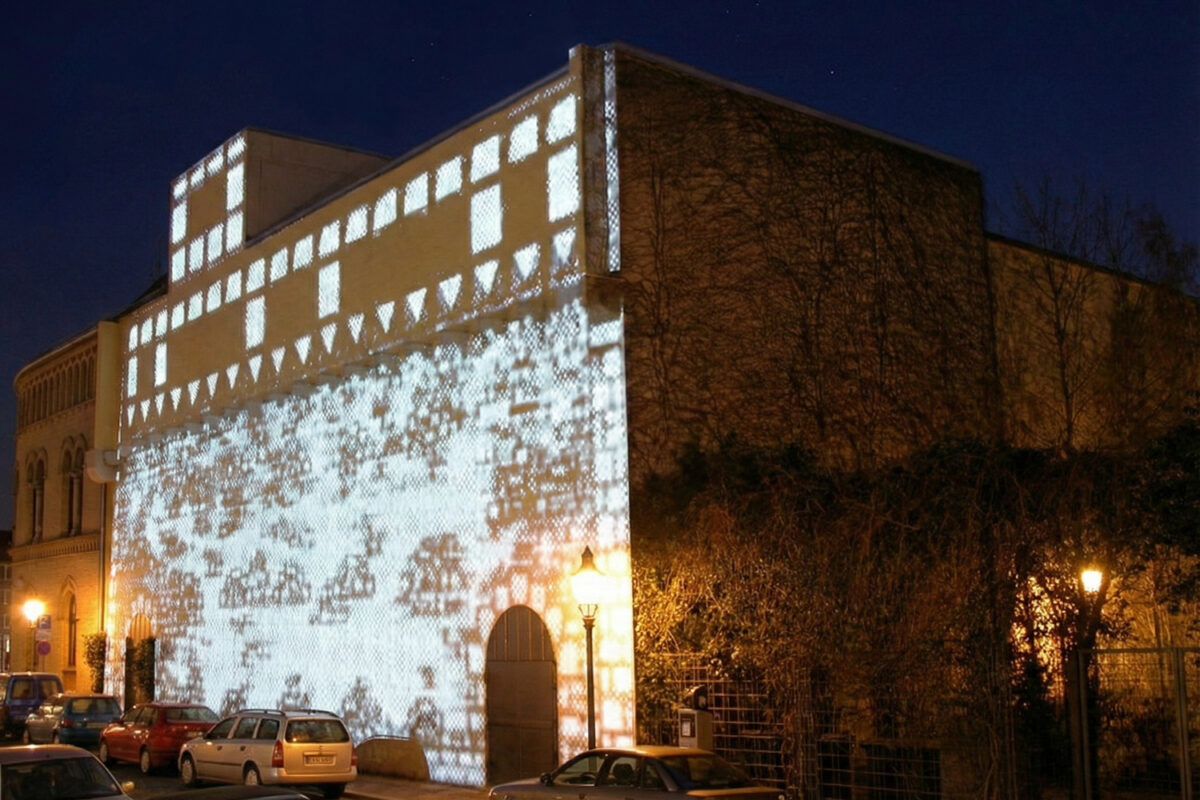
The projection really comes into its own in the dark. Photo credit: Team Rena Brockman, Milan Reusch and Thor Wendler
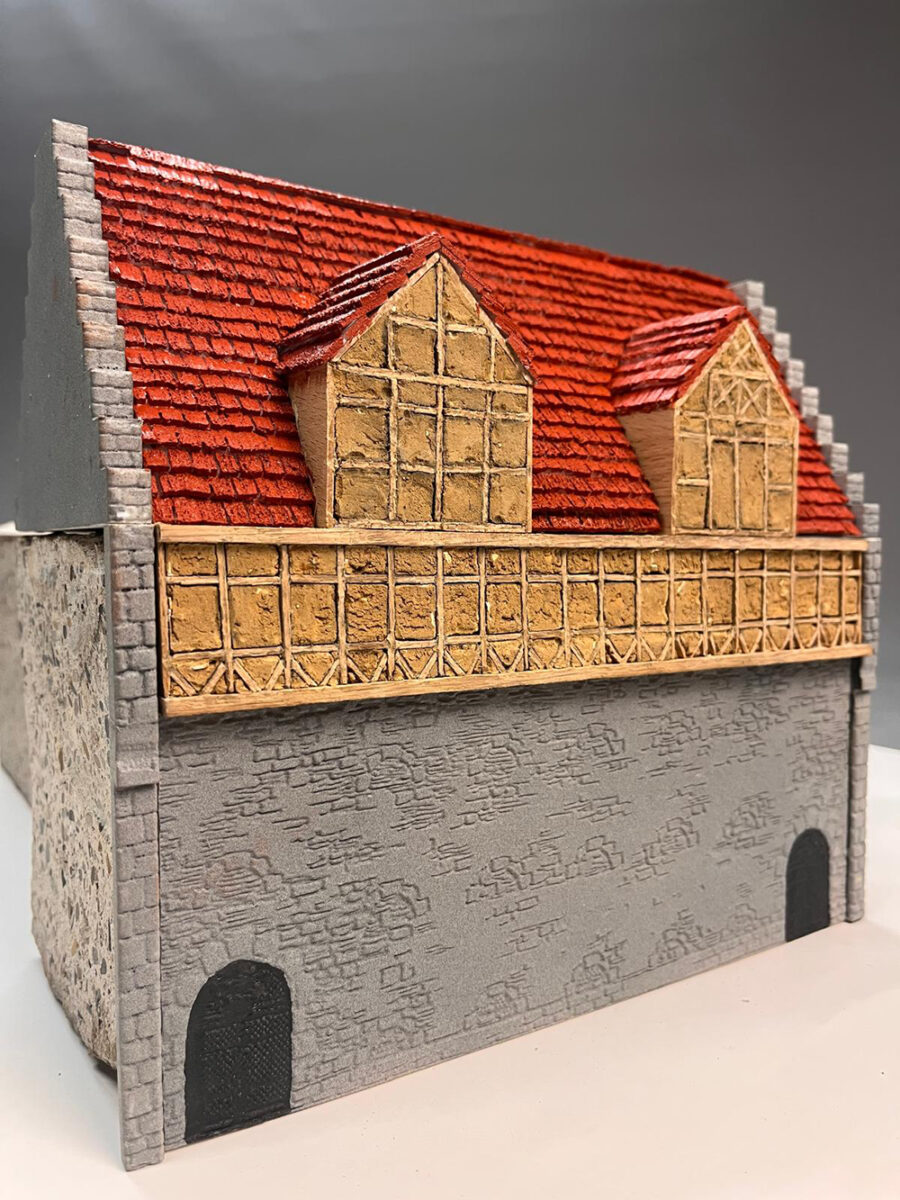
As well as the projection, the students also built a model of the building featuring the planned façade. Photo credit: Team Rena Brockman, Milan Reusch and Thor Wendler
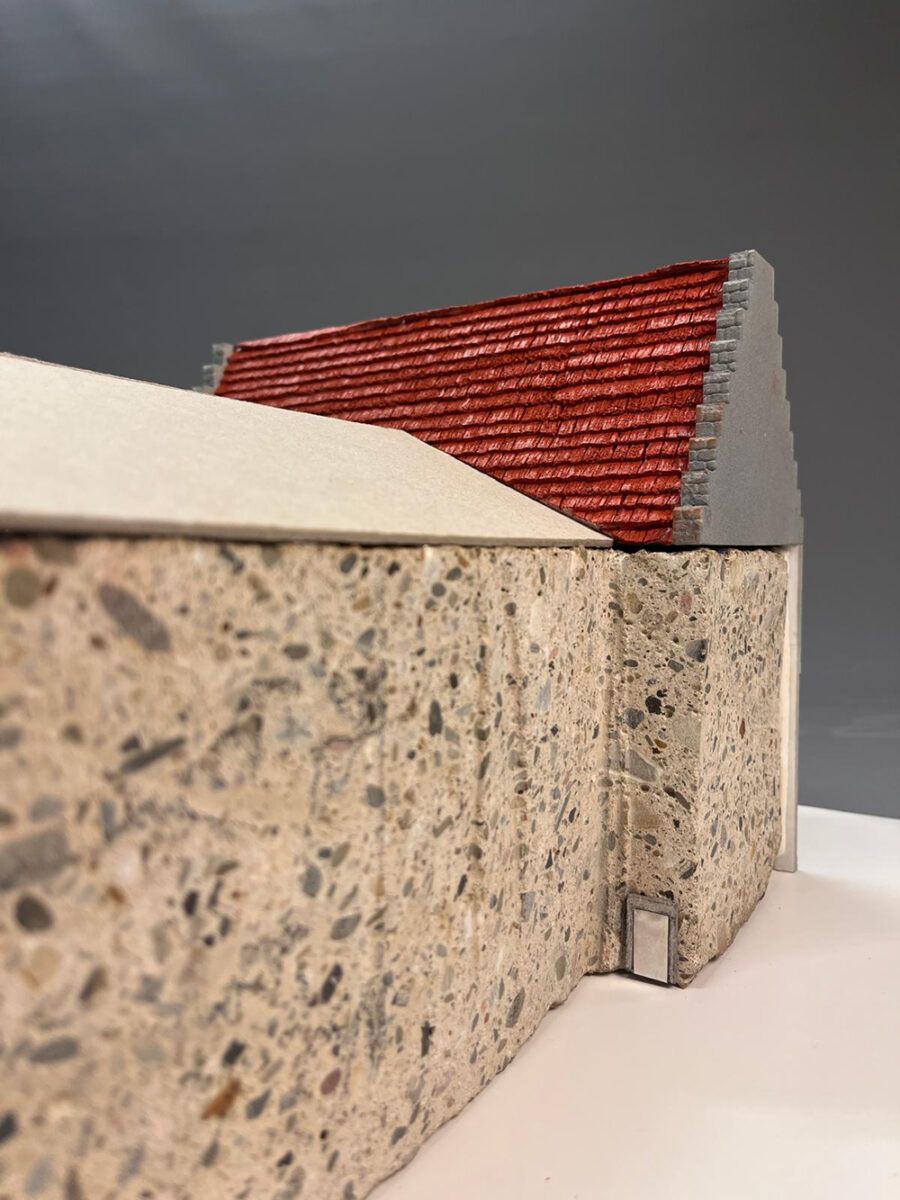
The model was based on a piece of cast concrete that the students found near the IAK in the Querumer Forest. Photo credit: Team Rena Brockman, Milan Reusch and Thor Wendler
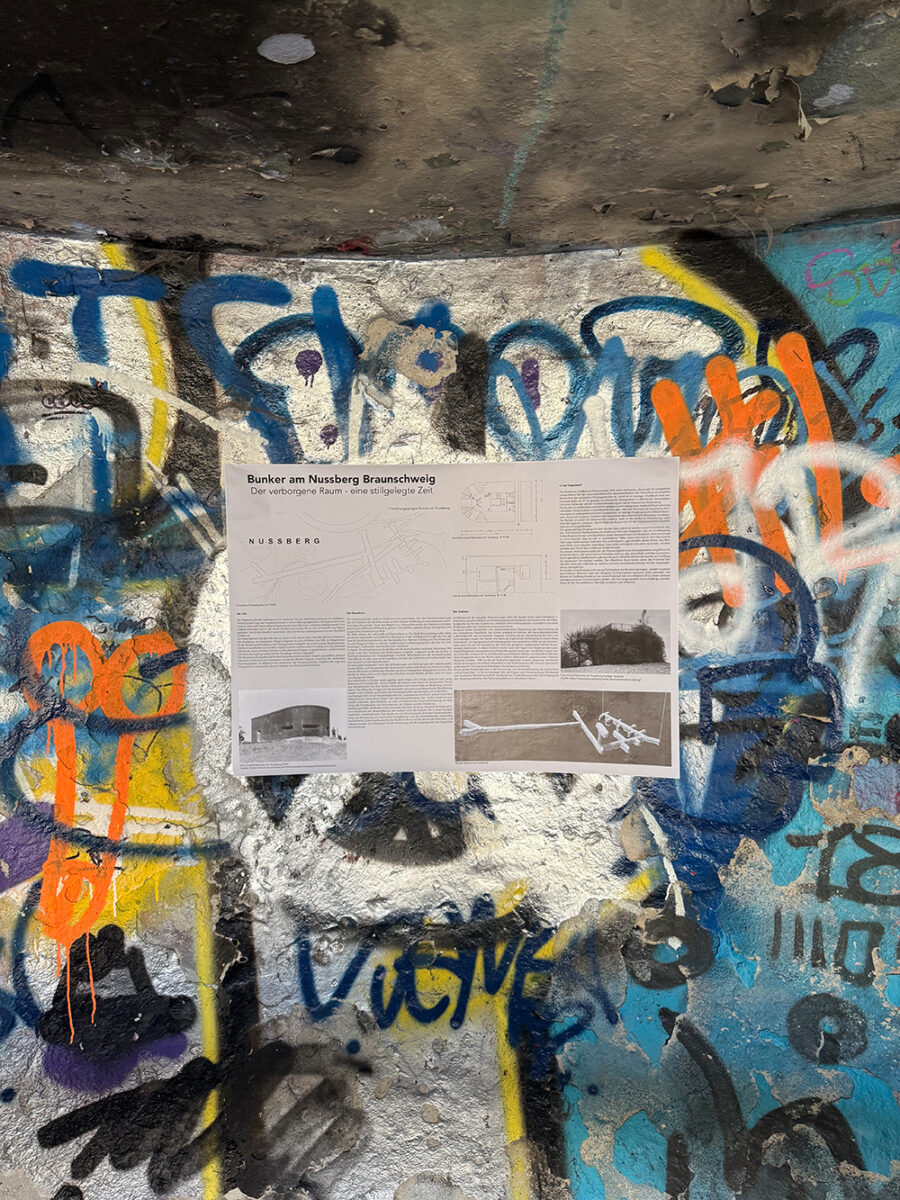
The hidden room – a time frozen in history. A historical reconstruction of the Nussberg Bunker. Photo credit: Team Fabienne Büchner, Josephin Schwarz, Marcus Wolter
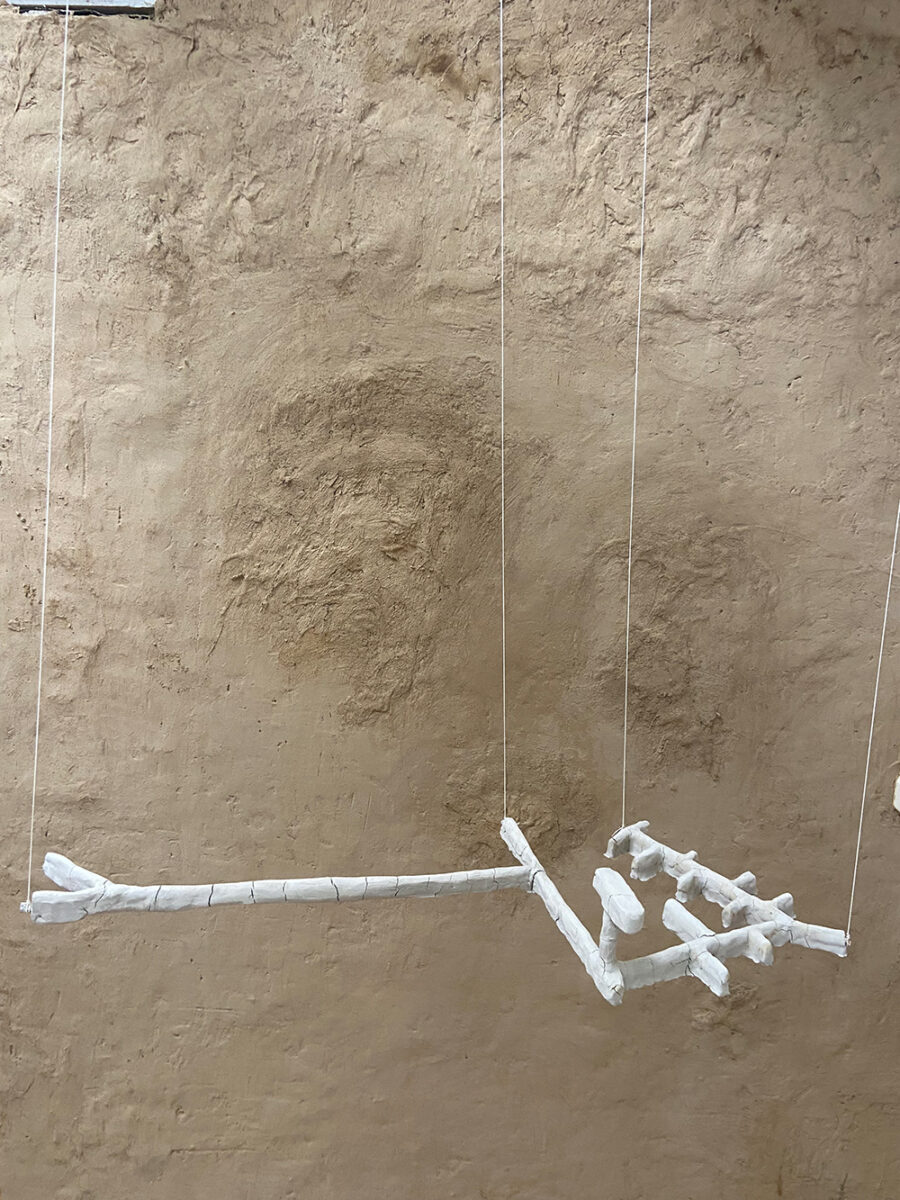
The hidden room – a time frozen in history. A historical reconstruction of the Nussberg Bunker. Photo credit: Team Fabienne Büchner, Josephin Schwarz, Marcus Wolter
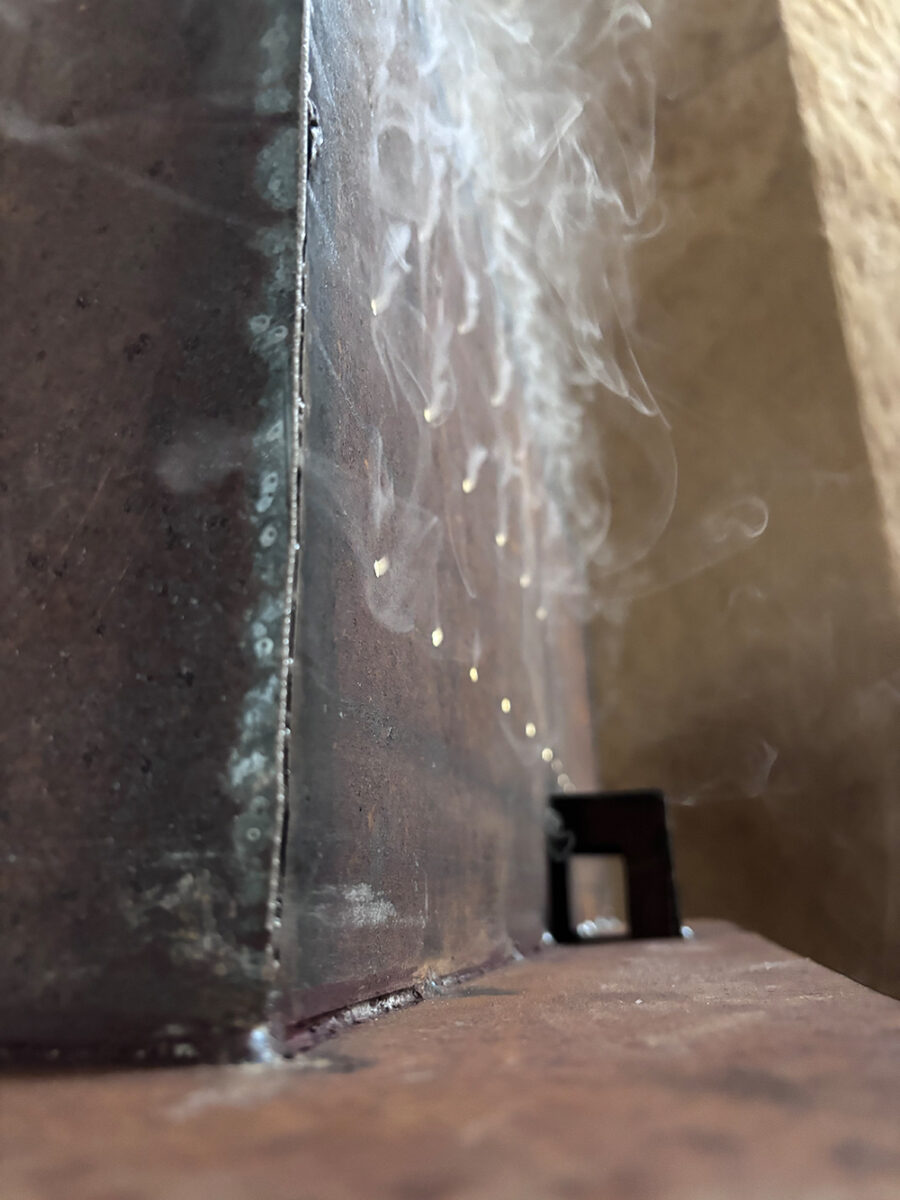
In “The Breathing Bunker”, a fog machine is used to direct fog in a controlled manner through an existing ventilation opening, in order to visualise the “air exchange”. Photo credit: Team Tobias Brüning, Yasin Sagir and Kamila Schneider
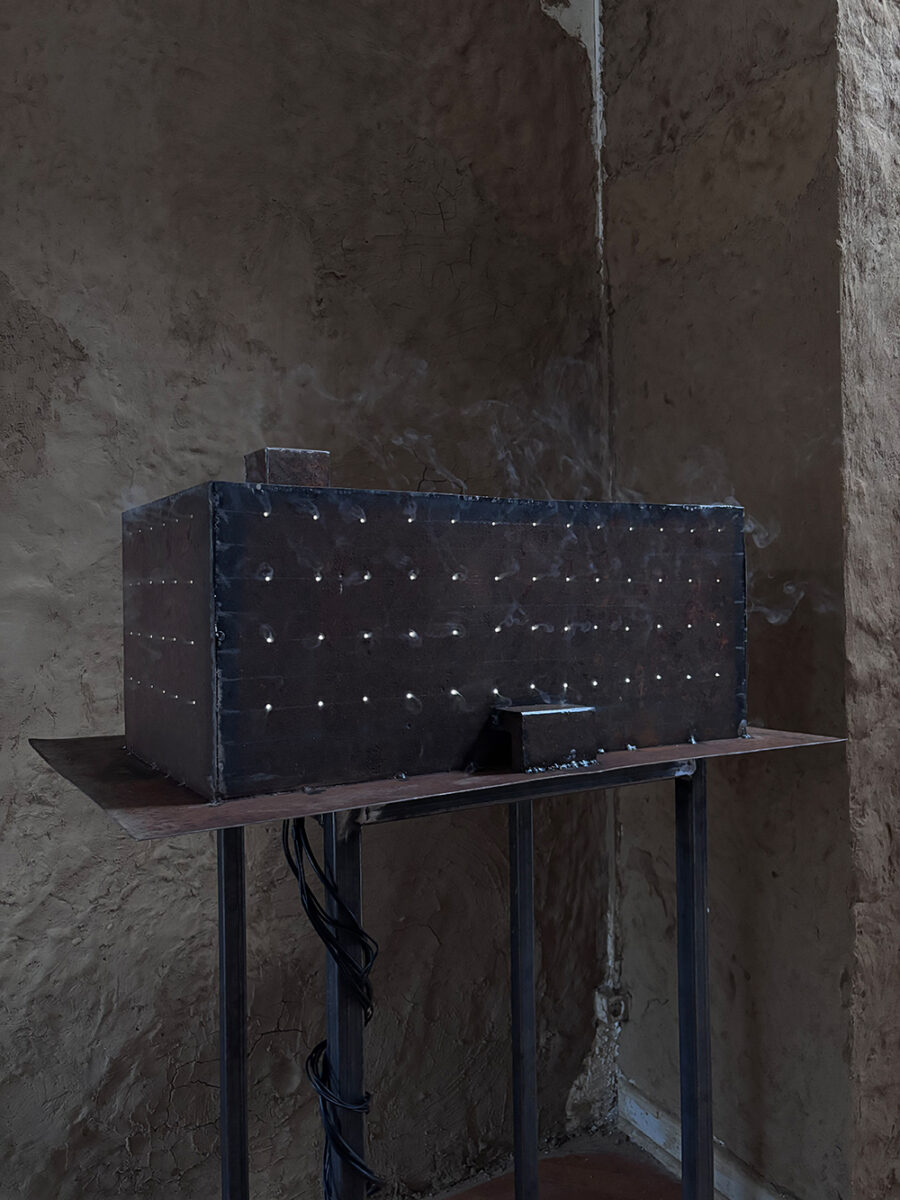
An intervention in the urban landscape that could draw attention to the bunker in a subtle way. "The Breathing Bunker" involves using a fog machine to direct fog in a controlled manner through an existing ventilation opening, in order to make the "air exchange" visible. Photo credit: Team Tobias Brüning, Yasin Sagir and Kamila Schneider
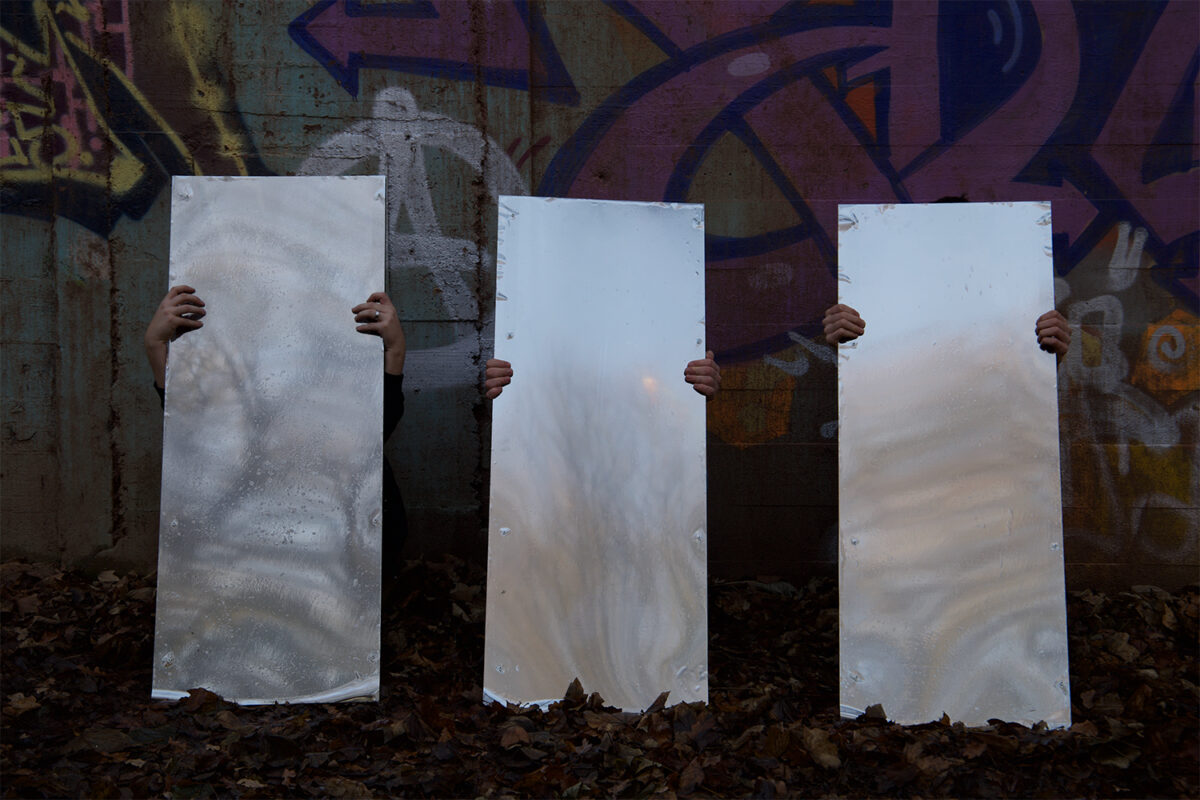
The "Testudo" team explored the theme of camouflage at the former Nussberg air-raid shelter. Photo credit: Team Joris Gomolla, Kilian Serre-Gruberbauer and Henrik Steinert
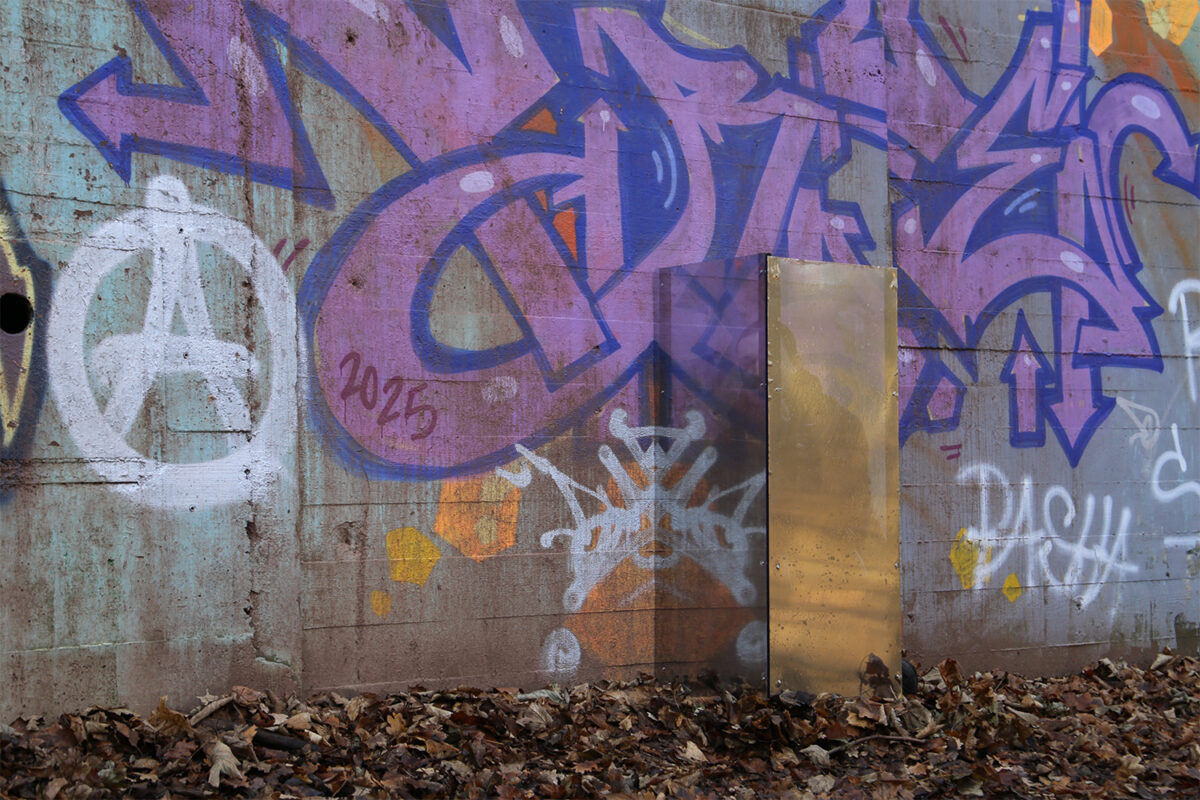
Well disguised: Who can spot the person hiding in the mirrored structure? Photo credit: Team Joris Gomolla, Kilian Serre-Gruberbauer and Henrik Steinert
Taking this site as their starting point, the students examined historical air-raid shelters in Braunschweig, particularly observation bunkers and shrapnel-proof cells, and how they have been transformed within the urban landscape. The students were led by Stella Flatten and Gergely László (both from the IAK) and Professor Christian Kehrt (IfG). They focused specifically on the former observation bunker on the Nussberg; the bunker on Knochenhauerstraße, which was built on the ruins of the destroyed “New Synagogue”; the hospital bunker on Cellerstraße, which is located on the site of today’s Municipal Hospital; and a Westermann anti-shrapnel shelter (“one-man bunker”) in Braunschweig’s inner harbour.
Bunkers as enduring structures of power
At the heart of their discussion were questions regarding the continued presence of historical air-raid shelters: How do places with a troubled past change through use? When does protection become camouflage, and when does it become a political gesture? In engagement with Paul Virilio’s “Bunker Archaeology”, which describes the Atlantic Wall as a legacy of military logic that shapes the landscape, bunkers were understood not merely as structures, but as enduring structures of power that continue to have an impact right up to the present day. She also considered shelters in current conflicts. “Due to the current geopolitical situation, bunkers are suddenly coming back into focus,” says Gergely László.
The seminar combined historical research, historical contextualisation, artistic methods and site-specific analysis. “For the history students, this meant it was no ordinary seminar,” says Professor Christian Kehrt. The students carried out research in the city archives and found sources relating to the expropriation and repurposing of land for bunker construction in Braunschweig’s old town. During site visits and bunker tours (facilitated, amongst others, by the historian Dr Christian Werner), they also examined the protective architecture of these spaces and conducted interviews with contemporary witnesses. One question, for example, was how today’s users – whether as disco-goers or residents – perceive former bunker structures. In the course of their research projects, the students found that visible contextualisation and historical information are often lacking. “These places are lost within the urban landscape,” says Stella Flatten. “They are unwanted architecture.”
The artistic performance “Vaporous Bodies” took place in the outdoor area and the adjacent woodland of the Institute for Architecture-Related Art. Photo credit: Stella Flatten
The foggy figure symbolises the concealment of the past. Photo credit: Stella Flatten
Still from the stop-motion film "Unbombable Archives". Photo credit: Stella Flatten
The seminar group at Braunschweig harbour, next to the Westermann splinter protection cell. Photo credit: Marie Röpke
Performance: "Disappearing whilst Connecting". Photo credit: Stella Flatten
The spatial installation “Verschwinden im Verbinden” at the former bunker on Nussberg in Braunschweig. Photo credit: Sief Kuban
A performance offering a commentary on the historical fabric of the former air-raid shelter on the Nussberg. Photo credit: Sief Kuban
Facade projection of the work "Alternative Realities". Photo credit: Team Rena Brockman, Milan Reusch and Thor Wendler
The projection really comes into its own in the dark. Photo credit: Team Rena Brockman, Milan Reusch and Thor Wendler
As well as the projection, the students also built a model of the building featuring the planned façade. Photo credit: Team Rena Brockman, Milan Reusch and Thor Wendler
The model was based on a piece of cast concrete that the students found near the IAK in the Querumer Forest. Photo credit: Team Rena Brockman, Milan Reusch and Thor Wendler
The hidden room – a time frozen in history. A historical reconstruction of the Nussberg Bunker. Photo credit: Team Fabienne Büchner, Josephin Schwarz, Marcus Wolter
The hidden room – a time frozen in history. A historical reconstruction of the Nussberg Bunker. Photo credit: Team Fabienne Büchner, Josephin Schwarz, Marcus Wolter
In “The Breathing Bunker”, a fog machine is used to direct fog in a controlled manner through an existing ventilation opening, in order to visualise the “air exchange”. Photo credit: Team Tobias Brüning, Yasin Sagir and Kamila Schneider
An intervention in the urban landscape that could draw attention to the bunker in a subtle way. "The Breathing Bunker" involves using a fog machine to direct fog in a controlled manner through an existing ventilation opening, in order to make the "air exchange" visible. Photo credit: Team Tobias Brüning, Yasin Sagir and Kamila Schneider
The "Testudo" team explored the theme of camouflage at the former Nussberg air-raid shelter. Photo credit: Team Joris Gomolla, Kilian Serre-Gruberbauer and Henrik Steinert
Well disguised: Who can spot the person hiding in the mirrored structure? Photo credit: Team Joris Gomolla, Kilian Serre-Gruberbauer and Henrik Steinert
Camouflage through mist
In their term papers, the students examined the shelters, exploring various methods and approaches. They created performances, installations and concepts that redefined protection as not just a structural shell, but also as an action, a process and a collective strategy. For instance, the art performance “Vaporous Bodies” by León Klotz Garcia and Jan Saalman translates the idea of protection into an atmospheric, space-filling form. Fog becomes a protective shell for the human body. The fog-filled space also alludes to the concealment of the past. This is comparable to the bunker on Knochenhauerstraße, which was intended to be disguised externally as a townhouse in order to conceal its actual purpose.
The work “Alternative Realities” by Rena Brockman, Milan Reusch and Thor Wendler also dealt with the bunker, on the site of which Braunschweig’s New Synagogue stood until the pogroms of 9 November 1938. The students’ idea was to project the façade design originally planned for the bunker – featuring a mock half-timbered structure – onto the bunker’s façade using projectors, thereby depicting a possible alternative reality. In addition to the projection, the students also built a model of the building featuring the planned façade. This was based on a piece of cast concrete that the students found near the IAK in the Querumer Forest.
Knowledge as Protection
For the installation “Unbombable Archives”, Max Kolditz set up a collection of academic books inside a blast-proof chamber at Braunschweig harbour. It illustrates how academic work and critical information gathering create values that protect against manipulation, disinformation and propaganda.
Another project focused on the ventilation issues of the operations bunker on Celler Straße. In “The Breathing Bunker” by Tobias Brüning, Yasin Sagir and Kamila Schneider, a fog machine is used to direct fog in a controlled manner through an existing ventilation opening, in order to make the “air exchange” visible. An intervention in the urban space that could result in the bunker being perceived in a subtle way.
Participating architecture students: Fabienne Büchner, Rena Brockman, Tobias Brüning, Charlotte Gehrke, Joris Gomalla, Max Kolditz, León Klotz Garcia, Sief Kuban, Milan Reusch, Jan Saalman, Yasin Sagir, Emma Schreiber, Kilian Serre-Gruberbauer, Kamila Schneider, Josephin Schwarz, Henrik Steinert, Thor Wendler, Marcus Wolter,
Students of Civil Engineering, History, and Organisation, Governance, Education: Noah Hecht, Patrick Hoffmann, Leandra Mewes, Nikas Modde, Alina Müller, Maria Ritter, Annabella Sartison, Kjell Völzke, Moritz Wilhelm