
Antarctic expedition: Master’s thesis in the “eternal ice” Student Pinar Dogantekin reports from aboard the "Polarstern"
What is it like to spend almost two months in Antarctica? Pinar Dogantekin is experiencing it first-hand. Since the beginning of February 2026, the student on the Master’s programme “Culture of the Techno-scientific World” has been travelling in the Southern Ocean on the research vessel “Polarstern”, surrounded by icebergs in freezing conditions. The international research expedition “Summer Weddell Sea Outflow Study” by the Alfred Wegener Institute is investigating the largely unexplored north-western Weddell Sea, which is of central importance for the global climate and ocean system.
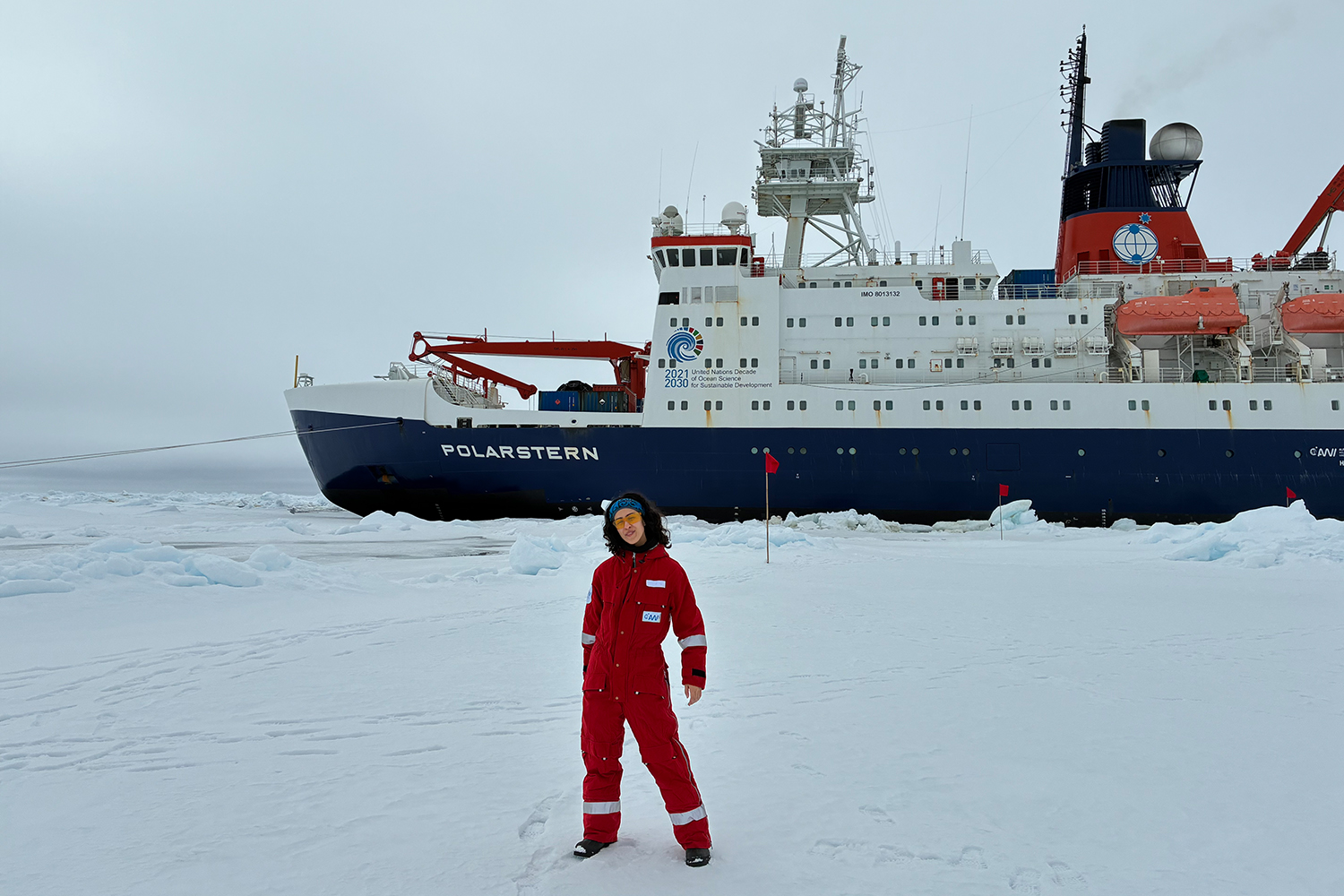
First time on sea ice. Photo credit: Pinar Dogantekin/TU Braunschweig
The expedition aims to determine why the Antarctic sea ice area has declined sharply in recent years and the impact this has on the ecosystem. Pinar Dogantekin is the only journalist accompanying the expedition and is reporting on board as a freelance reporter for various media outlets, including Der Tagesspiegel, Zeit Campus and the NZZ. And her studies are not being neglected either: she is writing her Master’s thesis on board the “Polarstern”, supervised by Professors Christian Kehrt and Henriette Bertram at TU Braunschweig. We asked her about this adventure.
What made you decide to take part in the expedition?
I like snow, ice and cold weather. I would always choose winter over summer. The polar regions have fascinated me since I was a child: the vastness, the extreme climate and the icy landscape.
As a journalist, I am particularly interested in how people live and work in these conditions, and the effect that this environment has on them.
How did you actually end up travelling on the “Polarstern”?
It was a combination of being in the right place at the right time and persistence. You have to keep at it and keep getting in touch. That’s exactly my advice, especially to women and migrants: stay visible, ask questions, don’t give up.
How did you prepare for it?
In order to take part in an expedition like this, you have to pass a medical fitness test and complete an environmental seminar. You also try on the polar clothing in advance, which is transported directly from Bremerhaven by the “Polarstern”, so you don’t have to carry so much luggage on the flight.
Of course, you also have to prepare yourself mentally. Being largely cut off for over two months is no mean feat. Talking to people who had already been on expeditions to Antarctica helped me a lot, as I was able to learn from their experiences.
What do you see as a particularly big challenge during the expedition?
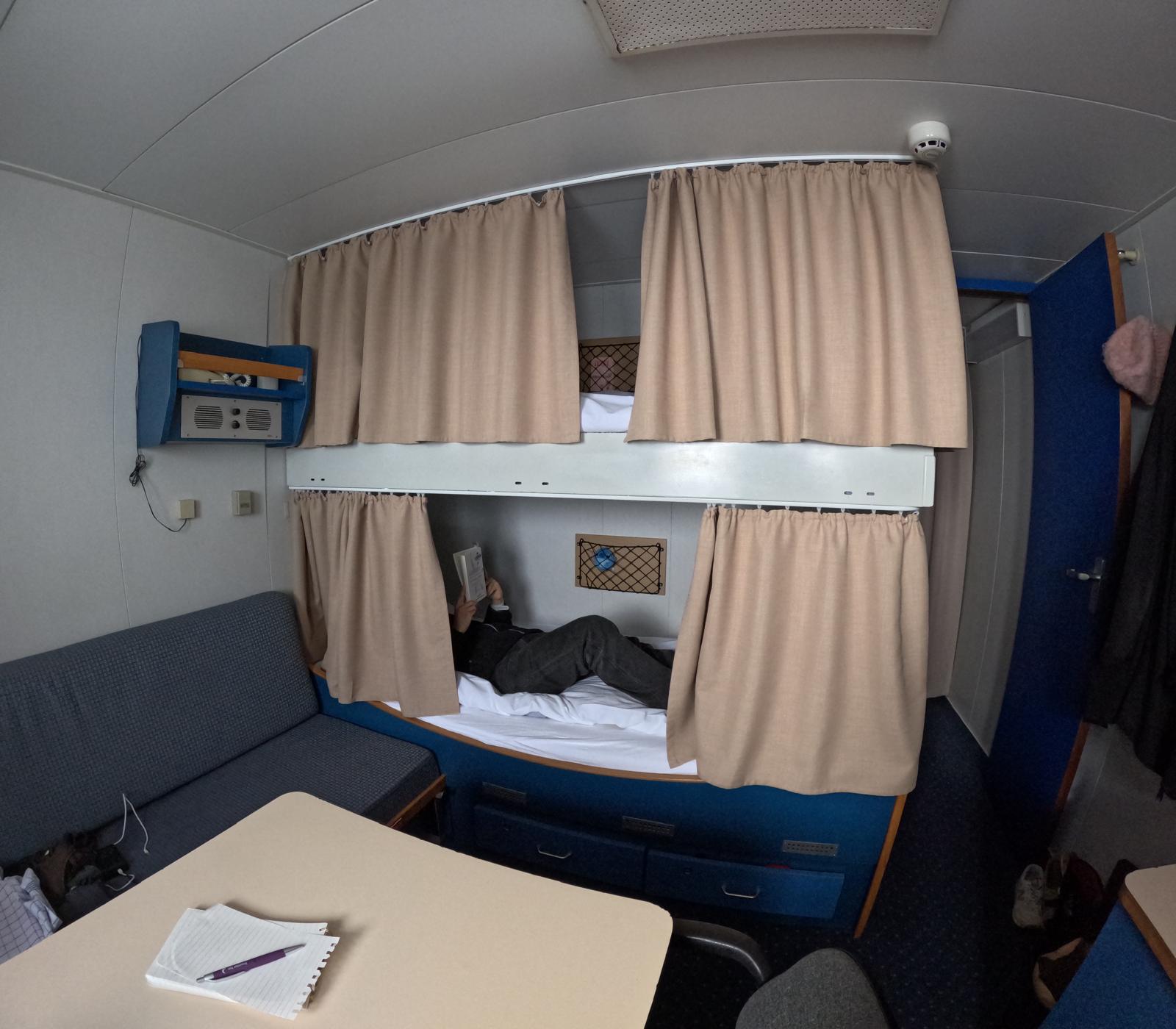
The cabins on the research vessel are usually shared by two people. If you want a little more privacy, you can close the curtains around your bed. Photo credit: Pinar Dogantekin/TU Braunschweig
Living in a confined space with lots of people. There are around 50 researchers and 50 crew members on board. The ship is approximately 120 metres long and 25 metres wide, and the cabins are typically occupied by two people. This means there are limited opportunities for retreat. The lack of movement is also challenging as the distances on board are very short. At least there is a gym.
You are writing your master’s thesis on the ship. What is it about?
I am investigating how researchers and non-researchers work together to make sea ice research possible in the first place. I am particularly interested in knowledge orders and hierarchies. Whose knowledge is recognised in which situations? My approach is ethnographic, meaning I live in the field, accompany the daily work on board, and observe interactions and work processes.