Diversity in Motion: Strengthening Individualised Learning in Physical Education Universities and schools jointly develop a practical concept
Physical activity, team spirit, fairness: few school subjects shape children and young people as directly as physical education. School sport can reach all pupils equally and thus bears a special responsibility for educational and formative processes. But what might personalised learning look like in a physical education programme that considers the diversity of pupils and enables everyone to participate equally? Sports and education scientists from Technische Universität Braunschweig, the University of Cologne and the German Sport University Cologne are investigating this question in close collaboration with instructors. At several schools in Niedersachsen and Nordrhein-Westfalen, they are developing and testing a concept that supports pupils’ learning development.
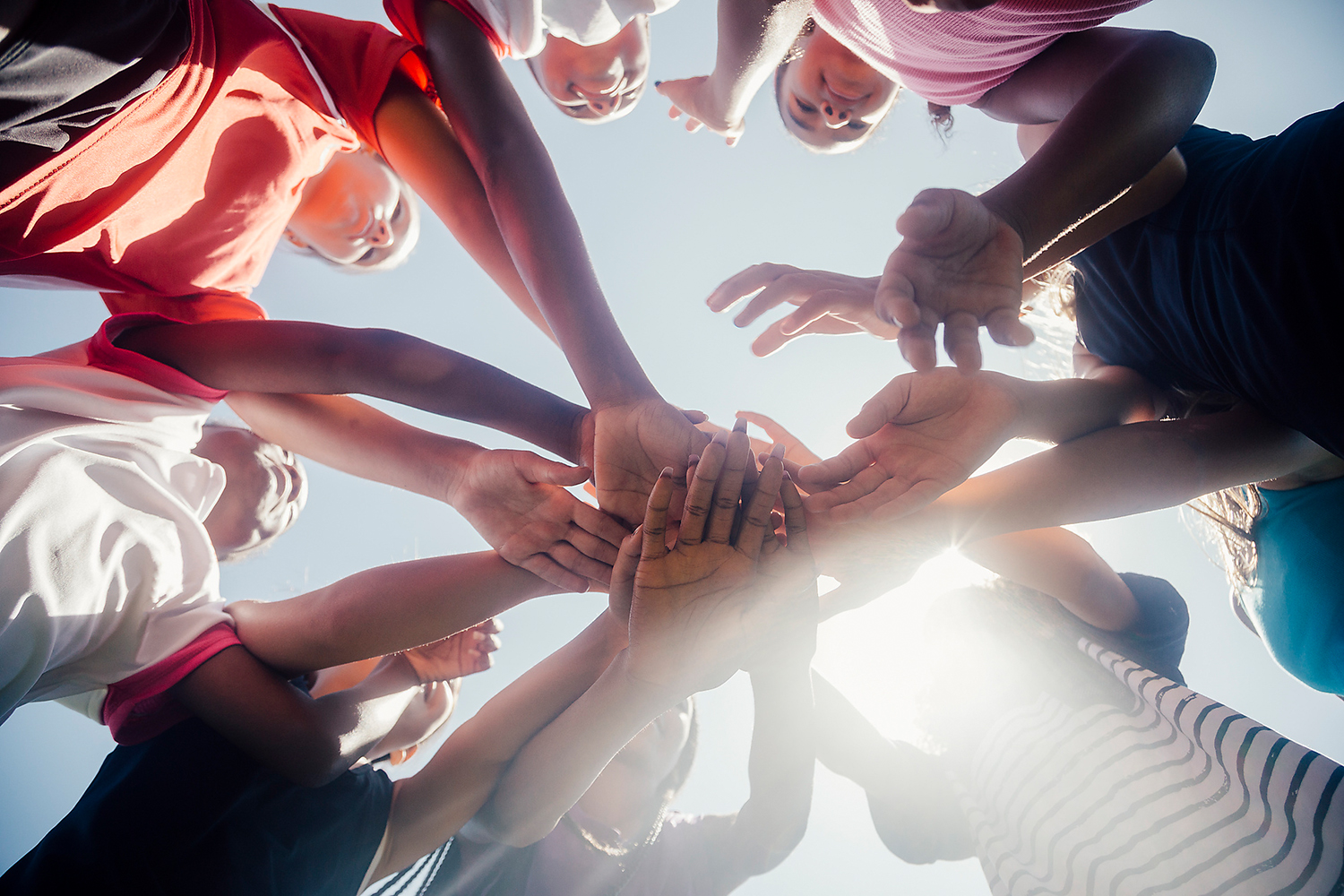
How might individualised learning be implemented in a physical education class to take pupils’ different starting points into account? Photo credit: Westend61/Ashley Corbin-Teich
School sport is more than just exercise and play. Through physical education, children and young people acquire motor, social and emotional skills, as well as subject-specific knowledge that enables them to function in the world. “Physical education is often associated with performance, measurement and comparison, yet the focus should also be on aesthetic, reflective and psychosocial education. Learners should understand and question how they learn in order to develop their own ideas on how to achieve their goals and how they can be supported in doing so,” says Professor Esther Serwe-Pandrick from TU Braunschweig.
Pupils come from a wide range of backgrounds and have a variety of experiences and interests. It is the responsibility of PE instructors to recognise and embrace this diversity, supporting all pupils individually without exposing or shaming anyone. “During lessons, instructors must therefore continuously observe and interpret different events. There are usually several suitable options for action, which should be reflected upon together in workshops,” emphasises Professor Sabine Reuker from the German Sport University Cologne.
Supporting learning processes
So-called “formative assessment” can help to support the learning processes of all pupils. This involves instructors and pupils jointly clarifying goals and criteria for success, with instructors observing the learning processes and providing regular feedback. Key questions here are: Where is each learner in the process? What is the next step towards the goal? What is needed to take this step? The aim is to support pupils in recognising their own progress and planning the next steps in their development.
As part of the research project, the researchers aim to combine formative assessment with the concept of reflective learning, in collaboration with the participating instructors. This means that instructors support pupils in specifically observing, documenting and discussing what happens and how they learn in school sports. When pupils become active, inquiring learners, they ask themselves questions such as: How did I perform the movement? What constitutes fair play? How can everyone participate? This helps pupils to recognise their own thoughts, feelings and actions more clearly, enabling them to change them more consciously.
“Recognising diversity and providing effective support for subject-specific learning processes is the central task of teachers. International comparative studies on the learning outcomes of German pupils show that we need to improve significantly in this area. This is where we are starting with the development of school sports lessons,” adds Professor Matthias Martens from the University of Cologne.
Cooperation with schools in Niedersachsen and Nordrhein-Westfalen
The researchers are working closely with subject teachers and schools to this end. They are examining the concept’s feasibility and effectiveness in the process.
The development process takes place in several cycles (as part of what is known as “design-based research”): The concept is tested and evaluated three times in succession, after which it is further developed based on the findings gained during the research process. It is then made available to a larger group of instructors. “This approach allows insights from practice to feed back into theory and vice versa,” explains Professor Svenja Vieluf from TU Braunschweig.
Benefits for classroom practice and teacher training
“As part of the project, we will not only gather scientific findings but also develop innovative ideas for practical application, the feasibility of which is ensured by the testing process,” explains Professor Julia Gerick, also from TU Braunschweig. Specifically, the aim is to develop observation and reflection tools, as well as a guide for use in the classroom and a professional development concept. These tools and concepts are to be made available to instructors, teacher trainers and continuing professional development providers throughout Germany for practical application.
Project details
The three-and-a-half-year research project “Reflective learning process support in the subject of physical education:Development and Evaluation of Reflective Teaching and Learning Methods for Effective and Diversity-Sensitive Physical Education” is funded by the Federal Ministry of Education, Family Affairs, Senior Citizens, Women and Youth (BMBFSFJ) with approximately 1.5 million euros (funding line “Dealing with Diversity” within the framework programme for empirical educational research). The project involves TU Braunschweig, the University of Cologne and the German Sport University Cologne.