
“So that we can rely on technology to function flawlessly” An interview with Professor Thomas Kleine-Ostmann
How can technical systems continue to function reliably in an increasingly interconnected and disruption-prone world? This is the question being addressed by Professor Thomas Kleine-Ostmann, who has taken up the Chair of Electromagnetic Compatibility and Resilience at Technische Universität Braunschweig. After many years at the Physikalisch-Technische Bundesanstalt (PTB), he is returning to his academic home. In this interview, he explains why electromagnetic compatibility is becoming increasingly important for our technology-driven society, what core research areas he intends to establish at the Institute for Electromagnetic Compatibility and Vehicle Electrical Systems (IEVB), and what particularly appeals to him about his new role.
Professor Kleine-Ostmann, why did you choose TU Braunschweig?
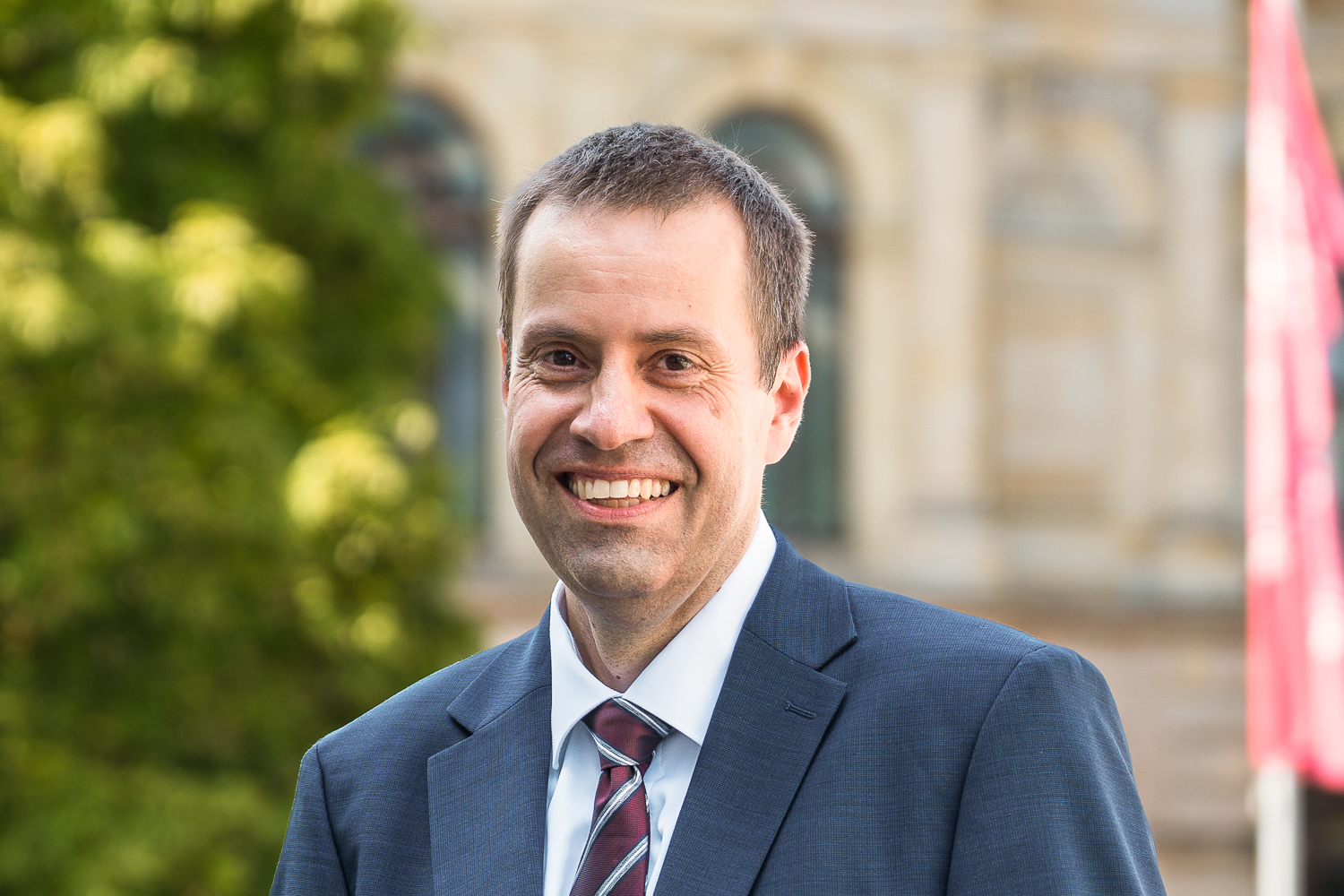
Prof. Thomas Kleine-Ostmann. Photo credit: Silja Klemenz/TU Braunschweig
I studied, completed my PhD and obtained my habilitation at TU Braunschweig, and have felt a strong connection to this university for over 30 years. For many years now, I have taken great pleasure in delivering the lecture “High-Frequency and Mobile Communications Measurement Technology”, and in my previous role as a senior researcher at the PTB, I collaborated in various ways on research into high-frequency measurement technology with professors from the Institutes of Communications Engineering, High-Frequency Technology and Electromagnetic Compatibility. It was therefore a natural step for me to submit an application for the advertised Professorship of Electromagnetic Compatibility and Resilience.
How would you explain your work to someone outside the field?
Through my research, I aim to contribute to making electromagnetic systems in a digitalised world safer, more resilient, more efficient and more sustainable, and to put the associated knowledge into practice.
Electromagnetic Compatibility (EMC) is the study of how electrical and electronic devices, systems and installations can function reliably in a shared electromagnetic environment without causing unacceptable interference to one another. What makes EMC unique is that it combines electromagnetic field theory, high-frequency engineering, circuit design, measurement technology and systems engineering. It is therefore a highly interdisciplinary field of study in Electrical Engineering that is relevant to power engineering, automation technology and telecommunications engineering alike.
As electrical systems are increasingly operated at the limits of what is physically possible, integration density continues to rise and the number of system components that must function together increases, the potential susceptibility to interference tends to grow. Furthermore, aspects of the resilience of technical systems are becoming increasingly important as society relies more heavily on technology to function flawlessly. This becomes even more critical given that sabotage or hybrid attacks on technical infrastructure must be anticipated.
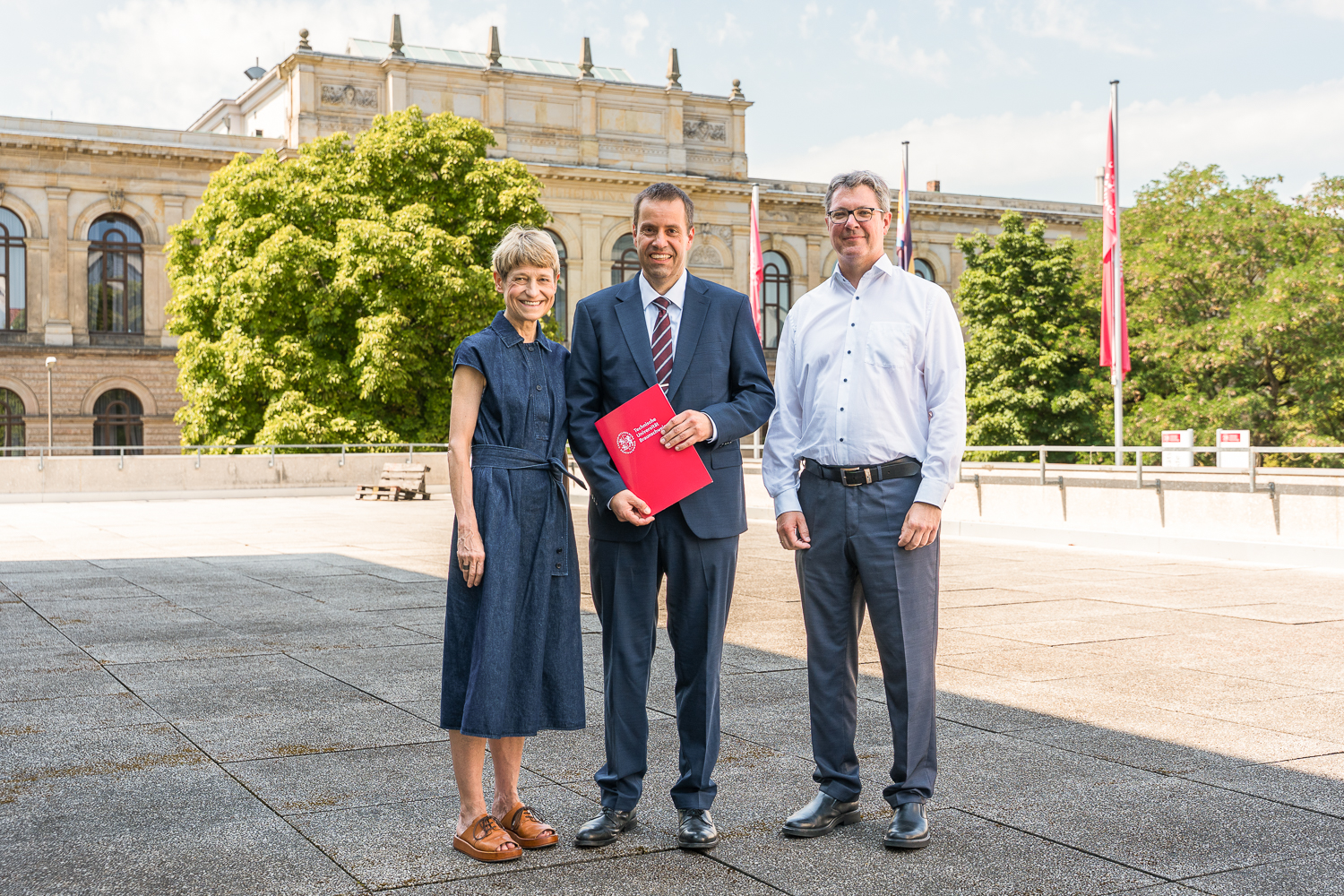
TU President Angela Ittel with Prof. Thomas Kleine-Ostmann and Prof. Eduard A. Jorswieck, Dean of the Faculty of Electrical Engineering, Information Technology, Physics. Photo credit: Silja Klemenz/TU Braunschweig
What core research areas and projects will you be focusing on at TU Braunschweig?
At the institute, I would like to focus on the areas of bio-electromagnetic interactions, the resilience of communication systems and drone-based field measurement technology for electromagnetic compatibility. In my view, these are key areas where there is a great need for research and which can help to significantly advance electromagnetic compatibility today.
What motivated you to conduct research in this field?
Through my previous work at the PTB, I have grown into these three areas. After completing my doctorate in terahertz spectroscopy at TU Braunschweig, I worked as a metrologist at the PTB, where my responsibilities included field and antenna measurement technology and the electromagnetic compatibility exam as part of conformity assessment procedures. As part of externally funded research projects, I have been involved in measurement technology for future terahertz communication systems, but have also worked on experimental set-ups designed to investigate the interaction of electromagnetic fields with biological cells.
How would you describe your day-to-day work in three keywords?
At the moment, I’m preparing and delivering lectures for the first time, organising the transfer of a DFG project from the PTB to TU Braunschweig, and working on grant applications and publications.