Research at the limits of material systems and beyond Prof. Thomas M. Koller is the new head of the Institute of Thermodynamics
Since November 2025, Prof. Thomas M. Koller has been working at Technische Universität Braunschweig as a university professor and head of the Institute of Thermodynamics. His research focuses on the transport of energy, matter and momentum, as well as fluid interfaces in energy and process engineering systems. In this interview, he talks about his decision to move to Braunschweig, his research visions relating to transport processes and interfaces, and what personally inspires him about interdisciplinary work in thermodynamics.
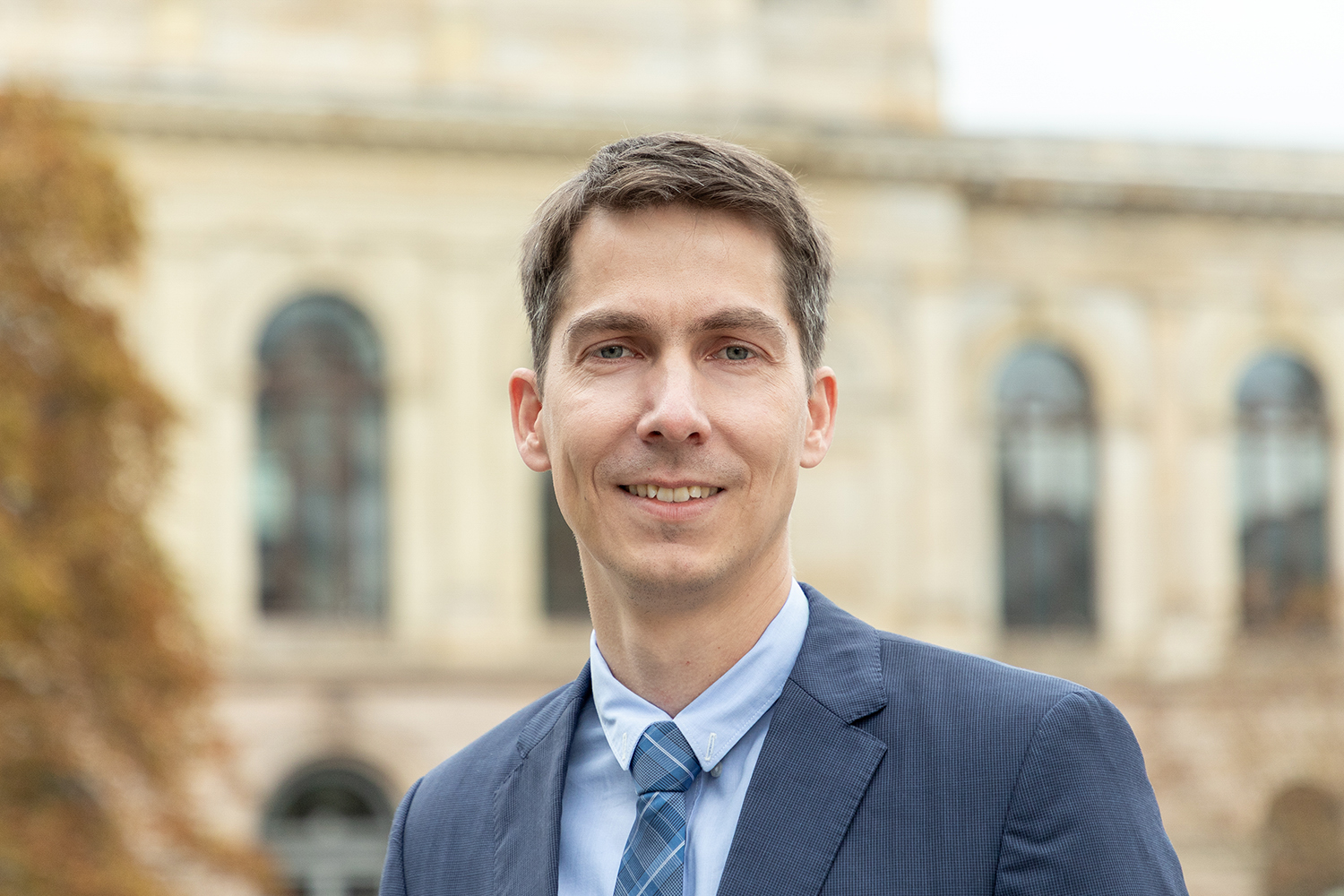
Prof. Thomas M. Koller, Head of the Institute of Thermodynamics. Photo credits: Kristina Rottig/TU Braunschweig
Why did you choose TU Braunschweig?
My decision to join TU Braunschweig was based in particular on the fact that it offers an attractive, interdisciplinary and dynamic environment with excellent opportunities for my research and teaching. From the very first contact during the interview process, I had a very good feeling that this was the right place for me. This has been absolutely confirmed since then and shows me that I made the right decision.
What exactly do you do in your research?
My research focuses on the thermodynamic characterisation of complex material systems in energy and material conversion processes such as batteries, fuel cells and heat pumps. My vision is to develop a fundamental understanding of material properties, particularly transport and interface properties in relevant working media and energy carriers, from the molecular or particulate level to modelling for process design. This involves the application and development of modern measurement and simulation methods for the precise determination of transport quantities such as thermal conductivity, diffusion coefficients and viscosity, as well as interface properties such as interfacial tension and wetting. To people outside the field, I explain that my work serves to improve the design of systems ranging from refrigerators in the home to chemical reactors in industry. Without precise knowledge of the material properties of gases, liquids and/or solids used in such systems, they would be incorrectly dimensioned, which would lead to increased operating or investment costs. In view of the current focus on the development of sustainable, resource- and energy-saving processes, the relevant research is therefore becoming even more relevant.
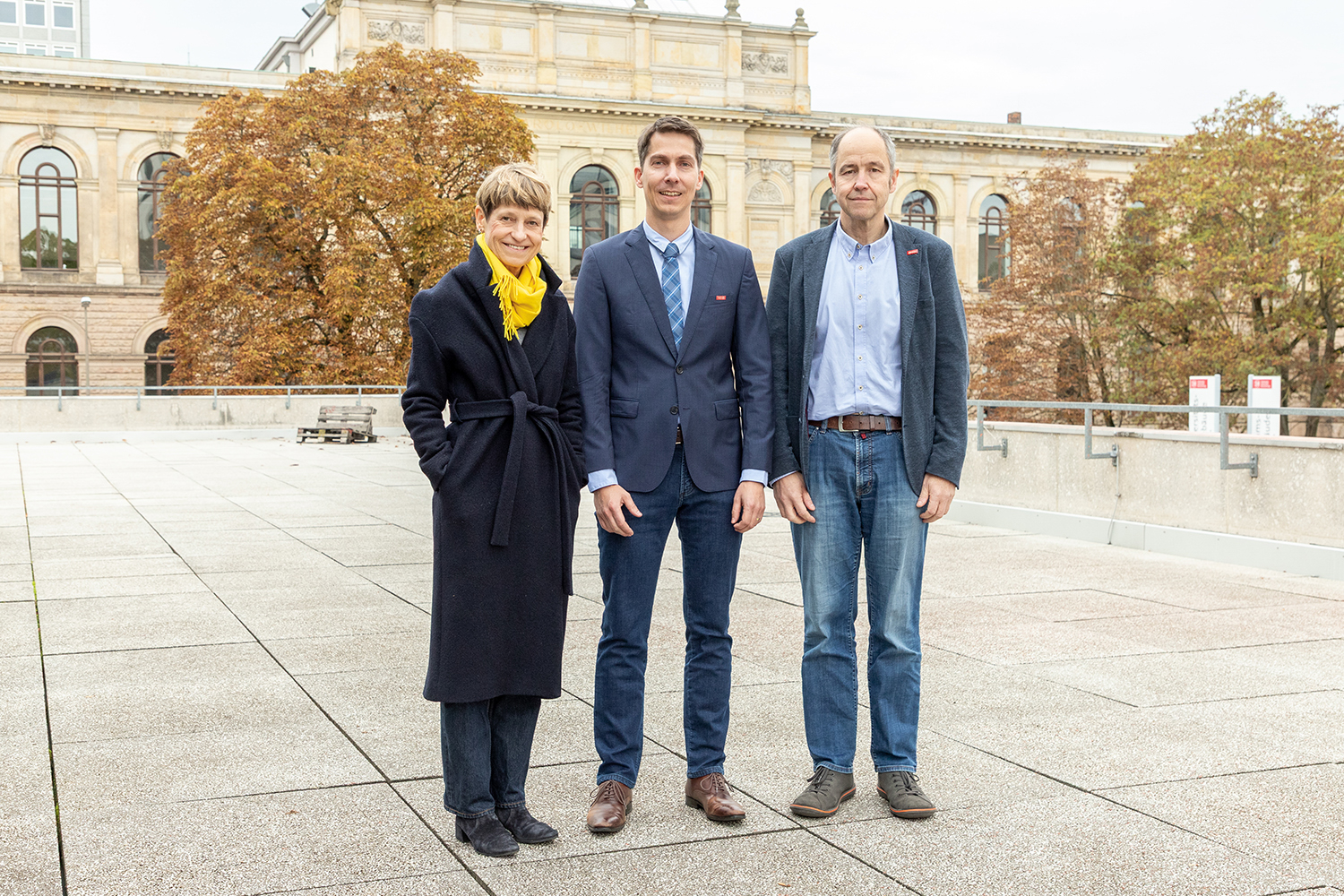
TU President Angela Ittel with Prof. Thomas M. Koller and Dean Prof. Markus Böl. Photo credits: Kristina Rottig/TU Braunschweig
What research areas and projects will you be working on at TU Braunschweig?
The focus is on various projects in the field of transport processes and interfaces, some of which I have already started at Friedrich-Alexander University Erlangen-Nuremberg (FAU) and am now continuing here. In addition, ideas for bilateral or multilateral projects with partners from the Faculty of Mechanical Engineering are currently maturing. There is great research interest here in heat and mass transfer, for example in electrochemical batteries and fuel cells, transport processes and particle morphology in pharmaceutical solutions, and interface properties in microfluidics for the precise control of tiny amounts of liquid, for example in lab-on-a-chip systems. My aim is always to link the institute’s broad fields of expertise, from the molecular scale to the overall system, and to generate synergies.
What motivated you to conduct research in this area?
The combination of chemistry, physics, biology and engineering already captivated me during my school days, which is why I decided to study chemical and bioengineering. During my doctorate and habilitation, I remained loyal to this field, focusing on thermodynamics and, in particular, the material properties of fluids. I am particularly attracted to the interdisciplinary nature of the research, as thermodynamic issues arise in a wide variety of fields – in pharmacy, mobile systems and process engineering.
How would you describe your everyday work in three keywords?
Discussing, deciding, tackling.