
How language influences research results New book by TU researchers on the role of metaphors in hypothesis formation
In the book, TU researchers present the results of an interdisciplinary collaboration that investigated the influence of metaphors on life science research. To this end, they combined a systematic metaphor analysis with ethical, philosophical and educational perspectives on the significance of metaphors in biotechnological research and science communication. Particular attention is paid to the role of metaphors in public discourse, which can be decisive for the acceptance or rejection of biotechnological advances.
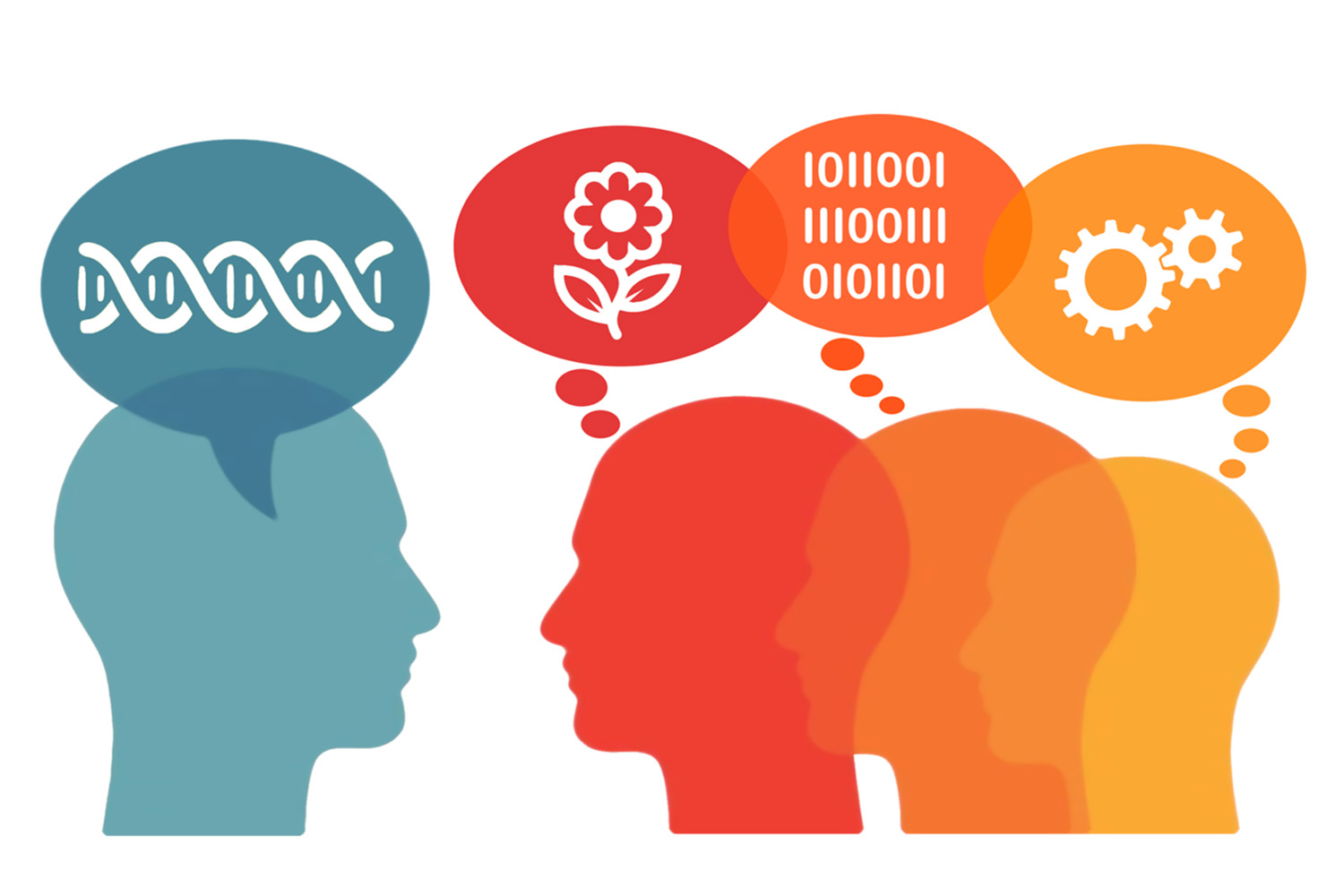
Illustration on metaphors: The use of metaphors in science is essential, but it can also lead to misunderstandings. Image credits: Prof. Stefan Dübel
Scientific research uses metaphors such as ‘antibody’, ‘gene scissors’ or ‘transcription’ in a variety of ways. On the one hand, the use of metaphors is essential for describing previously unknown biological phenomena and formulating hypotheses. The choice of a particular metaphor creates associations and can thus influence the thinking of researchers – and even the direction of future research – since a metaphor can never fully correspond to the actual biological phenomenon. On the other hand, metaphors are essential for communicating scientific results to a broader public, whereby their choice shapes public perception and influences acceptance or rejection.
It all started with speed dating
The story of this book began with scientific speed dating at a bar table in the forum building of TU Braunschweig. The event marked the start of the TU’s internal call for proposals, ‘Seed Funding Programme Interdisciplinary Collaboration’. Theologian and ethicist Professor Stefan Heuser and biotechnologist Professor Stefan Dübel got into a conversation about the role of language in hypothesis formation in the natural sciences.
The result of this exchange was the interdisciplinary workshop ‘How Metaphors Shape Biotechnology,’ which was held at TU Braunschweig in November 2023. It brought together biologists and philosophers to discuss the significance of metaphors in the life sciences. The workshop participants found these results so interesting that they decided to summarise them in a book. This has now been published in the ‘Health Academy’ series by De Gruyter Verlag (open access).
Continuation in two planned research projects
The interdisciplinary collaboration also resulted in two BMBF funding applications. The researchers were invited to present their findings at the Leopoldina’s Weissenburg Symposium on ‘Molecular Genetics and Ethics’ (7 to 9 October 2025) and to discuss them with the international experts gathered there.
“I had never been so aware of the importance of carefully selecting the most appropriate terms for all the new things we discover in our research. After all, in the natural sciences, we often have no choice but to use metaphors to describe newly discovered processes in our mostly submicroscopic research objects and to formulate new hypotheses. However, as natural scientists, we also have a responsibility to other researchers and the public to choose metaphors so carefully that they are understood as broadly as possible and are not misleading,” says Professor Dübel.
Professor Heuser adds: “Genuine interdisciplinary collaboration enabled us to systematically investigate the epistemic contribution of metaphors to scientific communication and knowledge acquisition. At the same time, we were able to analyse the extent to which new scientific findings trigger the transformation of metaphors and the renewal of scientific language. It has become apparent that metaphors in biotechnology can be closely intertwined with our perception of the contours of human life, with functional attributions, with our goals of knowledge, and with moral judgements – and aspects that go beyond these. With this conference proceedings, we document the results of our research collaboration to date, and I would be delighted if we could continue our work on metaphors.”
Text: Stefan Dübel & Stefan Heuser