Between Literature, Film and Artificial Intelligence Jan-Erik Leonhardt is the new junior professor for English Didactics
How do pupils learn English today, and what skills do teachers need to deliver modern lessons? Jan-Erik Leonhardt, the new junior professor for English Didactics at Technische Universität Braunschweig, is dedicated to exploring precisely these questions. In his research, he examines, among other things, how literature, films, TV series, artificial intelligence and other media can be meaningfully integrated into English lessons. In this interview, he talks about current research projects, the establishment of the ‘Centre for Pictorial Holocaust Narratives’, democracy education in English lessons and why stories can be key to foreign language learning.
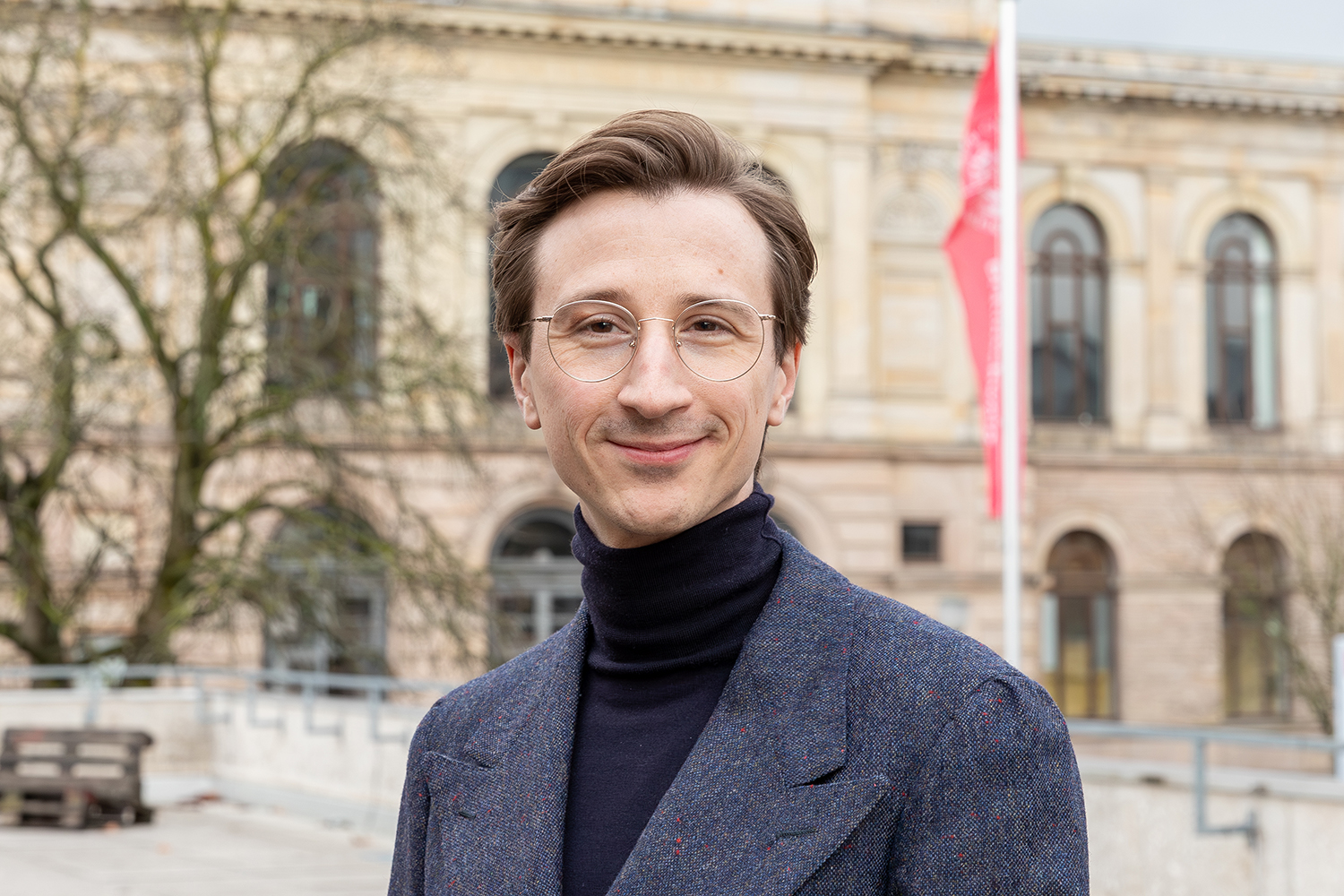
Jan-Erik Leonhardt, junior professor for English Didactics. Photo credits: Kristina Rottig/TU Braunschweig
Why did you choose TU Braunschweig?
I had the opportunity to cover the post in English Didactics during the winter semester. During that time, I met many committed students on campus and was able to work with numerous wonderful colleagues from both Didactics and the Subject Disciplines. In short: the people at TU Braunschweig made the decision to accept the junior professorship very easy for me – and I am now very much looking forward to continuing our collaboration!
What exactly does your research focus on?
In English Didactics, we train teachers for all types of schools. To ensure this training is evidence-based and professionally oriented, our research focuses, amongst other things, on pupils’ competences, the prerequisites for successful English teaching, and the effective professional development of foreign language teachers.
I am interested, for example, in the use of English-language films and series in the classroom, the potential of artificial intelligence for foreign language learning, and technological developments such as virtual reality and digital games.
My focus is not merely on functional foreign language learning, i.e. the development of individual linguistic skills such as reading and writing. Rather, I want to empower teachers and learners to engage critically and reflectively with a diverse range of texts and media.
What are the main research areas and projects you will be working on at TU Braunschweig?
I am currently researching the question of what skills trainee English teachers need for teaching with films. To this end, we are conducting a cross-national study with students in Germany, Austria and Switzerland. Based on the results, we aim to further improve the training of English teachers in the field of film-based foreign language teaching.
Many other projects are in the pipeline: within the English Didactics department in Braunschweig, we are currently working on establishing the ‘Centre for Pictorial Holocaust Narratives’. Here, research and educational projects are being developed from the perspectives of literary studies and language didactics on Holocaust narratives, particularly graphic novels and picture books. In the future, I would like to contribute to the development of an AI-based digital learning application focusing on democracy education in English lessons. The aim here, too, is to enable learners to access a variety of texts and media and to provide them with insights into their creation and impact.
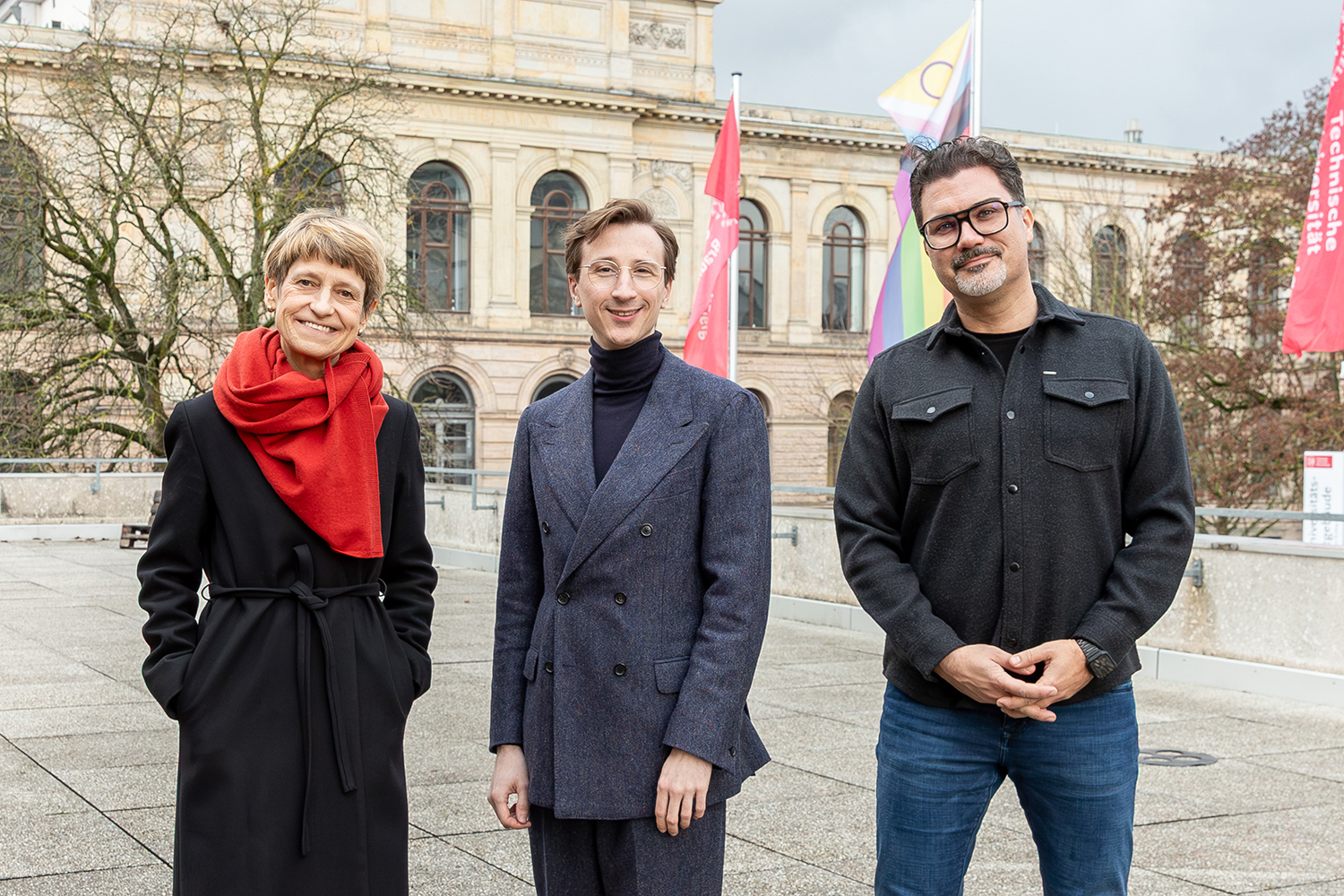
Prof. Jan-Erik Leonhardt with TU President Prof. Angela Ittel and Prof. Jan Standke, Dean of the Faculty of Humanities and Education. Photo credits: Kristina Rottig/TU Braunschweig
What motivated you to conduct research in this field?
Ever since my childhood, I have had a great love for language and stories of all kinds – whether in novels, the theatre, films or TV series. Stories allow us to immerse ourselves in new worlds, have exciting experiences and understand other people’s perspectives. I want to pass on my enthusiasm for language, literature, culture and media to students, teachers and pupils!
Furthermore, language education for children and young people is of central social importance. At TU Braunschweig, I want to help train competent teachers and develop English teaching in a forward-looking way, so that as many learners as possible can participate in social, democratic and professional life.
How would you describe your daily work in three keywords?
Cooperation: Almost every day, I attend numerous meetings with colleagues at TU Braunschweig and other universities to discuss project ideas, research interests and joint initiatives. It’s particularly nice when these meetings take place at a conference. Equally important to me are the conversations I have with students about their training as future English teachers – in lectures, seminars, office hours or over a quick coffee.
Research: Some people like Excel files, and I’m clearly one of them. This is where I analyse data and compile research findings. I particularly cherish those moments in the day when I get to write. I enjoy even more discussing the resulting texts with my colleagues and further refining our arguments.
Coaching and leadership: I am very much looking forward to working with my colleagues at TU Braunschweig. Coaching early-career researchers working on exciting PhD projects is particularly close to my heart. At the same time, it is also about strategically developing our department. In regular meetings, we therefore decide together as a team on teaching, new projects and the future direction of our work.