
Between innovation and the protection of fundamental rights Sarah Rachut is the new junior professor for public law, digitalisation law and higher education law
Artificial intelligence is not only changing our everyday and professional lives, but also affecting the state and society. Professor Sarah Rachut is investigating how digital technologies can be used responsibly in the public sector. Her research focuses both on the opportunities for more efficient procedures in administration, justice and education, and on the risks to fundamental rights and democratic processes. In this interview, the junior professor talks about the tension between protecting fundamental rights in the digital age and creating a framework for digitalisation that serves the common good.
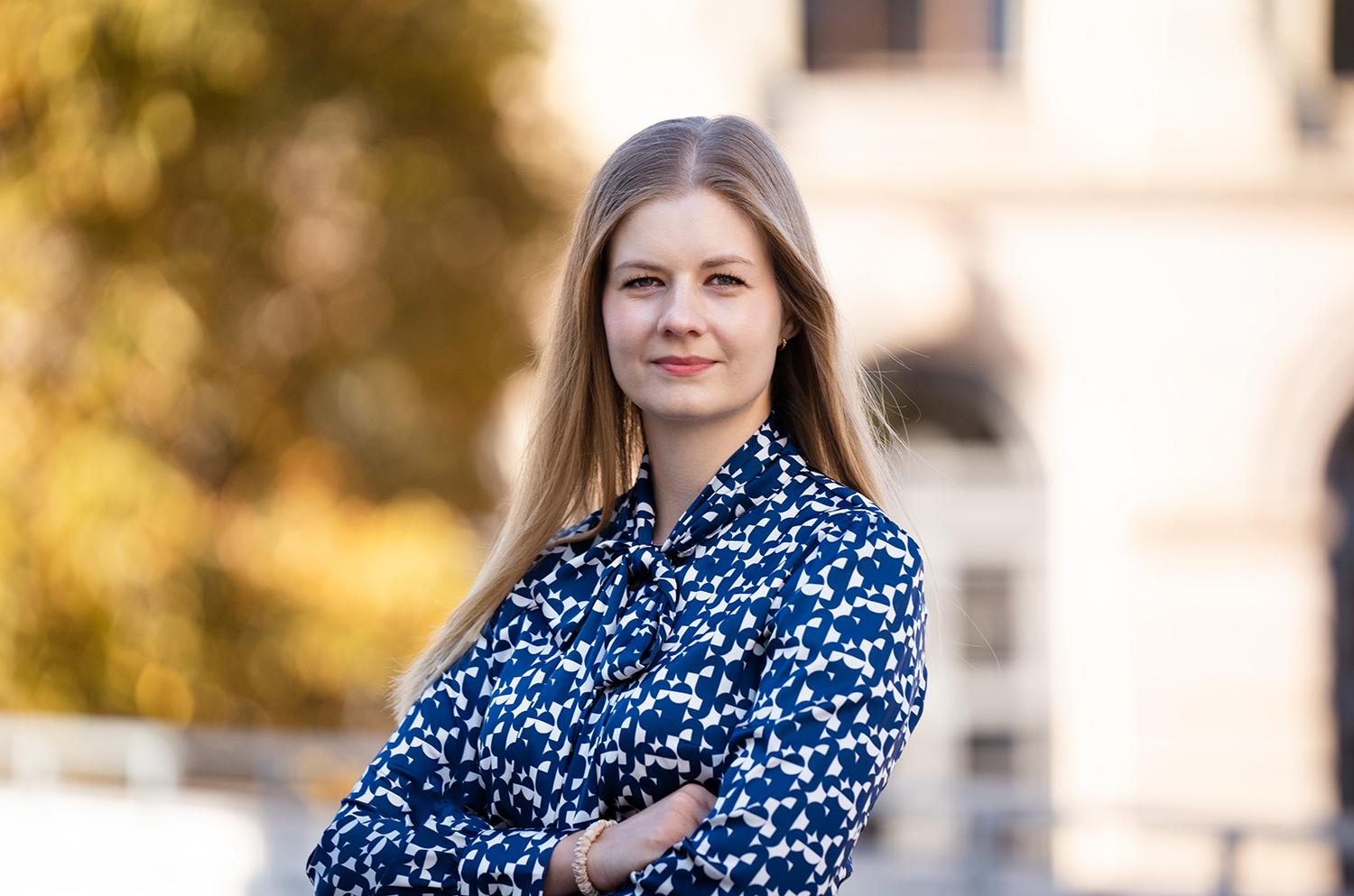
Sarah Rachut, junior professor of public law, digitalisation law and higher education law. Photo credits: Silja Klemenz/TU Braunschweig
Why did you choose TU Braunschweig?
As a lawyer, I conduct research at the intersection of law and technology, focusing on constitutional and European law issues. This means that I deal with legal issues relating to artificial intelligence and data-driven technologies, among other things. An excellent, interdisciplinary and internationally networked research environment is essential for this. This is because, particularly in the context of digital transformation, law, technology, economics and society must be considered together. TU Braunschweig offers me precisely these opportunities. My impression from the appointment process, namely that interdisciplinary and cross-faculty research is desired, encouraged and actually practised, has been absolutely confirmed since I started in October. This self-image is also reflected in my teaching, where I teach law to students from a wide range of disciplines.
What exactly do you focus on in your research?
Digital technologies are changing our everyday and professional lives and also have a profound impact on the state and society. For example, the widespread availability of AI applications not only means that anyone can easily generate professional texts, images or videos and outsource one or two tedious tasks. At the same time, we can no longer easily tell whether something was generated by humans or by AI, or whether it depicts a real event or fiction. This makes it easier to spread misinformation and influence opinion-forming processes.
The great potential of these technologies is naturally accompanied by risks and challenges that need to be managed proportionately. My research focuses on two points: On the one hand, I deal with the use of digital technologies by government agencies, for example as a means of reducing bureaucracy, for more efficient administration or in the context of modern university examinations. In doing so, I also examine the constitutional limits of data use in and by the state, for example in connection with the police and security authorities.
Secondly, I examine how the law can act as a facilitating factor rather than an obstacle in digital contexts, enabling innovation and thus digitalisation that is oriented towards the common good. The main focus here is on enabling data use and removing barriers to access.
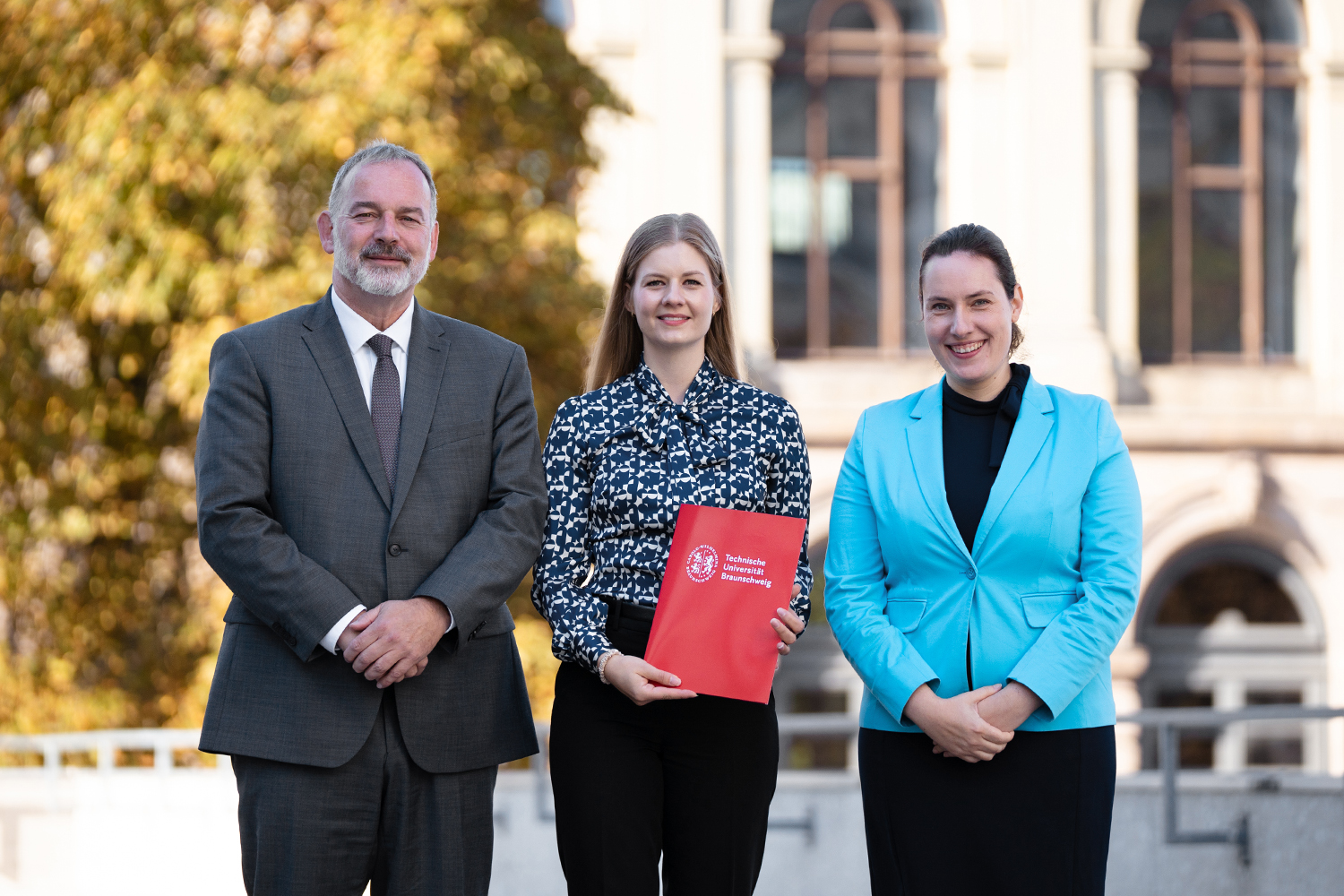
Professor Sarah Rachut at her appointment with Professor Manfred Krafczyk, Vice-President for Digitalisation and Sustainability, and Professor Anne Paschke, Executive Director of the Institute of Law. Photo credits: Silja Klemenz/TU Braunschweig
What are the main research areas and projects you will be working on at TU Braunschweig?
I am very fortunate to be able to build on existing and functioning structures and a great team at the Institute of Law, so I am already in the middle of several research projects. In various roles, I am involved in the digitalisation of the public sector, particularly in the areas of education, administration, justice and health.
In the field of higher education law, for example, questions arise regarding the design of teaching and examinations in the age of AI that is not only career- and needs-oriented, but also equitable.
In the TITAN project, we are researching the conditions for the successful use of AI in the justice system in an interdisciplinary team from six universities. AI is not intended to replace human judges, but can be used in various scenarios to facilitate access to justice or to identify and minimise existing deficits.
Issues of IT security law are also playing an increasingly important role in my research.
In addition, I have built up expertise in the field of legislative drafting and law evaluation. I am continuing this work at TU Braunschweig, where I advise political decision-makers and legislators on the regulation of digital technologies. Just recently, I appeared as an expert witness before the German Bundestag’s Committee on Digital Affairs and State Modernisation.
What motivated you to conduct research in this area?
In fact, I have always been interested in big questions and disruptive topics. There are quite a few of these, especially at the intersection of public law and digital technologies. Very few lawyers recognised this great need for research early on. I was fortunate to begin my academic career with Professor Dirk Heckmann, a pioneer in Internet law. This definitely shaped my academic career.
In addition, there is particularly great potential for shaping the future in my field of research, and the course is currently being set for a digital and networked society. It is not just a matter of protecting fundamental rights in the digital age, but rather of creating conditions for innovation that benefit everyone. This is exactly where I can apply my legal skills – combined with a great deal of curiosity, creativity and a certain affinity for technology – to make the world more digital and perhaps also a little bit better.
How would you describe your everyday work in three keywords?
404: Everyday life not found.