
Workshop of Diversity Students and people with mental health conditions design inclusive sports equipment
Technische Universität Braunschweig and the “Lavie Reha” rehabilitation centre in Königslutter are demonstrating what successful inclusion can look like: in a cooperation project, students and people with mental health conditions are working together to develop a concept for exercise, play and sport that consciously takes into account different abilities and needs. This process also results in the creation of new sports equipment – from the initial idea through to practical implementation.
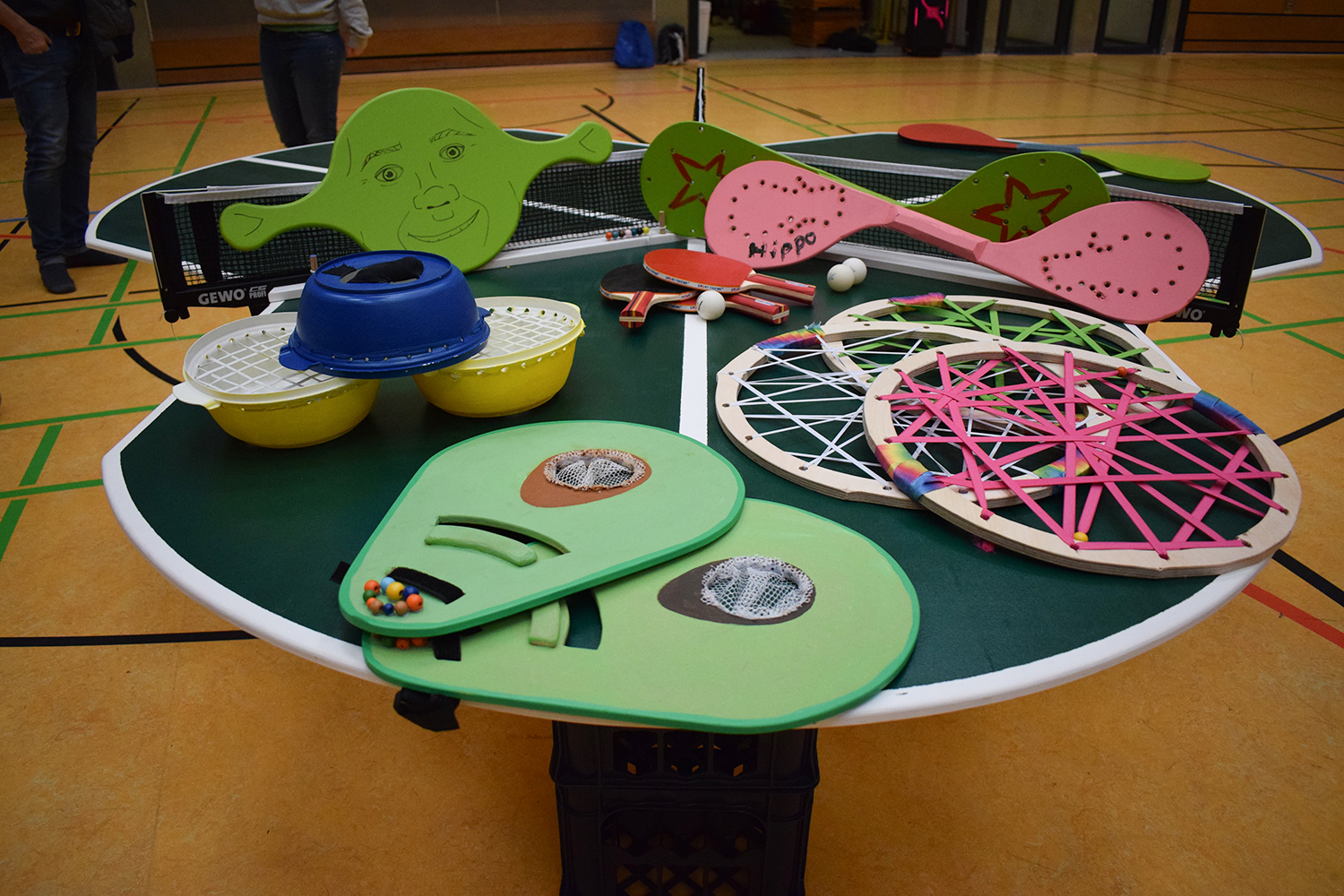
Some of the sports equipment designed and built by the students and participants from the rehabilitation centre. Photo credit: Lavie Reha gGmbH
The “Sports and Physical Education” Master’s programme at the Institute of Sports Science and Physical Education focuses on more than just theory. “Under the motto ‘Workshop of Diversity’, sport is being reimagined – diverse, accessible and sensitive to different needs,” emphasises Dominik Korte, who leads the “Learning Workshop” seminar and has redesigned it in cooperation with Elisabeth Viedt from Lavie Reha.
At the heart of the project is the woodworking workshop at Lavie Reha gGmbH, a non-profit organisation that, alongside the university’s seminar rooms and sports halls, forms a central venue for the course. There, the students develop and build sports equipment together with participants from the rehabilitation centre. They design innovative racket sports modelled on familiar games such as badminton, volleyball or table tennis. They are supported by workshop manager and carpenter Heiko Kowski, who contributes his technical expertise and guides the creative process.
Meeting on equal terms
However, the woodwork workshop produces far more than just new sports equipment. It is a shared space where people can exchange information about their individual circumstances, abilities, experiences, sensitivities and limitations. Participants from Lavie support sports students with ideas, practical expertise and continuous feedback, as well as contributing their own perspectives and personal characteristics.
The focus is on questions such as: How can a game or its associated equipment – such as a racket and ball – be designed to be particularly quiet? What group divisions, use of space or rules of play are needed to deliberately slow down the pace of action within the game and between the participants? Such considerations are an integral part of the cooperative seminar design. They are particularly relevant in the school context, which is characterised by a high degree of heterogeneity.
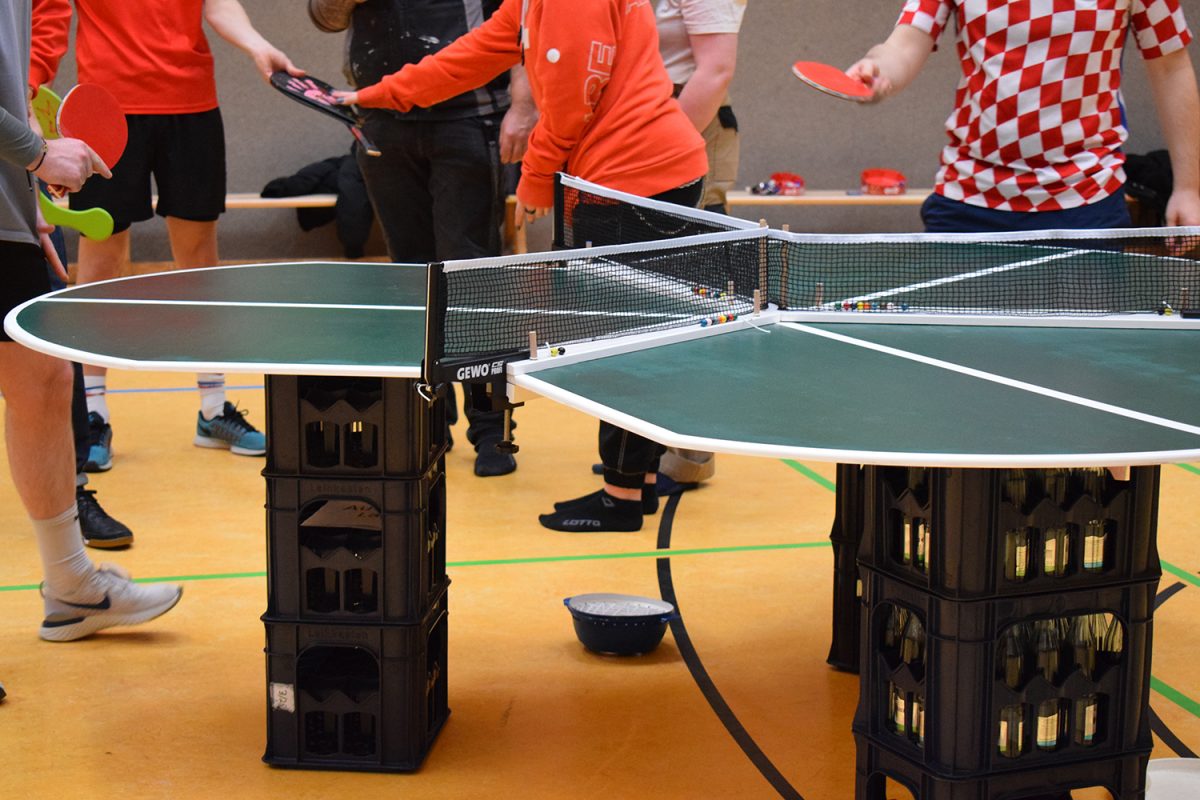
From the workbench to the playing field: once completed, the sports equipment will be presented and tested at a joint closing event. Photo credit: Lavie Reha gGmbH
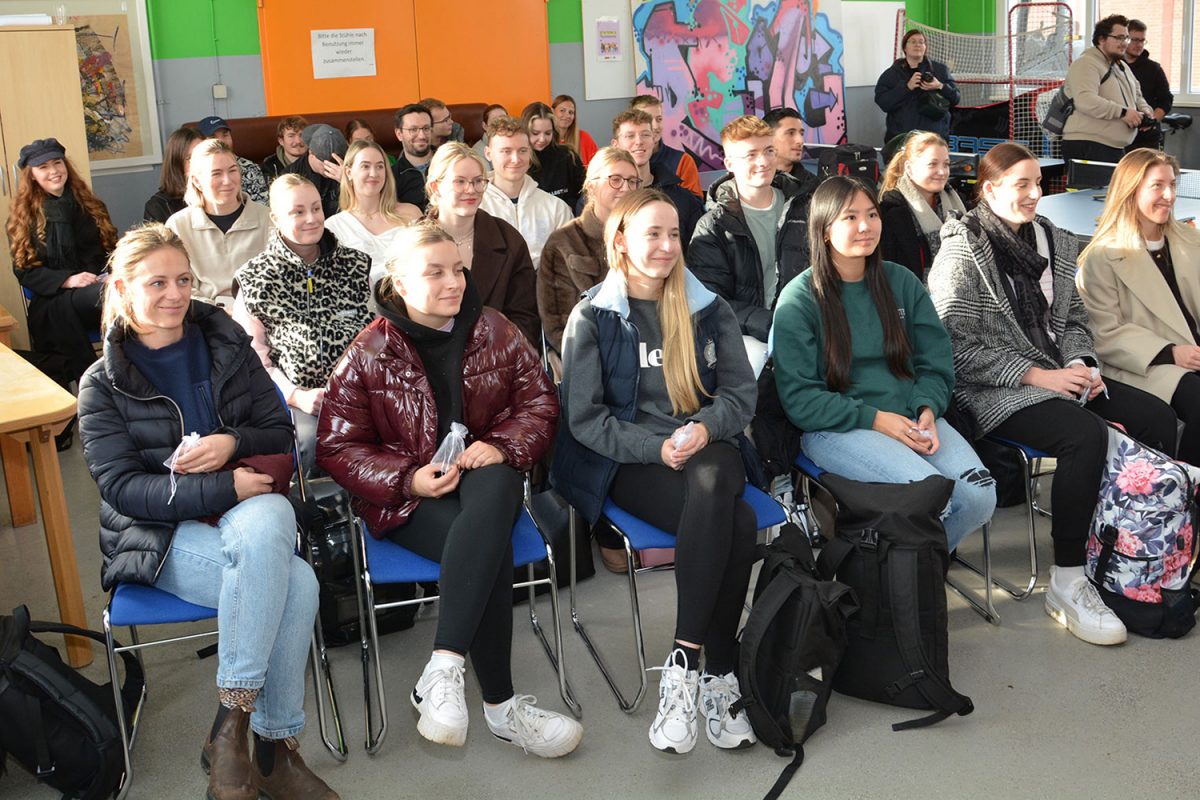
Full of anticipation: Students from TU Braunschweig gathered at the Lavie bouldering hall. Photo credit: Regio-Press
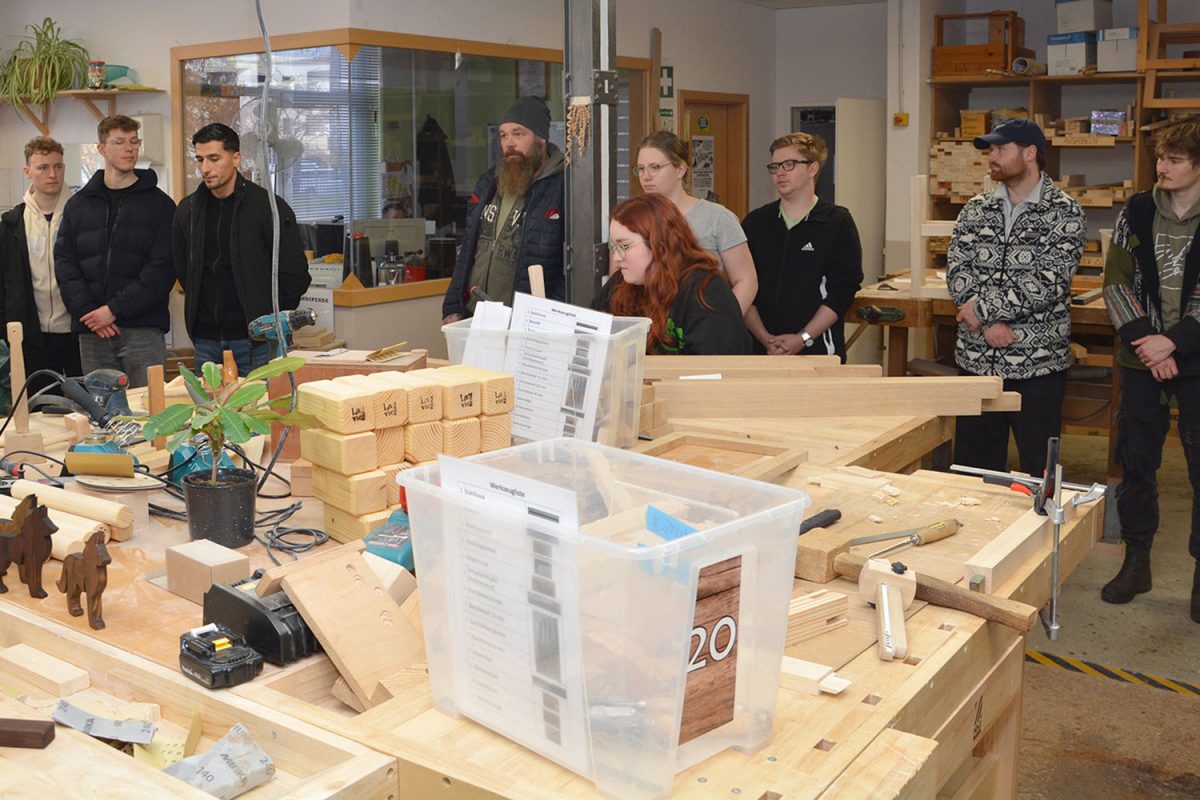
Students and Lavie trainees were given an initial introduction by Heiko Kowski (centre, with a beard), who works as a joiner in the workshop. Photo credit: Regio-Press
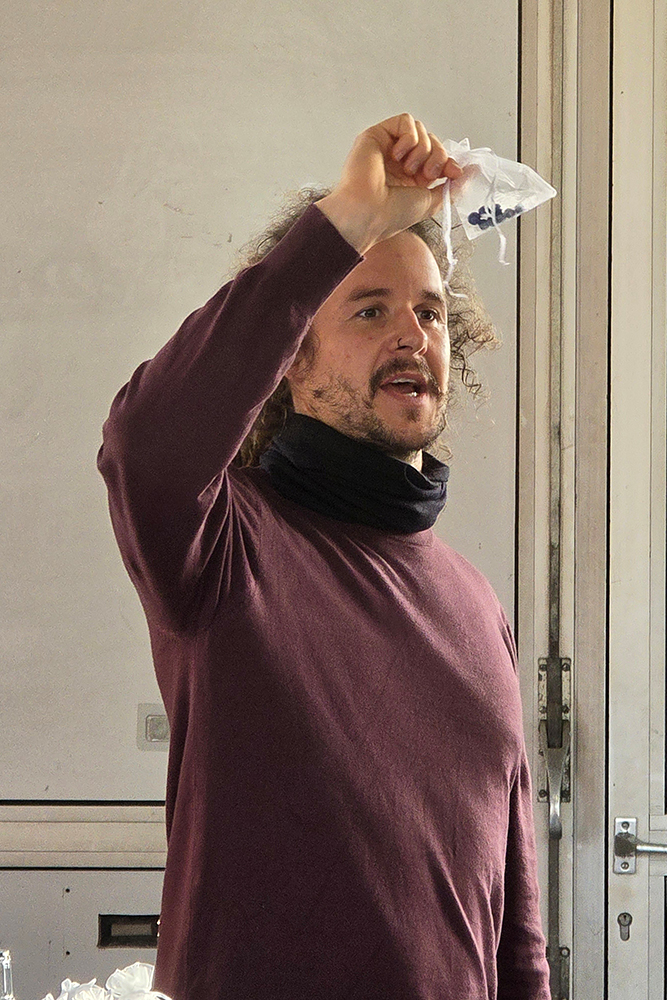
Seminar leader Dominik Korte. Photo credit: Lavie Reha gGmbH
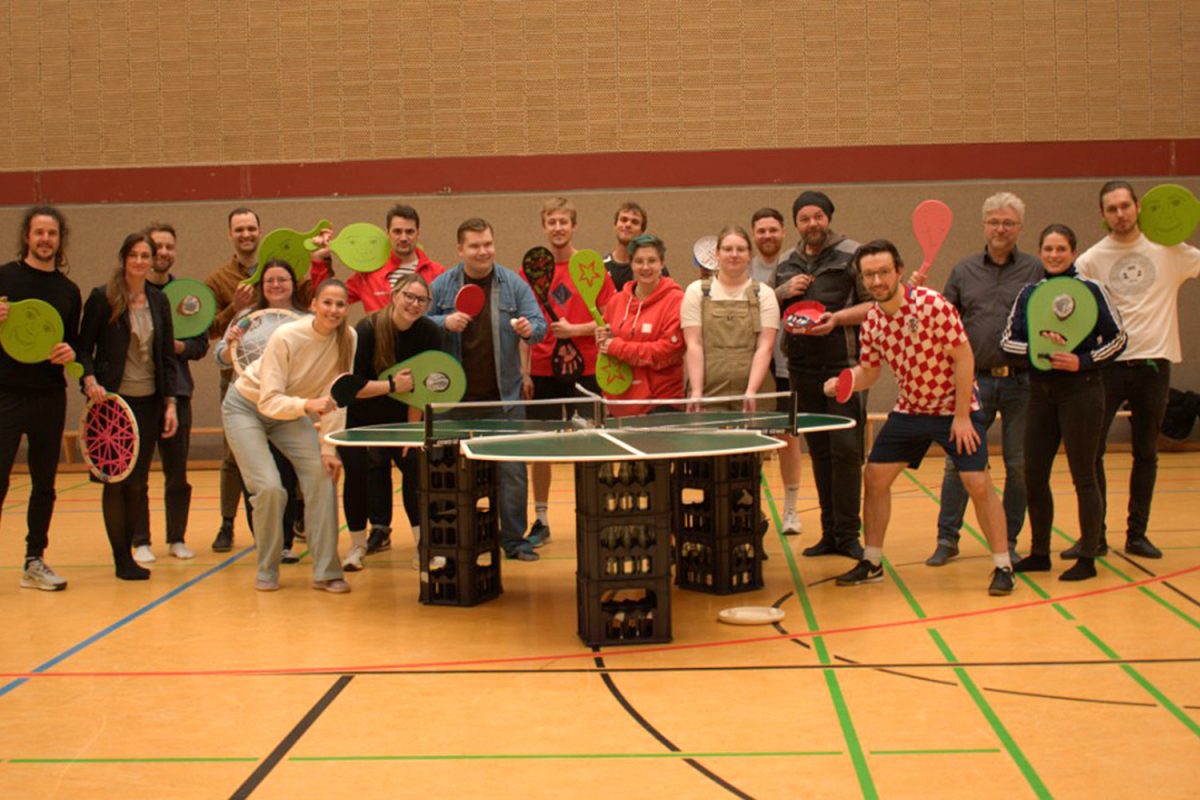
Completion of a successful project. Photo credit: Lavie Reha gGmbH
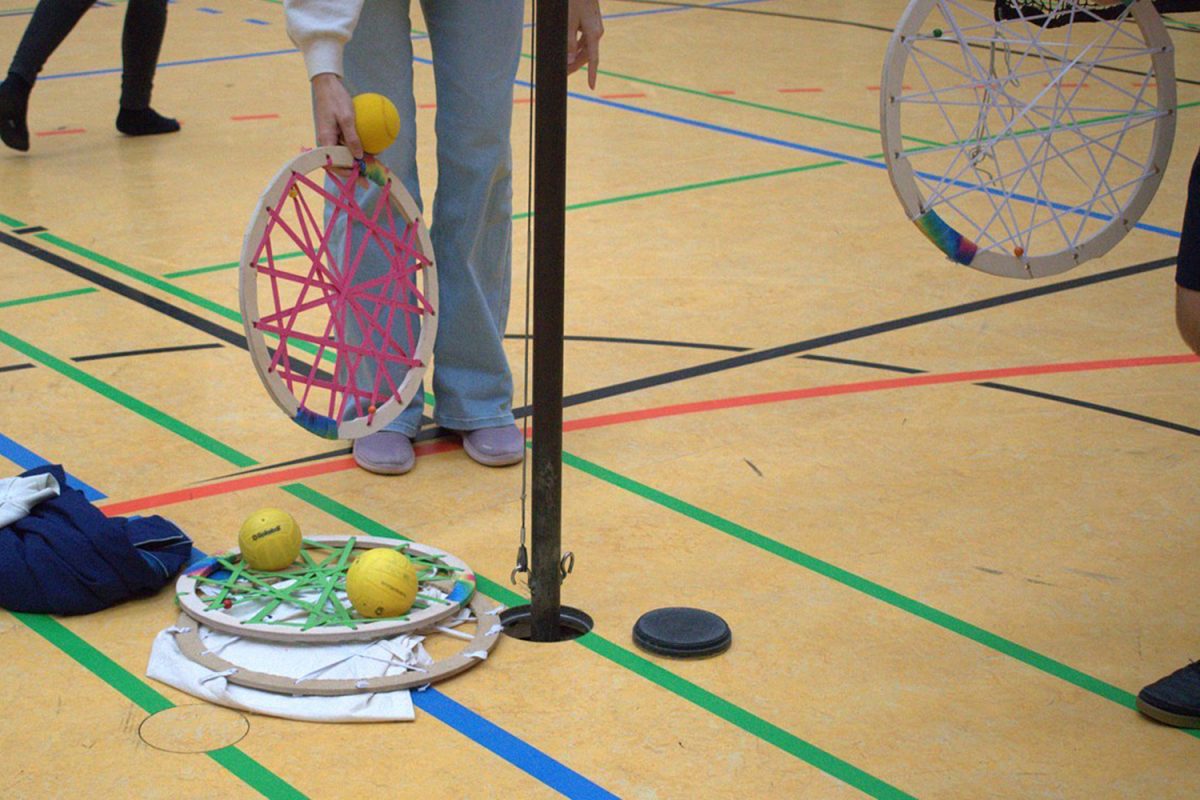
The project participants work together to design innovative racket sports based on well-known games such as badminton, volleyball and table tennis. Photo credit: Lavie Reha gGmbH
“For us, this cooperation project represents a significant gain in terms of impact learning and networking for the institute. Working together also changes our perspective on sport, education, teaching and people, enabling trainee instructors in particular to benefit from pedagogical and subject-specific professional development in the area of diversity,” says Professor Esther Serwe-Pandrick, Head of the Institute of Sports and Physical Education.
Innovative thinking does not develop solely in the seminar room and through dialogue. It also arises through practical action and experimentation. “Here, people interact with mutual respect, listen to one another and exchange ideas. Diversity is not just discussed here, it is lived out. Students benefit academically, and also learn the importance of sensitivity, communication and flexibility if sport is to truly be accessible to all,” summarises Elisabeth Viedt, project manager at Lavie GmbH.
Focus on mental health
Another key component of the project is the close professional support provided by Lavie, as well as the participatory structure of the seminar. As part of a visit, students gain insights into the professional management of mental health conditions. An instructor and a psychologist from the Braunschweig branch are available to answer questions: How do I deal with a child who is noticeably anxious? How can I constructively resolve difficult situations in the classroom? How do I design physical activities in a way that enables safety and participation?
Answers to these questions are directly incorporated into the development of sports equipment and game ideas. The students learn to vary sports formats and physical activity programmes in such a way that different prerequisites, approaches and goals are taken into account, enabling teaching to be tailored to individual needs. They reflect on how exercises can be adapted, safety precautions observed and motivation specifically encouraged. In this way, they develop a keen sense of individual needs and gain the confidence required for inclusive physical education.
From the workbench to the playing field
Once the sports equipment has been developed, it is presented and tested at a joint closing event. It is not just sporting ability that counts here, but also curiosity, openness and a love of movement. The group works together to test, play, reflect and think ahead.
“The cooperation between the university and the rehabilitation centre goes beyond a traditional service-learning structure. It combines university teaching and expertise, rehabilitation practice and social responsibility in a joint development and participation process,” emphasises Professor Serwe-Pandrick. “Through the creative potential and commitment of those responsible for the project, this fosters a shift in perspective through interaction and makes a concrete contribution to making physical activity and sport more inclusive not only in school education, but already within university education.”