
Mail from … Braunschweig Visit from the University of Tennessee in Martin
At the end of last year, Dr ZeVida Jones from the University of Tennessee at Martin (UTM) visited the Institute for Educational Sciences at TU Braunschweig as a guest lecturer. Her stay took place as part of the DAAD-funded project ‘Lehramt.International Go out, Come in 2.0’. In ‘Mail from Braunschweig’, she reports on her experiences at TU Braunschweig.
General Information
This is what I did in Braunschweig:
I delivered several guest lectures in TU Braunschweig’s education seminars, focusing on inclusion, Sustainable Development Goals (SDG 4), special education, school counseling, multiprofessional teamwork, and differences between U.S. and German school systems.
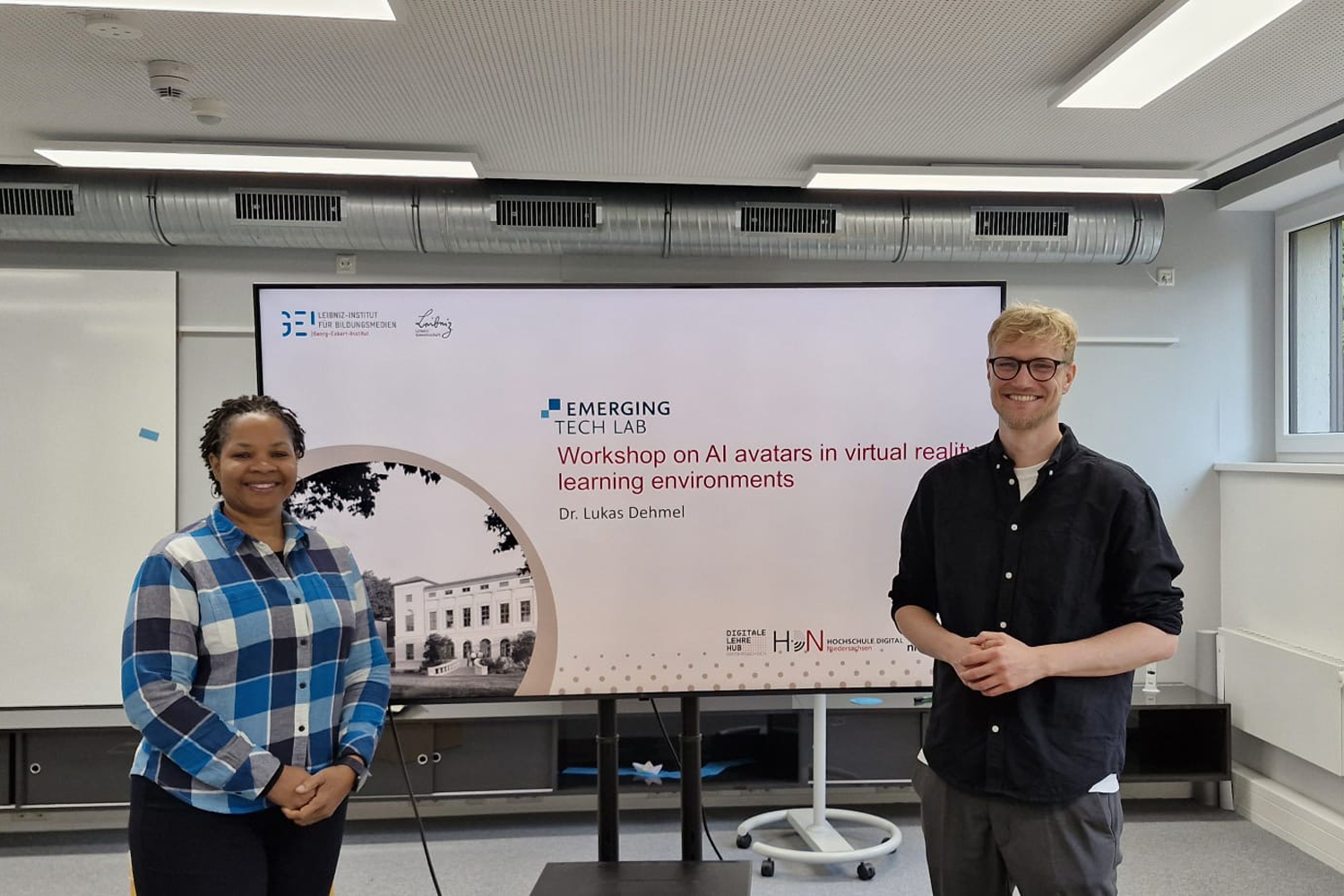
An exciting workshop on AI avatars in virtual learning environments led by Dr. Lukas Dehmel (right). Picture credits: Daniel Fehrentz/TU Braunschweig
In the sessions, I shared insights from my research on first-generation African American college students. I also participated in a research session with Dr. Lukas Dehmel in the Digital Lab “The Basement,” at the Georg-Eckert-Institut (GEI), where I joined the Workshop on AI Avatars in Virtual Reality Learning Environments. The session allowed me to explore how emerging technologies are reshaping education worldwide.
That’s why I decided to come to TU Braunschweig:
I was honored to serve as a guest lecturer through the DAAD–Lehramt.International partnership with the University of Tennessee at Martin (UTM). Although UTM did not send a student group abroad this year, the invitation provided a valuable opportunity to continue strengthening our international collaboration and academic exchange.
That’s what I knew about Braunschweig/TU Braunschweig before I arrived:
Before I arrived, I knew TU Braunschweig for its strong research culture and welcoming international community. I first visited in June 2024 as part of the UTM travel-study program, and returning this year as a guest lecturer was especially meaningful.
Living in Braunschweig
That’s what my days here in Braunschweig looked like:
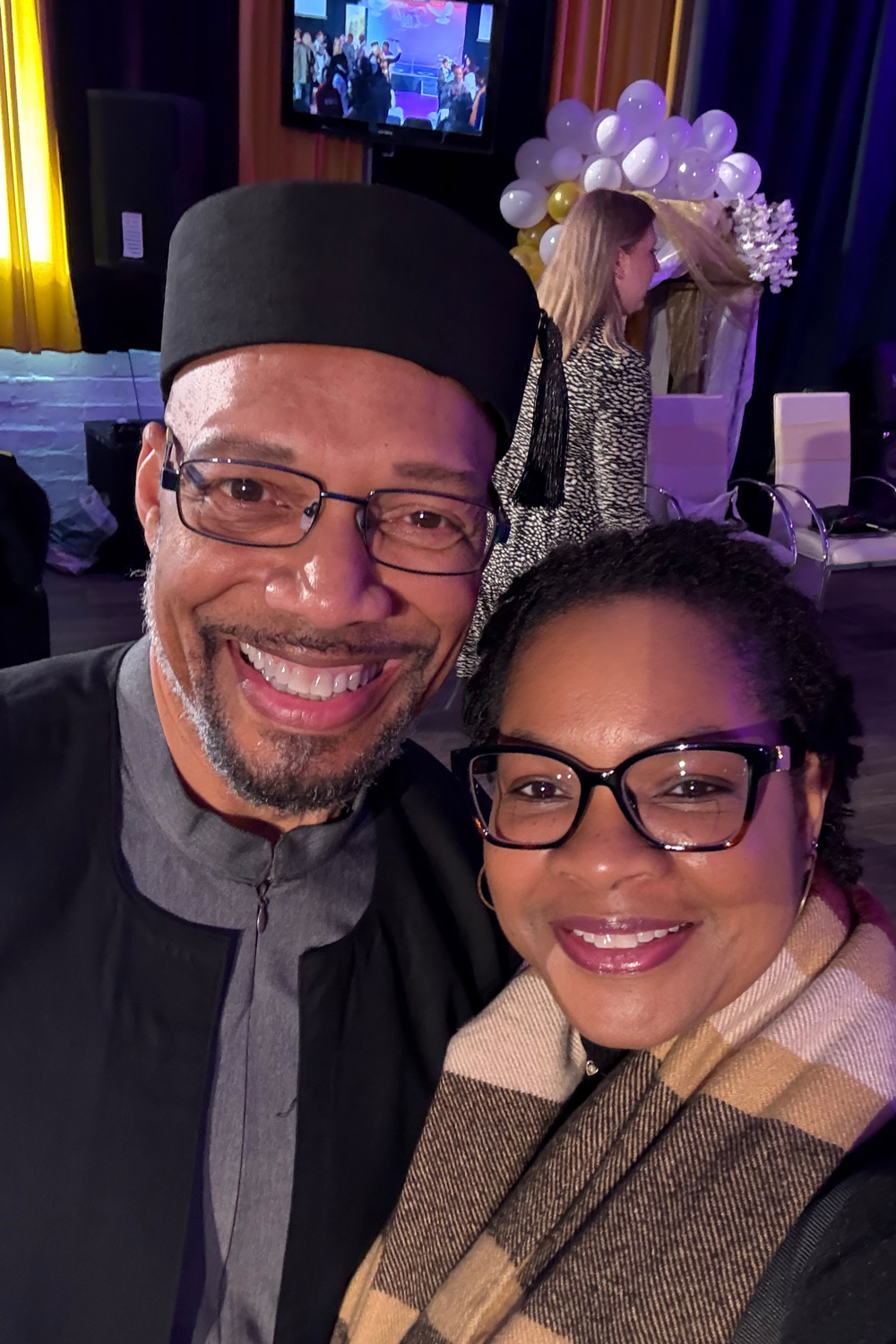
Here I visited the Christian Hope Church in Braunschweig with Dr Kenton Barnes (left). Picture credits: ZeVida Jones/TU Braunschweig
My days were full in the best way. I taught classes, prepared lectures, met faculty members, learned from students, and explored the campus. On my walk to the MediaLab at Pockelsstraße 4, I spotted an African Store that doubled as a beauty supply and grocery shop. I stopped in on my way back and bought seasonings and candy to bring home. It felt good to find a touch of cultural familiarity so far away. I also enjoyed a farewell dinner at Zu den Vier Linden with Prof. Dr. Katja Koch, Daniel Fehrentz, and Lisa-Katharina Möhlen. The conversation, laughter, and warmth made the night unforgettable.
This is how I lived in Braunschweig:
I chose to stay in a local Airbnb apartment instead of a hotel because I wanted the stay to feel comfortable and homey. I shopped at the local market, stocked the refrigerator, and cooked meals throughout the week.
What is the difference between studying or researching in Germany and in your home country?
- Attendance norms: Some university courses in Germany allow voluntary attendance, while courses in the U.S. generally require regular student attendance.
- Terminology: Many students were unfamiliar with the term first-generation college student, which is widely used in U.S. higher education.
- School counseling roles: In the United States, school counselors are embedded in nearly all K–12 schools, while in Germany, these responsibilities are divided among roles such as Schulsozialarbeit and Beratungslehrkräfte.
What is the difference between everyday life in Germany and in your home country?
I moved through Germany at a calmer pace. The city’s walkability, public transportation, and sense of intentional daily rhythm created a peaceful backdrop to my work.
That’s what I learned during my time here:
I learned how German teacher training approaches inclusion, sustainability, and multiprofessional cooperation. I also saw firsthand how faculty value open discussion, reflective practice, and student-centered learning.
That was the biggest challenge of my stay:
The most difficult part of my stay was being in Germany while my daughter was stranded in Jamaica during Category 5 Hurricane Melissa. She relied on me to help coordinate new flights and navigate the chaos of the hurricane’s aftermath, all while I was teaching abroad thousands of miles away. Balancing my responsibilities as a mother and as an international guest lecturer stretched me emotionally, but I remained grateful for the strength to navigate both.
What I took home with me from here:
I returned with meaningful connections, new ideas, and a deeper understanding of global education. I also brought back spices and candy from the African Store, as well as the warmth and hospitality of the TU Braunschweig community.
Good to Know
This is my tip for other international students or academics who are planning a stay abroad in Germany:
Stay open to every moment and embrace the local culture. Choosing an apartment can help you settle in quickly and create a sense of stability and comfort during an extended academic stay.
In my opinion, this is something that you should definitely try out in Braunschweig/Germany:
Explore the historic city center, visit campus laboratories such as the MediaLab or Emerging Tech Lab, enjoy traditional German cuisine, and take time to connect with local communities.
My favorite memory of my stay in Braunschweig:
One of my most cherished moments was attending Christian Hope Church Braunschweig with Dr. Kenton Barnes (Institut of English and American Studies). The praise team, Rev. Prince Blackson Ansah’s message, and the warm fellowship felt like a spiritual home away from home. I also celebrated two birthdays and a wedding, enjoying delicious African food and a deep sense of belonging that reminded me community can be found anywhere.
This is something I would like to add/tell you about:
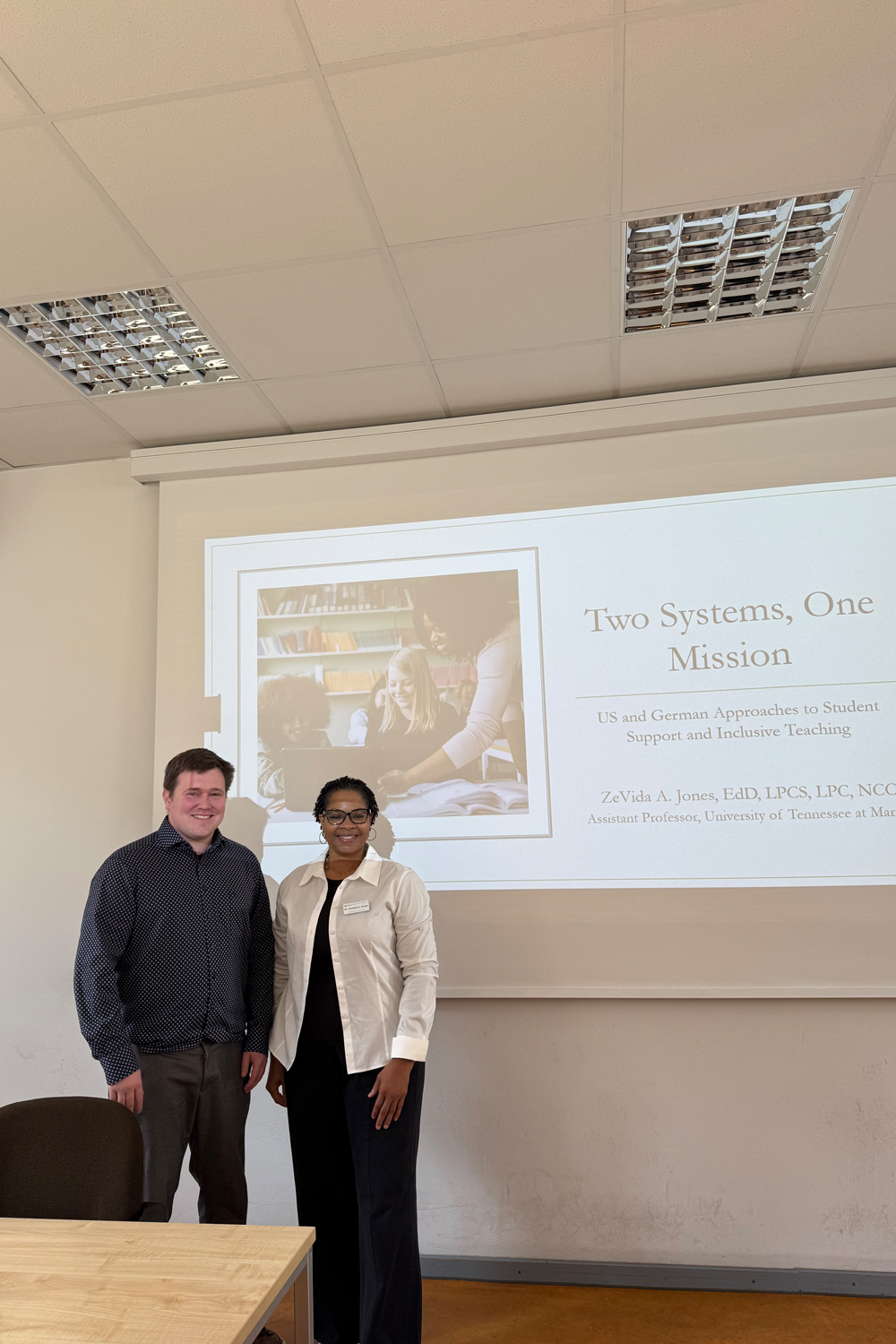
In Daniel Fehrentz’s (left) seminar, we compared the German and American education systems. Picture credits: ZeVida Jones/TU Braunschweig
The faculty at TU Braunschweig made my stay unforgettable, especially Daniel Fehrentz. He met me at the train station, walked me to my Airbnb, and carried my luggage up what felt like ten flights of stairs. The next day, when I discovered that the building had an elevator, we both laughed. He secured an office for me, introduced me to faculty, and checked in regularly. I always felt welcomed and appreciated their kindness and hospitality.