Attracting international students as skilled workers for Lower Saxony DAAD FIT connect 2026 conference took place at TU Braunschweig
How can we attract international students to Lower Saxony for the regional labour market and encourage them to stay in the region in the long term? Representatives from universities, industry and politics addressed this question on 09 and 10 March 2026 at the Automotive Research Centre Niedersachsen (NFF). TU Braunschweig hosted the first regional “FIT connect” conference organised by the German Academic Exchange Service (DAAD) and also presented its own initiatives to support international STEM students in their transition into the German labour market.
The DAAD provides targeted support to international students to help them integrate into their studies and subsequently transition into the German labour market. Through the ‘FIT – Supporting International Talent in Integrating into Studies and the Labour Market’ programme, it funds initiatives to prepare students for their studies and ensure their academic success, as well as to establish and expand career-related services for international students at German universities. At the start of the funding period in April 2024, 89 projects were launched at German universities. The funding period runs until 2028. With its “SUCCESS” project, TU Braunschweig is one of the nine universities in Lower Saxony to receive funding. The cooperation project, based at the International House, involves the Alumni & Career Service Centre, the Carl Friedrich Gauss Faculty and the Faculty of Mechanical Engineering. The involvement of regional partners AGV Region Braunschweig, IHK Braunschweig, the VDI District Association and the Alliance for the Region ensures close links with the local business community.
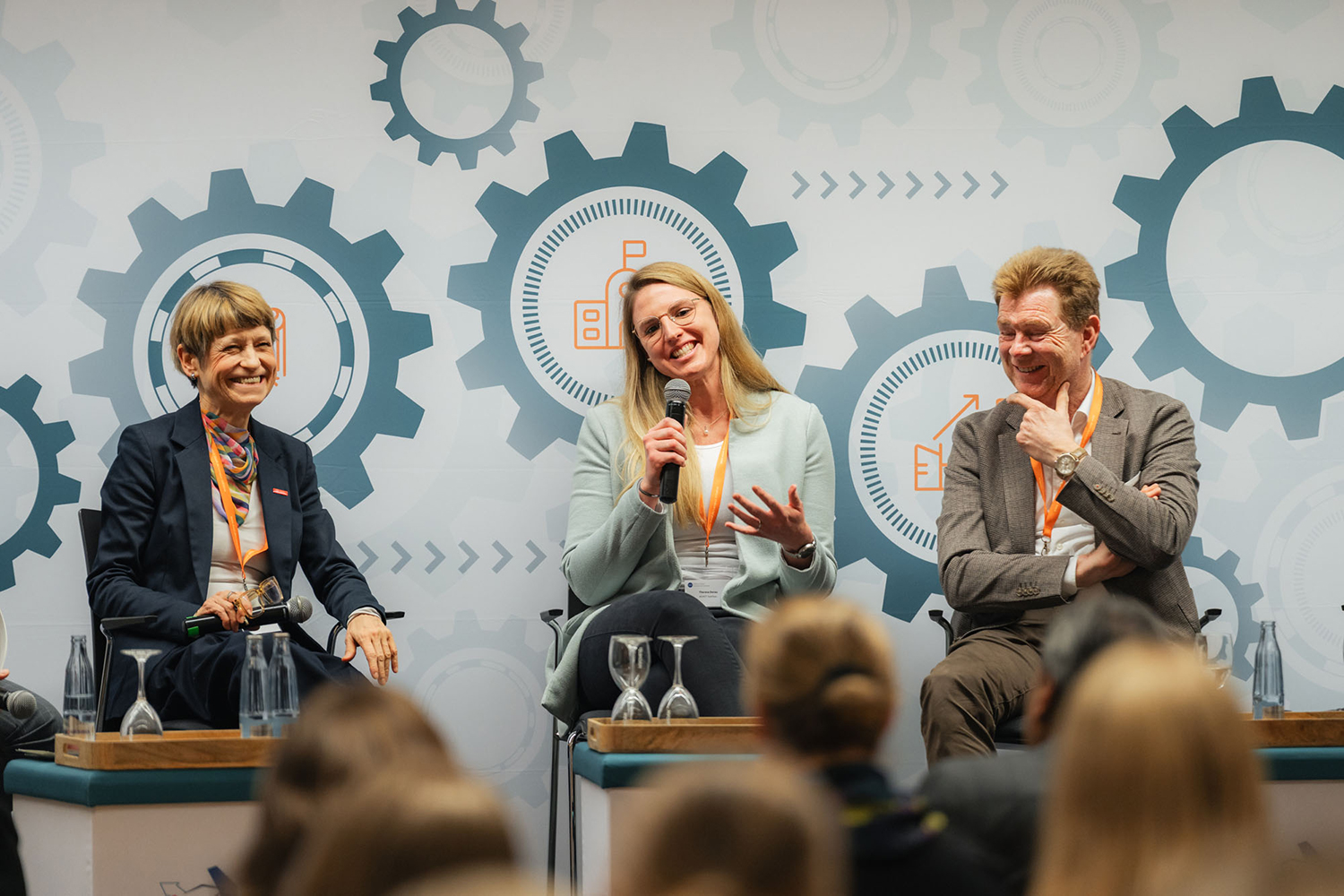
What does it take for a successful integration into the German labour market? TU President Prof. Dr. Angela Ittel (l.) and Dr. Klaus Birk (r.) discussed this with representatives from business and academia. Picture credits: Andreas Rodemann/DAAD
The “FIT connect 2026” conference served as a platform for dialogue among all stakeholders in Lower Saxony, Bremen and Hamburg, as well as for strengthening the links between universities, industry and politics. TU President Angela Ittel opened the conference together with Dr Klaus Birk, Head of the DAAD’s Projects Department. She emphasised: “Internationalisation is not just a way out into the world. It is also a way towards us. It is the decision to welcome international talents here. Not only because we need skilled new recruits and our economy has long depended on them, but also because international exchange at our universities is a core element of high-quality academic education.” In his speech, Klaus Birk highlighted the responsibility of universities and emphasised the importance of networking with businesses and the political sphere. In his keynote speech, Dr Bala Ramani, Head of the Specialist Workforce Unit at niedersachsen.next, provided an insight into the state’s activities to secure a skilled workforce and highlighted the great importance of FIT funding.
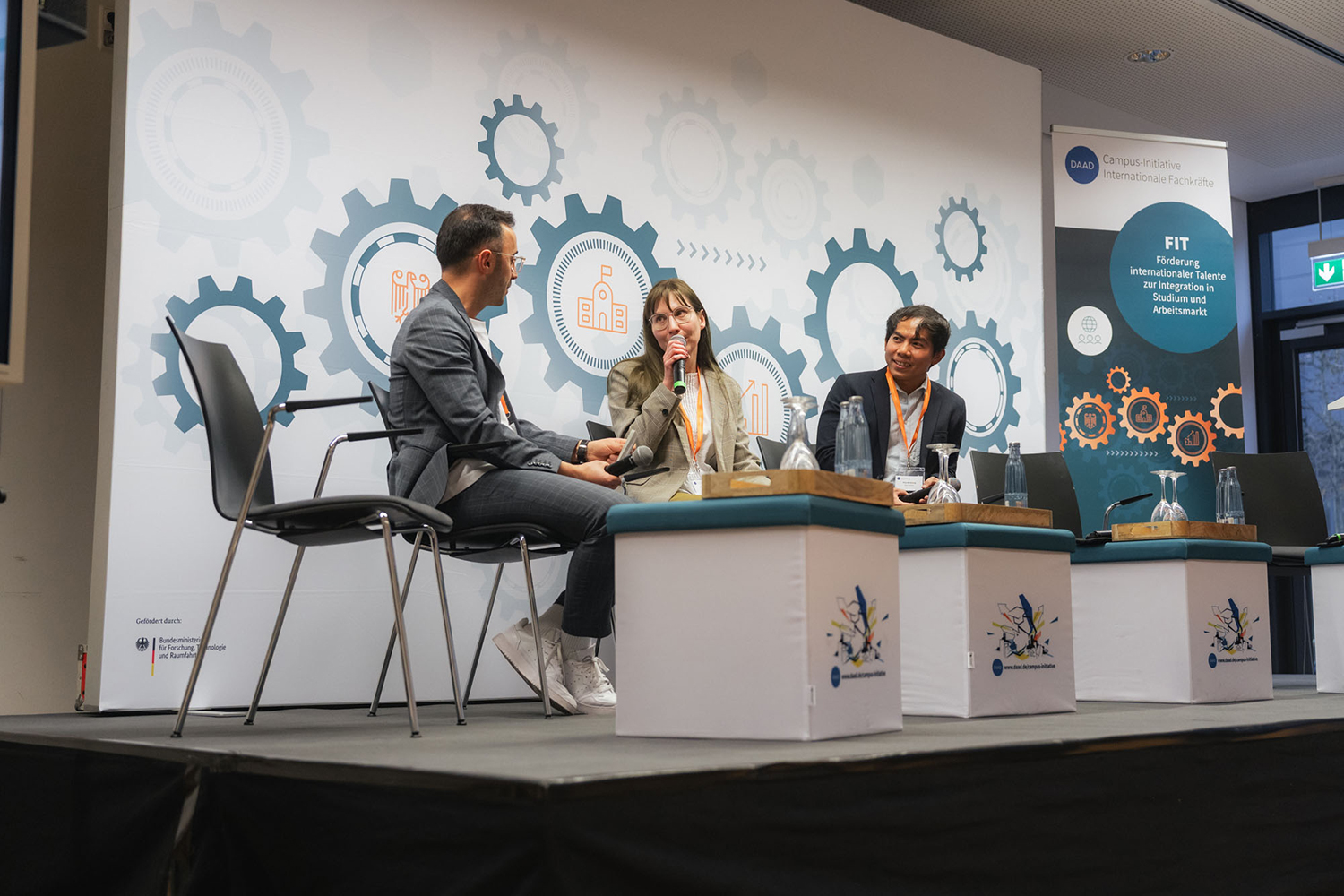
International students shared insights into their personal experiences of entering the labour market: Ksenia Zaytseva (centre) and Phyo Min Khaing (right). Picture credits: Andreas Rodemann/DAAD
To highlight the perspective of international students, Dr Ksenia Zaytseva and Phyo Min Khaing then shared their experiences of entering the labour market and, in conversation with moderator Feridun Öztoprak, explained what had motivated them to stay in Germany. Both had completed their studies in Germany as international students. In a lively panel discussion that followed, Angela Ittel and Klaus Birk spoke with Prof. Dr. Tina Cornelius-Krügel (Lower Saxony Ministry of Science and Culture) as well as business representatives Theresa Dorau (WURST Stahlbau) and Thorsten Sponholz (Siemens Mobility Braunschweig) about the factors contributing to the successful integration of international students into the Lower Saxony labour market. The evening concluded with an exchange among the participants in the project gallery.
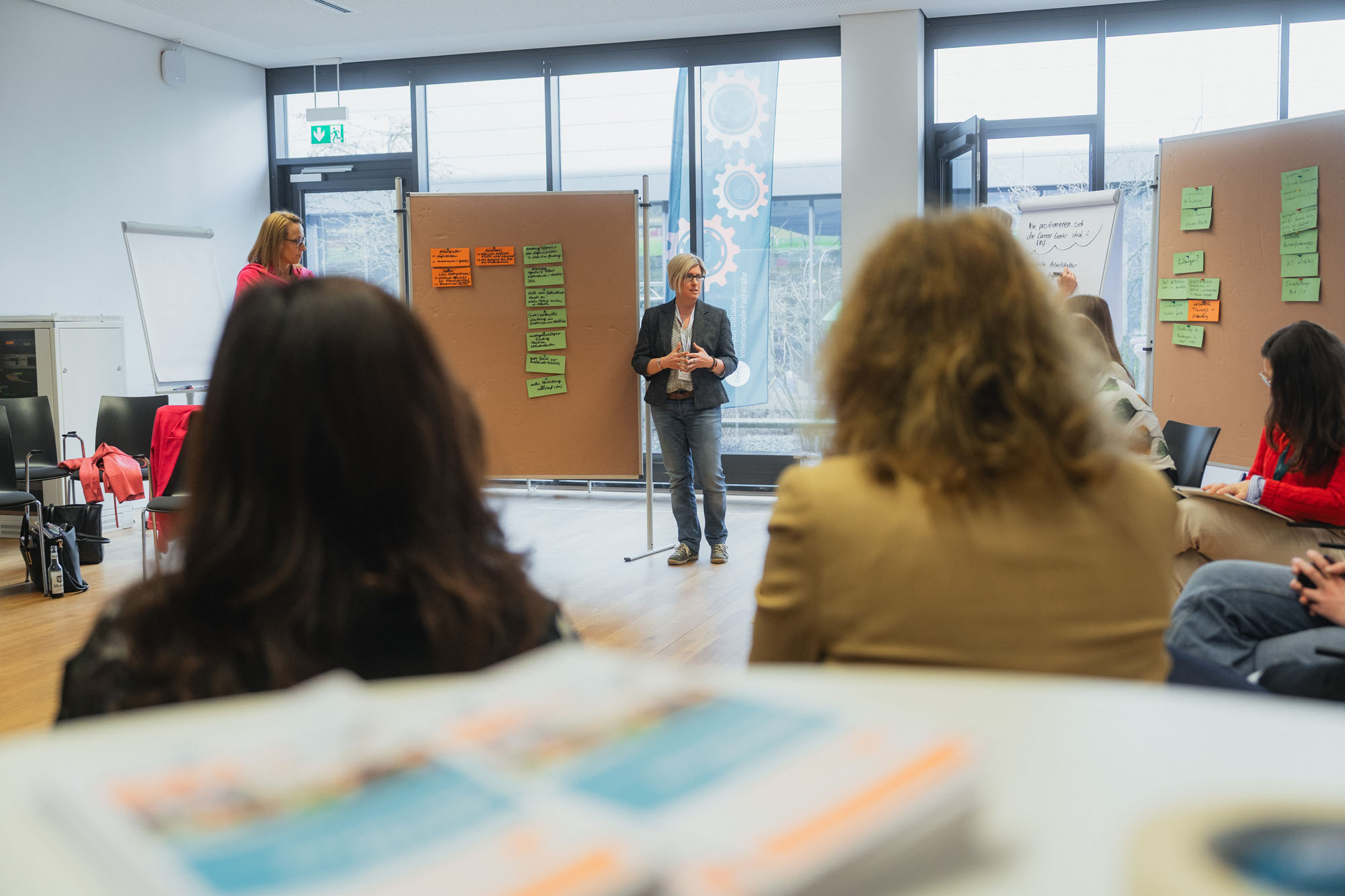
On the second day of the event, participants developed new ideas and impulses in interactive workshops. Picture credits: Andreas Rodemann / DAAD
On the second day of the event, Margarethe Schuseil and Kerstin Vogelsang presented the FIT project “SUCCESS” from TU Braunschweig. This was followed by workshops on the topics of residence rights, a welcoming culture, targeting specific groups, and collaboration between universities and small and medium-sized enterprises. The focus was consistently on the question of how to ensure a successful transition from study to work and how international students can develop career prospects in Lower Saxony at an early stage.
Dr Klaus Birk drew a positive conclusion following the event: “The exchange between universities and industry was particularly productive at the conference in Braunschweig. It became clear once again that language proficiency is a key factor in placing foreign skilled workers within the German economy. Students must be introduced to companies as early as possible through work placements, so that, ideally, they can be taken on directly after completing their final thesis within the company. Particularly in small and medium-sized enterprises, a certain level of German language proficiency is required from the outset, but companies must also be willing to focus more on the potential of applicants rather than just their current knowledge. At the same time, companies need support with the administrative procedures involved in hiring non-European skilled workers. Here, close cooperation between universities, industry, employment agencies and immigration authorities is recommended.”
The International Career Service helps students prepare for their career start
The DAAD funding has enabled TU Braunschweig to establish the International Career Service from 2024 onwards. It has quickly become an established part of the university and offers a comprehensive programme for international students: from company visits and networking events with business representatives to interview training and workshops on the application process. The programme is complemented by a comprehensive range of advisory services on academic success, job applications and entering the labour market. In the summer semester of 2026, there will also be a career compact course for international students for the first time, which will provide a condensed overview of the most important basics for entering the German labour market.
TU project coordinator Kerstin Vogelsang is delighted that the events have been so well received and highlights the collaboration with the project partners: “The cooperation with our industry partners is excellent – both in terms of content and on a personal level. This enables us to work very efficiently and to implement many new projects that benefit both the students and the companies in the region.”
FIT project serves as an example of the Ecoversity principle
For TU President Angela Ittel, the FIT project at TU Braunschweig is an excellent example of how to harness the potential of the collaborative Ecoversity approach: “For us, Ecoversity means exactly what is happening within the framework of the FIT project. As a university, we are networking with our partners in the region, thereby creating added value for everyone involved. This results in initiatives and a network from which many people will benefit.”