
Architecture students sweep the board at the Laves Prize Seven awards go to TU Braunschweig
Great success for architecture students at Technische Universität Braunschweig at the 2025 Laves Prize: the jury honoured seven projects from the Department of Architecture. The first two prizes also went to Braunschweig. The Laves Prize is awarded annually by the Laves Foundation to students of architecture, interior design, landscape architecture and urban planning at universities and colleges in Niedersachsen.
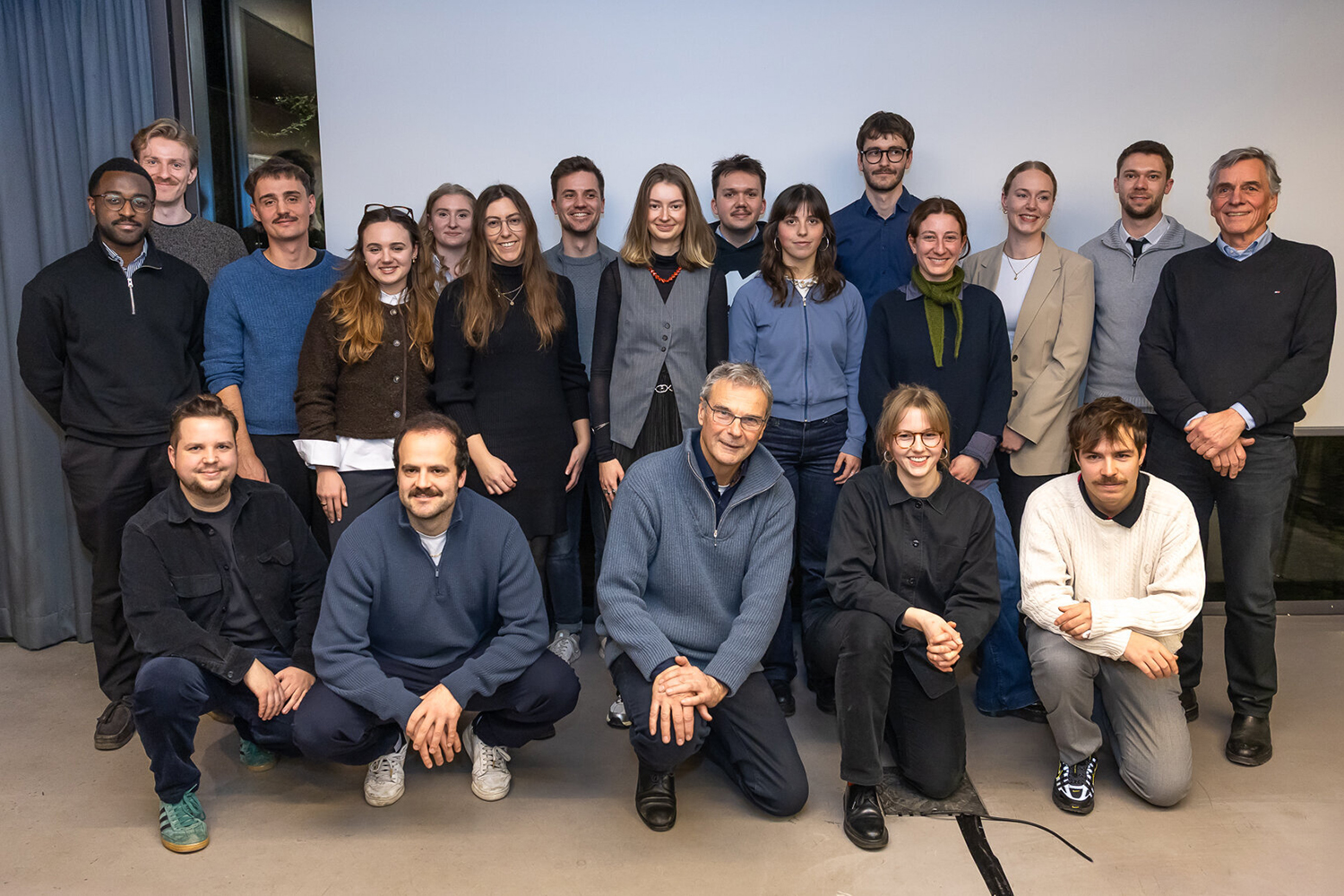
The winners of the Laves Prize 2025. Photo credit: Iris Klöpper/Laves Foundation
More than 100 entries from all over Niedersachsen were submitted for the Laves Prize 2025. With a total of seven awards, TU Braunschweig is one of the most successful universities in this year’s competition. On 22 January, Robert Marlow, Chairman of the Laves Foundation, and Professor Volker Droste, Chairman of the jury and from Jade University of Applied Sciences in Oldenburg, presented the awards, worth a total of 5,000 euros. The jury awarded two equally deserving projects with first prize (1,500 euros each).
Laura Leinert impressed the jury with her urban planning project “Next stop: Rodenkoppel”, which she developed at the Institute for Urban Design and Design Methodology (ISE). Milena Marie-Antoinette Nitsche also received first prize for her master’s thesis “Gjenopplive Smelteverket – Between Tourism & Industry – Transformation of the Heavy Industry Site Odda,” which she presented at the Institute for Design and Spatial Composition (IAD).
In her design, Laura Leinert focuses on a harbour area in Lübeck, located north of the old town between the Trave River and the railway line from Hamburg to Fehmarn. She bases her analysis on the upcoming opening of the Fehmarn Belt Tunnel and the new opportunities this brings for tourism, accommodation and research at the Rodenkoppel site.
In her master’s thesis, Milena Nitsche deals with the conversion of a former carbide factory in Odda, Norway. The factory, which was shut down in 2003, is to be transformed into a tourist destination offering a variety of activities. Plans include an industrial museum to document the history of the site, incorporating parts of the facility, as well as a campus dedicated to traditional and modern crafts, with a particular focus on fruit growing.
In addition to the two first prizes, a special prize went to Ole Frieling and Gujejiani Ketevan for their design “reziproof”. Four other successful projects from Braunschweig were honoured with commendations: “codename BALDRIAN | Wiener Werkstätten 2.0” by Leon Krug and Luzia Gödde, “PostPost – Frankfurt am Main” by Alexandra Dücker and Robert Sievert, “Stadtbaustein Kleingarten, Das Urbane Dorf” by Leon Kremer, and “Accommodation en bloc” by Julius Brandis.
The Laves Foundation awards the Laves Prize every year to students from all over Niedersachsen who demonstrate a commitment to holistic and complex design quality and sustainability.