
Science that connects Humboldt Network Conference hosted by TU Braunschweig
For three days, the campus of Technische Universität Braunschweig became a meeting place for international scientific talent. Over 100 researchers from 37 countries gathered at our university for the network conference of the renowned Alexander von Humboldt Foundation.
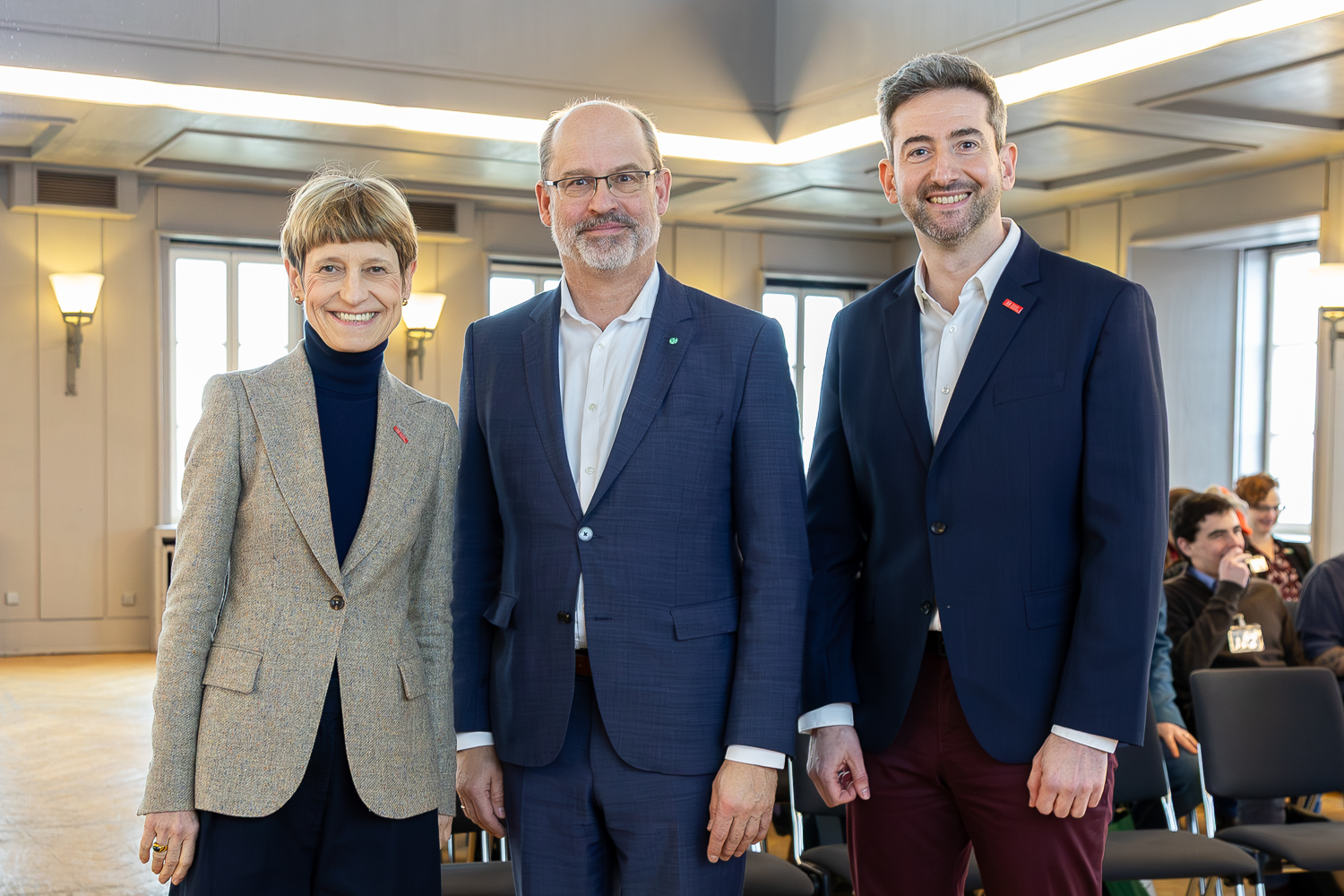
TU President Angela Ittel with Dr. Markus Zanner and Prof. Daniel Prades. Photo credits: Kristina Rottig/TU Braunschweig
When languages, voices and research questions mingle in the auditorium of the House of Science, it is no coincidence. The Alexander von Humboldt Foundation (AvH) networking conference brings together young scientists from all over the world who are working on a wide variety of topics. But they all share something that transcends disciplines and borders: a passion for research.
The Alexander von Humboldt Foundation was established in 1953, and the first Chancellor of the Federal Republic of Germany, Konrad Adenauer, signed the foundation’s charter. The aim of the AvH is to strengthen Germany as a centre of science through international research exchange. The foundation has supported 31,000 researchers worldwide to date, and 2,300 scientists are currently in Germany on a Humboldt Fellowship.
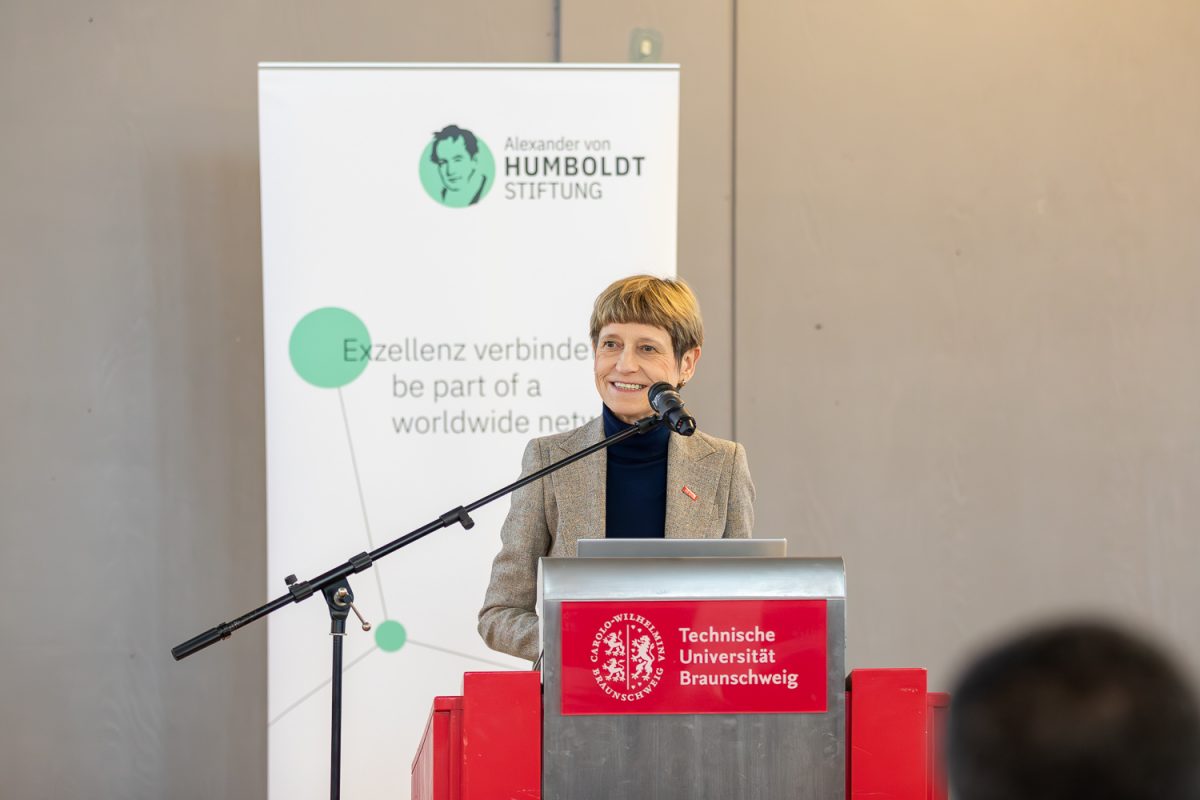
TU President Angela Ittel. Photo credits: Kristina Rottig/TU Braunschweig
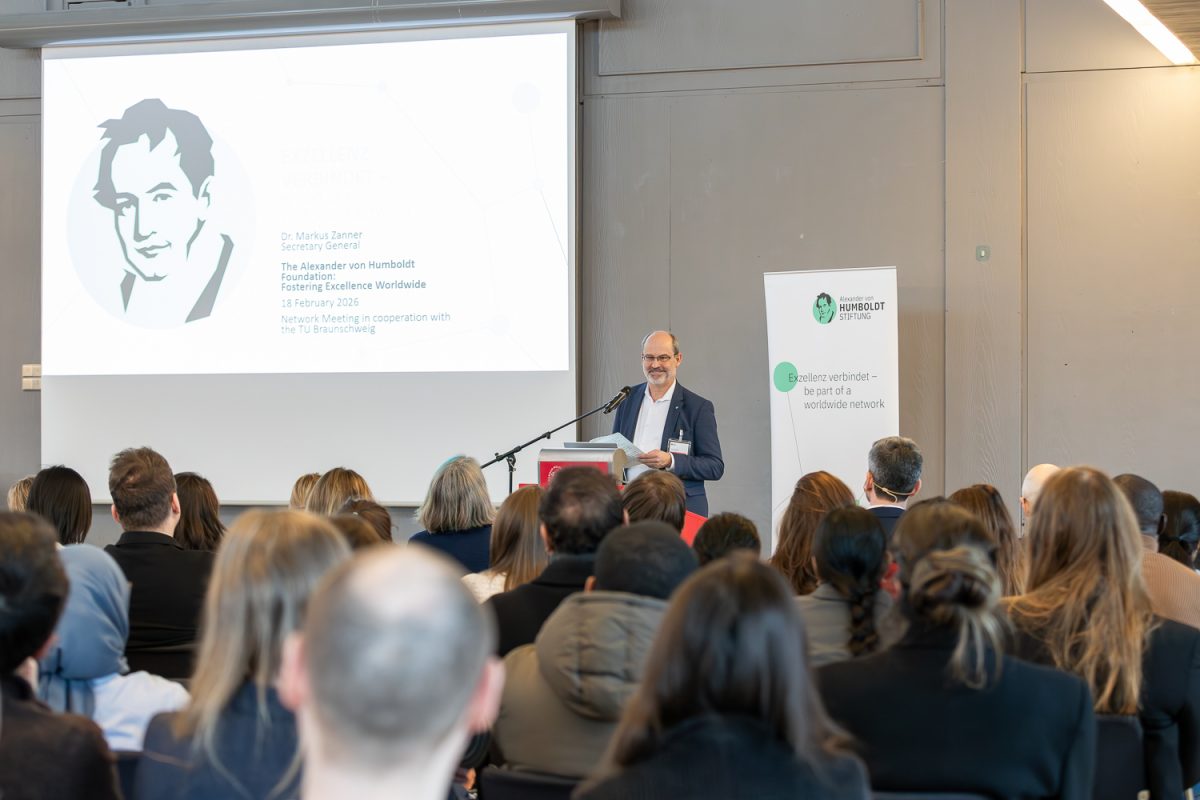
Dr. Markus Zanner. Photo credits: Kristina Rottig/TU Braunschweig
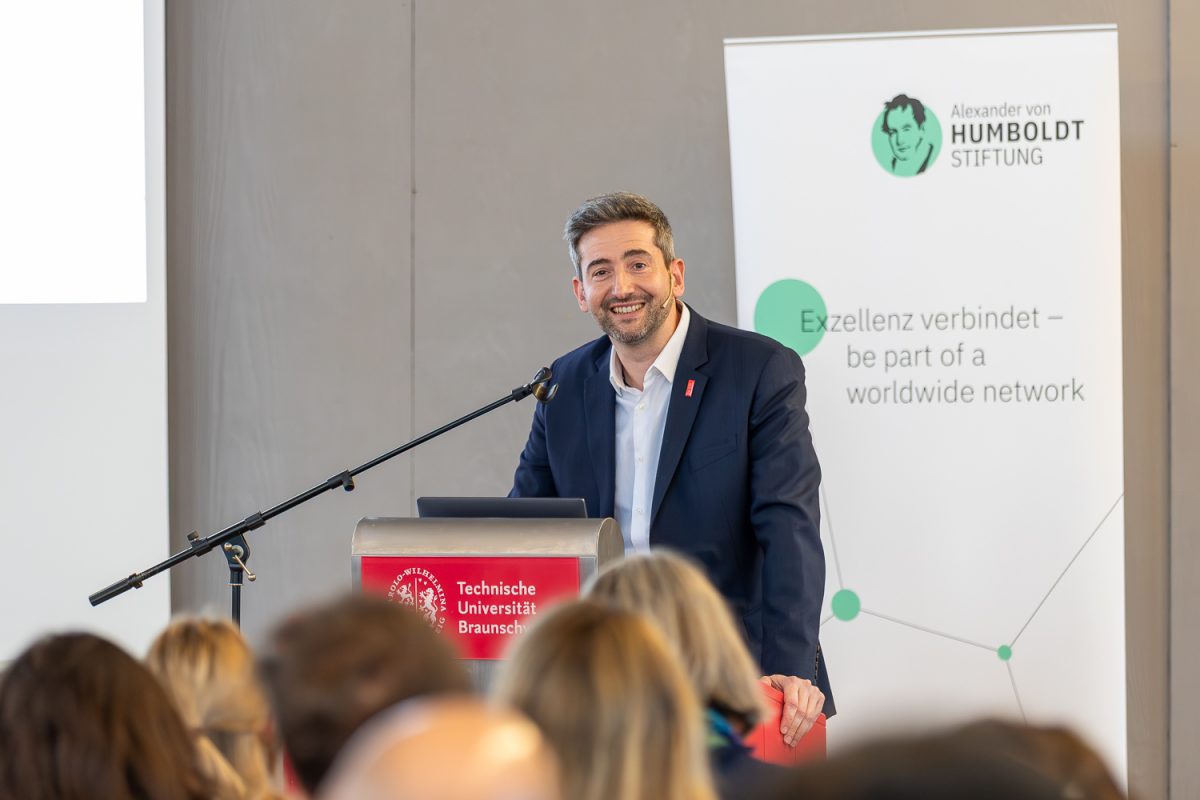
Professor Daniel Prades. Photo credits: Kristina Rottig/TU Braunschweig
Personalities, not projects
TU President Angela Ittel and Dr. Markus Zanner, Secretary General of the Humboldt Foundation, welcomed the participants at the opening of the conference. Dr. Markus Zanner said: “What counts for us are not projects, but people.”
Most of the more than 100 scholarship holders who came to the network conference in Braunschweig have just begun their several-year research stay in Germany. There are currently eight Humboldt scholarship holders at TU Braunschweig.
In addition, the TU also has a Humboldt Professorship, the most highly endowed research grant for scientists. Professor Daniel Prades is currently researching how gas sensors can be made more reliable and accurate using a completely new approach. The TU and its research environment offer him excellent conditions for this. In his moving speech welcoming the network meeting, he spoke about his work at TU Braunschweig: “The greatest gift was being accepted into an environment that welcomed my ‘crazy’ ideas. It encouraged me to think freely, unconventionally and in a completely new way – while at the same time giving me the support and expertise my research needs.”
The region as a research ecosystem
In addition to lectures and exchange formats, the programme also included visits to TU institutes and city tours. This gave guests an insight into research topics that are particularly prominent at TU Braunschweig – from measurement and sensor technologies to issues of sustainable urban and mobility development.
The conference is also an invitation to get to know the region as a research ecosystem. Strong partners work closely together around the university. TU President Angela Ittel said: “The future of science lies in cooperation. We are used to a lot of competition in research – but what we need, especially in these times, is to cooperate and act together. This strengthens the research community here locally, but also worldwide.”
Her last sentence summed up the mood at the start of the network conference: “Cooperation not only makes collaboration more efficient, sustainable and resilient, it also makes it much more enjoyable.”